Herb-Roasted Pork Loin

More often than not, I let what’s available or on sale at my market determine what I will be making for dinner that night. When I found pork loins on sale for $4 off a pound at my local Whole Foods, my menu was set. Knowing that I would be cooking only for two, I chose a small two-pound center-cut roast.

Originally, I though I would prepare it braised in milk, a recipe that I have previously posted on this blog. But when I returned home, a bottle of Chianti Classico that we had received as a Christmas gift caught my eye and it brought to mind the many times I enjoyed this wine with a classic roasted pork loin whenever I was in Tuscany, where it is commonly known as arista.

In the past, I’ve always made this roast for a get together and used a larger piece of meat. But mind was now set on having arista even if it would be a diminutive aristina.

The recipe I chose was from the Williams-Sonoma Essentials of Italian cookbook. Although the recipe called for a five-pound roast, I didn’t adjust the amount of herbs or oil for my two pounder. I did, however, reduce the number of garlic cloves to three, and not having any fresh sage at home, I doubled the amount of rosemary. Because it was quite late when the roast was done and we were both starving, I skipped the pan sauce. The roasted onions were enough of a condiment.

I also served Italian roasted potatoes, which I cooked at the same time as the roast. Although the recipe I used called for much hotter oven (425°F), I simply let the potatoes cook at the same temperature as the roast (325°F) and they were perfectly done at the same time as the meat.

As you probably noticed, there are no photos in this post. I can only say that while I was cooking, my photographer was at work, and by the time the food was on the table, neither of us was thinking about the blog. But despite not having any photos, I thought this dish was so good, I had to write it up.

Herb-Roasted Pork Loin from Williams Sonoma Essentials of Italian

Ingredients
4 large garlic cloves
2 tablespoons fresh rosemary leaves
2 tablespoons fresh sage leaves
2 teaspoons crushed fennel seeds
Sea salt & freshly ground black pepper, to taste
1 bone-in pork loin roast, about 5 lb
4 tablespoons olive oil
1 yellow onion, halved and sliced
1 cup dry white wine, such as Pinot Grigio

Directions
Preheat an oven to 325°F.

Using a chef’s knife, very finely chop together the garlic, rosemary and sage. Transfer to a small bowl, add the fennel seeds, season with salt and pepper, and mix well. Make slits 1/2 inch deep all over the pork roast and insert some of the mixture into each slit. Rub the roast with the remaining seasoning, then rub with 2 tablespoons of the olive oil. Place the meat in a roasting pan just large enough to hold it.

Roast the meat for 1 hour. In a bowl, toss the onion slices with the remaining 2 tablespoons of olive oil and scatter them around the meat. Continue to roast until an instant-read thermometer inserted into the thickest part of the roast, away from the bone, registers 155°F, or the meat is pale pink when cut into at the center, about 1 1/4 hours more. Transfer to a warmed platter and cover loosely with aluminum foil to keep warm. Let rest for 15 minutes before carving.

Note: I cooked my two pound roast for two hours. Although it was very good, the next time I cook such a small roast, I might reduce the cooking time slightly.

Meanwhile, pour off most of the fat in the roasting pan and place the pan over medium-low heat. Add the wine and deglaze the pan, stirring to scrape up any browned bits from the pan bottom. Simmer until the sauce is slightly reduced.

Carve the roast and arrange on a warmed platter. Spoon the pan sauce over the pork and serve at once.

Wine Pairing: Chianti Classico, Rosso di Montalcino

Spicy Roasted Chicken Thighs

img_7302sm

Almost every week I roast bone-in skin-on chicken thighs on a sheet pan the same way, with a mix of fresh thyme and rosemary, lemon zest, salt, pepper, and olive oil. It’s a staple of my comfort-food repertoire. But yesterday, I opted out of my comfort zone and went for a spicier dish: Mark Bittman’s Spicy Roasted Chicken Thighs posted on the New York Times Cooking website. Having all the ingredients for the spice rub in my pantry, except for a small jalapeño, also contributed to my choosing this dish.

After reading some of the reader comments on the site, I made a few changes to the recipe. I halved the amount of lemon juice and upped the amount of tomato paste, cumin, and coriander. Unfortunately, I did not increase the amount of salt. I also let the thighs marinate in the fridge for almost 3 hours and then lightly drizzled them with olive oil before putting them into the oven.

The result was delicious, but benefited from some additional salt and a drizzle of fresh lemon juice at the table.

This is a recipe you can play with (as I plan to do in the future).

A camera malfunction (really user error) resulted in my not having any prep photos, but with such an easy recipe I don’t their absence matters.

Spicy Roasted Chicken Thighs (adapted from Mark Bittman on the New York Times Cooking website.)

8 chicken thighs, with skin, pierced all over with a small knife and trimmed of any excess skin and fat.
5 large cloves garlic, peeled
1 2-inch piece fresh ginger root, peeled
1 small jalapeño pepper, seeded
Zest of 1 whole lemon and juice of half
3-4 tablespoons tomato paste
1 teaspoon salt, or to taste
1.5 teaspoons cumin powder
1.5 teaspoons ground coriander.

1. Heat oven to 400 degrees. Put trimmed chicken thighs in a bowl. Finely mince garlic, ginger and pepper. Toss with all remaining ingredients or put in a small food processor, and grind to a paste. (It is O.K. if the coriander seeds are not fully pulverized. They will add a little crunch.) (I recommend the small food-processor option.)

2. Rub mixture thoroughly into chicken. At this point, you can cover, and refrigerate for up to a day.

3. Put thighs, skin side up, in a roasting pan (I prefer a rimmed sheet pan). Roast for 35 to 45 minutes or until done.

img_7282sm

Yield: 4 servings.

Wine Pairing: Dry Riesling, Sauvignon Blanc

Greek Chicken Stew with Cauliflower and Olives

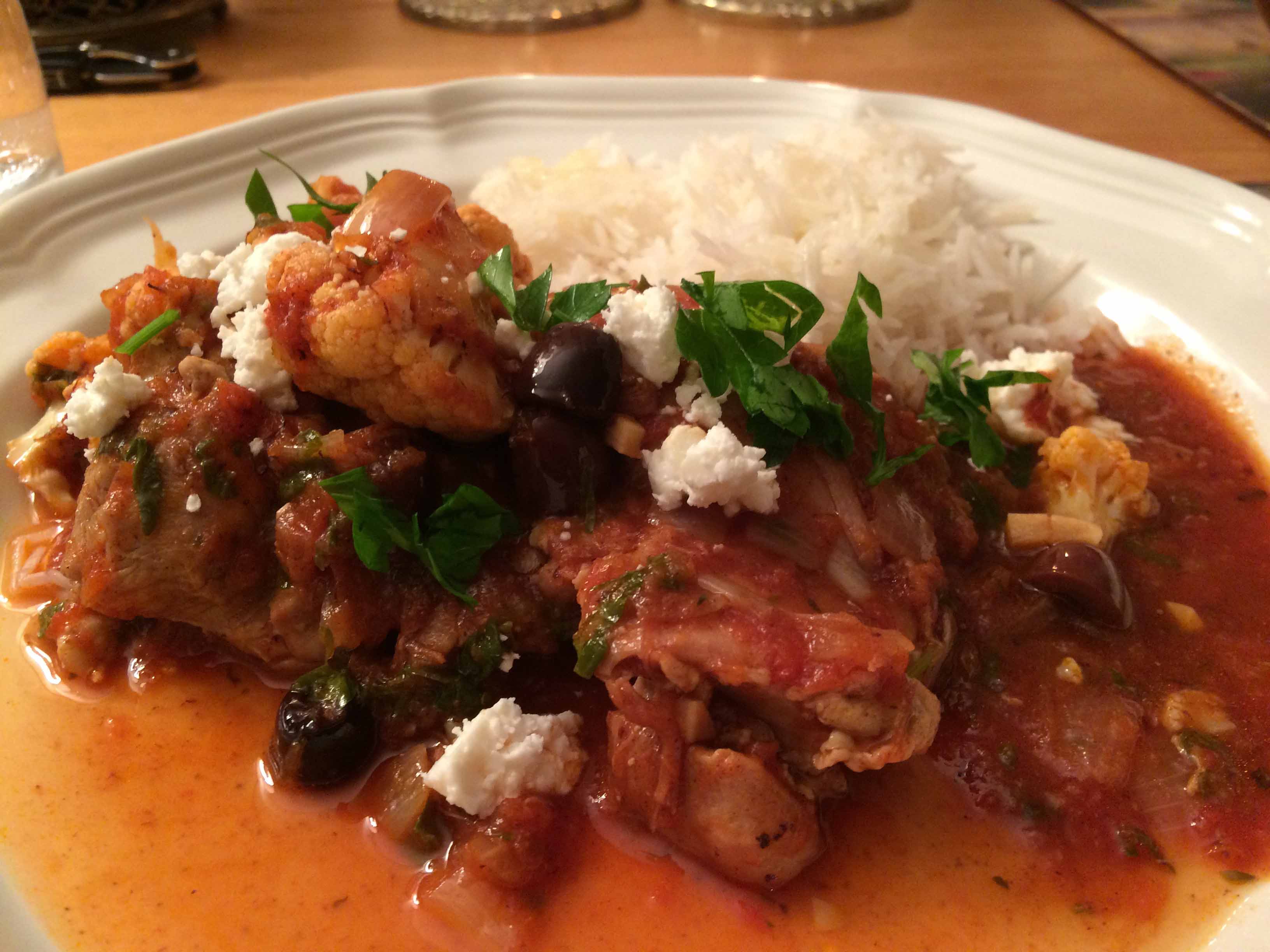
img_7266smAfter four turkey-sandwich lunches and several leftover-turkey improvisations, it was time for a change. We savored our first dinner without the bird–NY strip steaks with mashed potatoes and buttered peas. But then, given our cholesterol levels, it was time to get back to non red-meat meals. One of these was last night’s entrée, a recent New York Times recipe for Greek Chicken Stew With Cauliflower and Olives. Its use of cinnamon in the tomato-based sauce and feta-cheese garnish intrigued me.

I must admit that a shopping error gave me some pause when I discovered that rather than purchasing skinned chicken thighs, I had purchased not only skinless but boneless thighs. Despite this mistake, the dish turned out quite well, with moist meat and a succulent savory sauce. I still believe, however, that it would have been even better with bone-in thighs.

I should also note a few other changes that I made to the recipe. I used a little more cinnamon, dried thyme, vinegar, olives and parsley than was called for in the recipe. To heighten the Greek character of the dish, I also added some dried oregano. Most of these changes were done for flavor, but the additional vinegar was required to fully deglaze the pot after browning the chicken.

Rather than adding the cauliflower after the first twenty minutes of cooking, I added it at the beginning along with the chicken since I’ve learned from cooking this vegetable in a plain tomato sauce requires at least 40 minutes for my tastes.

I’m providing the recipe in its original format with my notations, but I think you can alter it in a variety of other ways to make it your own. One alternative cited in readers’ comments to the recipe was roasting the cauliflower in the oven before adding it to the pot.

Greek Chicken Stew With Cauliflower and Olives (adapted from the New York Times)

Ingredients

  • 2 tablespoons extra virgin olive oil (I needed a little more oil than was called for.)
  • 1 large red onion, chopped
  • 2 to 4 garlic cloves (to taste), minced (I used two large cloves.)
  • 6 to 8 chicken legs and/or thighs, skinned (I opted for nine thighs.)
  • 2 tablespoons red wine vinegar (I used at least 4 tablespoons.)
  • 1 28-ounce can chopped tomatoes, with juice, pulsed in a food processor (I chose Pomi’s Finely Chopped Tomatoes rather than pulsing.)
  • ½ teaspoon cinnamon ( I used about ¾ teaspoon.)
  • Salt and freshly ground pepper
  • ½ teaspoon dried thyme, or 1 teaspoon fresh thyme leaves (I used ¾ teaspoon dried.)
  • ½ teaspoon dried oregano (This is my addition.)
  • 1 small or 1/2 large cauliflower, cored, broken into florets, and sliced about 1/2 inch thick
  • 12 kalamata olives (about 45 grams), rinsed, pitted and cut in half (optional) (I used about 24 olives.)
  • 1 to 2 tablespoons chopped flat-leaf parsley (I upped this to 3 tablespoons.)
  • 1 to 2 ounces feta cheese, crumbled (optional) (The feta is essential.)

Preparation

  1. Heat 1 tablespoon of the oil over medium-high heat in a large, deep, heavy lidded skillet or casserole and brown the chicken, in batches if necessary, about 5 minutes on each side. Remove the pieces to a plate or bowl as they’re browned. Pour off the fat from the pan. Add the vinegar to the pan and scrape up all the bits from the bottom of the pan.

    Browning the chicken
    Browning the chicken
  2. Add the remaining tablespoon of the olive oil to the pan, and turn the heat down to medium. Add the onion and a generous pinch of salt and cook, stirring often and scraping the bottom of the pan, until it begins to soften, about 5 minutes. Turn the heat to low, cover and let the onion cook for 10 minutes, stirring from time to time, until it is lightly browned and very soft.

    img_7255sm
    The browned onions
  3. Add the garlic and stir together for a minute or two more, until the garlic is fragrant, then add the tomatoes and their juice, the cinnamon, thyme, and salt and pepper to taste. Bring to a simmer and simmer 10 minutes, stirring from time to time, until the mixture is reduced slightly and fragrant.

    The simmered sauce
    The simmered sauce
  4. Return the chicken pieces to the pot, along with any juices that have accumulated in the bowl. If necessary, add enough water to barely cover the chicken. Bring to a simmer, reduce the heat, cover and simmer 20 minutes. (As I said above, I added the cauliflower at this point.)

    Adding the chicken, cauliflower, parsley, and olives
    Adding the chicken, cauliflower, parsley, and olives
  5. Add the cauliflower and kalamata olives, (I also added some parsley here) and simmer for another 20 minutes, or until the cauliflower is tender and the chicken is just about falling off the bone. Stir in the parsley, taste and adjust seasonings. Serve with grains, with the feta sprinkled on top if desired. (I served with steamed rice.)

    The finished stew
    The finished stew

Wine Pairing: Syrah, Cotes du Rhone

Roasted Sausages with Butternut Squash and Pears

img_7235sm

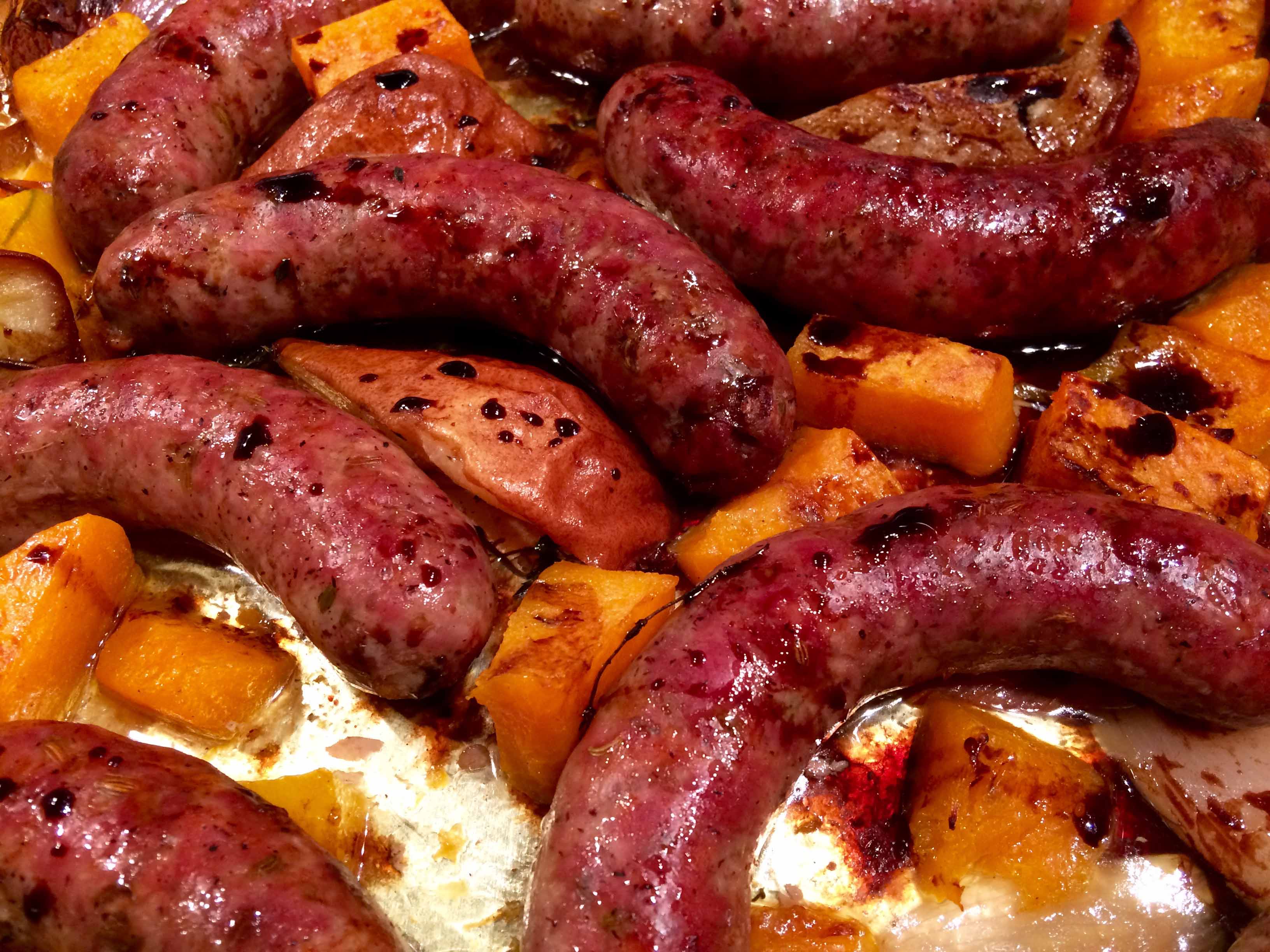
About a year ago while waiting for a doctor’s appointment, I saw a recipe on the Rachael Ray show for sausages roasted with butternut squash and pears. Well, after finding the recipe online, I finally got around to making it the other night for a small get together with friends. The colors and aroma of the dish echoed fall.

I made a few changes to the original recipe that included adding shallots and extending the cooking time. I also substituted a package of cut and peeled squash for the recipe’s large butternut squash.

Roasted Sausages with Butternut Squash and Pears (adapted from the Rachael Ray Show)

Ingredients

3 red pears, cored, cut into quarters
1 20-ounce package cut and peeled butternut quash
2 large shallots peeled and quartered
Extra-virgin olive oil, for drizzling
Salt and pepper
5 sprigs thyme
8 sweet Italian sausages (about 2.5 pounds)
Balsamic vinegar

Directions

Preheat oven to 400°F.

Place pears, butternut squash and onions into a large roasting pan. Drizzle with olive oil and season with some salt and pepper. Scatter the sprigs of thyme over top of the vegetables. Place the sausages on top of the vegetables.

img_7222sm

Put the roasting pan into the oven and cook for about 35 minutes or until sausages are golden brown. (The original recipe called for 25 minutes of cooking, but I found that both the sausages and the vegetables needed more time to roast. I also turned the sausages after 30 minutes to makes sure they were browned evenly.)

img_7228sm

Drizzle the sausages and roasted pears, squash, and shallots with some balsamic vinegar.

img_7231sm

Wine Pairing: Zinfandel, Primitivo

Penne with Tomato and Goat-Cheese Sauce

img_7218sm

My go-to recipe for a simple tomato sauce is Marcella Hazan’s. With only 3 ingredients (plus some salt) and 3 steps, it’s the easiest sauce I know:

One 28-ounce can of whole peeled San Marzano tomatoes, crushed, along with their juices
5 tablespoons unsalted butter
1 onion, peeled and cut in half length-wise, so the root end keeps the layers together
Salt

1. In a heavy bottomed, non-reactive sauce pan, combine the tomatoes and their juices, the butter, and the onion. Add salt too taste.

2. Bring to a simmer over medium heat, and then reduce the heat to maintain a gentle simmer. Cook uncovered for 45 minutes, stirring occasionally and mashing any large pieces of tomatoes with your spoon.

3. Discard the onion; adjust for salt.

You can search the internet for more versions of this recipe, like this one from the New York Times Cooking site.

Hazan’s recipe makes enough sauce for a pound of pasta. Given that I’m usually cooking for two, I often have a half portion of it on hand. Such was the case last night, when after a weekend of red-meat indulgence, I decided to make one of my favorite meatless dishes: penne with tomato and goat-cheese sauce.

Penne with Tomato and Goat-Cheese Sauce

Ingredients
1/2 portion of Marcella Hazan’s tomato onion sauce
2.5 ounces goat cheese or chèvre
1/4 teaspoon of crushed red pepper flakes
8 ounces penne rigate, or any short cut pasta
Freshly ground black pepper
Parmigiano-Reggiano for serving

1. In a large skillet slowly bring the tomato sauce to a simmer. When the sauce is warmed through, crumble the cheese into the sauce and still until well blended. Add the crushed red pepper. Be careful not to overdo the pepper flakes, which can overwhelm the flavor of the cheese.

2. Meanwhile, cook the pasta until one minute before al dente (about 9 minutes). When the pasta is done, drain well and add it to the skillet with the sauce. Toss with sauce over low heat and allow the pasta to finish cooking, about 1 minute.

Tossing the pasta with the sauce

Before serving, sprinkle with some ground black pepper and grated Parmigiano-Reggiano.

Wine Pairing: Rosso di Montalcino

Roasted Sausage, Peppers, and Onions

img_1694sm

Sausage and Peppers has been a family favorite for years. My aunt would often prepare this for lunch on Saturdays, after we returned from shopping in our neighborhood’s Italian section on Avenue U in Brooklyn. She would serve them with bread still warm from the baker and a selection of cheeses from her favorite salumeria. These days, I often make it for an easy weeknight supper.

Like most cooks, my aunt would fry up the sausages and then use their fat to fry the onions and peppers. This is the way I too have prepared this dish—that is, until last night.

Although I enjoy this Italian staple, I hate cleaning up the greasy mess it makes all over the stove. I thought there must be an easier alternative using my oven. I did a Google search and found several recipes that looked promising.  I combined a few of them and came up with the one below.

Once again, I hadn’t planned on writing about this dish, but it turned out so well that I had to share it with you. I don’t think I’ll ever use the stove top again to make it.

Roasted Sausage, Peppers, and Onions

Ingredients
4 Italian sweet sausages
4 bell peppers (2 red, 1 yellow, 1 orange) cored, seeded, and sliced 1/2-inch thick
1 large onion, thinly sliced or chopped
3 garlic cloves, lightly smashed
Kosher salt
Freshly ground black pepper
1/4 cup olive oil
1 lemon, quartered for serving with the sausage (optional)

  1. Preheat the oven to 400°F.
  2. Spray a large roasting pan with olive-oil spray.
  3. Place the sausages, peppers, onion, garlic, in the pan. Sprinkle with salt and pepper. Drizzle with olive oil and toss, making sure the sausages are in a single layer.
  4. Roast the sausages and vegetables for about an hour. About mid-way through, turn the sausages to ensure even browning.

When the sausages and vegetables are browned to your liking, remove from the oven and serve. Squeeze some lemon on the sausage for added flavor.

Wine Pairing: Zinfandel

Beef Barley Soup with Oxtails

img_7191

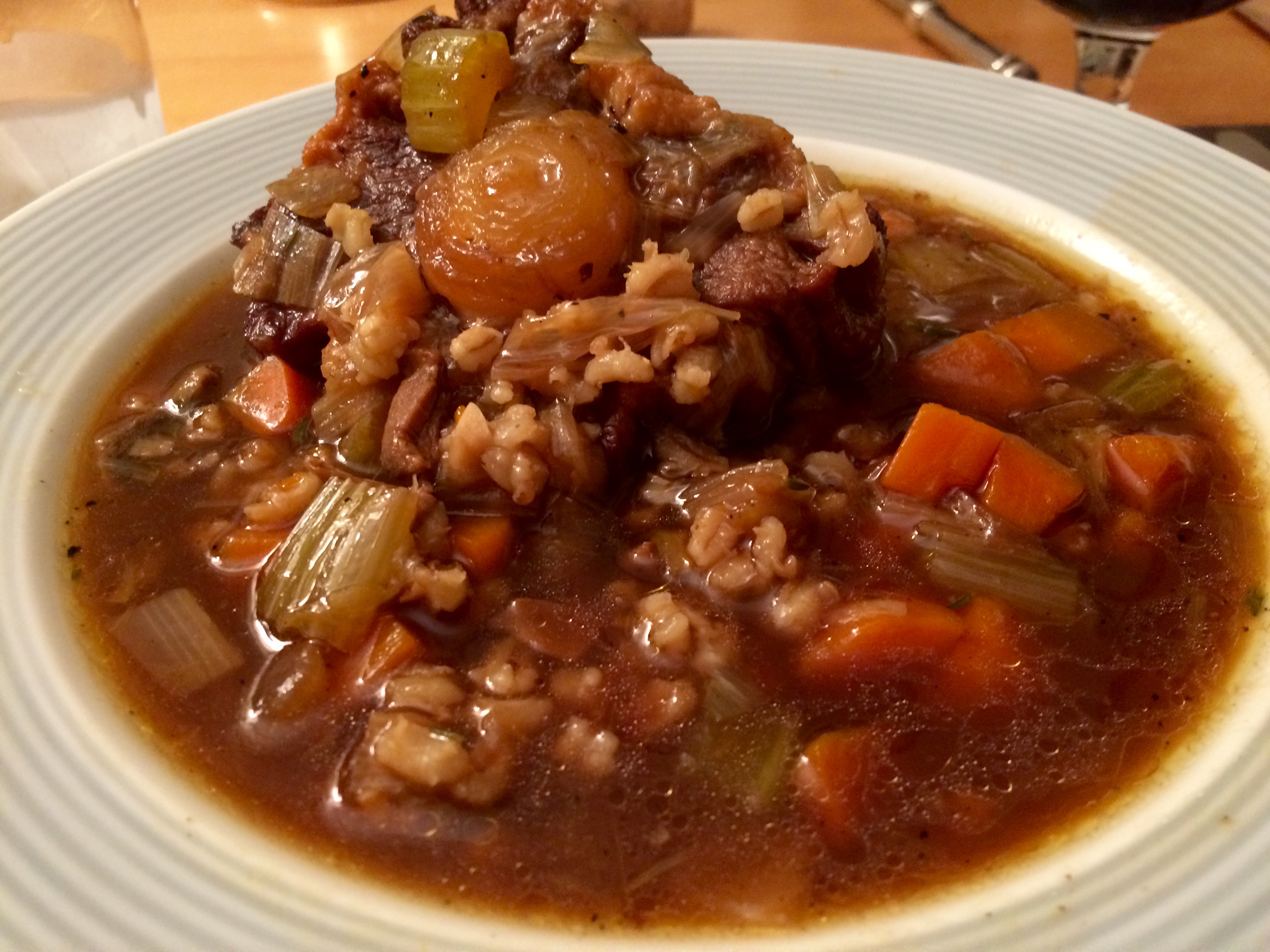
With the first chill of autumn came a desire for a rich soup. My better half asked for beef barley, a childhood favorite. So after searching my cookbooks and the internet, I came upon a great recipe from Food Network star, Ina Garten. Served along with the recipe’s oxtails, the soup makes a complete meal that will satisfy even the most ardent carnivore.

It’s a relatively simple recipe, but I modified it slightly. The original recipe called for 10 cups of beef broth, but my local grocery only had two 32-ounce boxes available. Originally, I thought I would simple add some chicken stock to make up the difference. But then I thought that making up the difference with a broth made from soaking dried porcini would provide even more flavor with the added benefit of adding some mushrooms to the soup. I made my broth with a half cup of porcini, but regretted afterwards that I didn’t use more. So, as you will see in the recipe, I’ve upped the dried porcini to 1 cup.

As you may have noticed, this posting has far fewer photographs than is my norm. This is because I wasn’t planning on posting this recipe until I first tasted the soup for seasoning about mid-way through.

Rich Beef Barley Soup (adapted from Ina Garten recipe on foodnetwork.com)

Ingredients

1 tablespoon good olive oil
2 pounds beef oxtails
Kosher salt and freshly ground black pepper
2 cups chopped leeks, white and light green parts (2 leeks)
2 cups (1/2-inch) diced carrots (4 carrots)
1 cup chopped yellow onion
1 cup (1/2-inch) diced celery (2 stalks)
2 garlic cloves, minced
2 sprigs fresh thyme leaves
3 bay leaves
8 cups canned beef broth
2 cups wild porcini broth (made from soaking 1 cup of dried porcini in 2 1/2 cups of boiling water for about 30 minutes)
1 cup pearled barley

Directions

Heat the olive oil in a large pot or Dutch oven, such as Le Creuset. Add the oxtails, 1 teaspoon salt, and 1/2 teaspoon pepper and cook over medium-high heat, stirring occasionally, for 10 minutes until browned all over. Remove the oxtails with a slotted spoon and reserve.

Add the leeks, carrots, onion, celery, and garlic to the fat in the pot and cook over medium heat, stirring occasionally, for 10 minutes, until the vegetables start to brown. Tie the thyme sprigs together with kitchen string and add to the pot along with the bay leaves. Return the oxtails to the pot and add the broth, the soaked porcini,1 teaspoon of salt, and 1 teaspoon of pepper. Raise the heat and bring to a boil. Lower the heat, cover, and simmer for 1 hour. Discard the thyme bundle and the bay leaves, and skim off the fat.

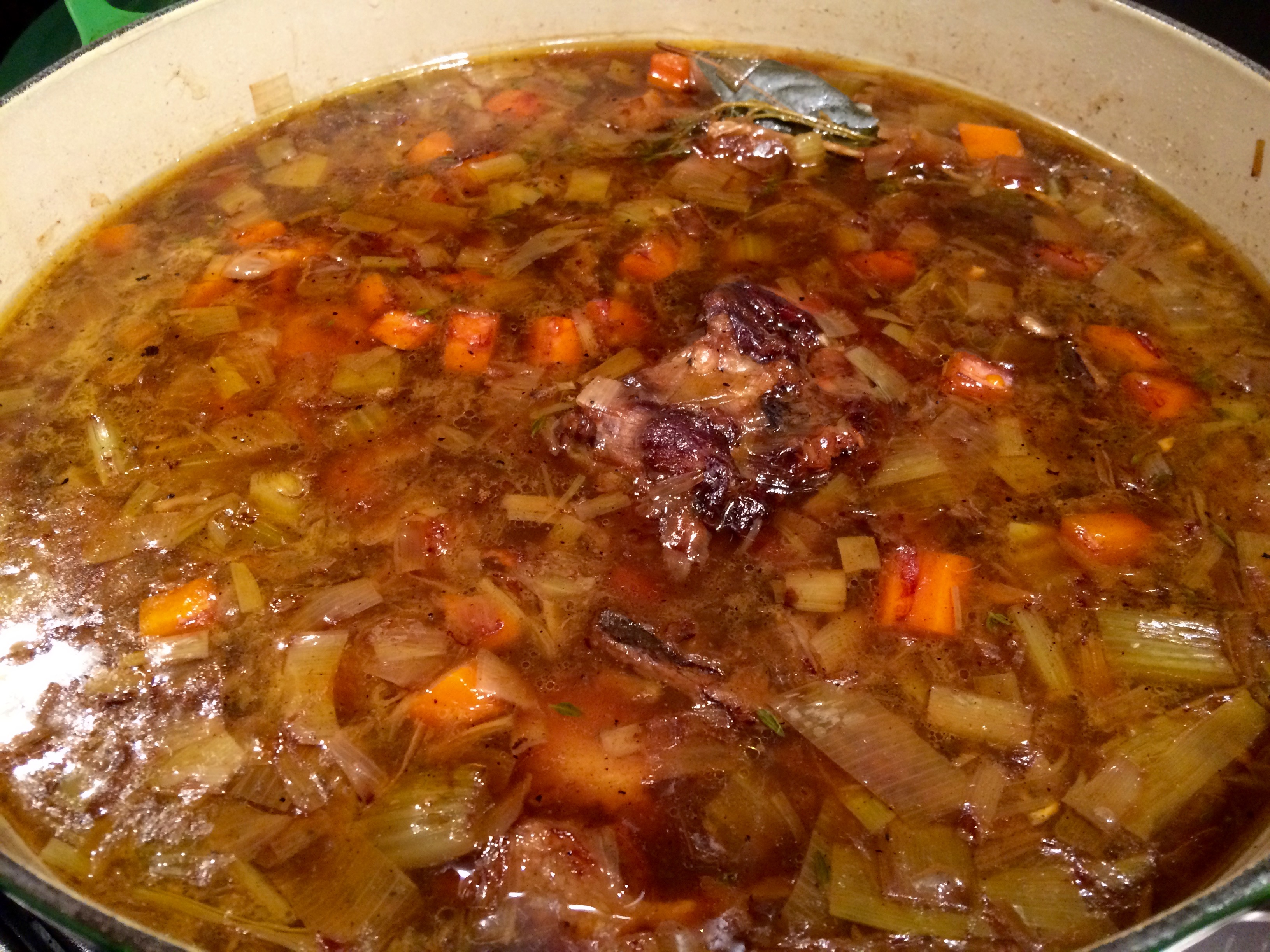
Oxtails returned to the soup

Meanwhile, bring 4 cups of water to a boil and add the barley. Simmer uncovered for 30 minutes, drain, and set aside.

When the soup is ready, add the barley and cook the soup for another 15 or 20 minutes, until the barley is tender. Depending on the saltiness of the stock, the soup might need another teaspoon of salt and some pepper.

The finished soup
The finished, skimmed soup

Serve the soup hot together with the oxtails in heated bowls.

Wine Pairing: Zinfandel

Pasta with Cauliflower

img_7163sm

Recently, my brother called me to ask for my mother’s recipe for cauliflower in tomato sauce. It’s one of the dishes we had as kids that came from the Sicilian side of our family. More often than not it was served on its own, without pasta, as a primo, or first course. However, once I a while my mother would mix it with pasta most likely to satisfy my father who wanted pasta almost on a daily basis.

The dish calls for just a few ingredients and requires minimal preparation, which makes it perfect for a weeknight meal.

Pasta with Cauliflower

img_7142sm

Ingredients
1 small onion, sliced thin
2 tablespoons extra-virgin olive oil
Kosher salt
¼ teaspoon ground cloves (optional)
1 small head of cauliflower, rinsed and cut into small florets
1 28-ounce can San Marzano whole tomatoes, crushed, with their juices
Freshly ground black pepper
1 pound pasta like farfalle, shells, orecchiette
½ cup grated Romano or Parmigiano
6 leaves basil, torn

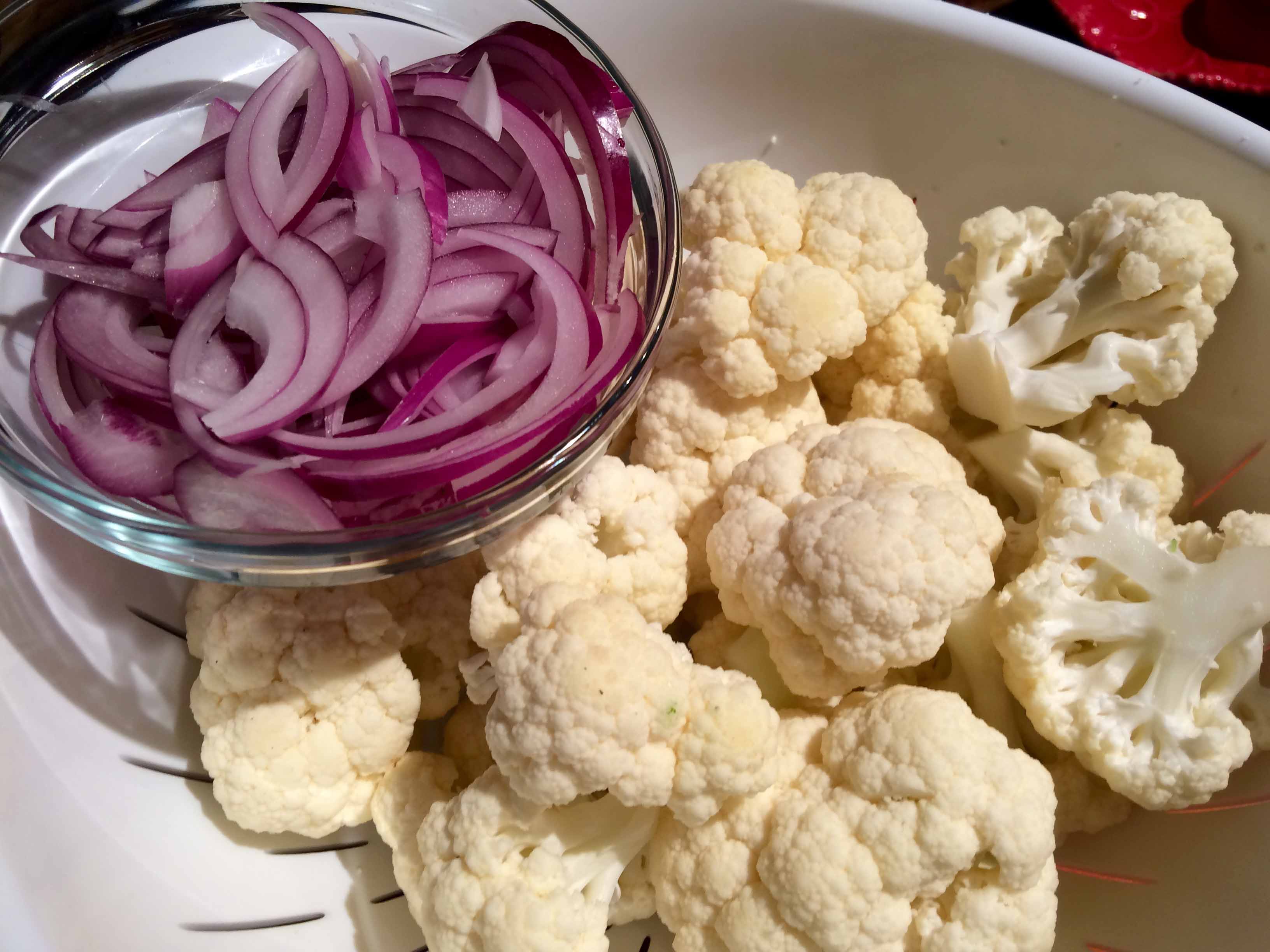
Prepped cauliflower and onions

In a heavy-bottomed 3 to 4 quart (preferably enameled cast-iron) casserole, over medium heat sauté the onion with a pinch of salt in the oil until translucent and just lightly colored. As the onions are sautéing you may add the optional ground cloves.

img_7146sm

When the onions are done, add the tomatoes and their juices and season with salt and pepper. Continue to cook over medium heat until the tomatoes come to a simmer.

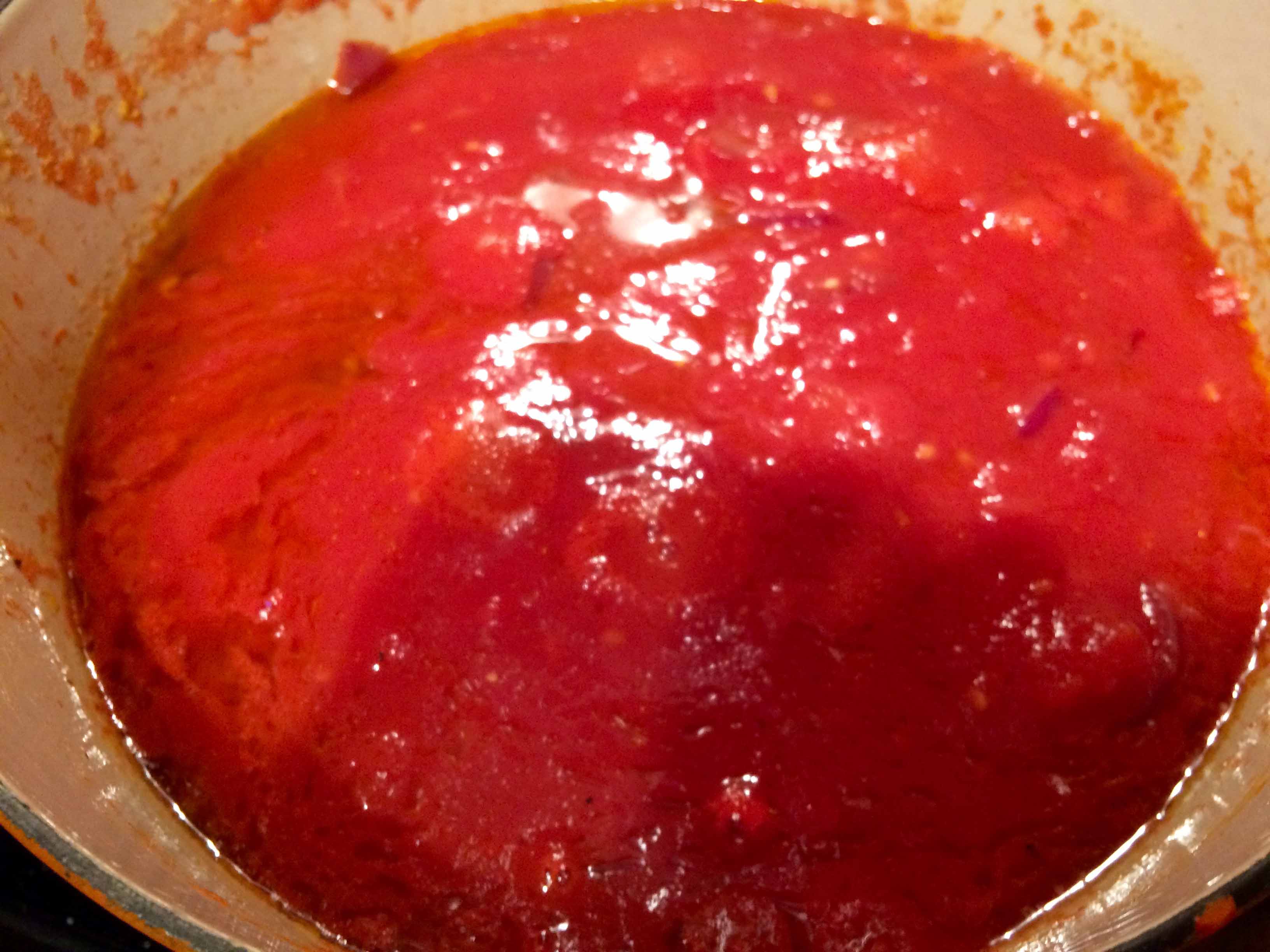
Simmered tomatoes
Simmered tomatoes

At this point, add the cauliflower, gently pushing down on them so that they are lightly covered with the tomatoes. If there is not enough sauce to cover the cauliflower add a little water.

After adding cauliflower to the sauce

Reduce the flame to low, cover the pot, and continue to cook , stirring occasionally, for about 40 minutes or until the cauliflower is tender.

Cooked Cauliflower
Cooked Cauliflower

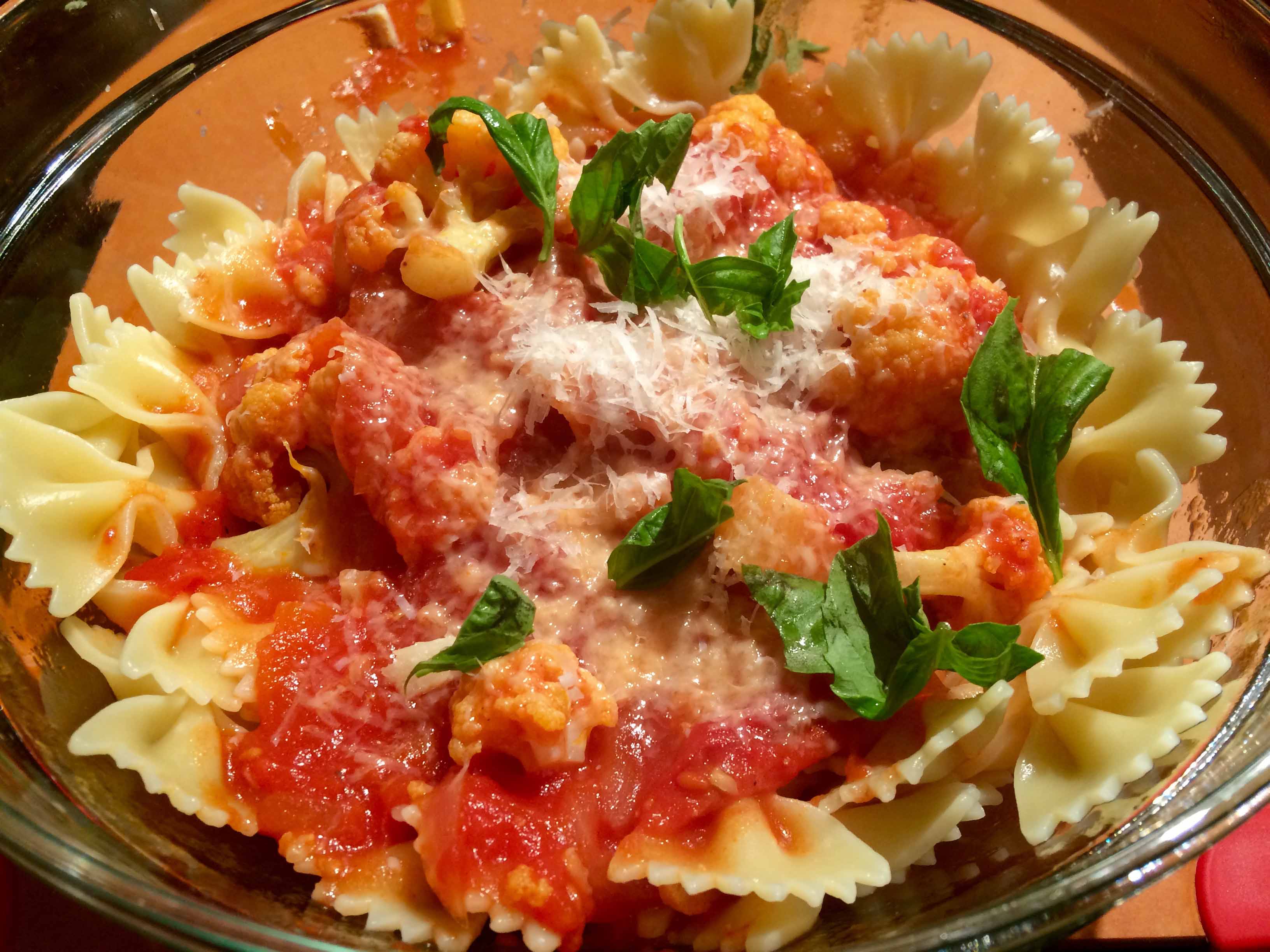
Meanwhile,cook the pasta until al dente. Then drain well and transfer to a large bowl. Add the cooked cauliflower, grated cheese, torn basil, and toss.

Cauliflower with Pasta

Wine Pairing: Nero d’Avola

Roasted Chicken Provencal

img_7110

Saw this 70s-style recipe for roasted chicken Provencal yesterday on the NY Times “Cooking” site and driven by memories of my first encounter with the classic mix of herbs had to make it. Here’s a link to the recipe.

I chose to drizzle the chicken with some olive oil before roasting and since neither the chicken nor the shallots had taken on much color, finished the dish under the broiler.

Wine Pairing: Cotes de Provence Rose

Chicken Paprikash

img_7094sm

A few weeks ago, I was reminiscing with some friends about our days as graduate students at Columbia in the early 70s.   After talking about friends, teachers, and seminars, it didn’t take us long before we started to recall some of our  favorite bars and restaurants near campus: the West End for drinks and burgers, The Symposium for Greek food, V & T’s for Italian and pizza, and The Green Tree for Hungarian.

The last of these was perhaps my favorite, for it served large portions at reasonable prices. At The Green Tree, I always ordered the same thing: chicken paprikash, which was served with a generous side of small Hungarian dumplings called nokedli. This was pure comfort food, especially during the winter.

Since our get-together, I’ve had a hankering for chicken paprikash and have made it a couple of times following recipes I’ve found on the Internet. (My copy of George Lang’s The Cuisine of Hungary having been lost to a flood after hurricane Sandy.)

My most recent attempt at this dish combined several recipes and came close to recreating the dish I enjoyed more than 40 years ago.

Chicken Paprikash

Ingredients

Ingredients
Ingredients

2 tablespoons extra-virgin olive oil
2 tablespoons butter
4 bone-in, skin-on (preferably Kosher) dark-meat chicken quarters (about 3 pounds)
Salt
Freshly ground back pepper
2 large onions, finely chopped
1 green cubanelle pepper, finely chopped
3 garlic cloves, minced
3 heaping tablespoons sweet Hungarian paprika
1 1/2 tablespoons all-purpose flour
1 3/4 cups chicken stock
1 large beefsteak tomato, peeled and chopped
1/2 cup sour cream
Thick egg noodles

Directions

Trim any excess skin and fat from the chicken, pat dry with paper towels, and season with salt and pepper.

In an enameled cast iron Dutch oven, over medium-high heat, heat the oil and the butter.

When hot, add the chicken skin-side down and cook each side until nicely browned, about 6 minutes a side.

img_7051sm

Remove the chicken from the pot and remove some of the excess fat from the pan.

Add onions scraping any browned bits from the bottom of the pan, and over medium heat cook the onions covered for 5 to 7 minutes. Make sure that the onions do not brown.

Then add the chopped pepper, cover and cook for an additional 5 minutes, stirring once to avoid browning. Finally add the garlic and cook covered for another 2 minutes, again making sure not to brown the vegetables.

Adding garlic to onions and peppers

Add the paprika and the flour and cook stirring for 1 minute until the spice becomes fragrant.

Toasting the paprika

Add the broth, whisking until smooth, and then add the chopped tomato. Bring to a boil over high heat.

Adding the tomatoes
Adding the tomatoes

Return the chicken skin side up in a single layer, along with any accumulated juices, to the pot and reduce the heat to medium.

Cover and cook until the chicken is fully cooked, about 20 to 25 minutes.

The cooked chicken
The cooked chicken

Meanwhile, cook the egg noodles following package directions.

Remove the chicken from the pan and, if necessary, cook the sauce over medium high heat to reduce liquid and thicken the sauce. About 3 minutes.

Off the heat, stir the sour cream into the sauce.

Adding the sour cream
The finished suave
The finished sauce

On plates, arrange the noodles and chicken and generously ladle the sauce over them.

Some of the recipes I consulted were Martha Stewart’s Chicken Paprikash, Rachael Ray’s Hungarian Paprikash, and one from We The Eaters. Ray’s use of brined chicken led me to select Kosher chicken for this dish and several Internet recipes, like the one form the We the Eaters website, influenced by use of the cubanelle pepper.

Wine Pairing: Merlot