In this post Julia Child era of cookbooks penned by celebrity chefs or celebrities posing as chefs, it’s heartening to return to books researched and written by cooks whom I regard as culinary scholars–writers who took up the gauntlet from Julia, writers like Paula Wolfert, Nancy Harmon Jenkins, Fred Plotkin, and Lynne Rossetto Kasper, the source for today’s recipe. If you’re thinking that “scholarly” means “dry and dull,” just pick up one of these authors’ books and you’ll find just the opposite.
Ever have unexpected guests show up for dinner? Such was the case when my husband failed to tell me he had invited some friends to dinner. “It was a casual invitation,” he said. “I didn’t think they had accepted.”
We had just gotten back from doing errands on Saturday when the call came and Andrew’s friend said he and his wife would be arriving at 7. “Great,” Andrew stammered. “Looking forward to seeing you.” That gave me, who wasn’t looking so forward, about two and a half hours to get dinner ready. Read more
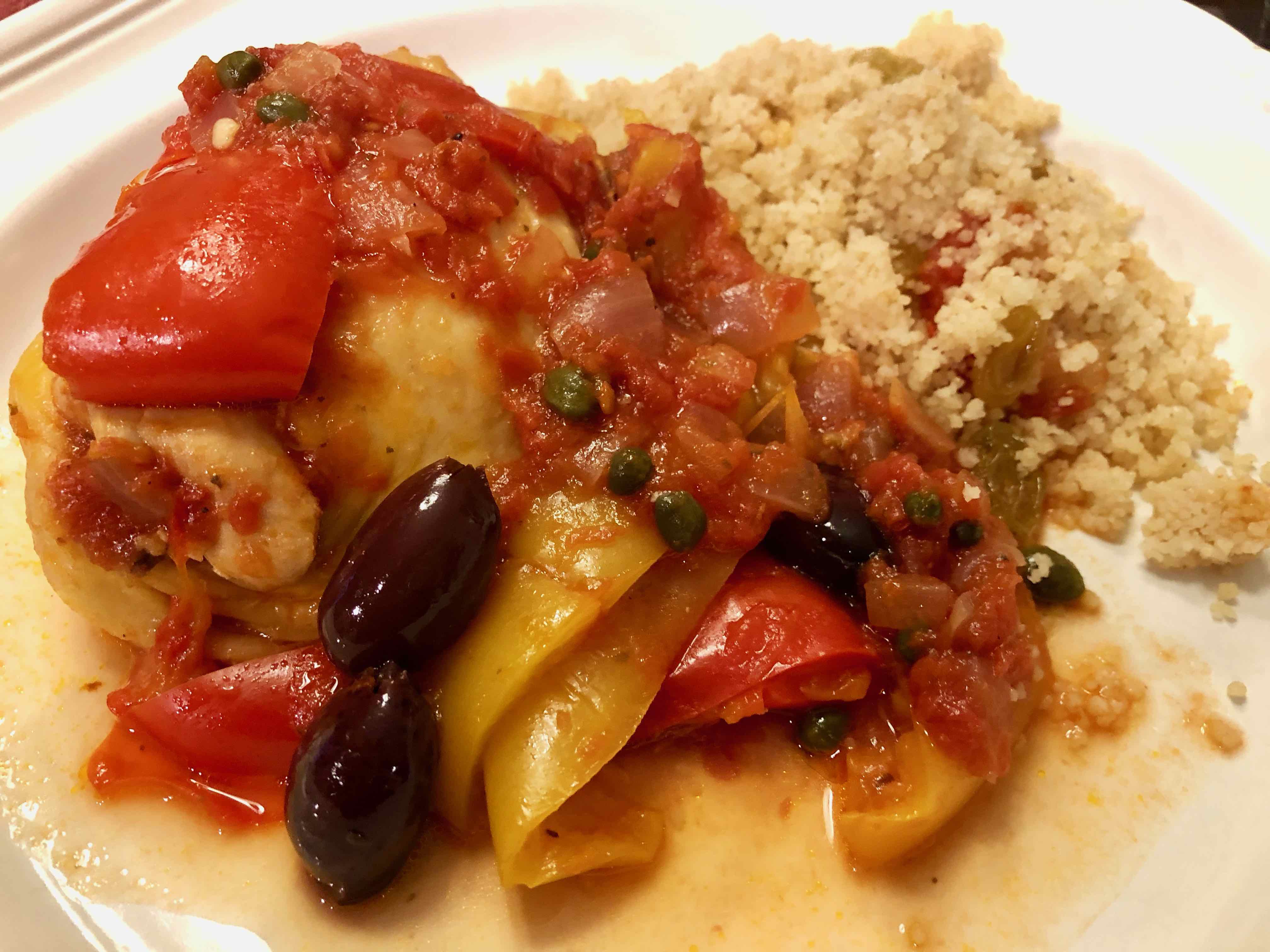
An old favorite found its way to our table this weekend, Chicken Thighs, with Saffron, Green Olives and Mint. I had forgotten how good this dish is with its sweet and savory onions, tangy olives, and whiffs of saffron and fresh mint. The long cooking time, actually a braise, renders chicken thighs with meat that falls of the bone and a rich sauce just waiting to be sopped up by couscous. The saffron and mint lead me to believe the origins of the dish are Sicilian, or perhaps even Moroccan.
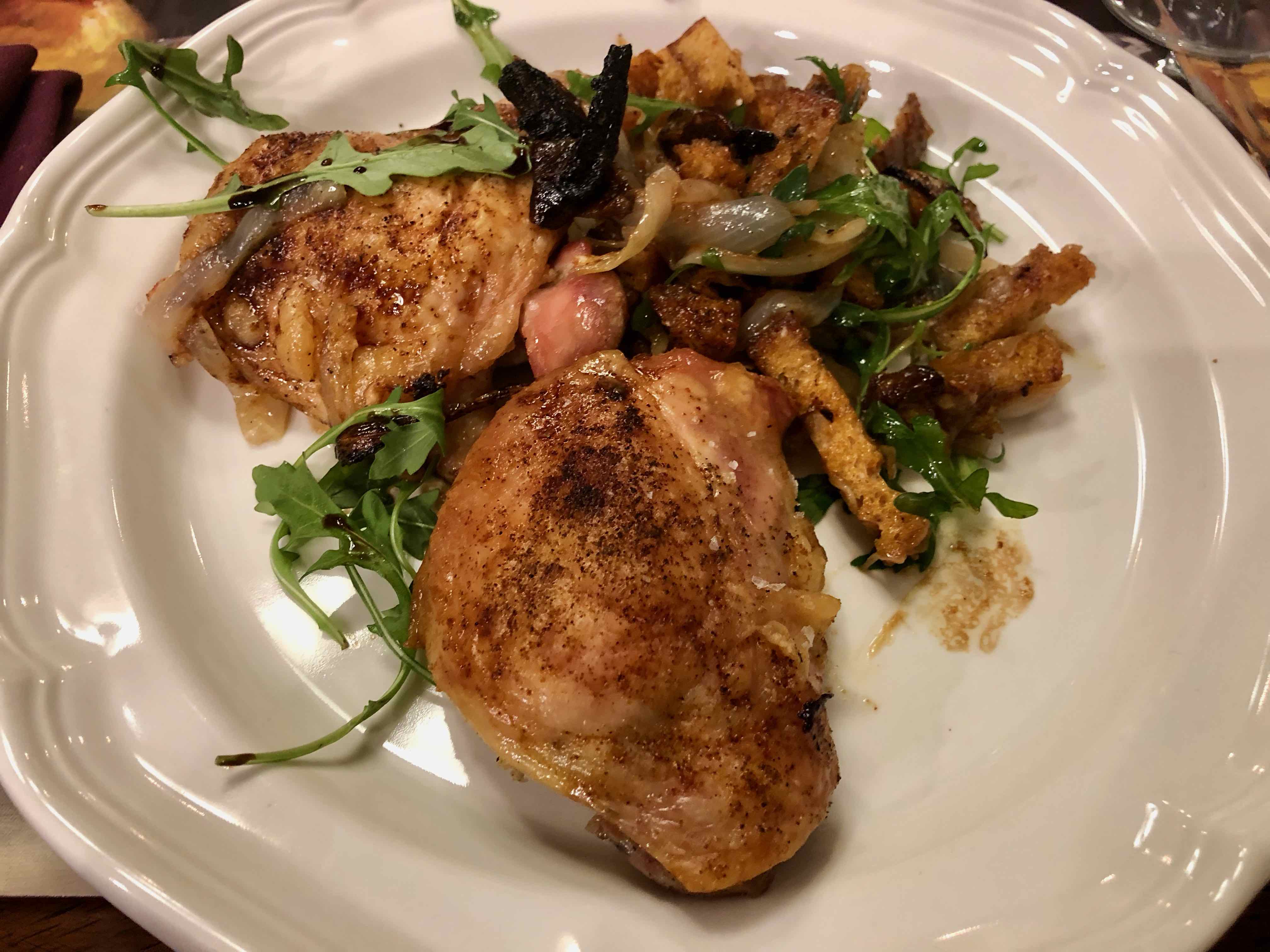
You can find at least half a dozen recipes for chicken cacciatora or cacciatore on this blog; it’s truly one of my go-to comfort dishes. Unfortunately, as with most fricassee dishes, the required step of browning the chicken wreaks havoc on the stove top. However, my recent experiments with roasted chicken thighs prepared from one of Sam Sifton’s “You Don’t Need a Recipe” columns on the New York Times “Cooking” website led me to develop a version of cacciatora that eliminates the mess and has plenty of flavor. Moreover, because it doesn’t require separately cooking the vegetables, it takes less time. Read more
Sick Days. We all have them now and then; however, I must admit that, fortunately, mine are far and few between. But last week I had one of those days, when waking up without a voice was followed by a day of coughing and sneezing. Yuck!
Nevertheless, dinner had to get on the table and it’s my job to get it there. Sure, I could have accepted my better half’s offer to get take out or order in, but I find that my own cooking, no matter how simple, does a better job of putting me on the road to recovery.
Today’s post is pretty much a repeat of one I did four years ago. It wasn’t until we sat down to supper that my husband asked if we hadn’t had this dish before. Well, I checked after dinner and, sure enough, he was right. There was, however, one major difference. The first time I prepared the dish, I used chicken thighs; last night, I used a whole chicken cut into 10 pieces as suggested by the recipe.
Say “chicken cacciatore” to most people and, more than likely, it will conjure up an image of sautéed chicken pieces simmered in tomato sauce along with vegetables like peppers, onions, mushrooms, etc. Until the other day I was among those people. In fact, I’ve posted several recipes for the dish on this blog.
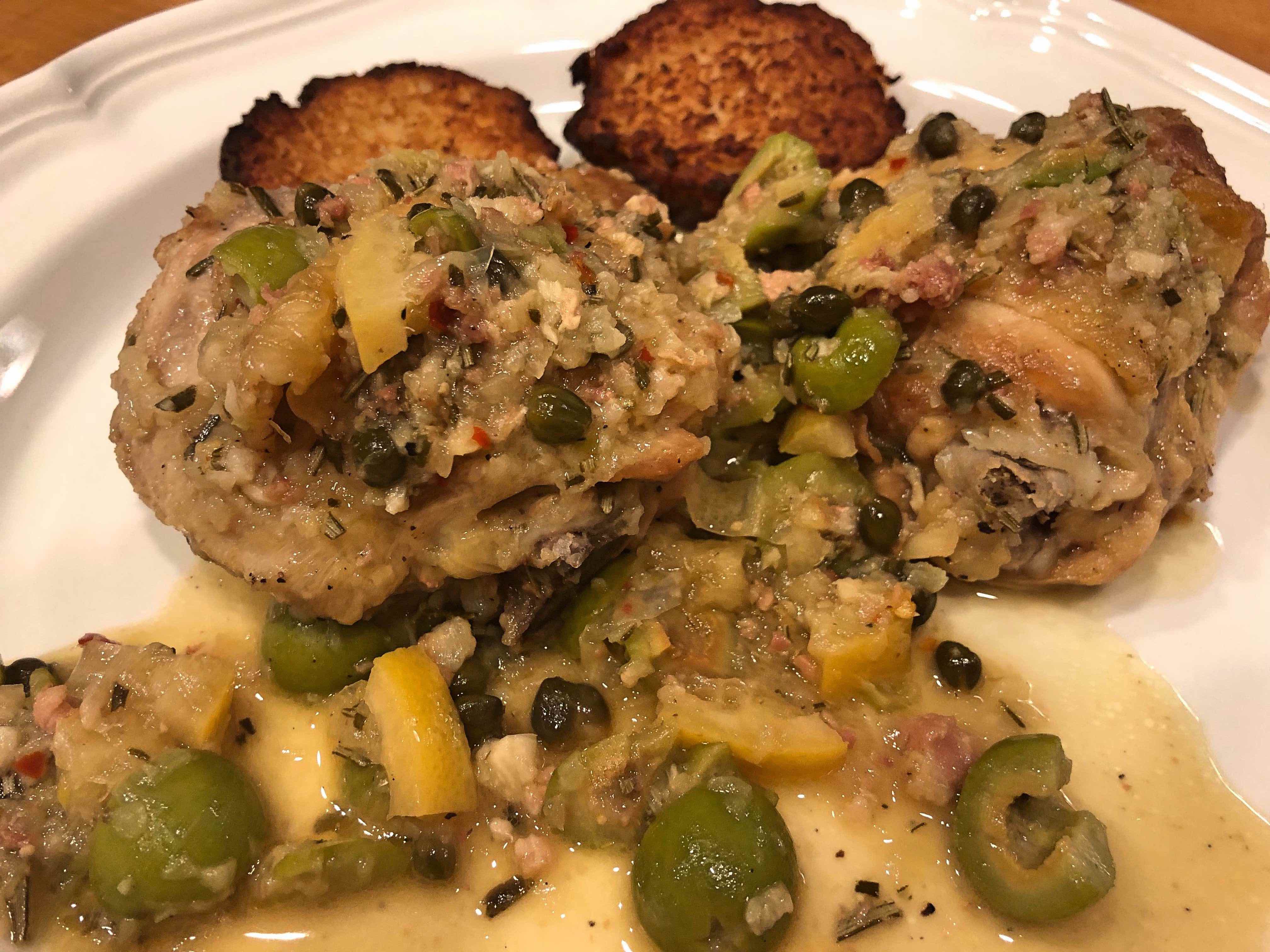
Yesterday, however, I came across a recipe in Italian Country Cooking by Loukie Werle for an Umbrian-style version of the dish that has neither tomatoes nor peppers but in their place uses olives, capers, and pea-sized cubes of lemon. Its sauce starts with a savory and aromatic soffritto of minced pancetta, onion, rosemary, and garlic and then finishes with white wine, vinegar, capers, lemon and chili flakes.
I love it when friends and family pass along recipes that they’ve read about and think of me. Sometimes, however, they may over estimate my culinary capabilities and propose dishes that are far beyond my skills and sometimes even my budget.
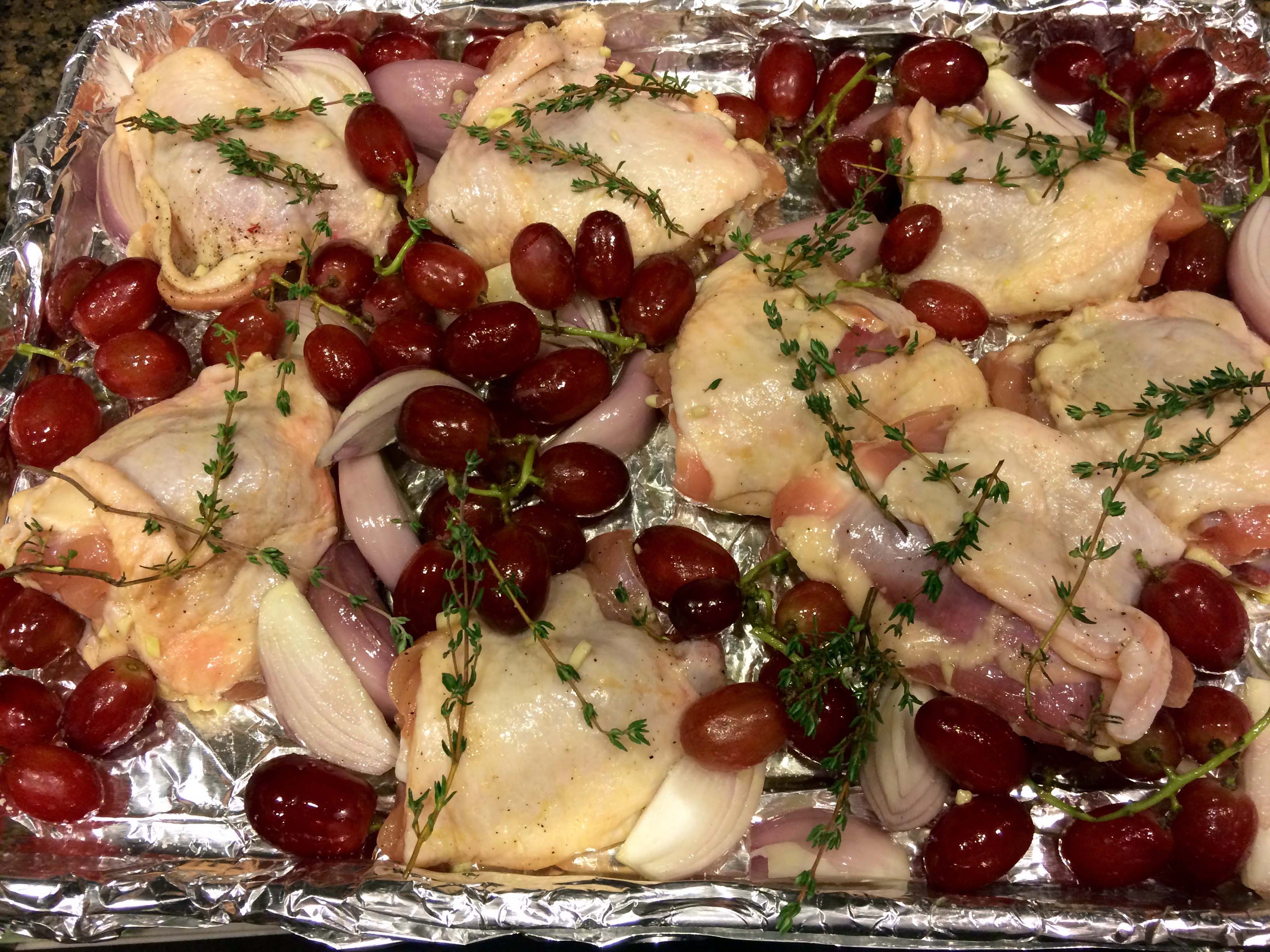
But recently a close friend from back home sent me a link to a New York Timesrecipe for sheet-pan chicken thighs with shallots and grapes. When I first saw the recipe’s photo, I thought I had already made it, but soon realized that I had only made a similar sheet-pan supper but with sausages.
This is an easy recipe and perfect for a mid-week dinner. The flavors of the shallots and grapes blend beautifully and provide the perfect complement to the crispy chicken.
Unfortunately, I was unable to find the za’atar, a Middle Eastern spice mix, which I think would have added more complexity to the dish. I also found the recipe’s cooking time a tad too short to render the chicken as brown and crispy as I like it. I cooked mine for about 40 to 45 minutes, followed by two to three additional minutes under the broiler.
Finally, don’t forget the recommended flaked salt for serving. It adds a lot to the final dish.
Ingredients
Ingredients
2 ½ to 3 pounds bone-in, skin-on chicken thighs, patted dry
3 tablespoons olive oil
2 garlic cloves, finely chopped
1 tablespoon za’atar (optional)
Kosher salt and black pepper
6 medium to large shallots, peeled and quartered root to stem
8 ounces seedless red or green grapes, or a combination of both, broken into small clusters on the vine
4 to 5 sprigs thyme, plus 2 teaspoons finely chopped thyme
Flaky salt, for serving
Preparation
Heat the oven to 425 degrees. In a large bowl, toss together the chicken with 1 tablespoon olive oil, garlic and za’atar, if using. Season well with salt and pepper.
Place the shallots and the grapes on the sheet pan and gently toss with the remaining olive oil and season well with salt.
Oiled grapes and shallots
Nestle the chicken skin side up in between the shallots and grapes and lay the thyme sprigs on top of the mixture.
Nestled chicken thighs
Roast for 25 to 30 minutes until the chicken is cooked through and the shallots and grapes begin to soften and caramelize around the edges of the pan.
Turn the oven to broil and move the oven rack to sit right below it. Remove and discard the thyme sprigs and broil the chicken for 1 to 2 minutes until the skin of the chicken is crispy and golden. Scatter with chopped thyme and season with flaky salt.
Sometimes a recipe doesn’t turn out the way you had hoped, and I guess that’s OK—especially if the final dish is, despite its faults, delicious.
Such was the case last night when I prepared a recipe from Marcella Hazan’s second cookbook More Classic Italian Cooking. This is the same volume that introduced us to one of her most famous recipes, Pollo al Limone, Roast Chicken with Lemon, which uses only two ingredients, a young chicken and two lemons, along with salt and freshly ground black pepper, to yields one of the best roast chickens I’ve ever made.
Perhaps because of my success with this dish, I chose the recipe for today’s post: Pollo in Tegame al Limone, Pan Roasted Chicken with Lemon Juice. It’s a little more involved than her roast chicken recipe and uses a few more ingredients. But what immediately caught my eye and led me to make it was that it called for browning the chicken without using any fat. After being washed under cold running water but not dried, the chicken pieces are placed in a skillet without any oil to brown. “The moisture clinging to the washed chicken pieces and their own fat,” says Marcella, “will suffice.” I simply had to see if this would work.
She does warn you to watch the chicken pieces and “turn them before they stick.” Yet even though I followed these directions and hovered over the pan like a mother hen, my chicken only attained just a tinge of brown. And maybe this is what was called for, since even if the chicken had browned normally, the skin would never have been crisp as the dish is cooked covered for 40 to 45 minutes. In fact, the recipe does specifically call for “lightly browning” the chicken.
Moreover, both in appearance and in flavor, this dish reminded me of one of my favorite dishes from the Roman trattoria Da Gino, coniglio al vino bianco, rabbit in white wine. The meat was wonderfully moist, tender, and flavorsome. But alas the skin was disappointingly slimy or rubbery. Perhaps I should have served the chicken without the skin.
Eventually I’ll make this dish again, but with a few tweaks, the first of which will be drying the chicken and browning it with some fat.
Pan-Roasted Chicken with Lemon Juice
Ingredients
2 ½ to 3 pound chicken (I used thighs.)
2 tablespoons vegetable oil
1 tablespoon butter
1 sprig rosemary
3 whole garlic cloves peeled
Salt
Freshly ground black pepper
1/3 cup dry white wine
2 tablespoons freshly squeezed lemon juice
5 or 6 thin julienne strips of lemon peel
Procedure
1- Cut up the chicken into 6 or 8 pieces, and wash these under cold running water. Do not dry them.
Washed Chicken
Put the chicken pieces skin side down in a sauté pan in which they will fit without overlapping.
Chicken skin-side down
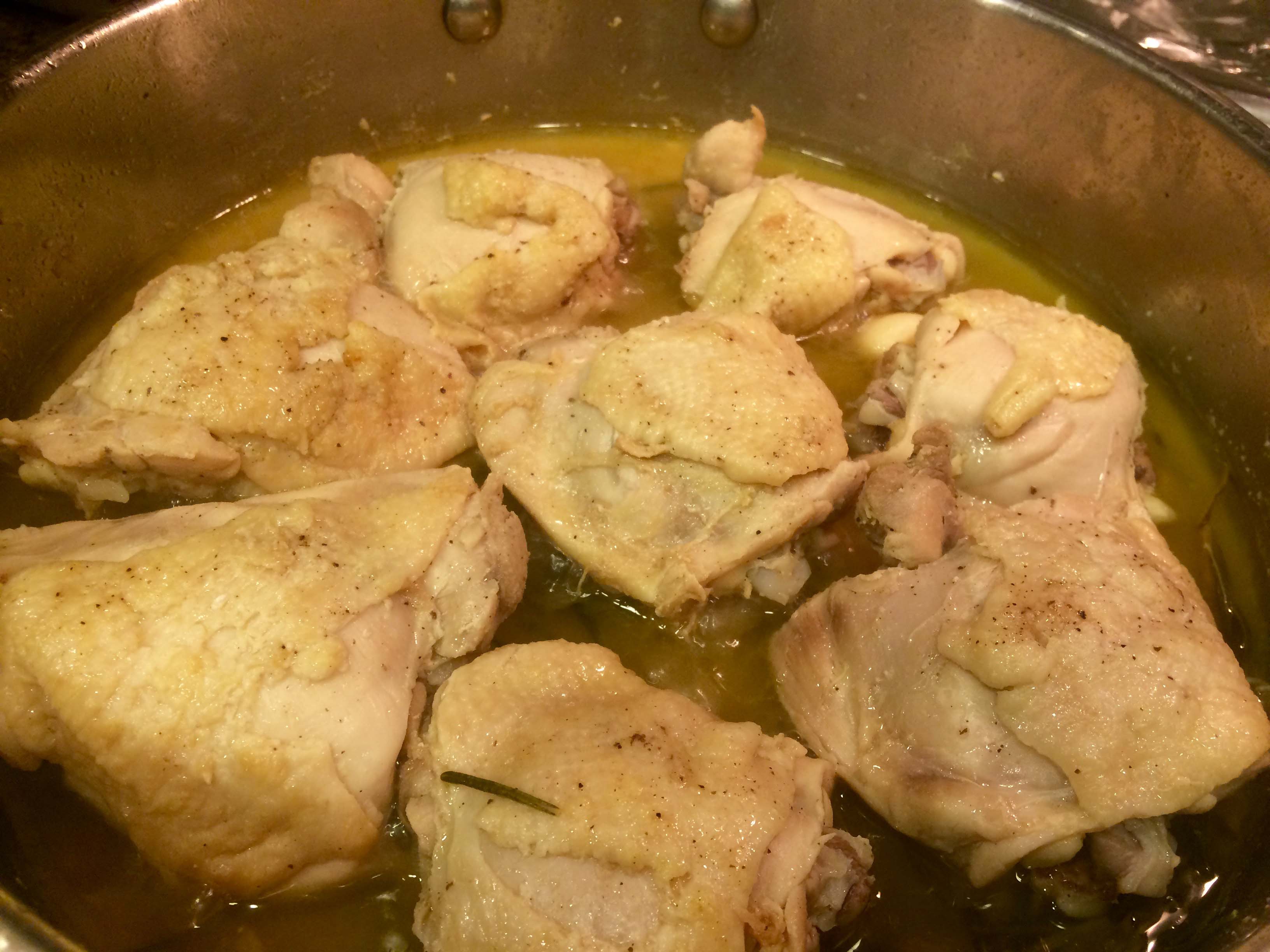
Turn the heat on to medium high, drying and lightly browning the chicken on all sides. No cooking fat is required at this point. The moisture clinging to the moist chicken pieces and their own fat will suffice. You must watch them, however, and turn them before they stick to the pan.
Chicken lightly browned
2-When this chicken is lightly browned on all sides, add the oil, butter, rosemary, garlic, salt, and pepper. Cook for 2 to 3 minutes, turning the chicken pieces over once or twice.
Adding rosemary, garlic, etc.
3-Add the wine, turn the heat up a bit, and let the wine bubble for half a minute or so. Then turn the heat down to medium low, and cover the pan.
Adding wine
Cook until the chicken is tender, testing one of the thighs with a fork. It should take about 40 to 45 minutes.
4-Turn off the heat, and transfer just the chicken pieces to a warm serving platter.
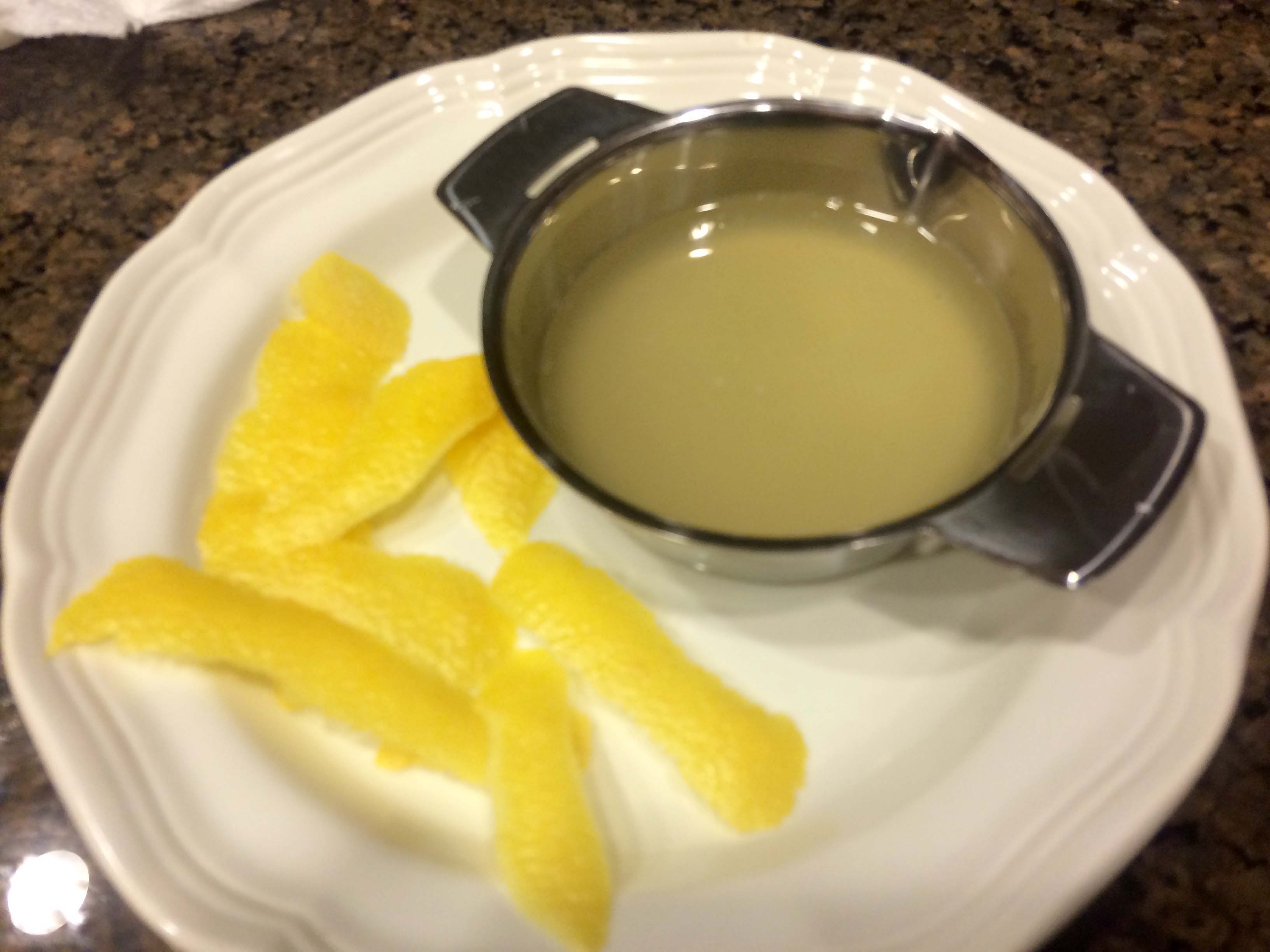
5-Tip the pan, and with a spoon remove all but 2 tablespoons of fat. Add the lemon juice and lemon peel, turn the heat on to medium low, and stir with a wooden spoon, scraping loose any cooking juices that have stuck to the pan.
Lemon juice & peelThe finished sauce
Pour this light sauce over the chicken, and serve at once.
My family was pretty traditional when it came to Italian cooking. Both my mother and my aunt prepared recipes passed down to them by their mothers and took pride in preserving their traditions.
Perhaps because of this adherence to the past, I never had had the ever popular Italian-American Chicken Parm until I was in high school. I remember my first time with it. My friends raved about the dish so much that I simply had to try it. I thought it would be similar to the only other “parm” I knew, namely my aunt’s eggplant parmigiana, with perfectly fried slices of eggplant baked in layers with a light tomato sauce, fresh mozzarella, and Parmigiano Reggiano.
However, when my order of chicken parm appeared, my disappointment with the dish hit me before I even tasted it. The sight and smell of an overly fried and similarly over breaded skinless chicken cutlet drowning in a thick, sweetened tomato sauce and topped with a rubbery piece of “mozz” were, to put it mildly, less than appealing. The taste was not much better. Nevertheless, to fit in with the crowd, I ate most of it and said “Wow, the best chicken parm I ever had.” It was also my last.
Back to the present. Intrigued by a tempting picture of what was called “Chicken Pizza” in a NY Times “What to Cook Now” newsletter, I clicked my way to the recipe by Melissa Clark. My intrigue lessened, however, when I read in her introduction that the dish was “reminiscent of Chicken Parmesan.” Yuck! But that picture was so still tempting.
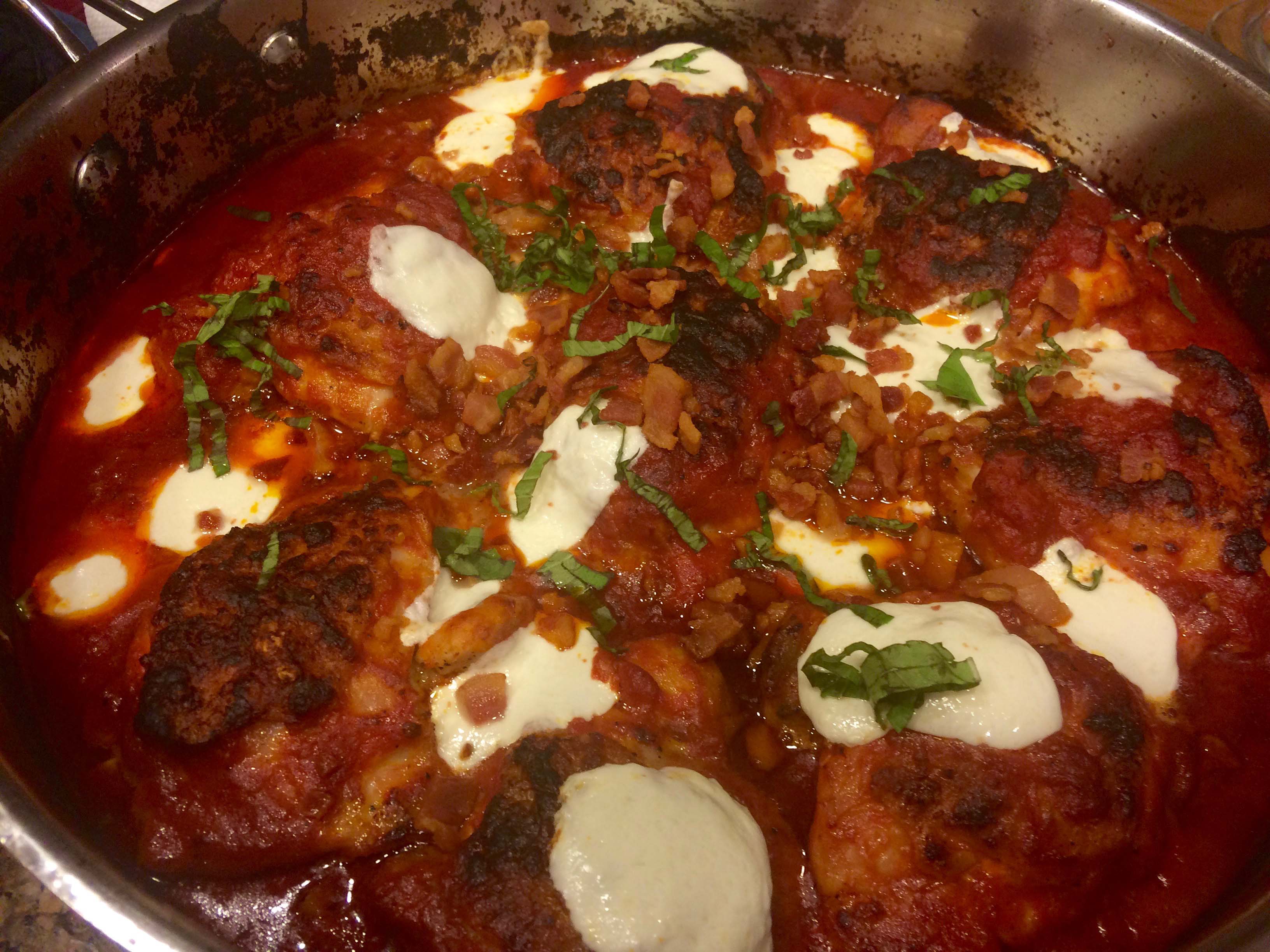
Well last night, I finally made the dish and am happy to report it was a huge success, or as my better half proclaimed “a keeper!” The sauce had layers of flavor from the anchovies and pancetta; the bocconcini, perfectly melted, complemented the sauce; and the chicken thighs were moist and juicy. A far cry from that first chicken parm.
I followed the recipe pretty closely, only adding one extra anchovy, upping the amount of olive oil to 2 tablespoons, and using chopped rather than whole imported Italian tomatoes. I also chose to deglaze the pan with a little white wine after browning the chicken and frying the garlic, anchovies, and red pepper flakes.
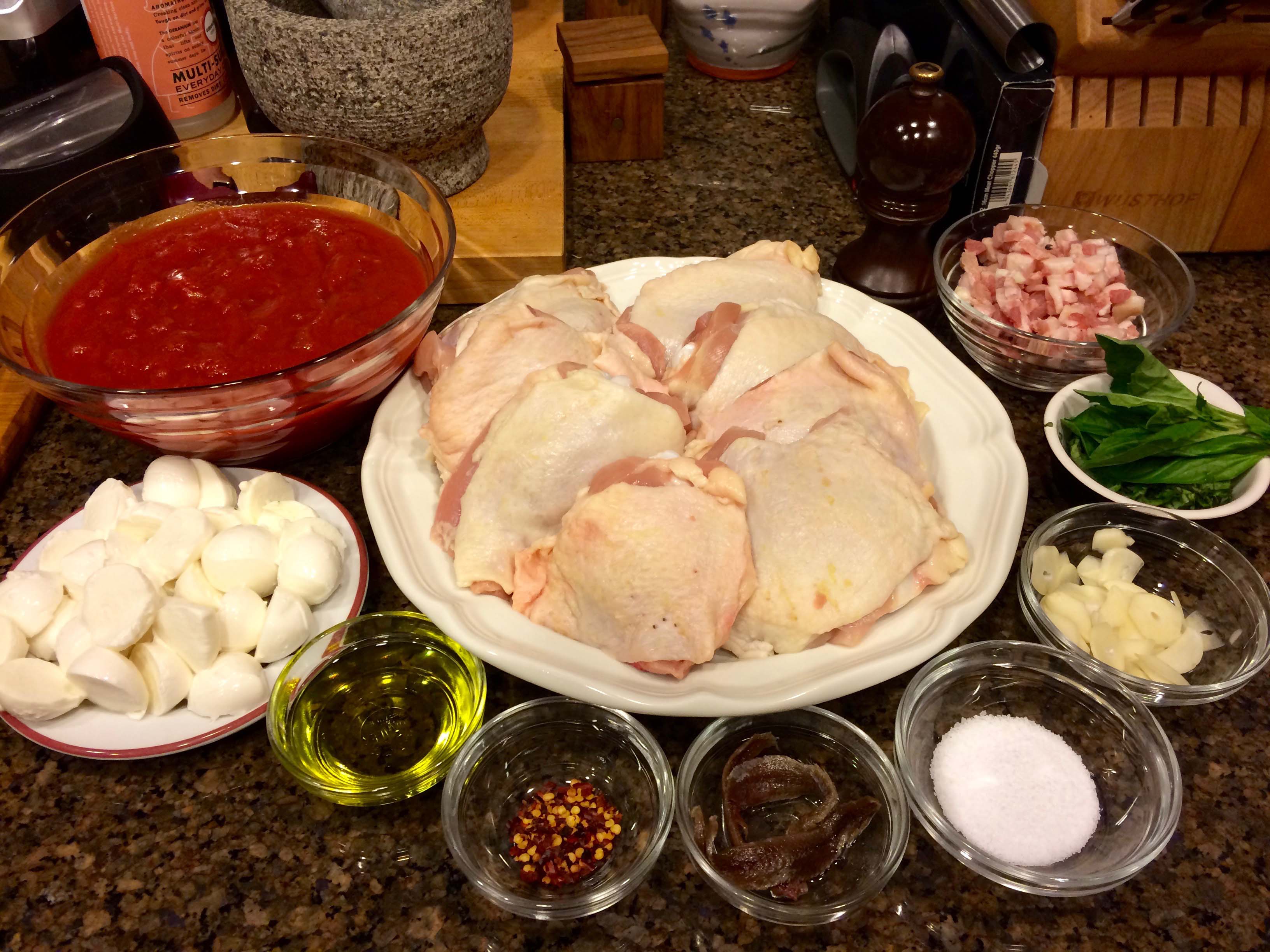
Skillet Chicken With Tomatoes, Pancetta and Mozzarella Ingredients
Ingredients
3 ½ pounds bone-in chicken pieces (or use a 31/2 pound chicken cut into 8 pieces)
2 teaspoons kosher salt
1 teaspoon black pepper
1 tablespoon extra-virgin olive oil (I used 2 tablespoons.)
5 ounces pancetta, diced
3 garlic cloves, thinly sliced
2 anchovy fillets (I used 3 anchovies.)
¼ teaspoon red pepper flakes
1½ ounces dry white wine for deglazing (My addition to the recipe.)
1 (28-ounce) can whole plum tomatoes (I used chopped imported Italian tomatoes.)
1 large basil sprig, plus more chopped basil for serving
8 ounces bocconcini, halved (or use mozzarella cut into 3/4-inch pieces)
Preparation
Heat oven to 400 degrees. Pat chicken dry and season with salt and pepper.
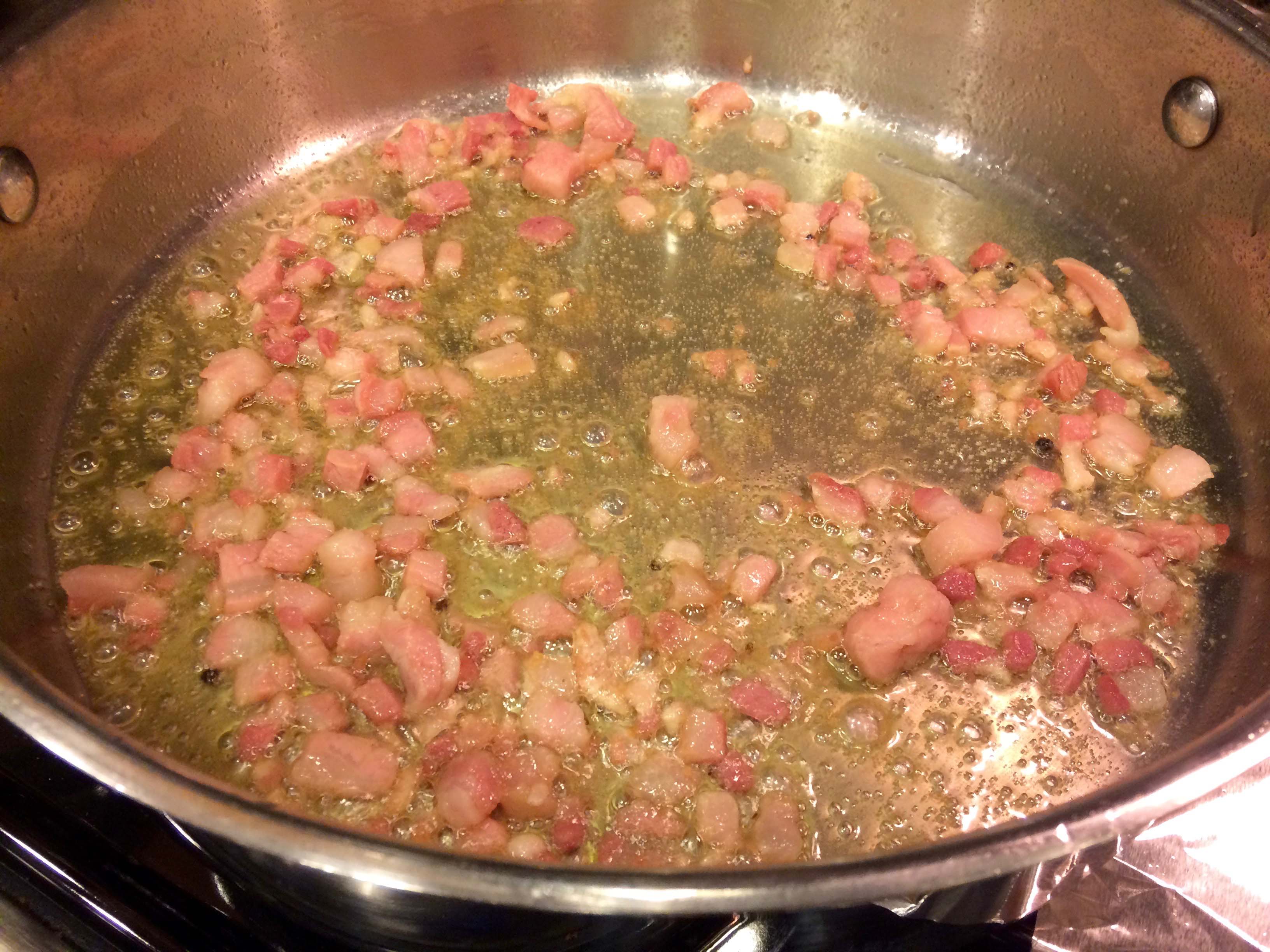
In a large oven-proof skillet, warm oil over medium-high heat. Add pancetta and cook, stirring frequently, until browned.
Browning the pancetta
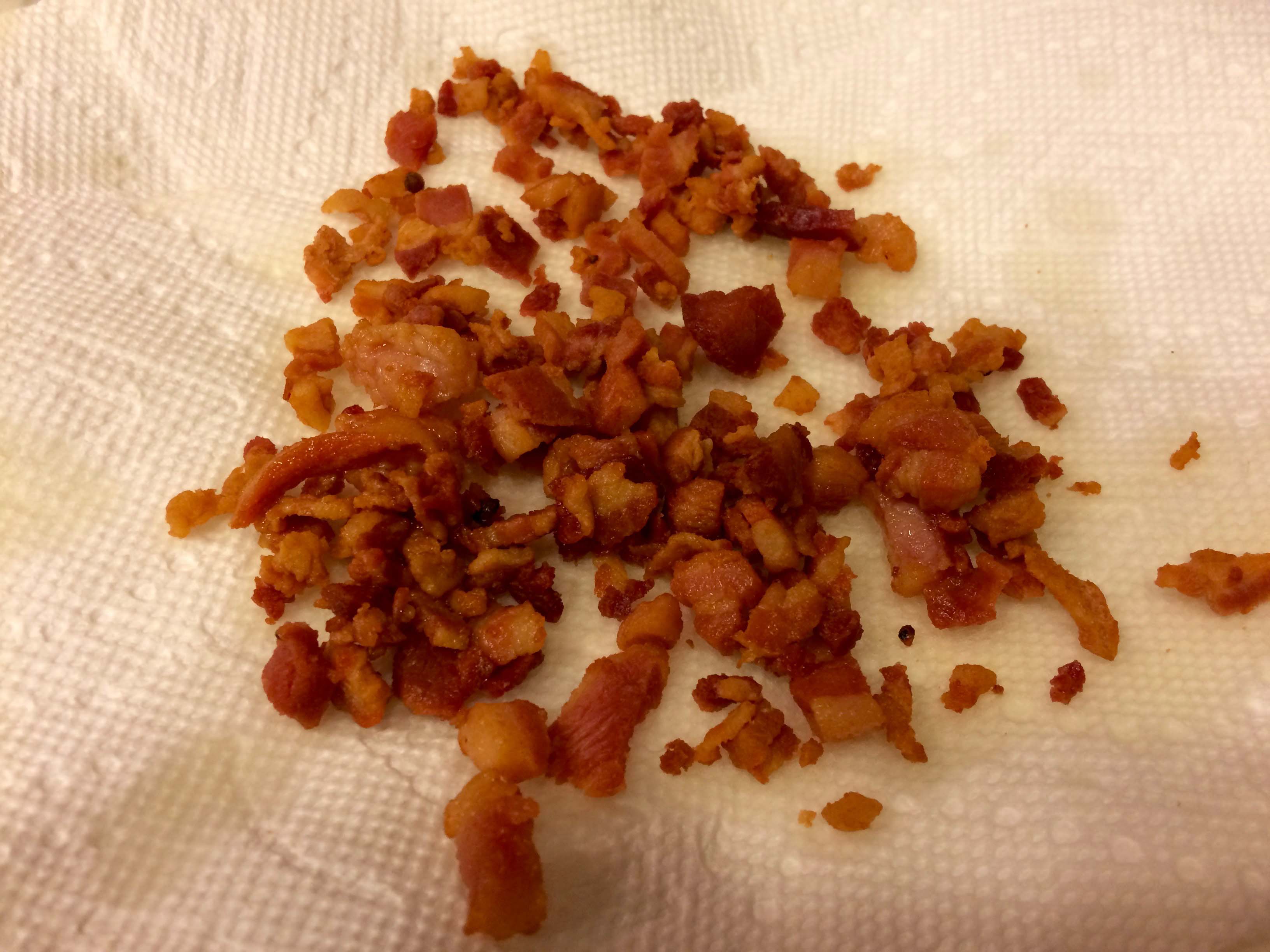
Use a slotted spoon to transfer pancetta to a paper-towel-lined plate.
The browned pancetta
Add chicken to skillet. Sear, turning only occasionally, until well browned on all sides, about 10 minutes. (My chicken took almost 20 minutes to brown.) Transfer to a large plate. Pour off all but 1 tablespoon oil.
The browned chicken
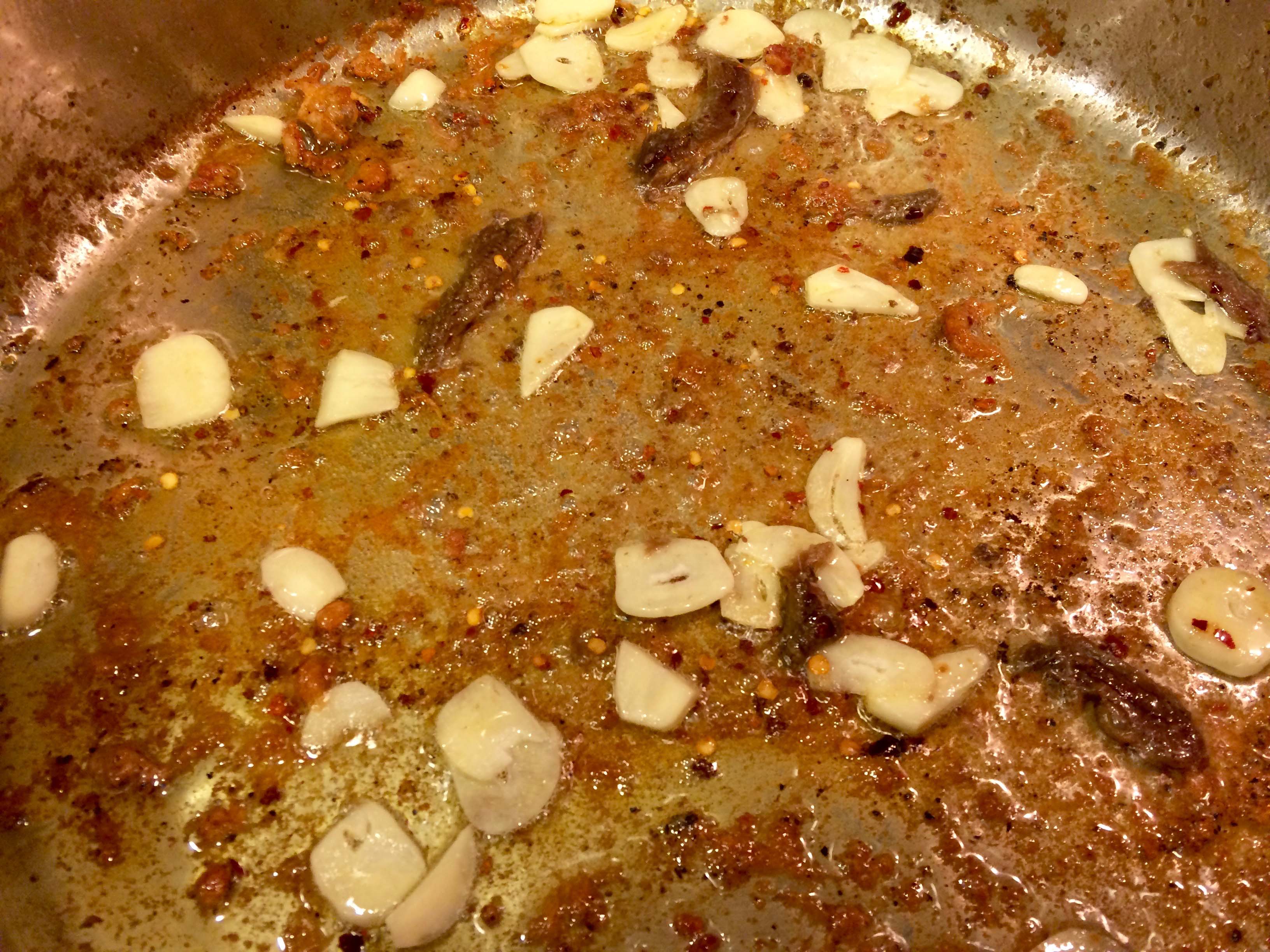
Add garlic, anchovy and red pepper flakes to skillet; fry 1 minute.
Frying garlic, anchovies, and red pepper
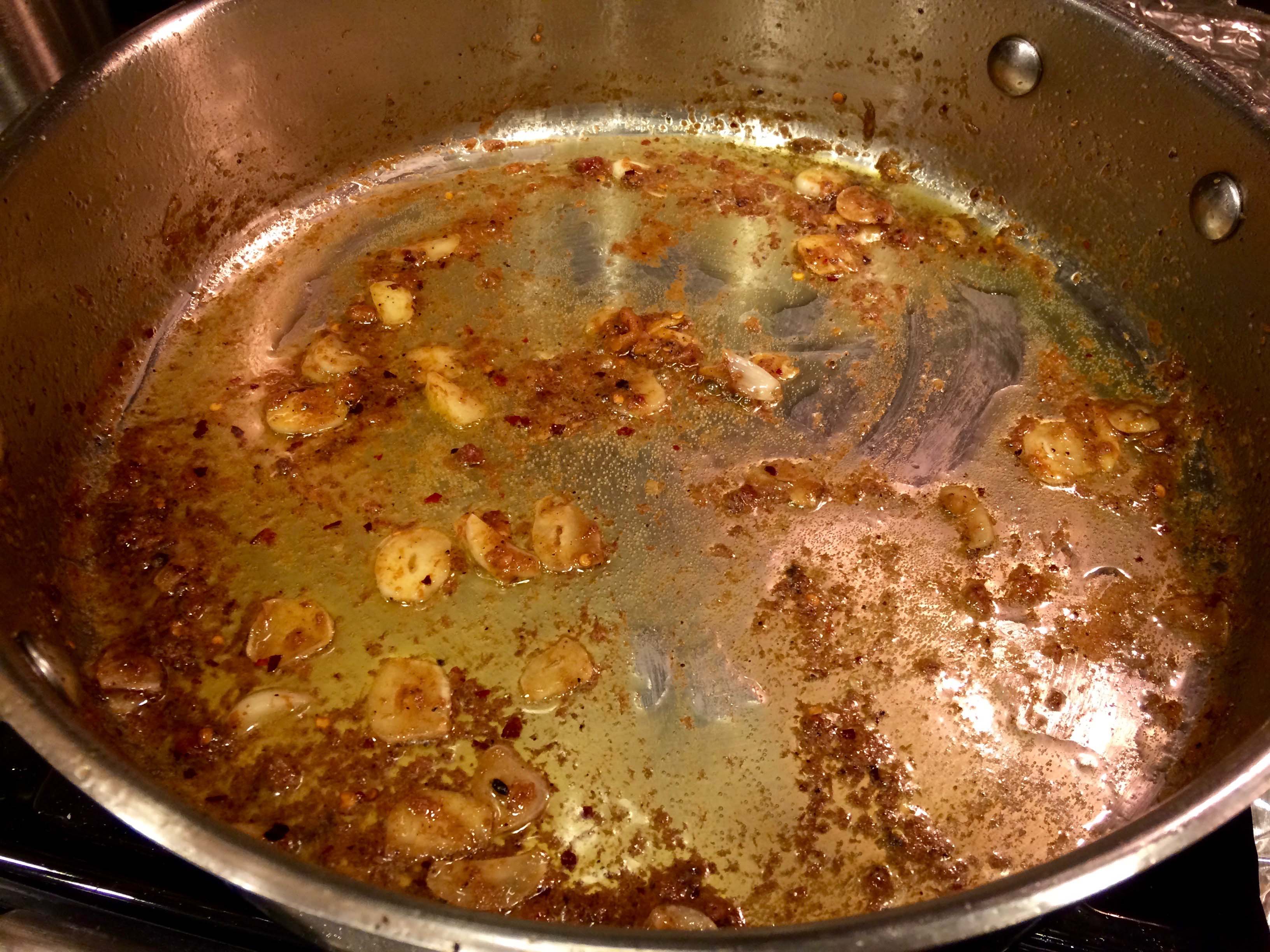
I chose here to deglaze the pan with wine.
Deglazing
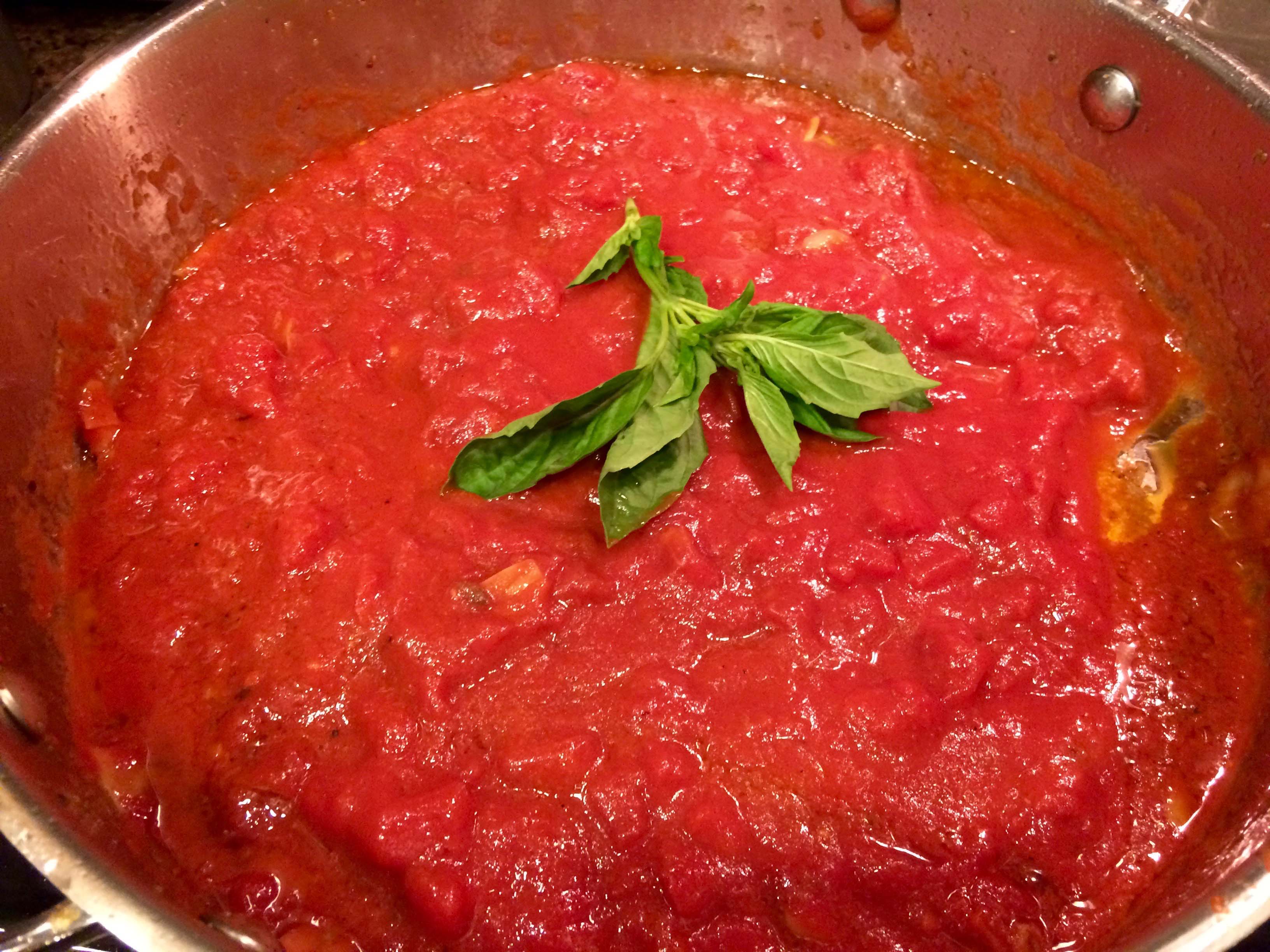
Stir in tomatoes and basil. Cook, breaking up tomatoes with a spatula, until sauce thickens somewhat, about 10 minutes.
Cooking the sauce
Return chicken to skillet. (Turn the pieces in the sauce to coat the chicken. My addition,)
Adding the chicken
Transfer skillet to oven and cook, uncovered, until chicken is no longer pink, about 30 minutes.
The chicken, baked
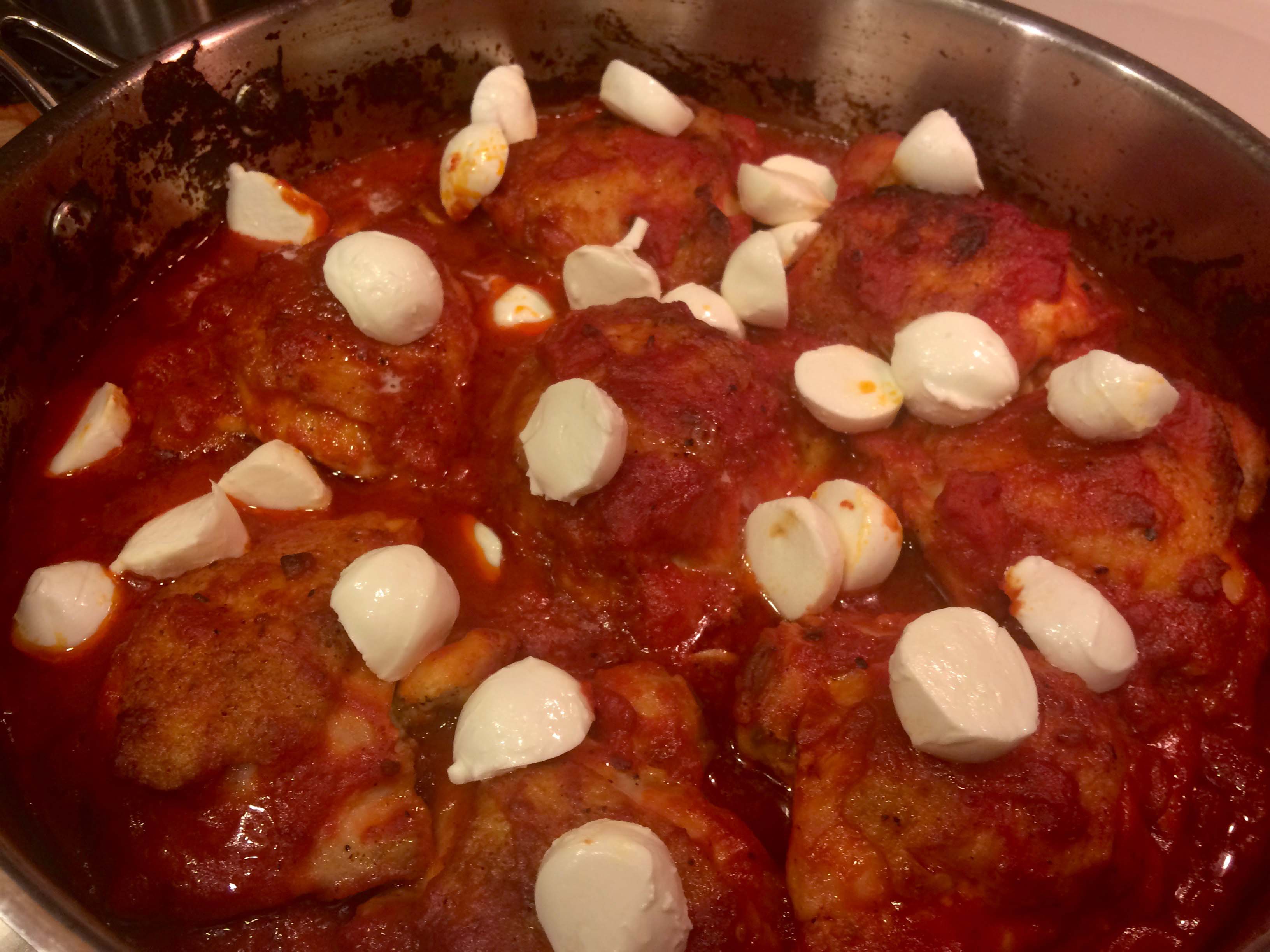
Scatter bocconcini or mozzarella pieces over skillet.
Adding the mozzarella
Adjust oven temperature to broil. Return skillet to oven and broil until cheese is melted and bubbling, 2 to 3 minutes (watch carefully to see that it does not burn). Garnish with pancetta and chopped basil before serving.













 Cooking from Books