Grilled Tuna. . .Again?

tunamarsmall

I know that this is my second posting on grilled tuna in one month’s time. However, the other night I decided to abandon the soy-based marinade from Mark Bittman, which I’ve used for years, for one made with Marsala. While the former marinade yields a meaty-tasting tuna steak, the latter wine-based one is happy to play a supporting role and allow the lush flavor of the tuna to take precedence.

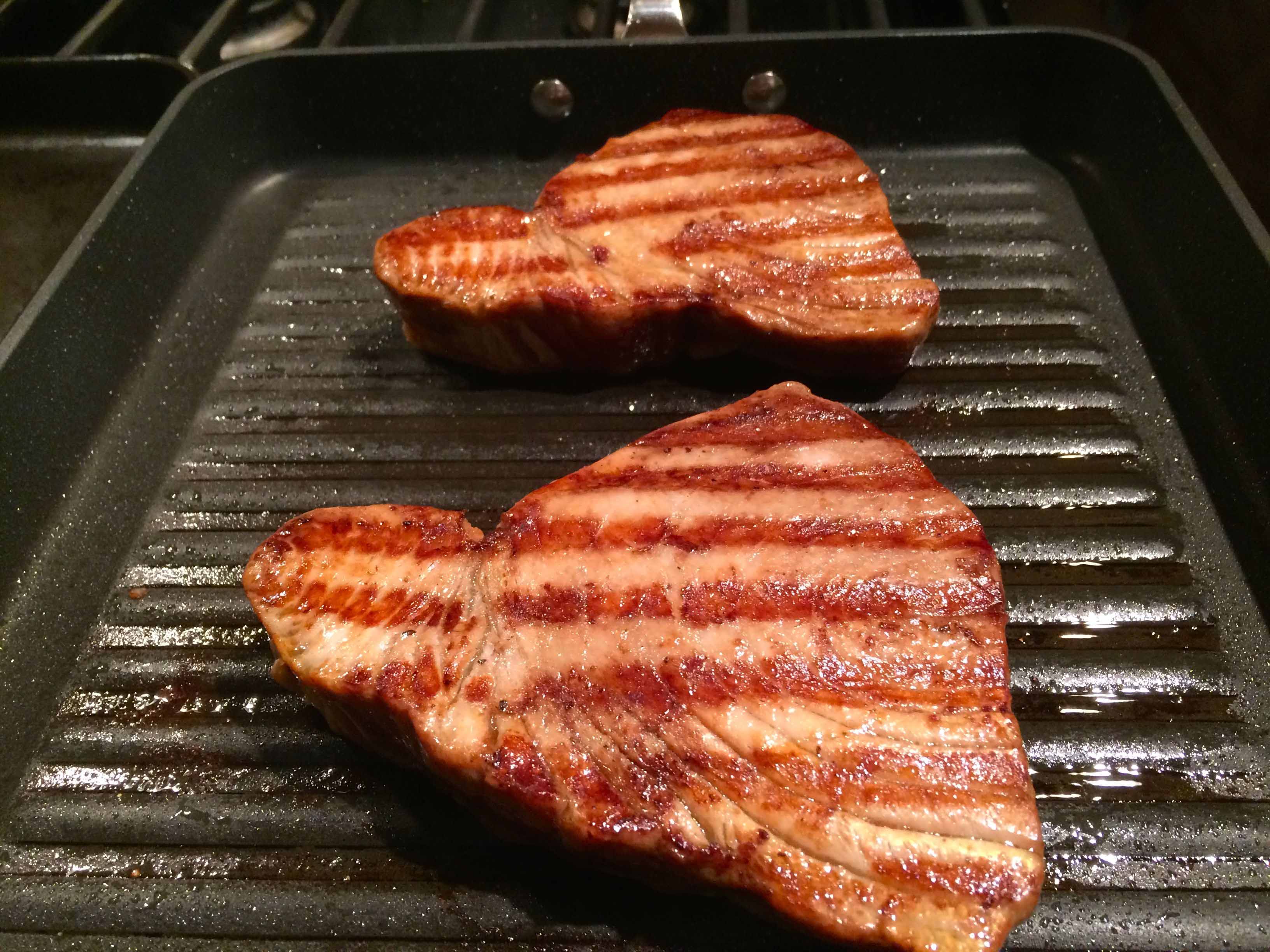
I used equal amounts of extra-virgin olive oil and dry Marsala to make the marinade and allowed the fish to marinate for about 30 minutes before putting it on a hot grill pan. I cooked the 3/4-pound yellowfin-tuna steaks, a little more than an inch thick, grill on the first side for 5 minutes seasoning them lightly with salt and freshly ground black pepper. I then turned them and allowed them to cook for about another two minutes, leaving a pink, almost sushi-style middle. While cooking, I basted the steaks with the marinade.
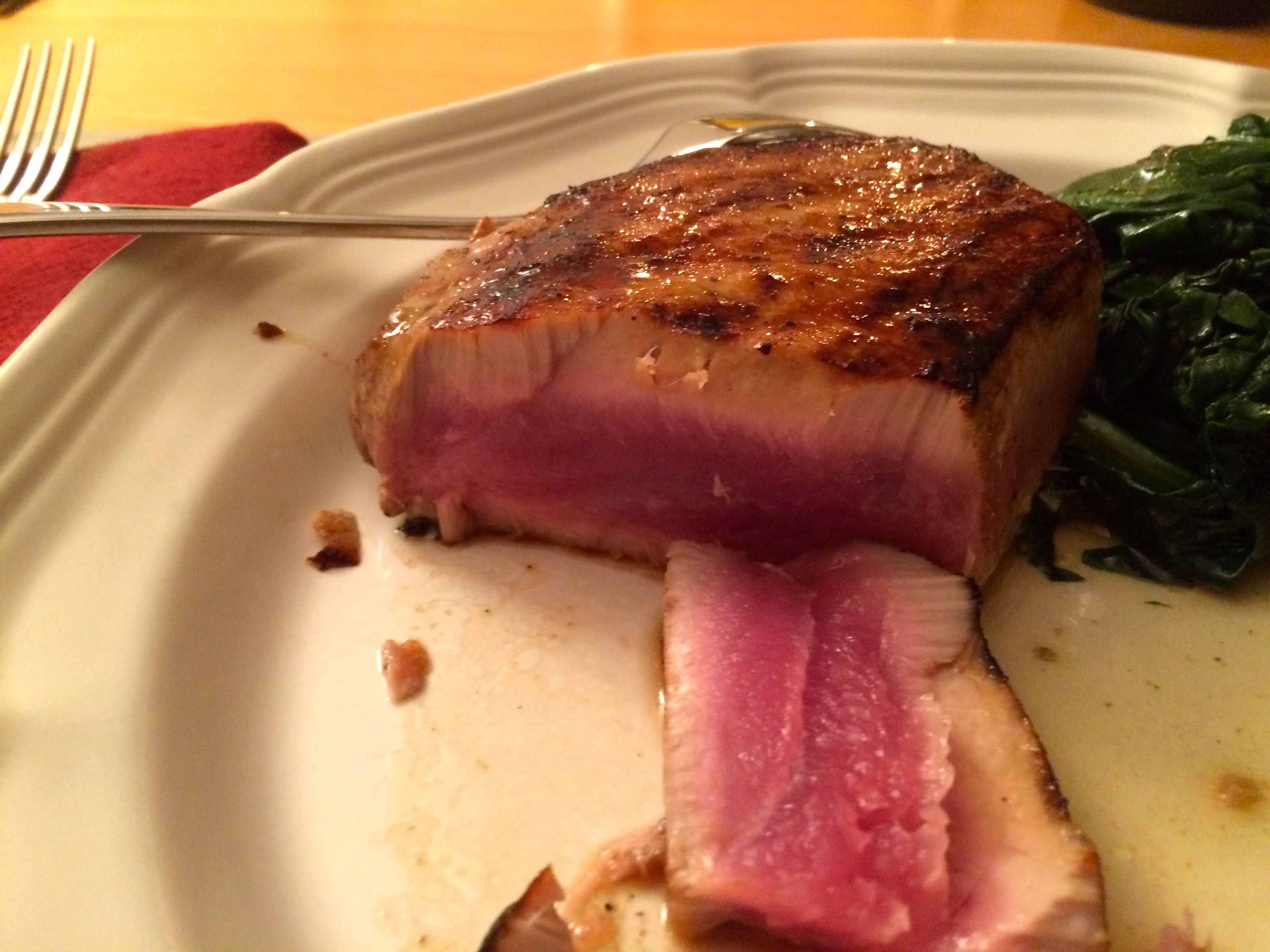
A pink, almost sushi-style center

I enjoying experimenting with my favorite recipes; sometimes, I fail and other times, I succeed. This time, I undoubtedly succeeded.

I served the fish with fresh spinach sautéed in olive oil and garlic and accompanied by a spectacular 2013 Domaine de Robert Morgon. This young fruit-forward cru Beaujolais was the perfect pairing for the rich tuna.

Wine Pairing: Morgon, Pinot Noir, Cotes du Rhone

Grilled Tuna

tunagrilledplatesmall

When it comes to pure flavor, I’d have to say that tuna, raw or cooked, is my favorite fish. As a true beef lover, I find tuna the perfect substitute when trying to eat healthy. Because I truly enjoy the flavor of this fish, I like to prepare it with a minimum of ingredients and cook it as simply as possible.

My go-to recipe for this “king of the sea” is “Basic Grilled Tuna” in Mark Bittman’s Fish: Fish: Complete Guide to Buying and Cooking.

The recipe calls for marinating a thick tuna steak (1.5 to 2 pounds) in a high-quality soy sauce and olive oil marinade for an hour or less and then grilling it on a hot grill or under a broiler, and basting occasionally with the marinade. After five minutes, the steak is turned and you start checking for doneness by cutting into the steak with a thin-bladed knife.

He warns that tuna should not be cooked to the well-done stage as it will continue to cook after its removed from the heat.

tunagrilledsmall
After the first turn

The first time I prepared this recipe, I overcooked my tuna. Now I turn my fish after about 3 minutes on a hot grill pan and then cook it for about 2 minutes on the other side. Rather than using a knife, I keep my eye on the sides of the steak and remove them before the rare middle is cooked. You can see the band of “rare” tuna in the photo above.

Although Bittman provides a recipe for an optional ginger-soy dipping sauce, I prefer to serve the tuna plain with a drizzle of extra-virgin olive oil and a lemon wedge.

Wine Pairing: Pinot Noir, Sauvignon Blanc

Salt Seared Swordfish with Garlic and Mint

sfplatedsmall

Our dinner last night was based on a recipe from The Southern Italian Table by Arthur Schwartz. He’s an authority on the cooking of this region and writes with an informed passion for it that makes one, or at least me, want to rush to the market, get the ingredients for a particular recipe, and come home and cook.

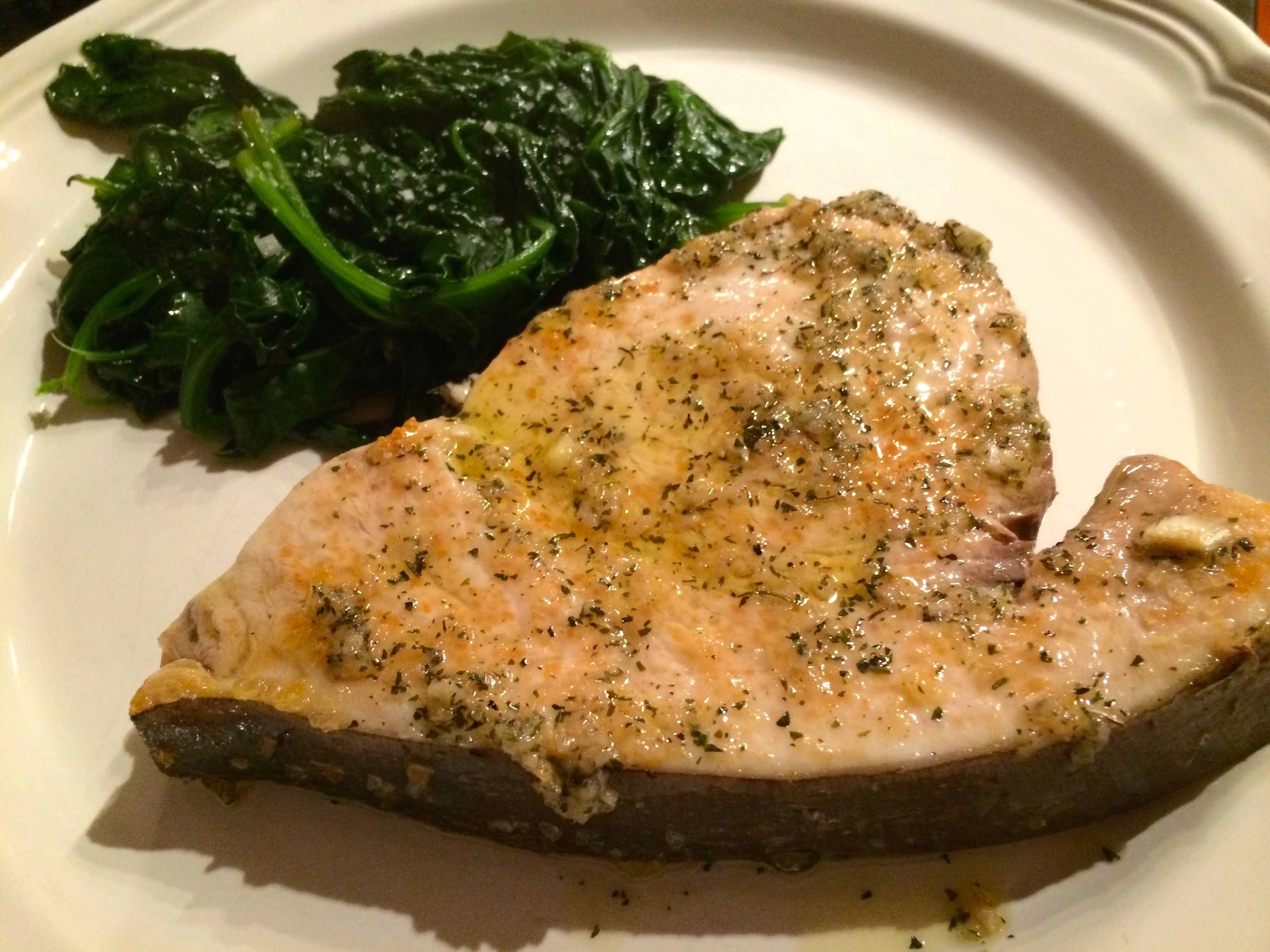
The recipe that caught my eye yesterday was for Salt Seared Swordfish with Garlic and Mint. A minimum of ingredients are combined to create an unctuous raw sauce of olive oil, garlic, and dried mint, which is used to dress swordfish steaks that are quickly seared over a layer of coarse sea salt in a blazing hot skillet.

This is not a recipe for those averse to indulging in garlic or salt but, although used liberally, their flavors along with those of fine extra-virgin olive oil and dried mint seem to heighten the already rich taste of the swordfish.

Make this dish on a weekday night, and you’ll feel as though you’ve been transported to a seaside trattoria in Sicily.

Salt Seared Swordfish with Garlic and Mint  Adapted from The Southern Italian Table by Arthur Schwartz
1 tablespoon dried mint (You may need more than a tablespoon of dried leaves to make a tablespoon of sieved.)
6 to 8 large cloves garlic, finely chopped (I used a microplane grater for the garlic.)
At least 6 tablespoons extra-virgin olive oil (Use the finest you have for the most flavor.)
1 tablespoon red wine vinegar (I added a little more than a tablespoon.)
2 tablespoons large-crystal sea salt (You may need more depending on the size of your skillet.)
2 (1/2-inch thick) swordfish steaks, skin removed (My steaks were about an inch thick. I also chose to leave the skins on. I think doing so makes it easier to turn the fish.)

With your fingertips, push the mint through a fine sieve onto a large platter. (To end up with 1 tablespoon of dried mint powder, I used a little more than the 1 tablespoon of dried mint leaves.)

Add the garlic, olive oil and vinegar. Blend with a fork. (Using a microplane for the garlic makes it easier to blend the garlic into the sauce.)

The raw sauce
The raw sauce

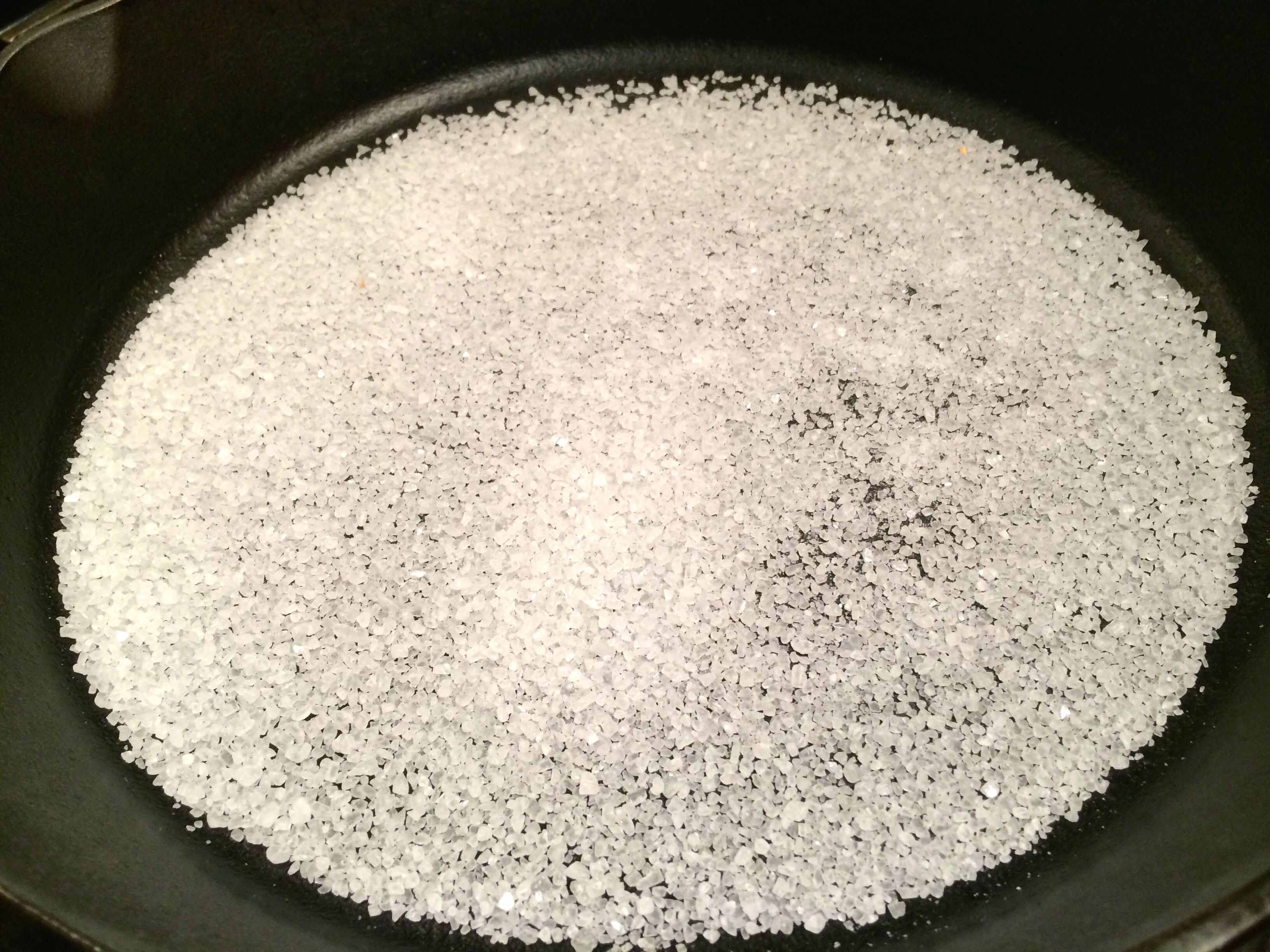
Sprinkle the bottom of a heavy 9- to 10-inch skillet (black cast iron works best) evenly with salt. Place over high heat. When the pan is so hot that you can’t leave your palm 3 inches over it for more than 5 seconds, place the swordfish on top of the salt and cook for 3 minutes. (I’m not an expert on non-stick cookware, but since you’ll be getting the pan very hot, a non-stick skillet may not withstand such a high temperature.)

The layer of salt
The layer of salt

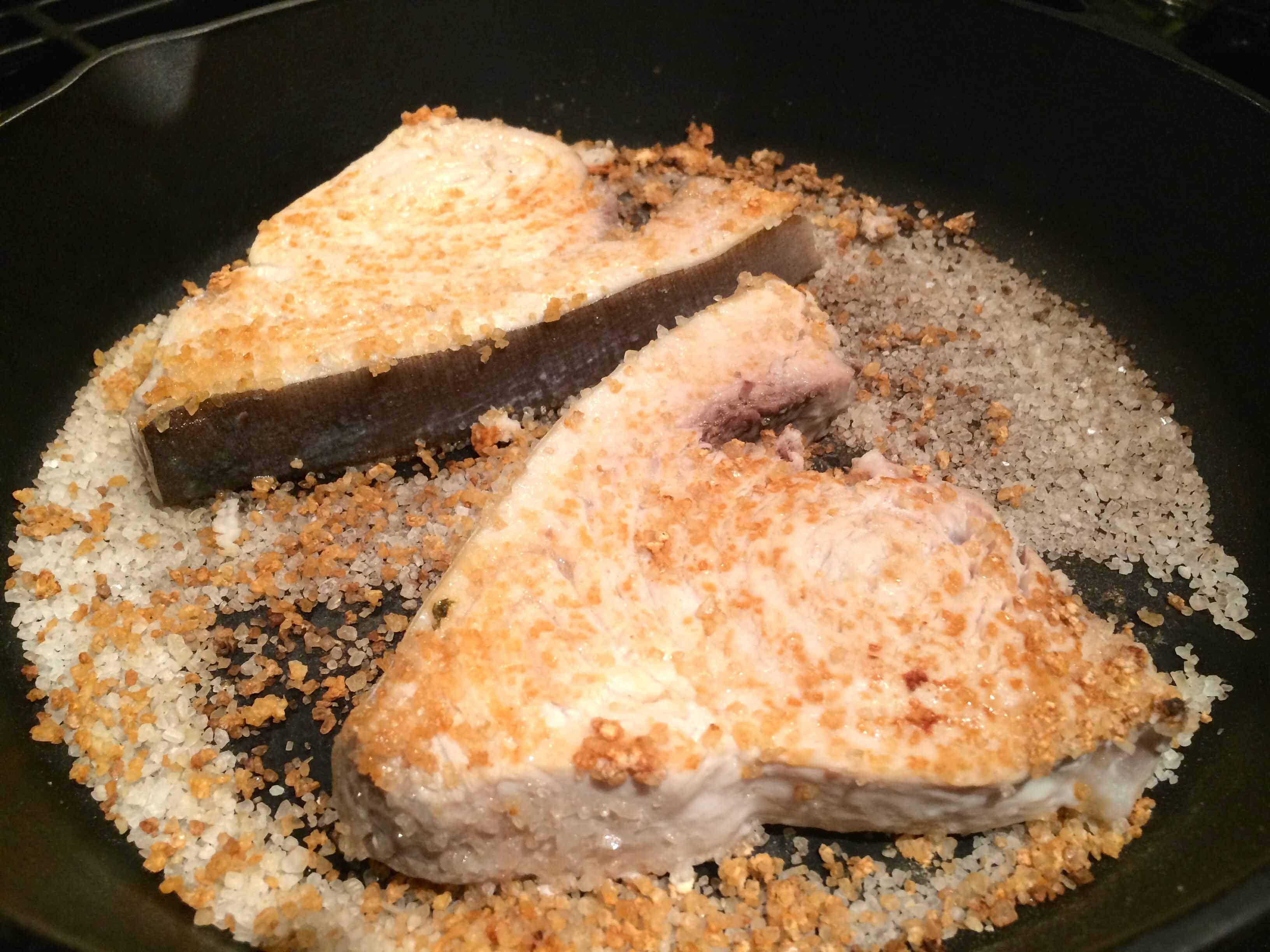
Turn the fish and cook another 2 to 3 minutes for medium-well, without a trace of pink in the center. (For my 1-inch thick steaks, I went for a full 3 minutes on each side.)

The fish turned
The fish turned

Lift the fish from the pan with tongs or a fork and brush off any large pieces of salt clinging to it. (Since we really like salt, I left a few crystals on our steaks.)

Place the fish on the platter and turn it to coat with the raw sauce, finally spooning some of the sauce on top.

Serve immediately.

Wine Pairing: Grillo, Falanghina, Sauvignon Blanc

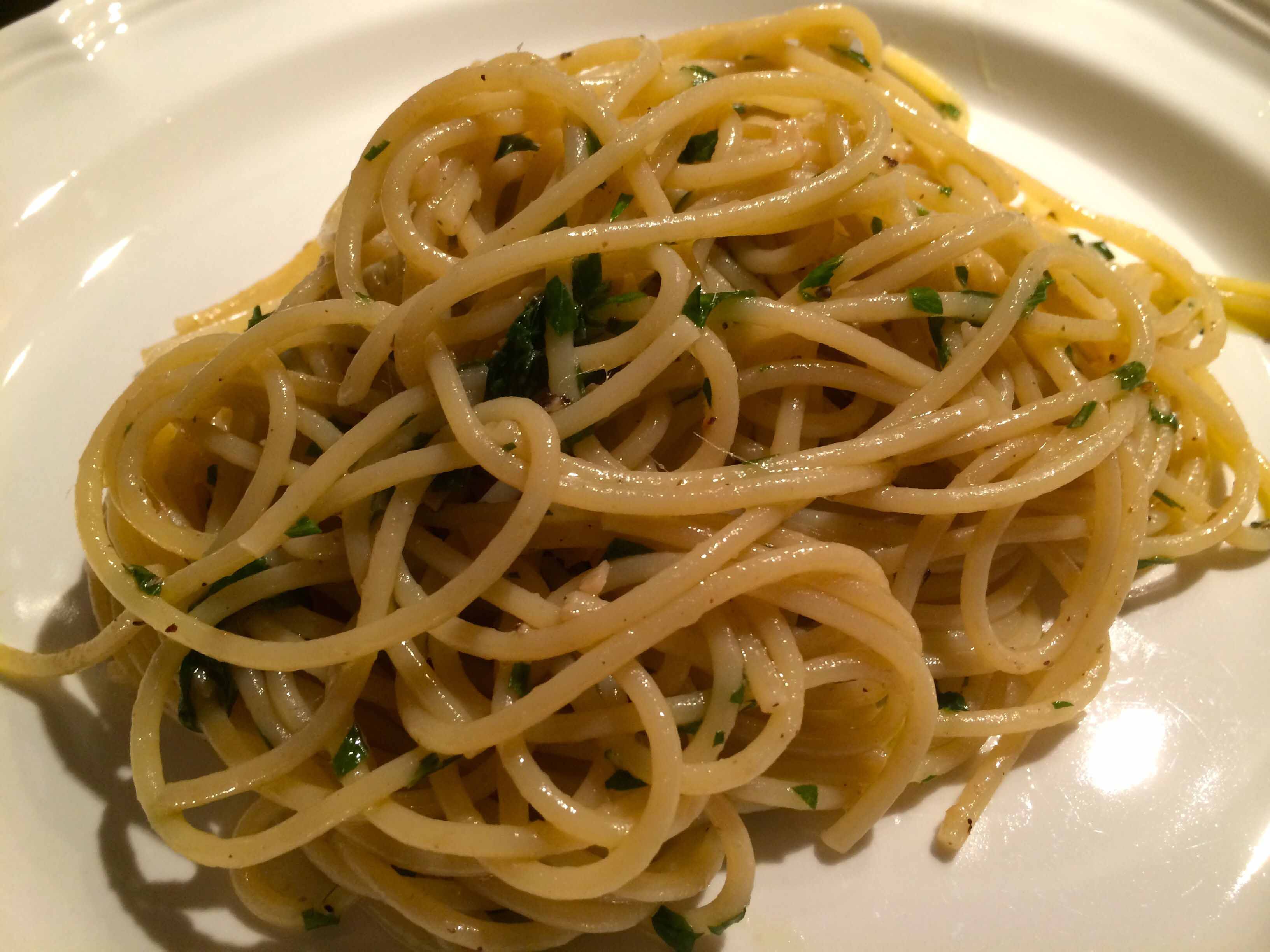
Spaghetti with Anchovy Sauce

asauceplatedsmall

Another trip down memory lane. As a child asking “What’s for dinner?”, I used to dread hearing the words “pasta acciughe,” Italian for “anchovy pasta.” But unlike many kids today, my brother and I had to eat, or at least try, whatever was put in front of us. “It’s an acquired taste,” my dad would say.

Well, I must admit it took me a few years to acquire that taste, but now I’m happy I did. Pasta acciughe was frequently served in our home as a first course on Friday nights, as well as during Lent, when we weren’t allowed to have meat. For the longest time, I thought having to eat it was a kind of penance for misbehaving.

Anchovy sauce is both simple to prepare and cooks in about the same time it takes to make the pasta. There are many variations of this dish, but mine is among the most straightforward. It has 4 ingredients: olive oil, garlic, anchovies, and fresh parsley. What I like most about it is that nothing interferes with the pungent, slaty, savory flavor of the anchovies. And although this dish is sometimes served sprinkled with toasted breadcrumbs, I prefer to enjoy mine plain. For me, the breadcrumbs detract from the unctuous texture and briny flavor of the sauce.

For this recipe, I like to use canned salt-cured fillets packed in oil. My favorite brand is Agostino Recca.

Spaghetti with Anchovy Sauce
1/4 cup extra-virgin olive oil
1 clove garlic, minced fine
10 anchovy fillets packed in oil, drained
8 oz spaghetti
Kosher salt
2 tablespoons of chopped flat-leaf parsley
Freshly ground black pepper

In a 10” heavy bottomed skillet, poach the garlic in the olive oil over low heat for approximately 10 to 15 minutes. The garlic should take on only a minimum of color.

Mid-way through the poaching, start cooking the pasta in well salted water. Try to time the cooking of the pasta so that it will be al dente when the sauce if finished.

When the garlic is finished poaching, place the anchovies in the pan and continue to cook mashing them with the back of a wooden spoon until they dissolve into the oil. (About 2 minutes.) When they have dissolved, add the parsley and continue to cook still over low heat for about 2 minutes.

Sauce waiting for the pasta

Using tongs or a spaghetti fork, transfer the cooked pasta to the skillet. Take off the heat and toss the pasta with the sauce until nicely coated. If the sauce is too thick, add a tablespoon of the pasta water to loosen it up.

Sprinkle, if desired, with some freshly ground black pepper and serve.

Wine Pairing: Pecorino, Falanghina.

Slow-Roasted Salmon

salmroasmall

Sometimes when entertaining you need to adjust your menu to a guest’s needs. For a recent dinner party, I was planning a menu around grilled baby lamb chops, when one of my friends called and announced that she just had gone through oral surgery. “Chewing may be a problem,” she said.

Although a meatloaf was the first dish that came to mind as a replacement, I opted for a more elegant alternative: slow-roasted salmon with cherry tomatoes and couscous that I haven’t made in quite a while. The center-cut piece of salmon slowly roasted over a bed of herbs would pose no problem and the tomato and parsley studded couscous would be an easy-to-chew side.

Slow-Roasted Salmon with Cherry Tomatoes and Couscous from Bon Appetit. (Click here for the original recipe.)

INGREDIENTS
YOGURT SAUCE
1 cup plain Greek yogurt (I used full fat.)
1/2 cup plain yogurt
3 tablespoons chopped fresh dill
2 tablespoons chopped fresh chives
1 tablespoon finely grated lemon zest
Kosher salt

SALMON
6 tablespoons olive oil, divided (I didn’t measure, but used considerably more, especially in the pan.)
1/2 bunch dill fronds
1/2 bunch thyme sprigs
1 3-pound piece center-cut skin-on salmon fillet, preferably wild king, pin bones removed (I opted for farmed salmon, which almost eliminates hunting for pin bones.)
Kosher salt
8 ounces small cherry tomatoes on the vine (optional)

TOMATOES AND COUSCOUS
2 cups cherry tomatoes, halved
4 tablespoons olive oil, divided
2 tablespoons chopped flat-leaf parsley
2 tablespoons za’atar (optional)
Kosher salt
2 cups Israeli couscous (I went for quick cook, regular couscous.)
1 tablespoon unsalted butter (I omitted the butter.)

PREPARATION

YOGURT SAUCE
Mix first 5 ingredients in a medium bowl until well combined. Season with salt. DO AHEAD: Can be made 3 days ahead. Cover and chill.

SALMON
Preheat oven to 325°. Pour 4 Tbsp. oil in a roasting pan just large enough to fit the salmon. Make a bed of herbs in bottom of pan; top with salmon, skin side down. Drizzle salmon with remaining 2 Tbsp. oil and season with salt. Top with tomatoes, if using. Bake until salmon is just cooked through in the center (a small knife will slide easily through flesh), 25–30 minutes.

TOMATOES AND COUSCOUS
Toss tomatoes with 3 Tbsp. oil, parsley, and za’atar, if using, in a medium bowl. Season to taste with salt. Set aside.

Bring a medium pot of lightly salted water to a boil. Add couscous and cook until tender, about 7 minutes. Drain couscous; transfer to a large bowl. Stir in butter and remaining 1 Tbsp. oil. Season to taste with salt. Gently fold tomatoes into couscous.

Use a large spoon or fork to serve salmon, leaving skin in pan. Serve with yogurt sauce and couscous.

Wine Pairing: Pinot Noir, Sancerre, Sauvignon Blanc

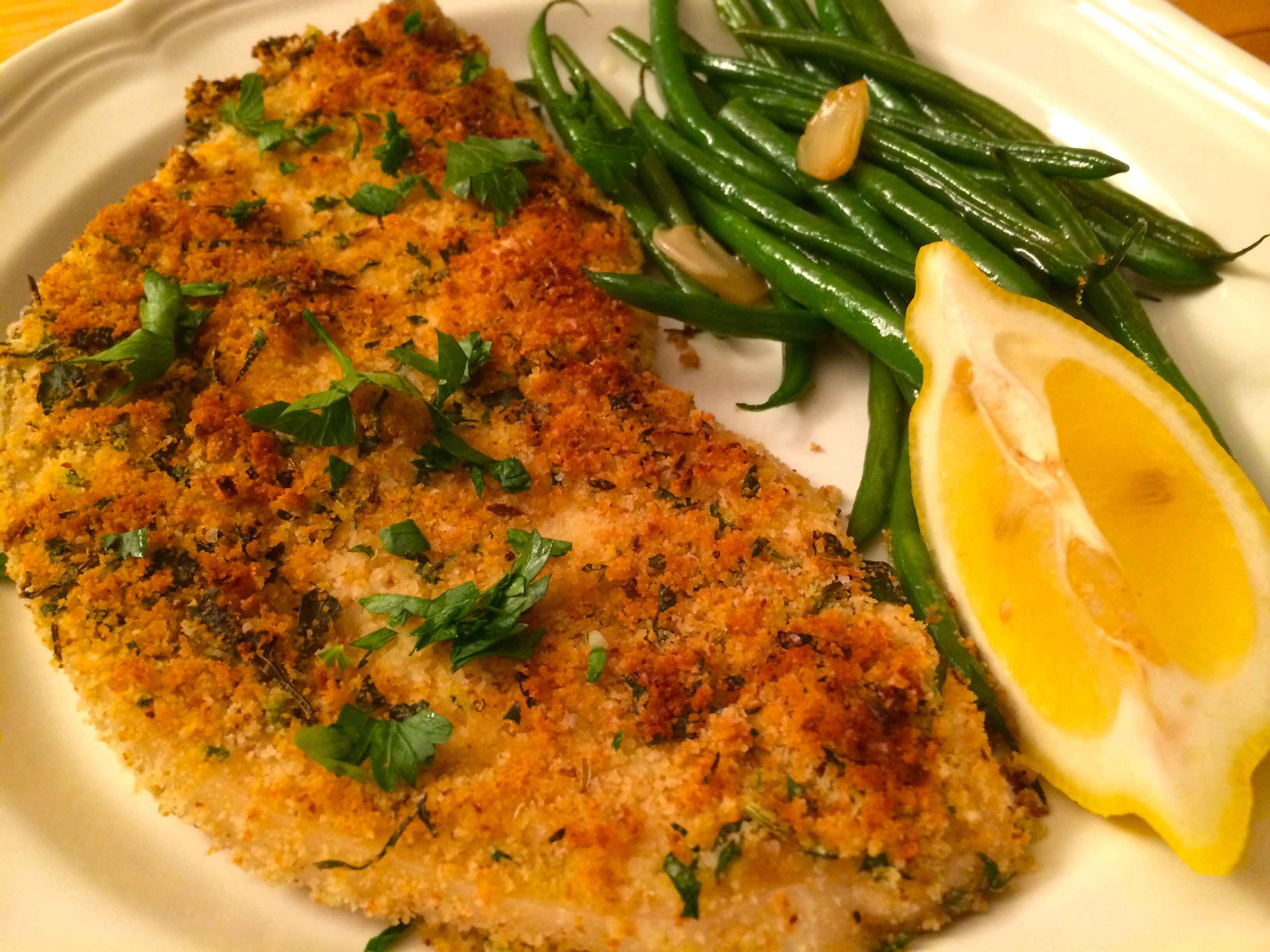
Swordfish Breaded Palermo Style

swordfishpalermosmall

For me, one of the most attractive characteristics of Italian cooking has always been its simplicity–its recipes with minimal ingredients and simple preparation. As I child, I used to watch my mother and aunt in the kitchen turn out multi-course dinners for us, night after night, without breaking a sweat. They cooked from memory the simple dishes with which they themselves grew up. One such dish was baked fish coated with breadcrumbs, which hailed from my mother’s Sicilian family.

Yesterday, when I came home from the fish market with some beautifully fresh swordfish, I thought I would try to recreate my mother’s dish and started looking for a recipe.

My search led me to one from Arthur Schwartz’s The Southern Italian Table: “Pesce Spada Impanata,” or Swordfish Breaded Palermo Style. Thin cutlets of swordfish are coated with seasoned bread crumbs and quickly baked. The savory, garlicky coating perfectly complements the subtly sweet, meaty flavors of the swordfish.

I served the fish accompanied by another of my mother’s favorites, string beans sautéed with garlic and oil.

Swordfish Breaded Palermo Style from The Southern Italian Table
Ingredients

1 cup fine dry bread crumbs
1 teaspoon salt
1 teaspoon roughly ground fennel seed
3 large garlic cloves, finely chopped (about 1 tablespoon)
3 tablespoons coarsely chopped flat-leaf parsley
2 tablespoons extra-virgin olive oil
1 pound swordfish, cut into 1/4 inch thick cutlets
Salt and freshly ground black pepper to taste
Lemon wedges

Place a rack on the highest rung of the oven. Preheat the oven to 450° F. (The position of the rack is important as it allows for a faster baking of the fish and the browning of the crumbs. RM)

Combine the breadcrumbs, salt, fennel seed, garlic, parsley, and 1 tablespoon of the oil on a large plate. Mix until all the bread crumbs are moistened with oil. (My breadcrumbs were quite dry and I needed to add a little more than the called-for tablespoon. RM)

Brush the fish slices lightly with the remaining tablespoon of oil and season lightly with salt and pepper.

Dredge each slice in the seasoned bread crumbs, pressing the crumbs into the fish so that each side is well coated. Arrange the fish slices on a baking sheet.

Bake the fish for 5 to 6 minutes.

Serve hot or at room temperature with lemon wedges.

My Note: Be sure to have your rack on the highest rung possible of your oven and to use a baking sheet without sides as opposed to a sheet pan with sides. Doing so will help the breading get more color. I did not have a baking sheet and had to put the fish under the broiler for the final minute or so to lightly brown the crumbs.

Wine Pairing: Grillo, un-oaked Chardonnay

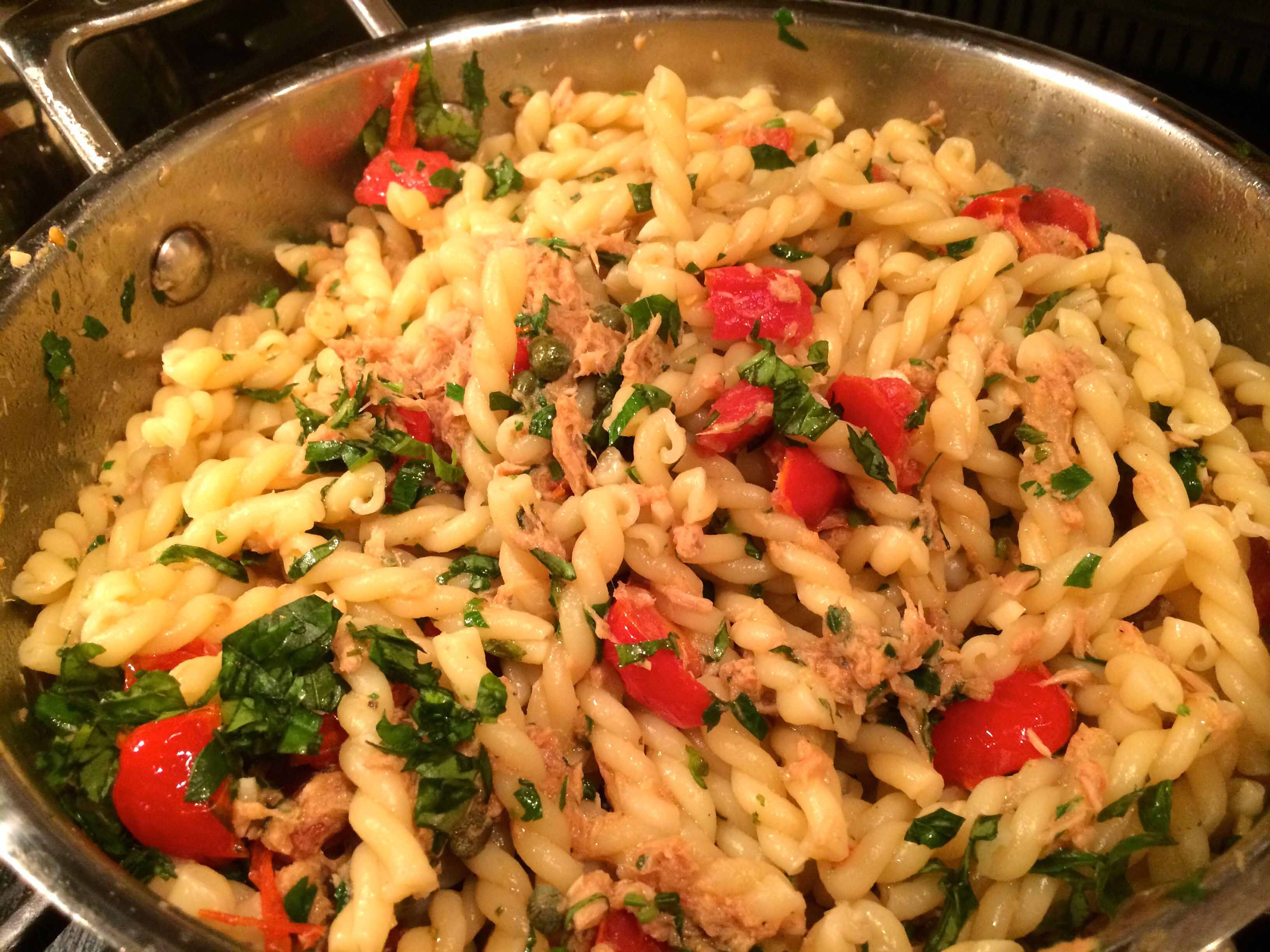
Gemelli with Tuna and Cherry Tomatoes

tunapastastep3small

Last night we enjoyed one of our favorite weeknight pasta dishes: Gemelli with Tuna and Cherry Tomatoes. The source, a seven-year old recipe from Rachael Ray. The counterpoint between the unctuous, savory tuna and the fresh, sweet cherry tomatoes makes for a wonderful sauce for the twisted-twin strands of pasta.

Over the years, I’ve modified the recipe to meet our own palates, boosting the savory side with some capers, adding a little heat with some crushed red-pepper flakes, and using a touch of vinegar to brighten the dish with some acidity. If you would like to view the original recipe, here’s a link: Rachael Ray’s Original.

INGREDIENTS
3 tablespoons extra virgin olive oil
6 cloves garlic, finely chopped
pinch of crushed red-pepper flakes
2 jars solid Italian tuna in olive oil (6 ounces each), drained
1/4 cup dry white wine
3/4 pint small cherry or grape tomatoes, quartered
1/2 teaspoon sherry vinegar
2 tablespoons small capers packed in brined, rinsed and drained
Coarse salt and black pepper
1 pound gemelli pasta – short braids of pasta or other short-cut pastas, such as penne rigate, can be substituted, cooked to al dente in salted water
1/3 cup flat leaf parsley, chopped (about 3 handfuls)
20 leaves fresh basil leaves, shredded
Serves 4

PREPARATION
Add olive oil and garlic to a large, deep skillet. Place over low heat and slowly poach the garlic to extract as much flavor as possible, about 5 to 6 minutes. Do not let the garlic to take on any color.

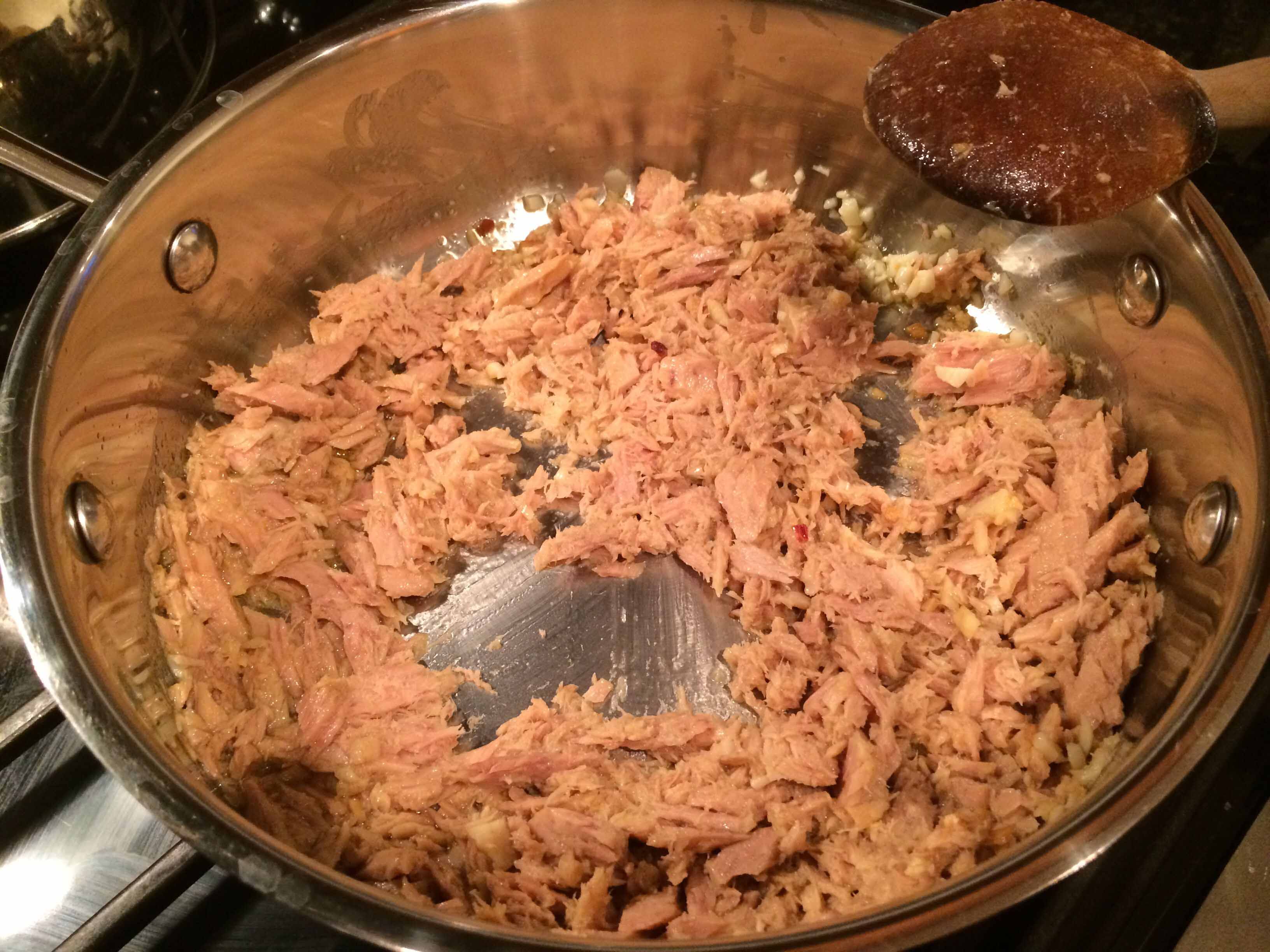
Raise the heat to medium and when garlic starts to sizzle, add tuna and mash into oil with the back of a wooden spoon. Reduce the heat to low and let the tuna sit in the oil for about 5 minute to infuse the fish flavor into the oil and to give the tuna time to break down. Add the wine to help break down the tuna so that it almost melts into the oil. If necessary, add a little of the pasta water.

Tuna being mashed in oil and garlic

When the tuna is like a thick pasty sauce, raise the flame a bit and add the quartered tomatoes, vinegar, and capers. Season with salt and pepper. Heat the tomatoes through until they start to break down, 3 to 4 minutes, then add hot, drained pasta that has been cooked to al dente.

Tuna with tomatoes and capers added

Add the parsley to the tuna and pasta and toss to combine well and evenly coat pasta. Adjust seasonings. Top pasta with shredded basil and serve on heated plates.

Pasta plated
Pasta plated

Wine Pairing: Trebbiano d’Abruzzo, Frascati


Roast Halibut with Artichokes

halibutplatedsmall

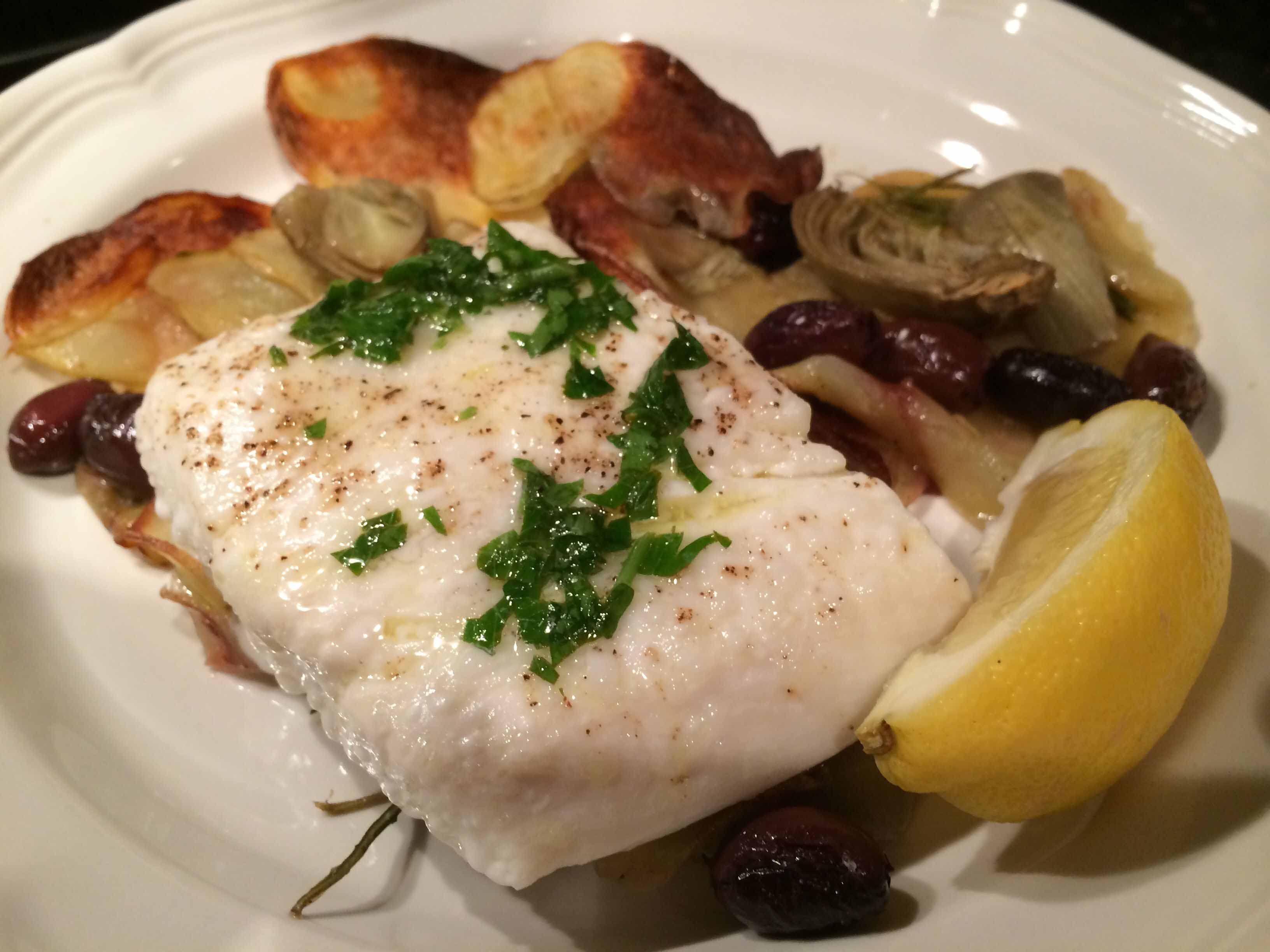
It seems that cooking magazines are always arriving in the mail and it’s hard to keep up with them. Once in a while, I go on a binge read, tearing out the recipes I want to make and filing them for future use. When I choose to prepare one of these recipes, I feel my subscriptions are justified—especially when, as last night, it turns out so good.

This recipe comes from the December 2013 issue of Food Network Magazine. It calls for cod, but when I went to the fish market, the halibut looked much better. It worked perfectly; the flavor is similar to cod, but the texture is richer.

The bed of crisp and creamy potatoes, earthy roasted artichoke hearts, and salty Kalamata olives provided the perfect background for the mildly sweet flavors of the halibut.

Recipe adapted from Food Network Magazine December 2013
Ingredients

1 pound Yukon gold potatoes, thinly sliced (I used a mandolin for uniform 1/8 inch thick potatoes)
1 9 -ounce box frozen artichoke hearts, thawed
1/2 cup pitted kalamata olives
1 tablespoon fresh rosemary leaves
1/4 cup extra-virgin olive oil
Kosher salt and freshly ground pepper
4 6 -ounce cod fillets (I substituted halibut.)
Juice of 1/2 lemon
1 tablespoon chopped fresh parsley
Lemon wedges for serving

Directions
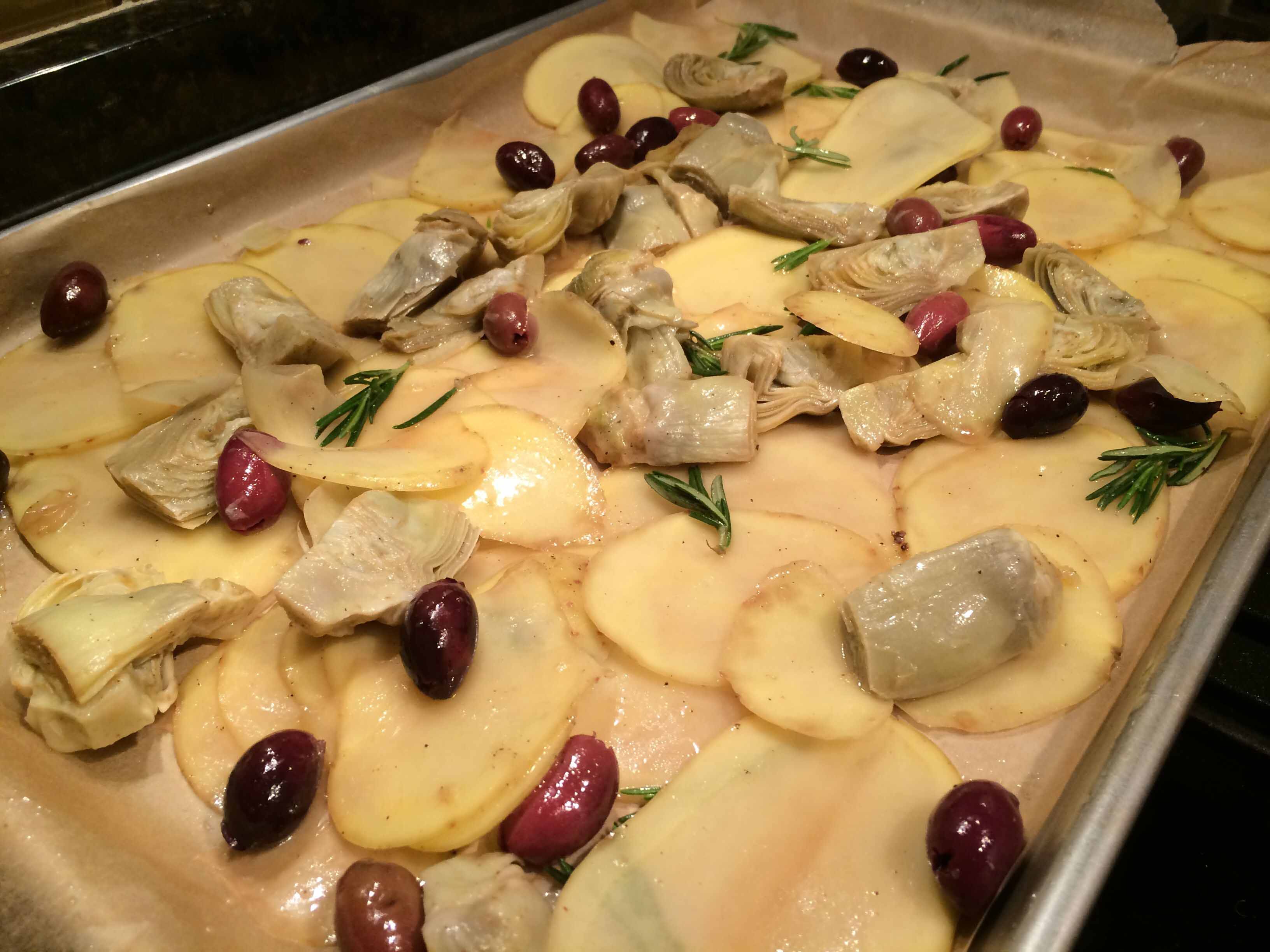
Preheat the oven to 450 degrees F. Combine the potato slices, artichokes, olives, rosemary, 2 tablespoons olive oil, 1 teaspoon salt and a few grinds of pepper in a large bowl. Spread the mixture evenly on a parchment-lined baking sheet; bake until the vegetables are tender and lightly browned, about 20 minutes.

Vegetables before roasting

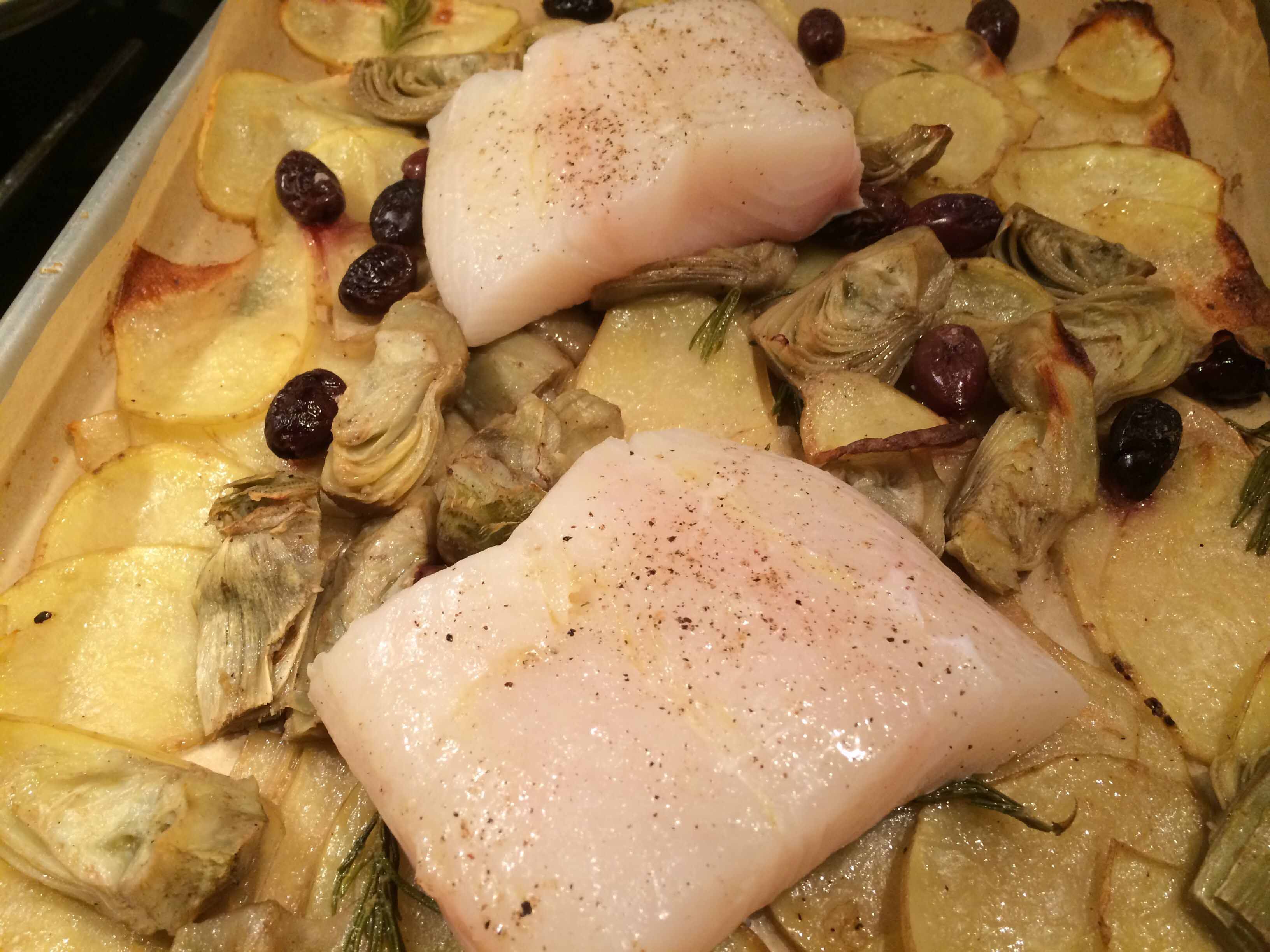
Brush the fish with 1 tablespoon olive oil and season with 1 teaspoon salt and a few grinds of pepper. Remove the baking sheet from the oven and set the fish on top of the vegetables. Return to the oven and continue baking until the fish is opaque and the vegetables are golden brown, about 10 minutes.

Fish before roasting

Mix the lemon juice, the remaining 1 tablespoon olive oil, and the parsley and drizzle over the fish. Serve with lemon wedges.

Read more at: Food Network

Asian Grilled Salmon

asiangrilledsalmonsmall

Friends are always surprised when I cook something other than Italian. But once in a while, a little change is good.

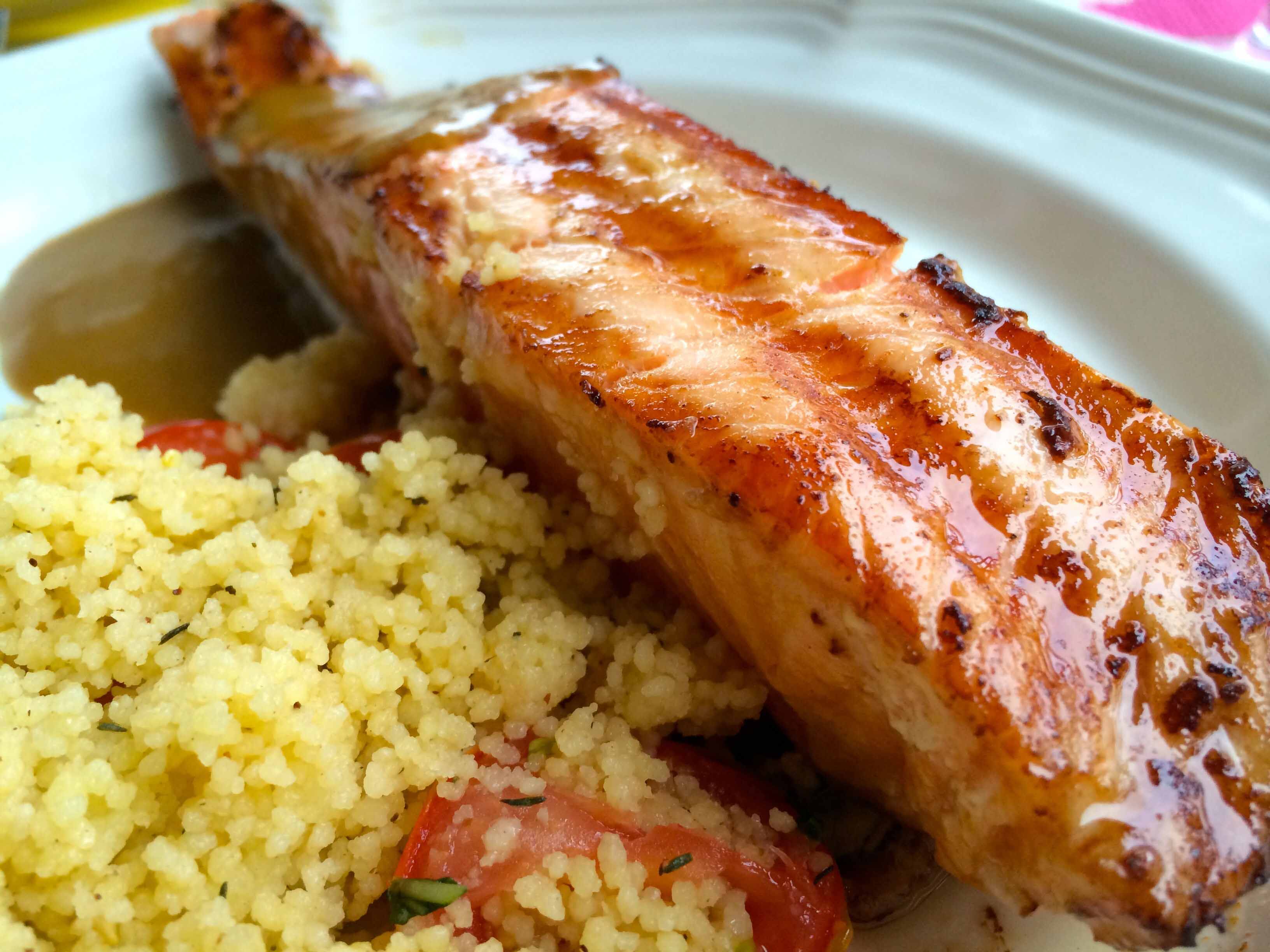
Tuesday is typically a fish night for us, and we hadn’t had salmon in quite some time. So I turned to one of my go-to recipes for it: Ina Garten’s Asian Grilled Salmon. (The link will take you to the recipe.) It’s perfect for a weeknight meal, with minimal prep and maximum flavor.

Salmon fillets marinate for around 10 minutes in a blend of olive oil, soy sauce, Dijon mustard, and minced garlic. Half the marinade is reserved for a sauce. Rather than mincing the garlic, I use a microplane rasp and also add some rasped fresh ginger.

The fish grills for about 4 to 5 minutes a side and is served with the reserved marinade.

As a side, I prepared a quick cooking couscous tossed with some cherry tomatoes, chopped basil, zahtar, and olive oil.

When you don’t have a lot of time and want something homemade, this salmon and side can be on the table in under an hour.

For wine, I chose a 2013 Mille Sauvignon Friuli Grave DOC. Not as grassy as some new-world entries, it’s fresh and crisp with good citrus notes. At around $17 for a liter bottle, it’s a wonderful value.

sauvignonblancmillesmall


Grilled Tuna Steaks


tunasteak1small

Except for shellfish and calamari, I’m not a fish lover. Nevertheless, we try to have fish twice a week and for that reason, I purchased Fish: Complete Guide to Buying and Cookingby Mark Bittman. It’s given me confidence not only in the kitchen but also at the fish market.
It was a great night for grilling and I can’t think of any fish better for the grill than thick tuna steaks—especially for a meat-lover like myself. I chose Bittman’s “Basic Grilled Tuna,” which calls for a simple marinade that seems to enhance the meaty character of the fish.

For sides, I prepared a simple couscous and roasted cherry tomatoes with olive oil, garlic, and crushed red-pepper flakes.

Basic Grilled Tuna Adapted from Mark Bittman’s Fish.
1/3 cup high quality soy sauce
2 tablespoons extra virgin olive oil
2 thick yellowfin tuna steaks about 3/4 lbs each
Ground black pepper
Lemon wedges and extra virgin olive oil for finishing.

1. Mix the soy sauce and olive oil.

2. Place the tuna in a square baking dish just large enough to hold the fish and sprinkle with fresh ground black pepper.

3. Cover the fish with the marinade, cover, and let the fish marinate in the fridge for no more than one hour. Marinating for too long a period may overwhelm the subtle flavors of the fish.

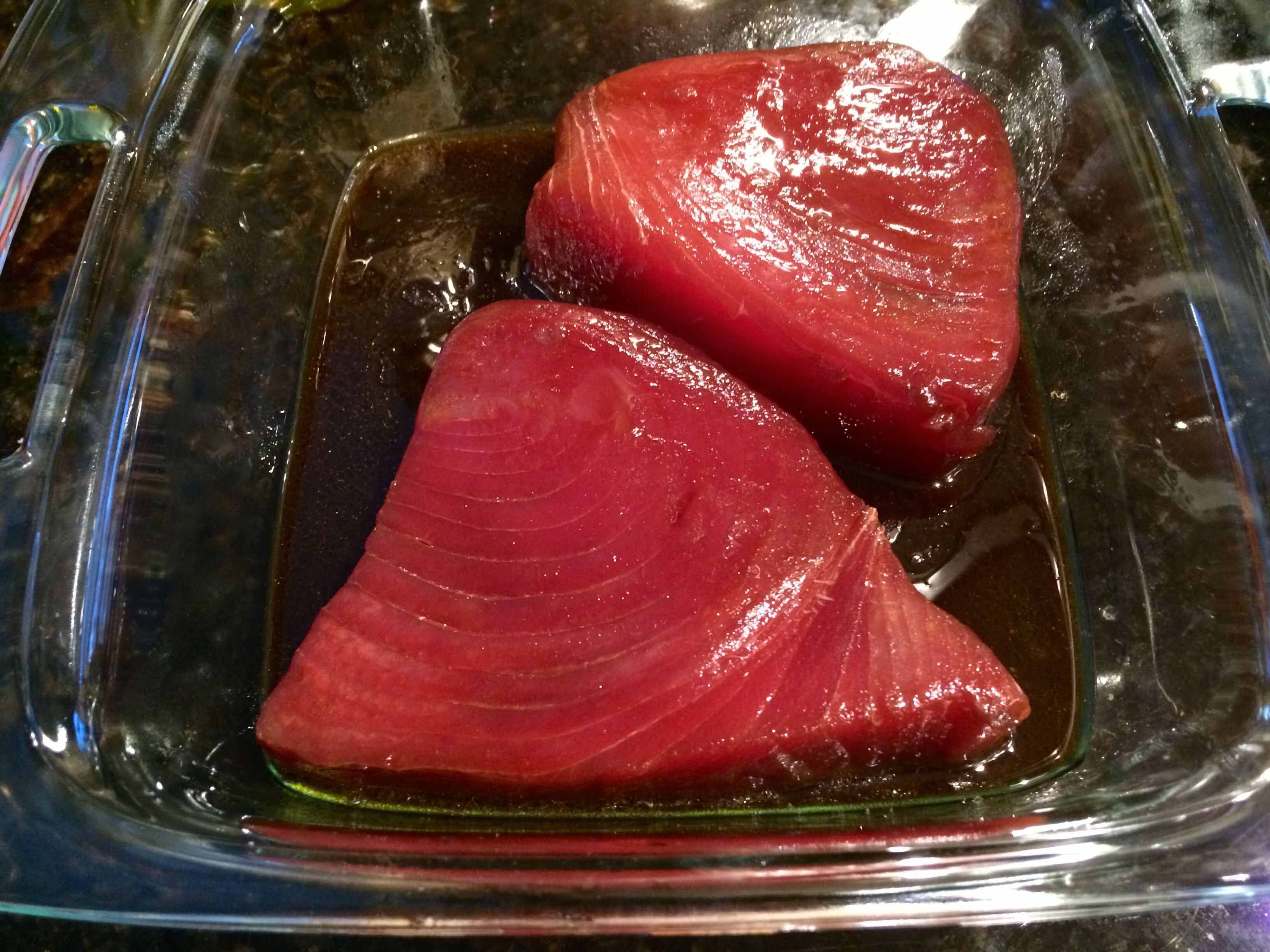
Tuna steaks marinating

4. Heat a grill pan greased lightly with some olive oil. When hot, grill the tuna on one side for about 5 minutes, basting occasionally.

5. Turn with a fish spatula and continue to cook for about 2 minutes. This timing should yield a steak that’s still somewhat rare in the middle. You can cook longer if you like, testing for your desired level of doneness by lightly prying open the tuna with a thin bladed pairing knife. Avoid overcooking.

6. Place the steaks on warmed plates and finish with a nice drizzle of high quality extra virgin olive oil.

Serve with lemon wedges.

Wine Pairing: Pinot Noir, Sauvignon Blanc