Italian Spare Ribs

IMG_5491sm

Because of Labor Day, racks of pork ribs were plentiful in the supermarket this weekend and thus found their way into our kitchen. Of course, bottles of BBQ sauce were also on display, which I guess suggested the way most of these ribs would be cooked.

Now, I’ve been lucky enough to travel throughout the United States and to have had the chance to sample some of the best BBQ ribs. And during these travels, I have heard the merits of dry vs. wet, sweet vs. hot, oak vs. cherry, and so on debated by my hosts and their friends in the south and midwest.

With one or two exceptions, all the ribs I tasted were extraordinarily good, with those in Greenville, South Carolina taking the prize. None of them, however, came close to the ribs I had growing up, which my aunt would occasionally make for Sunday dinner. Coming from Italy, she knew nothing about BBQ, but her ribs were without a doubt the most succulent I’ve ever had. Simmered slowly for hours in a simple tomato sauce, they were almost always served with a large cut of dry pasta, tubular in shape, known as occhio di lupo, wolf’s eye.

So last night, I decided to recreate this dish, but not being able to find occhio di lupo, I substituted the more widely available rigatoni. I also opted to serve the pasta with the same cheeses my aunt would use, namely, pecorino Romano and ricotta salata.

IMG_5441sm
The Ingredients

Ingredients
3 pounds pork spare ribs cut into 2-inch pieces. (I had the butcher saw the ribs lengthwise through the racks and then I cut them into double-rib pieces. See the picture above.)
Salt
Freshly ground black pepper
¼ cup extra-virgin olive oil
2 medium yellow onions, sliced thin
2 garlic cloves, minced fine
2 28-ounce cans Italian crushed tomatoes
1 large clump of basil (about 6 leaves)
2 to 3 cups hot water
1 pound rigatoni
1/2 cup pecorino Romano
1/4 cup ricotta salata

Directions
Season the ribs with salt and pepper.

Heat olive oil in a large, heavy-bottomed dutch oven over medium heat. Brown the ribs well on both sides, not over-crowding the pot. Work in batches if necessary. This will take about 10 minutes per batch.

Well browned ribs
Well browned ribs

After they are browned, transfer the ribs to a platter lined with paper towels.

Drain the fat from the pot, reserving 4 to 5 tablespoons. Add the onions to the reserved fat, sprinkle with a little salt, and brown them until they are soft and nicely browned. About 10 minutes. As the onions are browning, scrape up most of the brown bits sticking to the bottom of the pot.

The browned onions and garlic

A minute or two before the onions are done, add the garlic. Cook for about a minute, watchong the pot closely to ensure that the garlic does not burn.

Add the crushed tomatoes and basil, again scraping any remaining brown bits from the bottom of the pot. Adjust for seasoning.

With the tomatoes amd basil
With the tomatoes and basil

When the tomatoes start to boil, add the ribs. Press the ribs down so they are covered with the sauce.

When the sauce returns to a boil, reduce the flame to low and simmer for 2 to 2 1/2 hours, or until the ribs are tender, stirring occasionally. If the sauce reduces too much, add some of the hot water so that the ribs remain covered.

The cooked ribs
The cooked ribs

When the ribs are done, cook the pasta in abundant, well salted water. Cook the pasta until a minute before the al dente stage.

IMG_5466sm
Separating the sauce and the ribs

Meanwhile, remove the basil from the sauce and transfer about 2 to 3 cups of the sauce to a large skillet. When the pasta is done, using a spider, transfer the pasta to the skillet and toss with the sauce over a low flame. Sprinkle with some of the two cheeses and cook for about a minute or until the pasta is done.

Tossing the pasta with the sauce

Serve the pasta along with ribs accompanied by the two cheeses for individual sprinkling.

Serves 6.

Wine Pairing: Sangiovese

Pork Chops with Capers

IMG_5414sm

More often than not, when we have pork chops at home, I prepare them, as my mother did: pan seared and simmered with sweet vinegar peppers and their juice. As they are a classic Italian-American dish, recipes for them abound both in books and on the internet. In fact, I’ve even written about them on this blog.

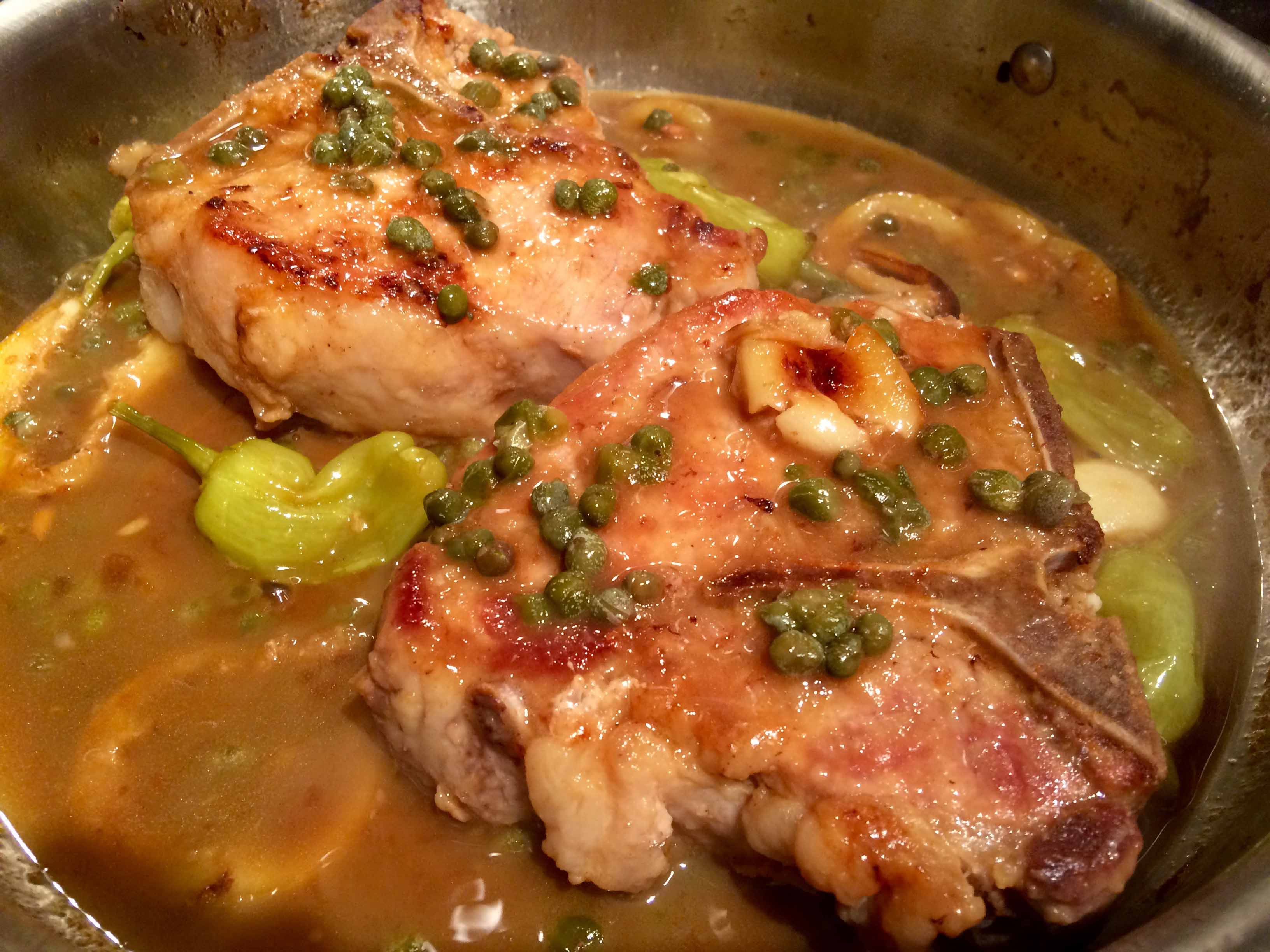
This weekend, however, I found a new way to prepare them in Lydia Bastianich’s Lidia Cooks from the Heart of Italy.  Although more labor intensive than my mother’s version, this recipe yields wonderfully succulent chops, coated with a silky savory sauce that acquires a bright piquancy from brined peperoncini and capers.

Although I was preparing only two pork chops, I maintained the recipe’s proportions for all the other ingredients. Since the sauce takes considerable time to thicken, I also opted for chops that were thicker than the one inch called for in the recipe. Mine were about 1 ½-inch thick and weighed at least 12 ounces each.

Should you choose to make this dish, I highly recommend using heritage pork which makes for juicier chops.

Italicized parenthetical comments in the recipe are my own.

Pork Chops with Capers from Lidia Cooks from the Heart of Italy

The ingredients
The ingredients

Ingredients
6 bone-in pork loin chops, 1-inch thick, 6 to 8 ounces each (I opted for thicker pork chops, about 1 ½-inch thick.)

1 teaspoon kosher salt

2 tablespoons butter

2 tablespoons extra-virgin olive oil

4 plump garlic cloves, crushed and peeled

½ cup all-purpose flour, for dredging, plus more as needed

1 large lemon, sliced in thin rounds

6 whole Tuscan-style pickled peperoncini, drained

3 tablespoons small capers, drained

¾ cup white wine (I used a Sardinian Vermentino that I had on hand.)

1 tablespoon lemon juice, freshly squeezed

2 tablespoons fresh Italian parsley, chopped

Directions

You will need a heavy-bottomed skillet or sauté pan, 14-inch diameter.

Trim the fat from the pork chops, if necessary, leaving only a thin layer, and salt them lightly on both sides, using 1/2 teaspoon salt in all.

Put the butter and olive oil in the skillet, and set it over medium-low heat. When the butter begins to bubble, scatter in the garlic; let it heat and gently sizzle. (You want to keep an eye on that garlic to ensure that it doesn’t burn.)

Meanwhile, spread the flour on a plate or tray, and dredge the chops on all sides. Shake off excess flour, and lay the chops in the skillet in one layer. (It may appear at first that there’s not enough room for all, but as the meat shrinks you will be able to nestle the chops in.)

The floured chops
The floured chops

Strew the lemon slices on top of the chops, and drop the peperoncini in between them. Cook the chops slowly, keeping them at a gentle sizzle, turning and moving them in the pan about every 5 minutes, as they take on color gradually and evenly. (To achieve maximum browning of the chops, let the lemon slices remain in the sauce after turning the chops the first time.)

Browning the first side

After 20 minutes or so, when the pork is lightly browned and caramelized on both sides, scatter in the capers, shake the pan to drop them onto the bottom and turn up the heat to medium-high. When the capers are sizzling, push the chops aside, and pour the wine and lemon juice into the clear hot spot.

Adding the capers
Adding the capers

Bring to a boil, and shake the pan so the wine flows around all the chops. Sprinkle over pan the remaining salt, and adjust the heat to keep the pan juices bubbling, steadily reducing and thickening. Turn the chops occasionally, so both sides are moistened and evenly cooked.

Cooking the chops
Cooking the chops

After about 10 minutes of reducing the liquid, when the juices are syrupy and glaze the chops, remove the pan from the heat.

Reducing the sauce
Reducing the sauce

Sprinkle the chopped parsley all over, and give the chops a final turn in the pan. Serve right away, drizzling a bit of the remaining pan sauce over each chop. (Keep testing the chops for doneness during this stage. If they’re done, remove them to a plate, retuning them to the pan after the sauce has reached the desired texture.)

Wine Pairing: Vernaccia di San Gimignano

Pork Chops with Potatoes

valplatedsm

While pork chops may not live up to everyone’s idea of a Valentine’s Day dinner, for us they made the perfect late-night supper, especially when prepared as they were last night. We had seen them prepared a few weeks ago on the Cooking Chanel’s “French Food at Home” by Canadian chef Laura Calder and were eager to prepare them at home.

When we found the recipe on line, however, we were surprised by how many discrepancies there were between the television and website versions. For example, the online recipe calls for 4 fatty pork chops rather tan the 4 fat, thick chops used on the show. Similarly, the online version listed 1.5 pounds potatoes thinly sliced, while on television Calder specifically specified waxy potatoes sliced thick.

Consequently, I modified the recipe to follow the dish prepared on the show and was extremely pleased with the result. Although I had some reservations about cooking the chops for close to two hours, they came out perfectly succulent and tasty.

The next time I prepare this dish, I’ll probably use chops a little thicker than an inch and extend the cooking time a tad. But even if you only have inch-thick chops, you’ll enjoy this French country dish.

Pork Chops with Potatoes adapted from Cooking Channel Chef Laura Calder
INGREDIENTS
4 thick bone-in rib pork chops (a least 1-inch thick)
2 cloves garlic, sliced (try to have 3 slices per chop)
Kosher salt and freshly ground black pepper
1 tablespoon extra virgin olive oil
1 tablespoon butter
1 1/2 pounds waxy potatoes, peeled and sliced thick, about 1/2 inch
1 large sweet onion, sliced 1/4 inch
2 to 3 thick slices bacon, cut into 1/4 inch lardons
1/2 teaspoon juniper berries
1/2 cup dry white wine
1/2 cup chicken stock
Chopped fresh parsley, for garnish

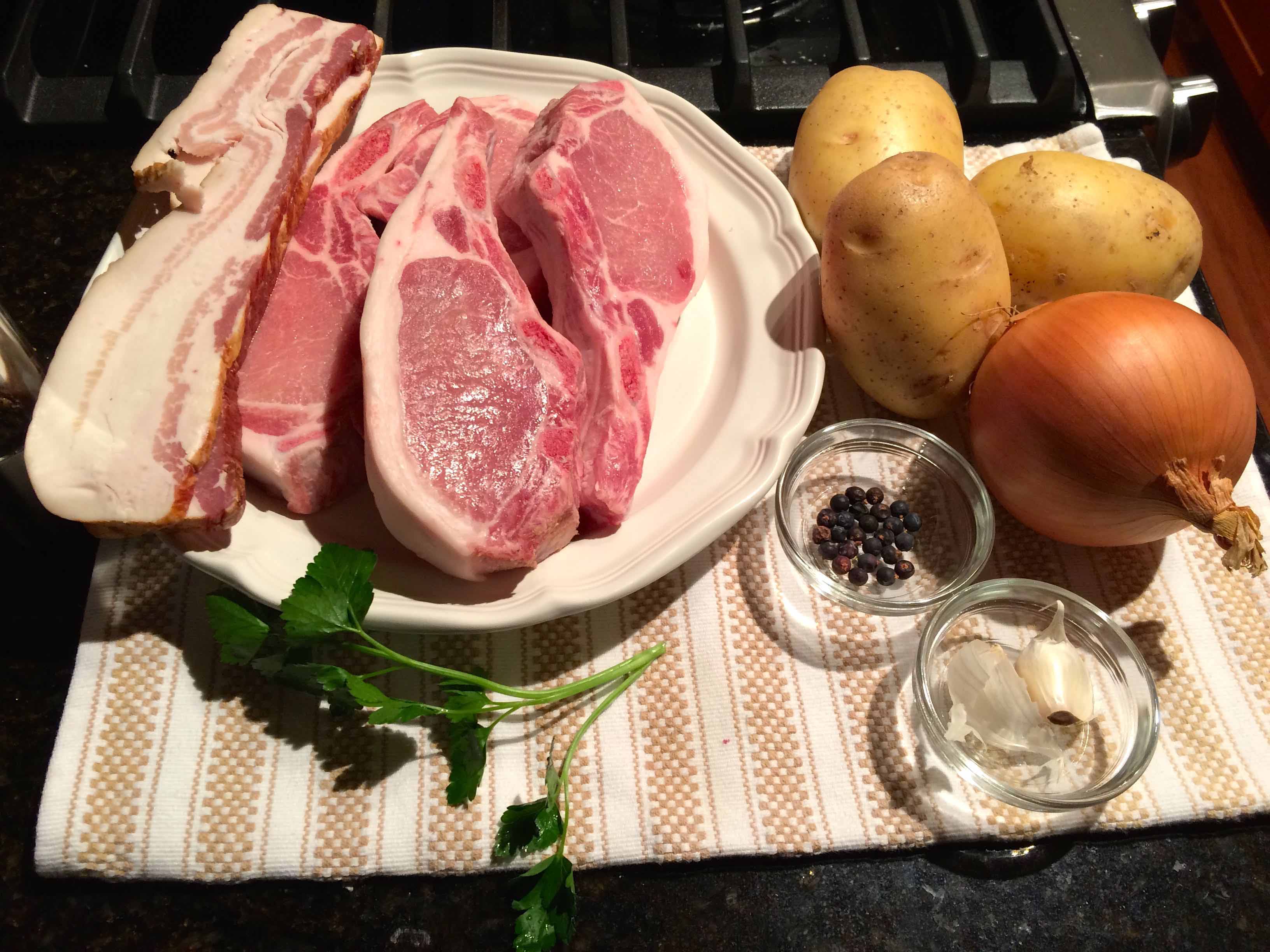
The chops and other ingredients

DIRECTIONS
Pre-heat the oven to 325 degrees.
Cut 2 to 3 slivers along the fatty edge of each pork chop and slide in the slices of garlic.

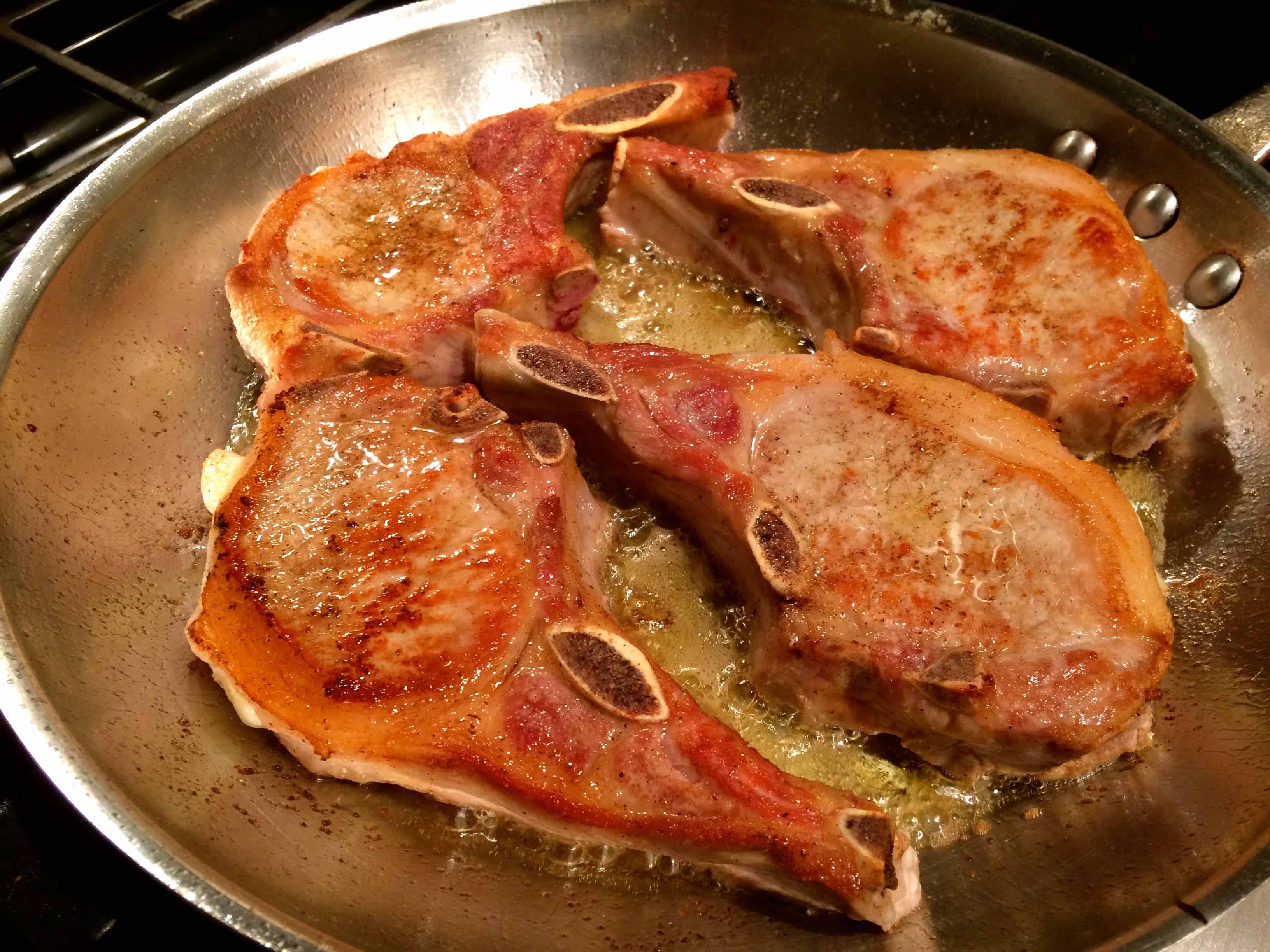
Heat the oil and the butter in skillet large enough to accommodate the 4 chops on high heat. Season the chops with salt and pepper and brown them well, about 3 minutes per side.

Browning the chops
Browning the chops

Transfer the chops to a plate and deglaze the pan with a splash of white wine. Transfer the pan juices to a large enamel-cast iron Dutch oven.

Arrange half the potatoes and onions over the pan juices in the Dutch oven. Season with salt and pepper lay two chops on top of the potatoes and onions.

First layer of potatoes and onions

Then stack the remaining two chops on top of the chops in the pot. Scatter the bacon and juniper berries over the stacked chops.

Stacked chops
Stacked chops

Cover with the remaining potatoes and onions. Season this layer with additional salt and pepper. Pour over the wine.

Cut a piece of parchment to fit over the potatoes and pork chops and lay it in on top.

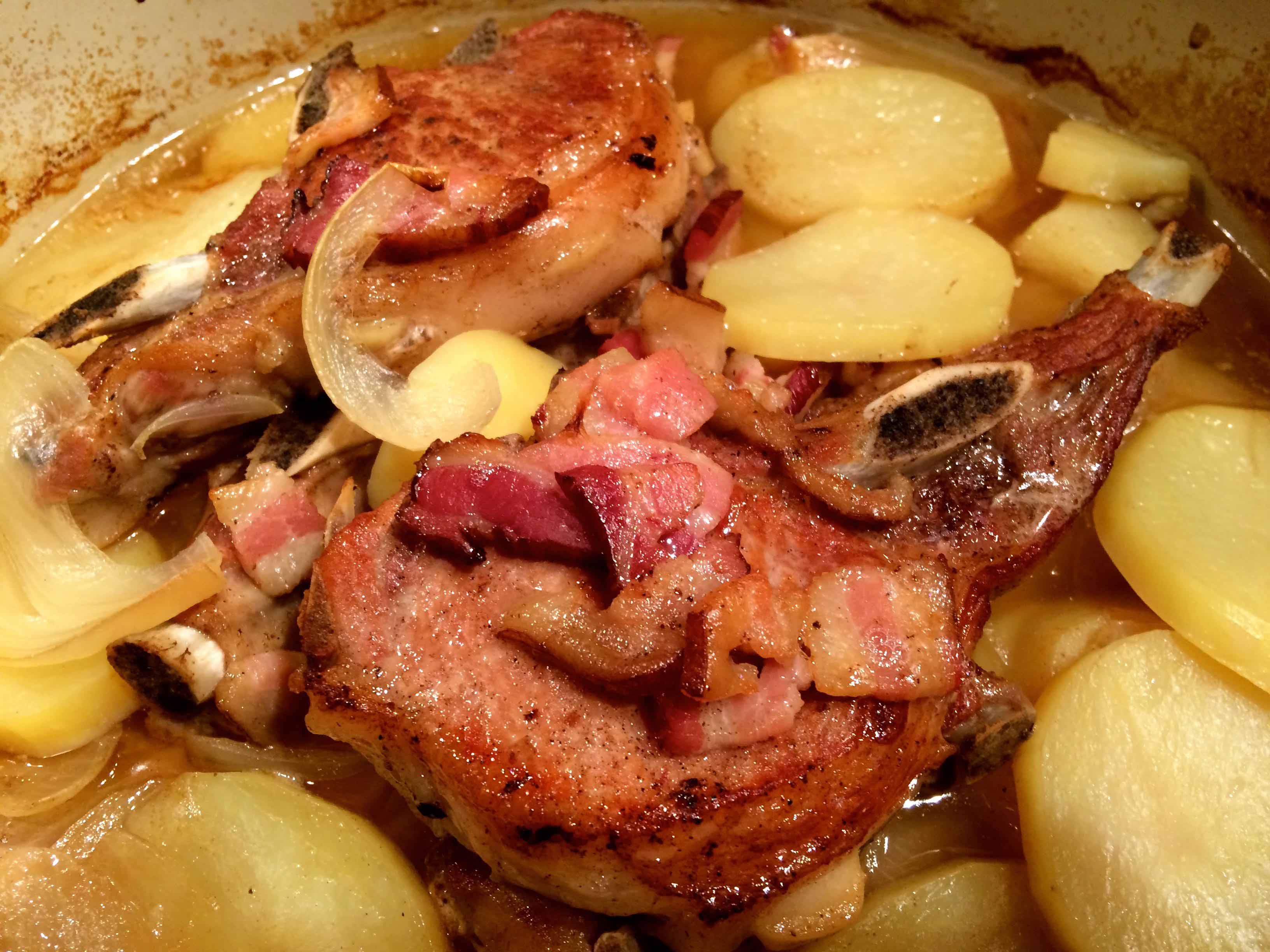
Bake the dish for about 1 hour and 45 minutes (longer if using thicker chops), pouring in the chicken stock halfway through baking. Sprinkle with parsley to serve.

After cooking
After cooking

Wine Pairing: Brunello di Montalcino

Stewed Sausages with Fennel and Tomato

fensausageplatedsm

Owing to our work schedules, Saturdays are typically filled with running errands and housekeeping. As a result on these days, I often look for dishes that are relatively easy to prepare and that can cook on their own while we catch our breath and linger over an aperitivo.

I came across this recipe on the Food and Wine website and thought it would be perfect for a wintry Saturday evening. Including prep, it only requires about an hour and a half and as the sausages cook, the aromas tantalize the appetite.

I’ve modified the original recipe slightly, reducing the number of sausages to 6 from 12 and the number of fennel bulbs from 3 to 2. The recipe recommends serving with creamy polenta and here, I opted for a quick-cooking 5 minute version.

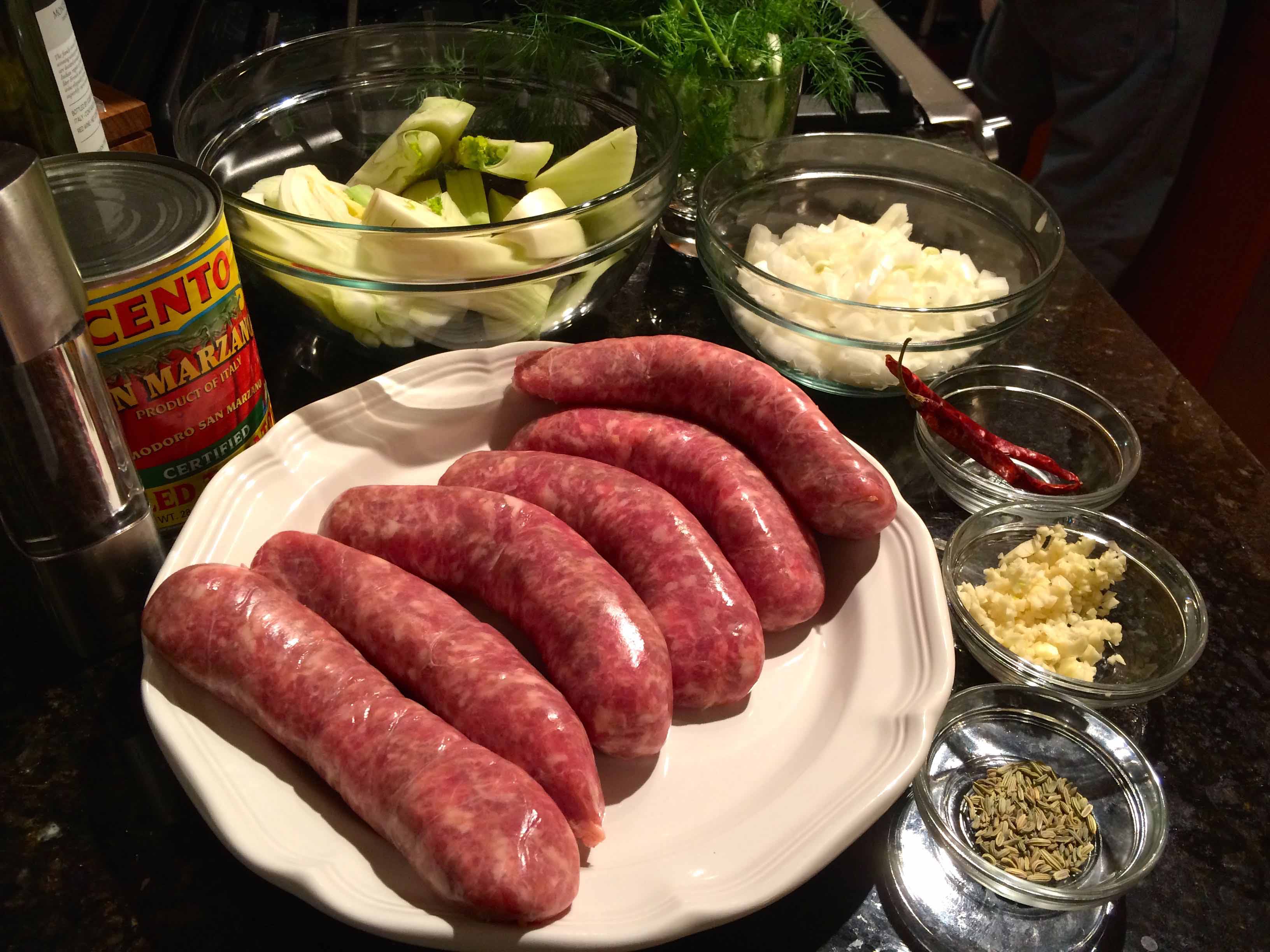
The prep
The prep

Stewed Sweet Sausages in Fennel-Tomato Sauce adapted from Food and Wine.com

1/4 cup extra-virgin olive oil
6 sweet Italian sausages (about 2 pounds)
2 large fennel bulbs—trimmed, each bulb cut into 8 wedges, fronds chopped
1 medium onion, chopped
4 garlic cloves, minced
1/2 teaspoon fennel seeds, crushed
Kosher salt
One 28-ounce can San Marzano whole tomatoes, crushed, juices reserved
1 cup dry white wine
2 whole chiles de árbol

In a large enameled cast-iron casserole, heat the olive oil. Add the sausages and cook over medium heat, turning, until nicely browned all over, 5 minutes. (Don’t rush this step, but also be careful not to overcook the sausages at this point.)

Transfer to a plate.

fensausagebrownsm
Browned sausages

Add the fennel wedges to the casserole and cook over moderate heat, stirring, until golden, about 5 minutes.

Browning the fennel
Browning the fennel

Add the onion, garlic, fennel seeds and 1 teaspoon of salt and cook, stirring, until the fennel is lightly browned, about 3 minutes.

fensausagefenonionsm
After adding the onion and garlic

Add the tomatoes and their juices, the wine, and chiles.

With the tomatoes, wine, and chili
With the tomatoes, wine, and chiles

Tuck the sausages into the sauce.

fensausagefinsm
During the last 45 minutes of cooking

Cover and cook over low heat for 15 minutes. Uncover and simmer until the sausages are cooked through and the sauce is thickened, about 45 minutes longer.

Garnish the stew with fennel fronds and serve over polenta.

Wine Pairing: Dolcetto d’Alba, Merlot

Braised Pork Shanks with White Beans

pshanks10sm

When it comes to winter comfort food, nothing beats something braised. During cooking, the heat from the stove warms the house, while the aromas tantalize the appetite. At the table, the unctuousness of the meat and the sensuousness of the sauce caress the palate. And if you’re lucky enough, or had the foresight to double the recipe, you have the leftovers, which more often than not are even better than when you first enjoyed the dish.

Last weekend, I found some great looking locally sourced, farm-raised pork shanks, each about a pound, at my butcher in Chelsea Market, Dickson’s.

Tied pork shanks
Tied pork shanks

When I got back home, I looked through my files and found a recipe from Williams-Sonoma for a classic braise with broth, wine, and aromatics complemented by cooked white beans.

The success of this dish depends a lot on thoroughly browning the shanks to develop deep meaty flavors. Finely dicing the onions, carrots, and celery makes for a richly textured sauce. My only variation from the recipe was using whole, rather than chopped, fresh thyme and removing the springs before finishing the sauce. I also used a smaller quantity of beans than called for.

Braised Pork Shanks with White Beans Adapted from Williams-Sonoma

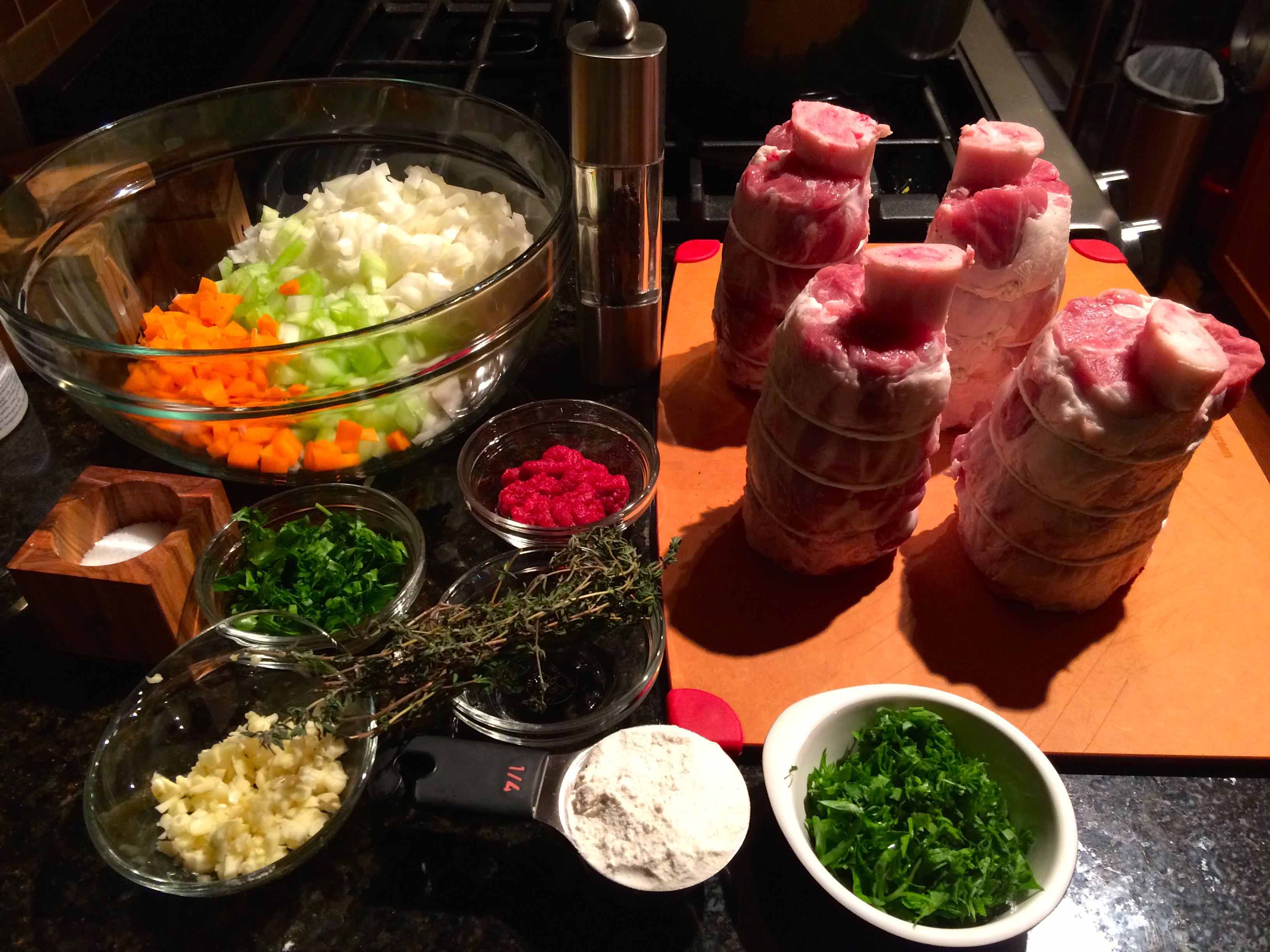
The prepped ingredients

4 fresh pork shanks, well-tied, each 1 1/2 to 2 lb.
Salt and freshly ground pepper, to taste
1/4 cup all-purpose flour
1/4 cup olive oil
2 yellow onions, cut into 1/4-inch dice
2 celery stalks, cut into 1/4-inch dice
2 carrots, peeled and cut into 1/4-inch dice
4 garlic cloves, minced
2 Tbs. tomato paste (I recommend the imported concentrated tomato paste from a tube.)
1/4 cup chopped fresh flat-leaf parsley, plus more for garnish
2 Tbs. chopped fresh thyme (I prefer to use the whole springs and remove then after cooking.)
3 cups low-sodium chicken broth
1 cup dry white wine
4 cups cooked cannellini beans (I recommend starting with 2 cups, and adding more to your taste.)

Directions:
Preheat an oven to 375°F.

Season the pork shanks with salt and pepper. Dredge the shanks in the flour, shaking off the excess. (I’m rather liberal with my salt and pepper.)

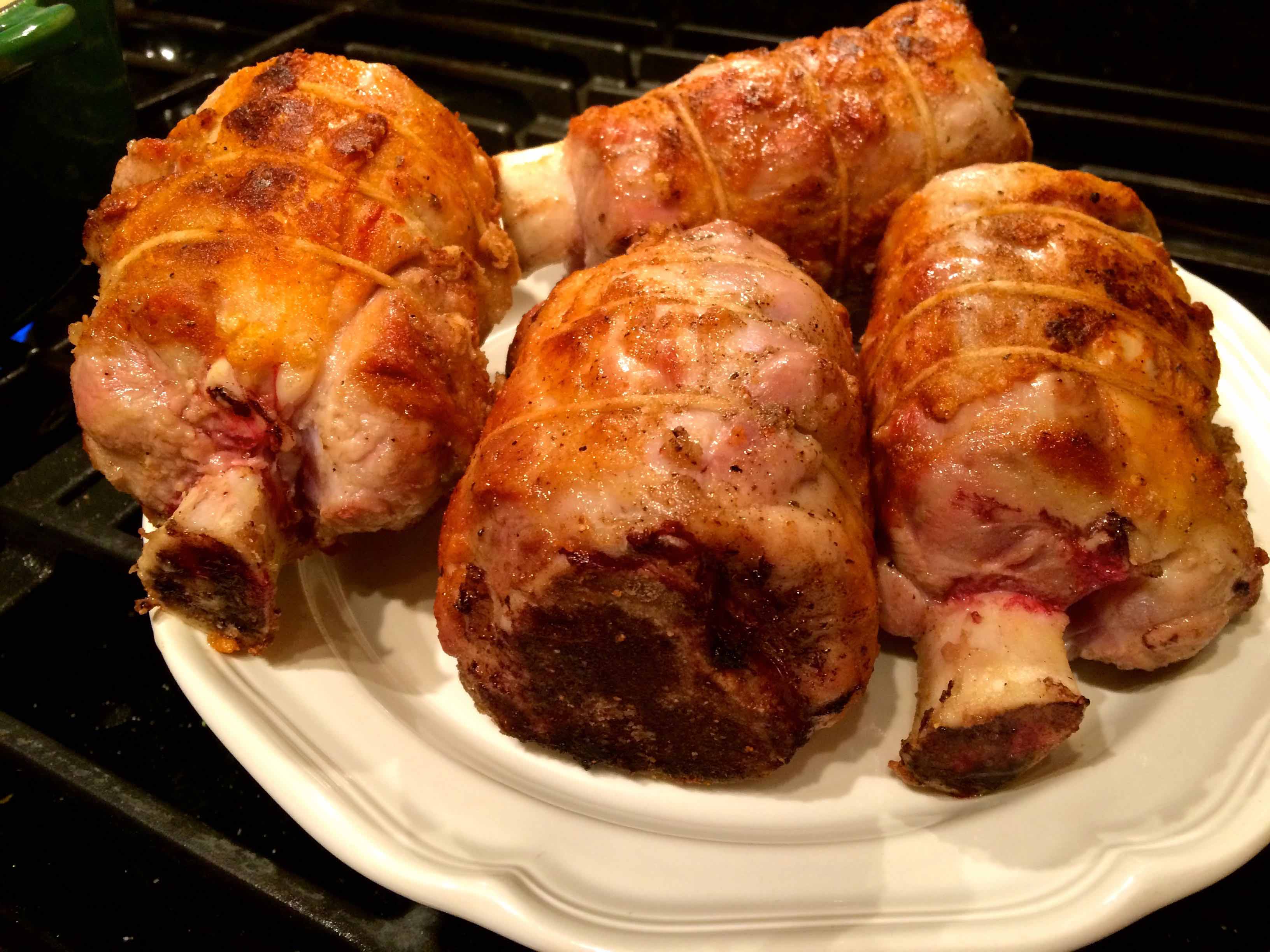
In a large braiser (enameled cast iron works best) over medium-high heat, warm the olive oil until just smoking. Add the shanks and brown on all sides, 10 to 12 minutes total. Transfer to a plate. (Take the time to brown the shanks well.)

The browned shanks
The browned shanks

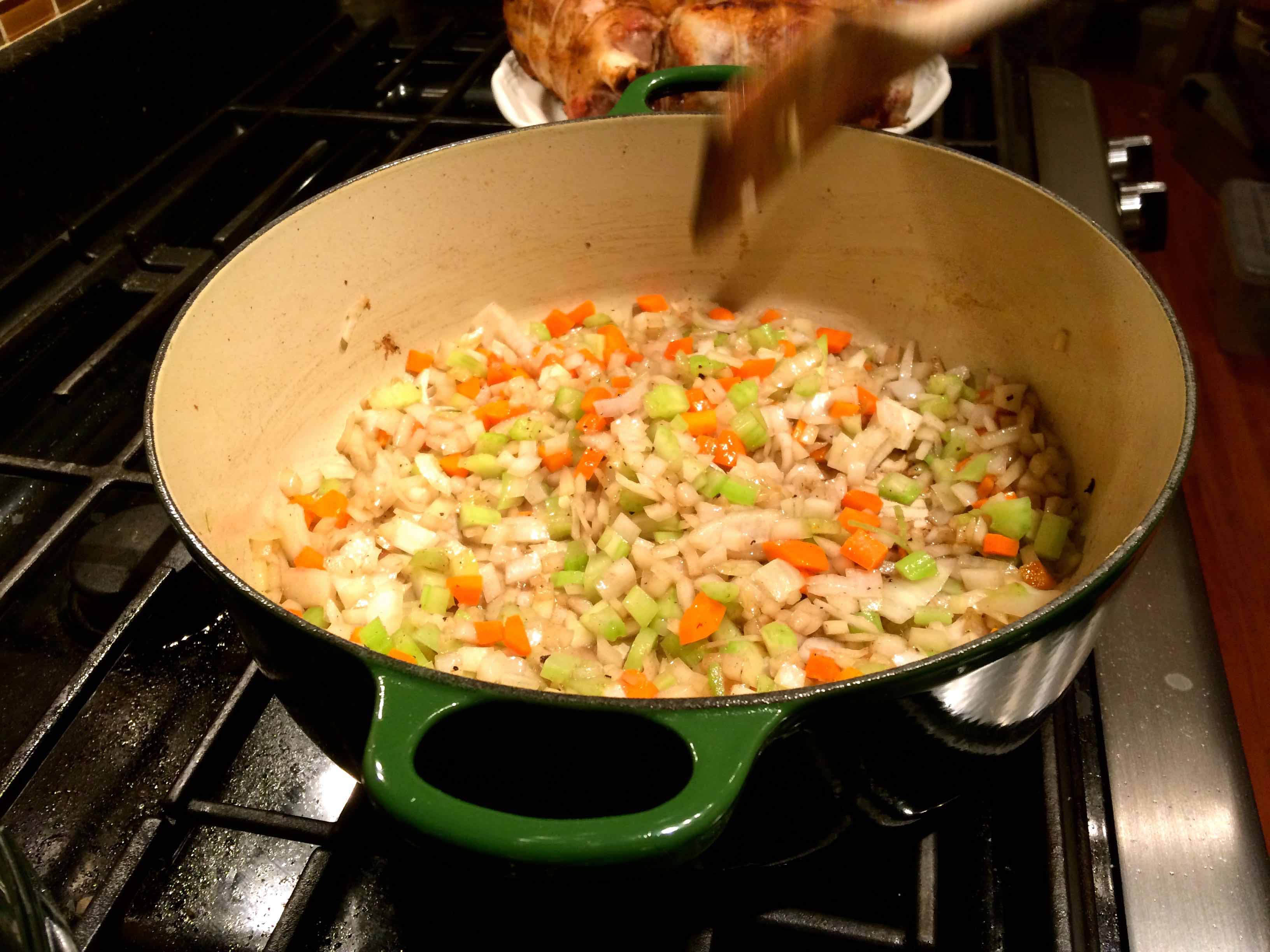
Add the onions, celery and carrots to the pan and cook, stirring occasionally, until tender, 8 to 10 minutes.

The aromatics cooking

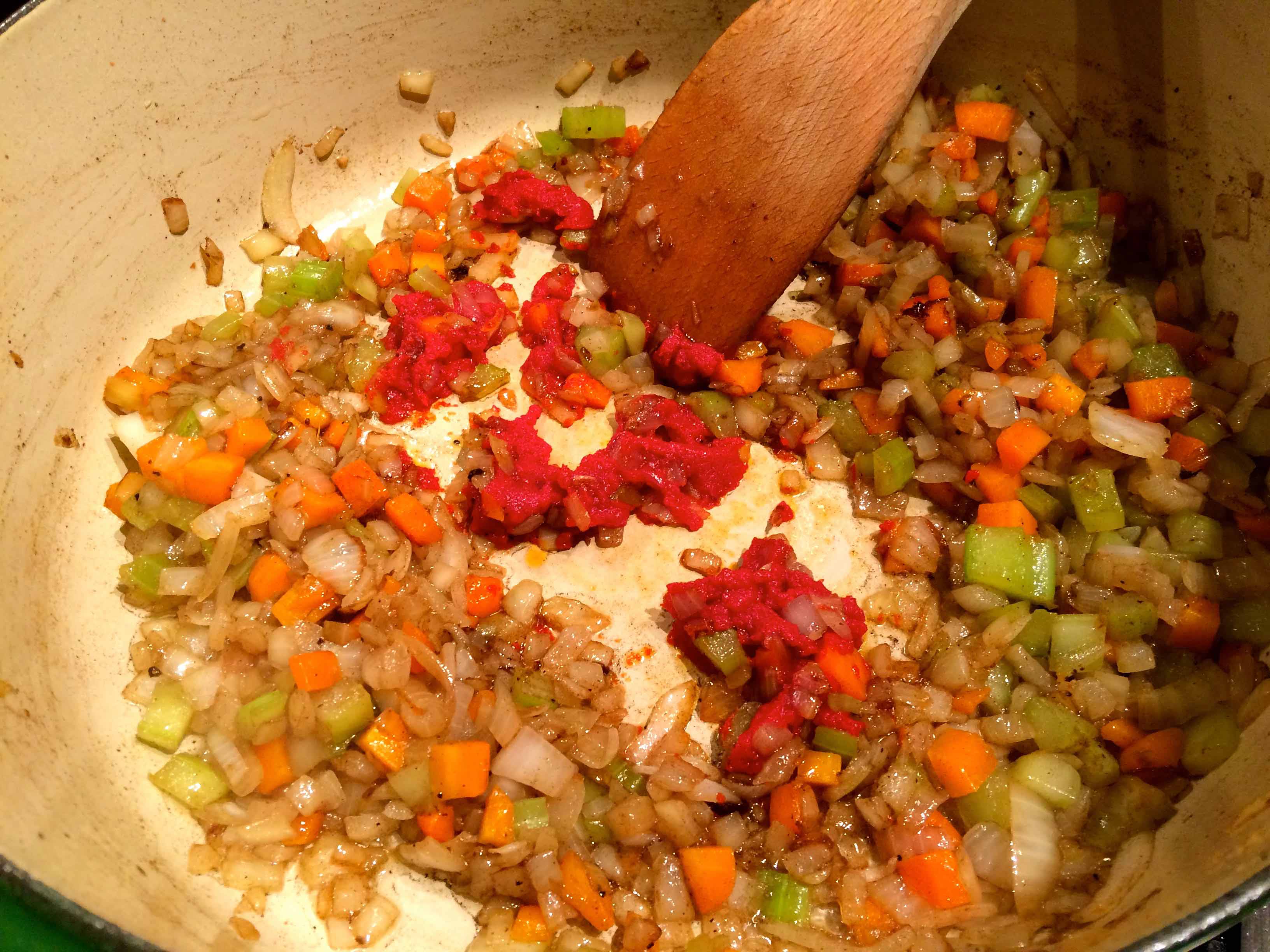
Add the tomato paste and allow to toast for about a minute. (The original recipe adds the tomato paste along with he garlic and thyme and does not call for toasting.)

Toasting the tomato paste

Add the garlic, the 1/4 cup parsley and the thyme and cook for 1 minute. Stir in the broth and wine and bring the mixture to a boil.

The garlic and thyme

Return the shanks to the pan, cover and transfer to the oven. Cook, turning the shanks once about half way through, until the meat is fork-tender and almost falls off the bone, 2 1/2 to 3 hours. Transfer the shanks to a platter and cover loosely with aluminum foil. (The original recipe says to turn the shanks occasionally; I think once is enough.)

The finished shanks
The finished shanks

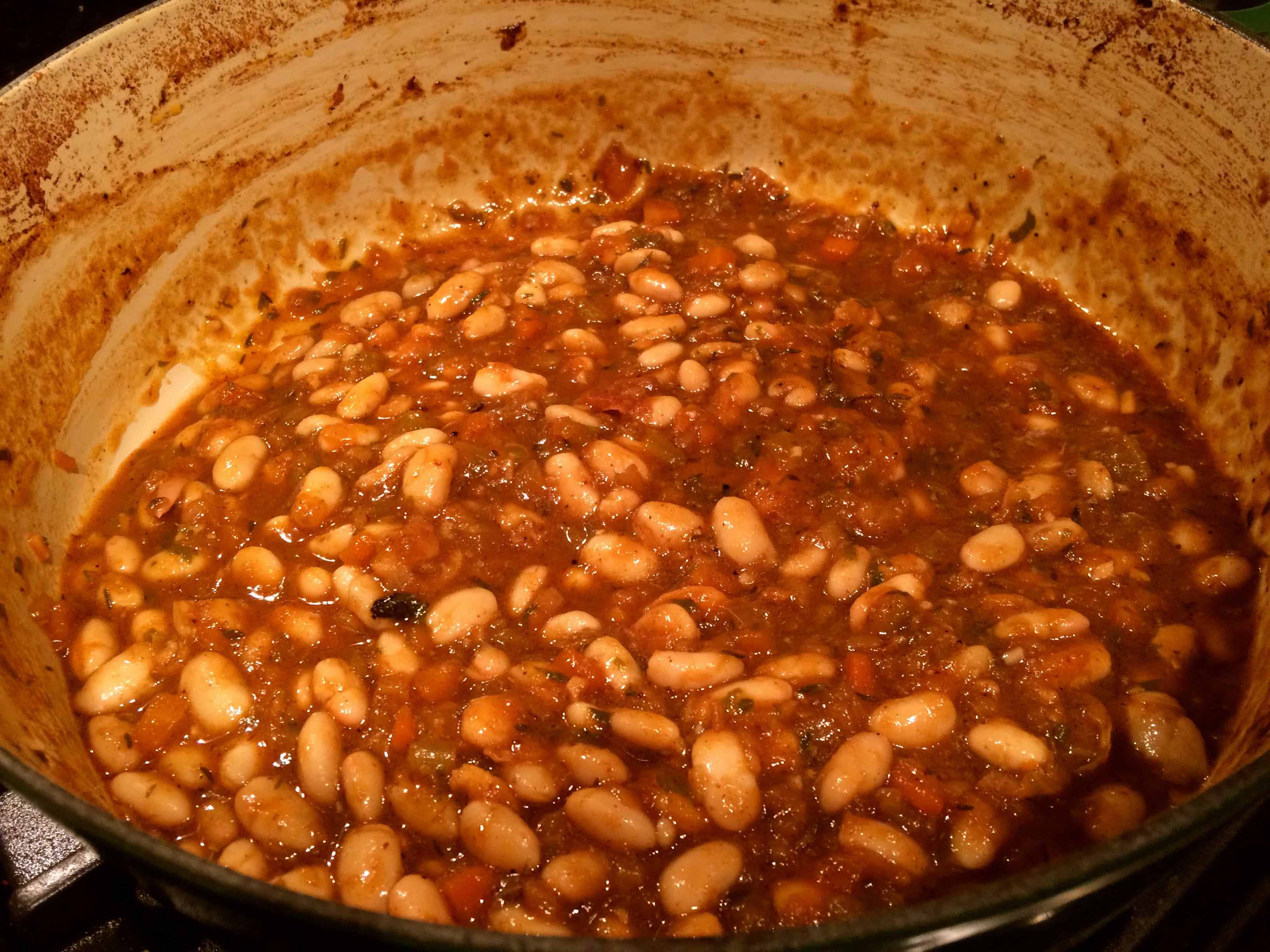
Skim the fat off the braising liquid, set the pan over medium-high heat and bring to a boil. Simmer until the liquid is thickened, 15 to 20 minutes. Stir in the cooked beans, mashing some of them into the sauce.

Beans added to the sauce


Garnish the shanks with parsley and serve immediately with the beans and braising juices. Serves 4.

Wine Pairing: Cotes du Rhone, Syrah

Braised Pork Shoulder Roast

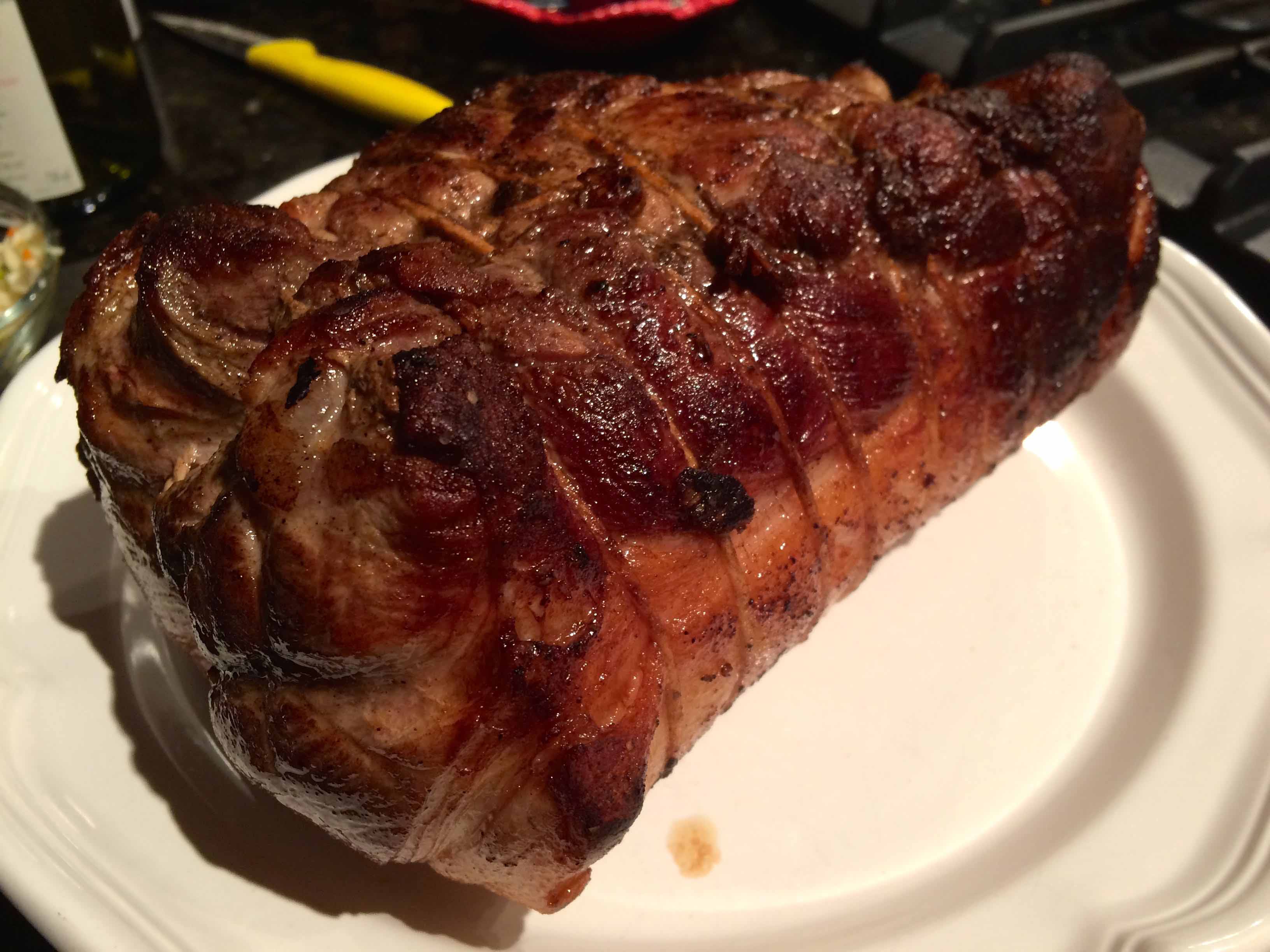
platedroastsm

Yesterday morning, we went to our local butcher to purchase some pork shanks, which I had planned to braise with smoked paprika. Unfortunately, they only had two: one large, one small. That wouldn’t do. As I scanned the display, I espied a pork shoulder roast that prompted me to think of a Facebook post by cookbook author Michele Scicolone on braised pork, which called for, you guessed it, a pork shoulder roast.

Even though we weren’t having dinner guests, I bought the almost four-point roast, and used my phone’s Facebook app to bring up Michele’s post for the recipe and shopping list. She claimed that “nothing is better than a pork shoulder especially when made in the classic Italian way, braised with aromatic vegetables, rosemary and wine.” Well after making it for dinner last night I have to agree—this was indeed the best pork roast I have ever made. Succulent, juicy, and aromatic, perfectly textured, it was absolutely delicious.

I made a few variations, using one large sweet onion rather than the two medium onions called for, increasing the amount of wine and decreasing the amount of water, and adding a tad more fresh rosemary and a pinch of fennel pollen.

The most difficult part of this recipe was waiting for this roast to finish cooking while being tantalized by its seductive aromas that wafted from the oven. We were salivating as it came out of the oven.

As recommended by the author, I served the dish accompanied by white beans and chose a young Barbera d’Alba for our wine.

Here’s a link to Michele’s post: Brasato di Maile for a Festive Dinner Party. Note that a misprint in the recipe erroneously calls for a 14 pound roast as opposed to a 4 pound one.

Onions, Carrot, and Celery are finally chopped

Chopped aromatics
Chopped aromatics

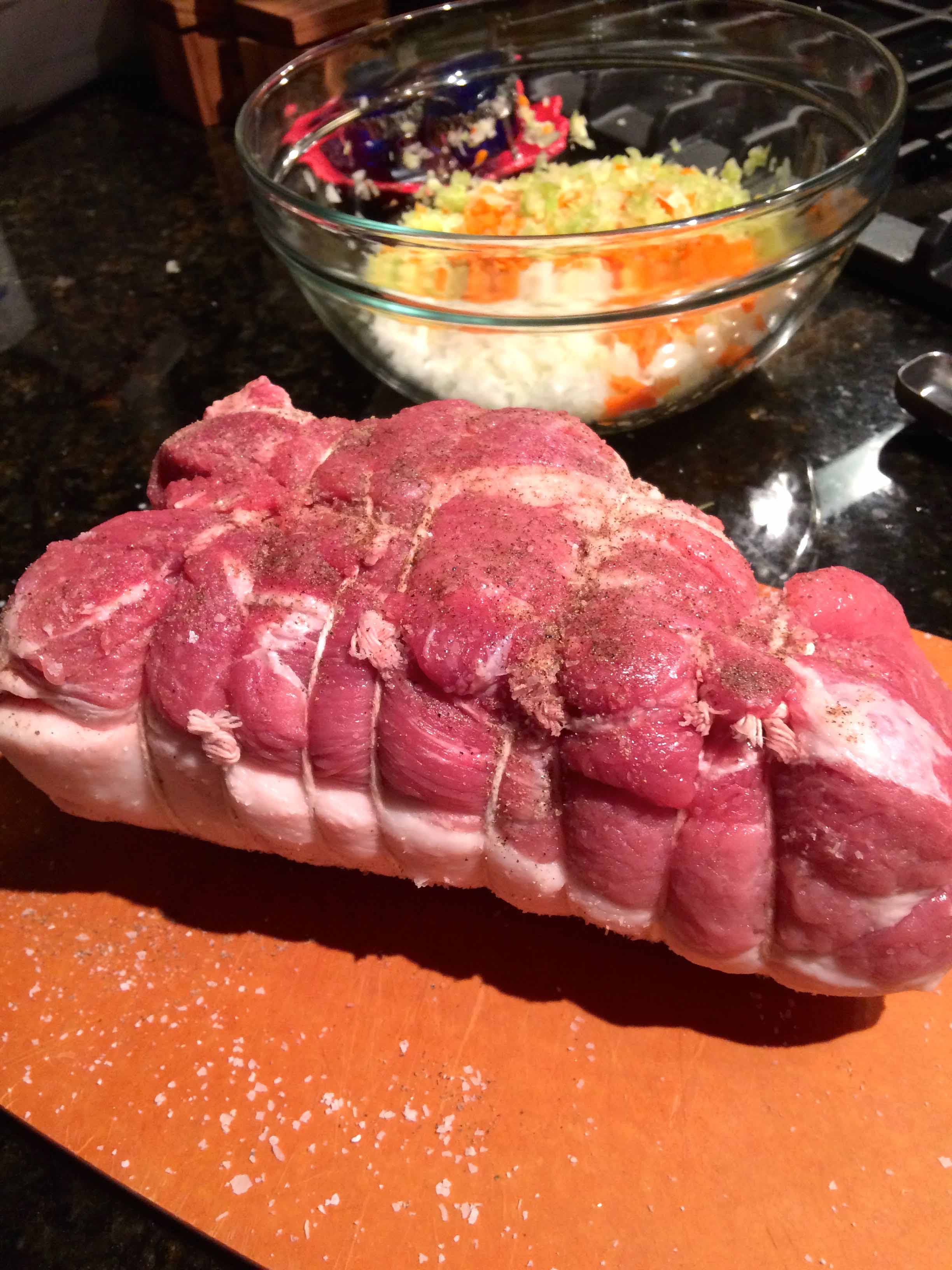
The roast is patted dry and seasoned liberally with salt and pepper:

The seasoned roast
The seasoned roast

The roast is browned on all sides. It’s essential for flavor to take the time to brown the roast well.

Bronwed roast
Browned roast

After browning the roast, I removed it from the pot and sautéed the vegetables, added the garlic, rosemary, fennel pollen, and the wine, and brought them to a simmer. I then returned the browned roast, along with its juices, to the pot.

The roast cooks for about 2.5 hours, or until easily pierced by a fork.

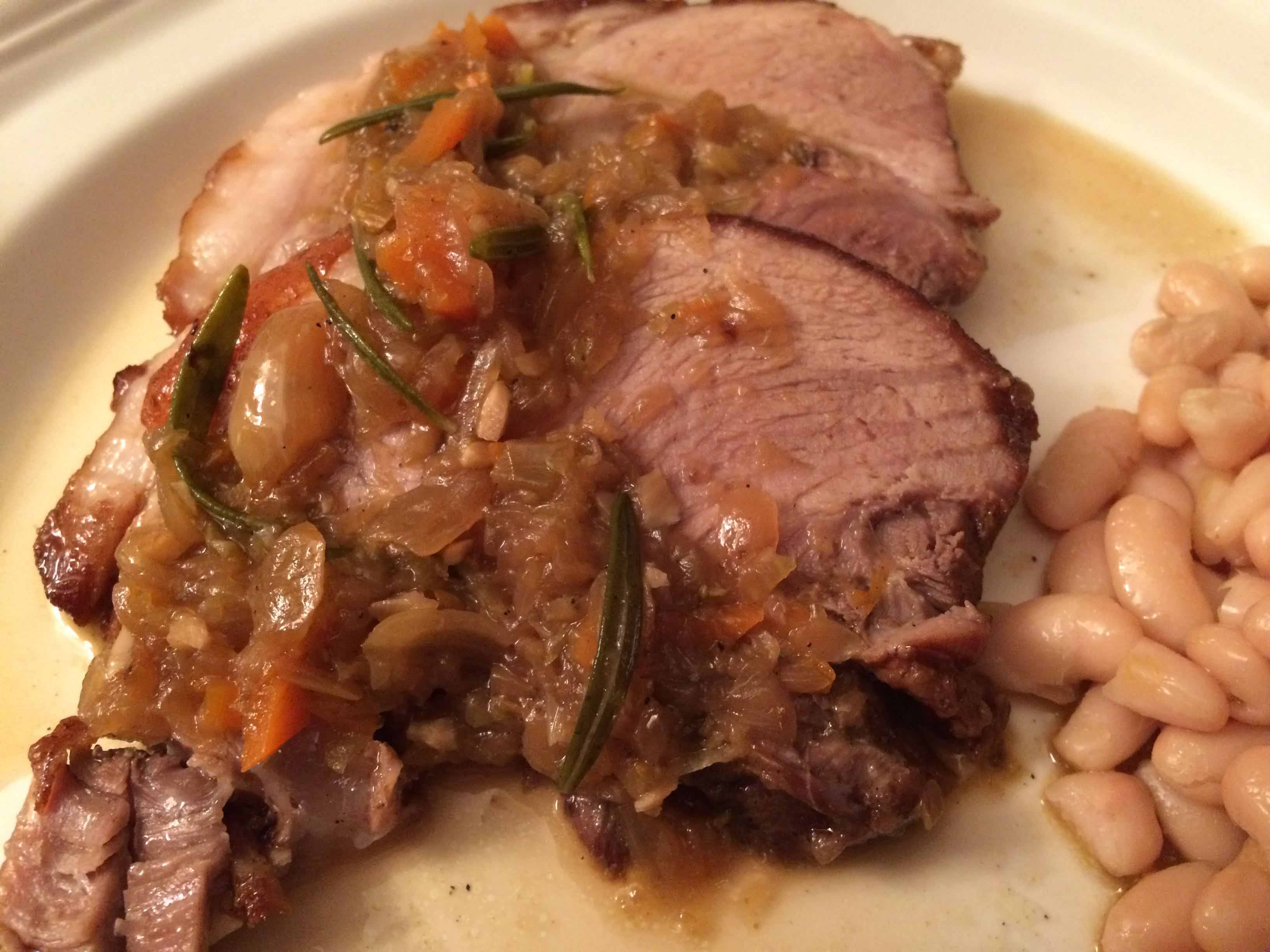
The finished roast
The finished roast

Wine Pairing: Barbera, Chianti Classico, Petite Sirah


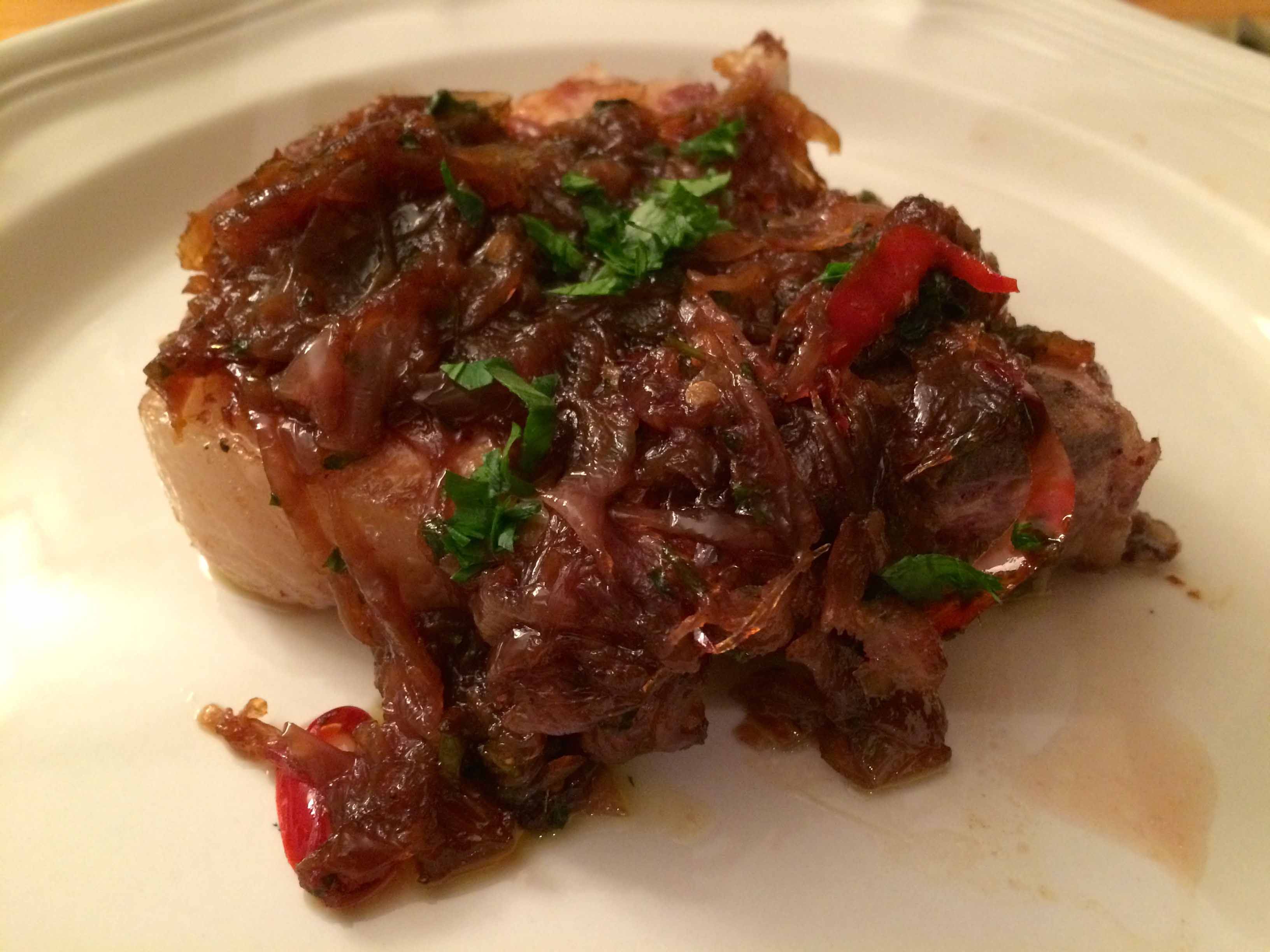
Grilled Pork Chops with Onion Marmalade

tuscanpcsplatedsmall

With a distinctive chill in the air, yesterday seemed to be a harbinger of fall. In fact, it was so chilly last night, that we took supper indoors for the first time since May. Fortunately, earlier in the day, I had found a recipe for Tuscan pork chops on John Fodera’s blog, Tuscan Vines, that I was planning to prepare later this year, but with the change in weather, I decided to prepare it now.

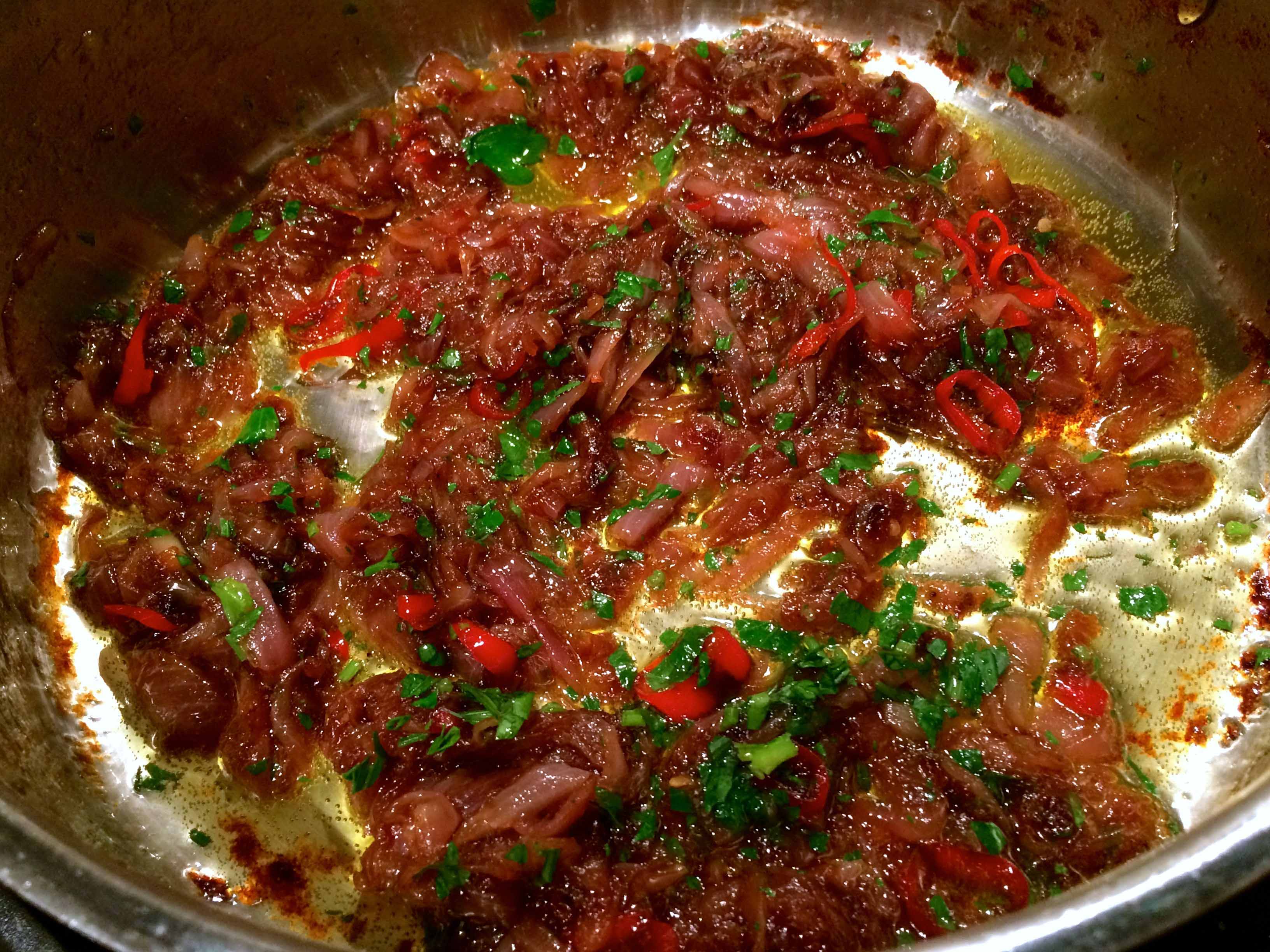
John’s recipe tops thick grilled pork chops with what is essentially a marmalade of caramelized onions spiked with some hot chili peppers. The hardest part of the preparation is waiting for the sliced onions to transform into their caramelized goodness and being tantalized by their sweet aroma.

tuscanpconionssmall
The caramelized onions

I followed the recipe pretty closely, halving the quantities as I was preparing for two. However, I chose to simmer the onions covered for the first 30 minutes of cooking and then browned them uncovered for the last 20 minutes or so. I also toned down the heat using only one chili pepper and I added a teaspoon or so of a thick balsamic vinegar to lend some acidity and complement the sweetness of the sauce.

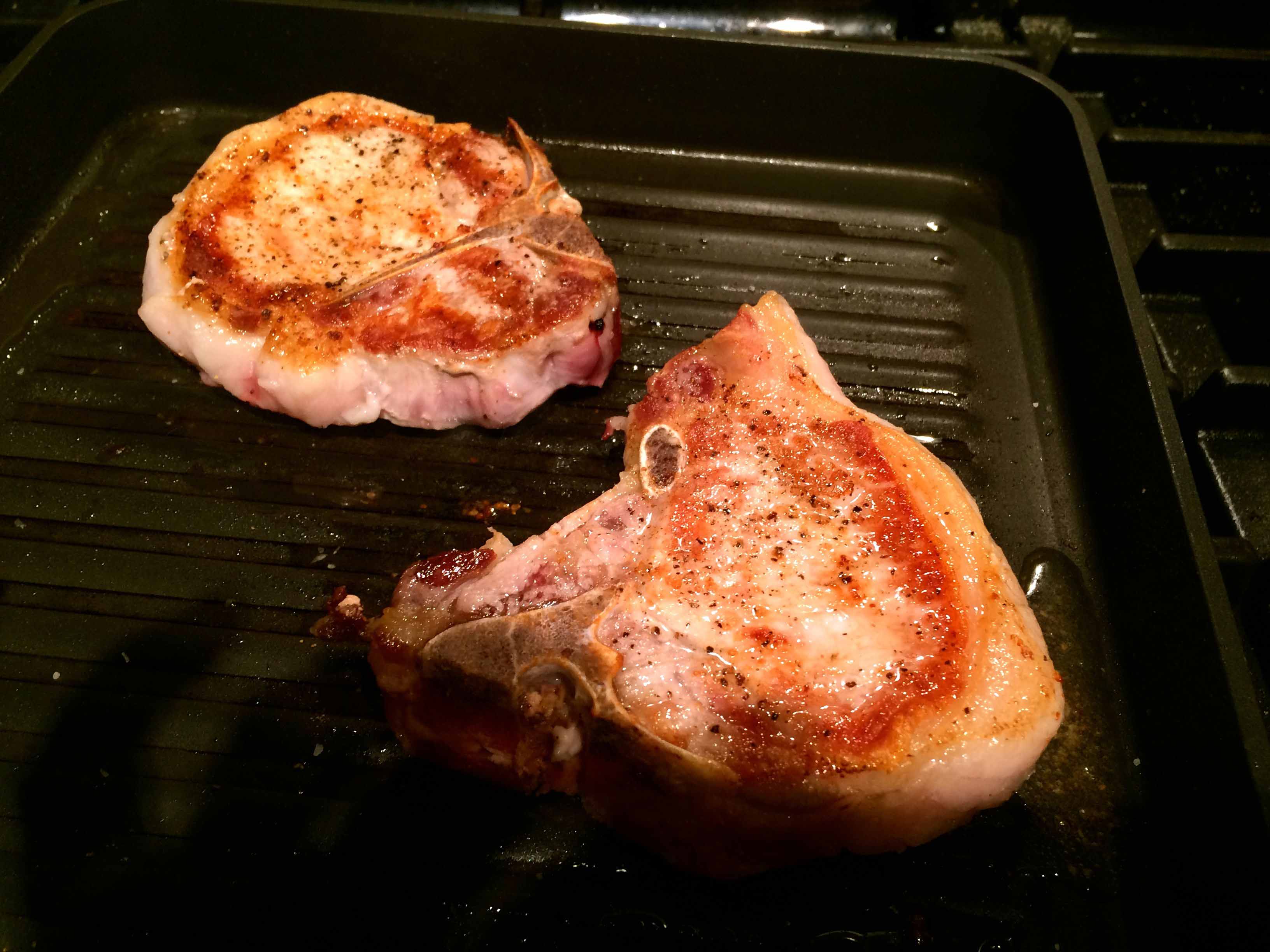
Chops on the grill
Chops on the grill

If you’re entertaining, you can easily prepare the onions ahead of time and then reheat them gently as you cook the chops. But do not try to rush the onions, otherwise they will taste more burnt than caramelized.

The onions would also make a great topping for steaks, chicken, or even bruschetta.

Wine Pairing: Sangiovese

Grilled Fennel Sausage and Peperonata

sausagepepperssmall

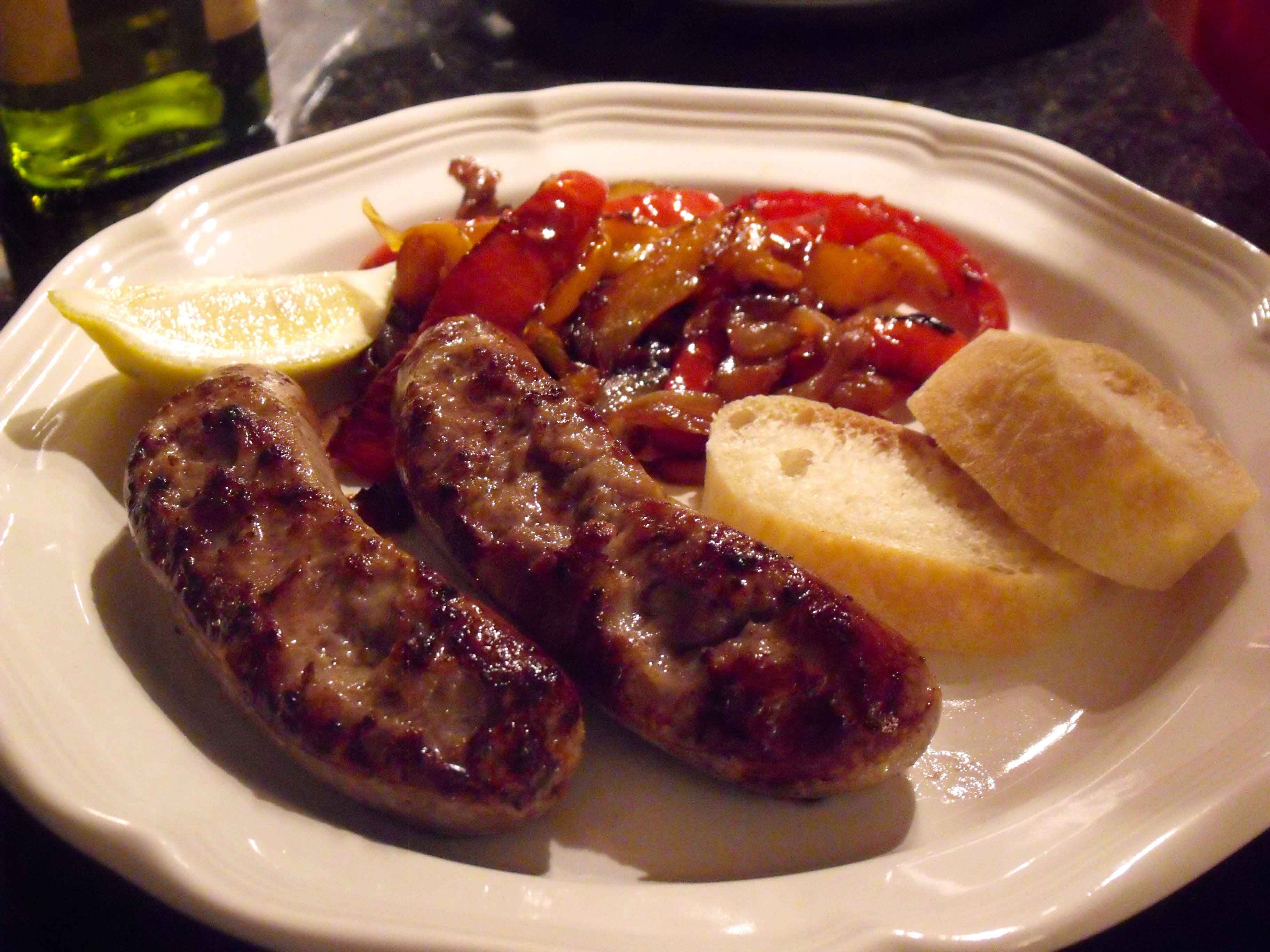
I cannot count the number of times I’ve prepared Italian fennel sausages. Last night, however, influenced by some cooking show, I opted to grill rather than fry them. Not as fortunate as the show’s chef, who used an open fire, I was limited to a stovetop grill pan. Yet despite this restraint, I’m happy to report that this grilling method yielded thoroughly cooked links that were delectably moist and juicy.

To grill the sausages, I made a shallow slit, about a 1/4-inch deep, lengthwise along one side of each sausage and spread it slightly open to expose the meat. I then placed the sausages slit-side down on a hot grill pan over medium-high heat and cooked them for 5 minutes. When they were nicely browned, I turned and cooked the sausages for about an additional 5 minutes.

I served the sausages accompanied by this classic peperonata inspired by my Neapolitan aunt.

Peperonata
3 tablespoons extra-virgin olive oil
3 bell peppers, sliced into 1/4-inch wide strips (I prefer red, yellow, and orange to green)
1 large sweet onion, sliced lengthwise
3 small cloves garlic, peeled and smashed
Kosher salt
1 tablespoon dry Marsala

In a large sauté pan heat the olive oil until shimmering. Add the sliced peppers and cook them, tossing occasionally, over medium-high heat for about 10 minutes, or until they start to become tender and slightly charred.

Add the sliced onion and garlic, sprinkle with some salt, and cook them with the peppers, still over medium-high heat, for about another 10 minutes, again tossing occasionally, until golden brown. Add the Marsala, scraping up any browned bits on the bottom of the pan. and cook for an additional minute or so. Transfer to a serving bowl.

Pairing the peperonta with the grilled sausages makes a perfect weekday supper as we start to enter fall.

Wine Pairing: Barbera d’Alba, Syrah

Broiled Pork Tenderloin with Sun-Dried Tomato and Basil Salsa

porkloinsmall

Last night, I decided to go a little more contemporary in the kitchen and decided to cook, for the first time ever, a pork tenderloin. I don’t know why I’ve never prepared one before, but the current issue of “Cook’s Illustrated” had one of their “technical” features on broiling this cut of meat that captured my interest.

Because I don’t use my broiler that much, other than for browning certain dishes, I found the article most informative and, after reading it, I was motivated to try the accompanying recipe for broiling pork tenderloins.

The magazine’s broiling technique involves preheating the oven to 325° F and then setting it to broil to cook the meat. It also foregoes a broiler pan in favor of a disposable 3-inch deep aluminum roasting pan which, it claims, makes for deeper browning. This recipe really works, and even though there were a few missteps (my pan was a little shy of the called for 3 inch height; I discovered when I went to turn the meat that my broiler had not turned on) the roast nevertheless turned out perfectly cooked, browned, and juicy.

Another reason I chose to make this dish was the sun-dried tomato and basil salsa recipe suggested as an accompaniment. It complemented the buttery flavors of the pork perfectly with a sweet succulence.

Sun-dried tomato and basil salsa

I’ve chosen to give a link to the “Cook’s Illustrated” website, which has a video that demonstrates this cooking method, rather than providing the recipes here. My reason? This is an advertising-free publication that relies heavily on subscriptions to support it and I hope that at least some of my readers will opt either to purchase this issue (September-October 2014) or even take out a subscription to help keep this excellent publication around. Here’s the link: Cook’s Illustrated Broiled Pork Tenderloin Video

Wine Pairing: Garganega, Chardonnay, Dry Riesling

Pork Chops with Sweet Vinegar Peppers

pchopsplatedsmall

Recently it seems that dishes from my childhood are finding their way to our dinner table. Whether it’s nostalgia or appetite that’s to blame, I’m not sure. But, as with last night’s pork chops with vinegar peppers, one of my mother’s favorites, reliving my past through food is always a pleasure.

For quite some time now, I’ve been trying to recreate this dish with varying degrees of success. Most of my attempts have yielded good results, but last night’s was the closest I’ve come to duplicating my mother’s. Most of the recipes I’ve read, and there are many for this Italian-American favorite, call for hot cherry peppers or pickled pepperoncini. However, my mother never used them and opted for pickled bell peppers, whose sweetness she tempered with cider vinegar.

Despite being cooked for a longer time than is fashionable these days, my mother’s chops were always moist and succulent. But back then, hogs were bred more for flavor than leanness. In order to recapture this quality, I use heritage pork when available that’s sourced locally.
The only hurdle left in trying to duplicate this dish perfectly is finding the brand of peppers she used, namely B and G Sweet Vinegar Peppers. Although last night’s Roland brand’s were good, they somehow were not just the same.

Pork Chops with Sweet Vinegar Peppers
Ingredients
2 1-inch thick, bone-in pork chops
Kosher salt
Fresh ground pepper
Sugar
1/4 cup extra virgin olive oil
1 garlic clove, peeled and lightly smashed
1/4 cup dry white wine
1/4 cup cider vinegar
2 whole red long peppers, sliced 1-inch thick

Dry the chops well with paper towels and season one side with salt, pepper, and a small pinch of sugar

Heat the oil and garlic clove in a sauté pan large enough to hold the chops comfortably.

When the oil is hot, add the chops seasoned side down and brown for about 5 minutes. Season the top side with salt and pepper, and then turn and brown on the second side for about another 5 minutes. Be sure to remove the garlic when it starts to brown.

Pork chops browned
Pork chops browned

When the chops are browned, place them on a plate and discard most of the fat from the pan, retaining a tablespoon.

Add the wine and the vinegar, scraping up any of the browned bit on the bottom of the pan. Return the chops, along with any juices from the plate, to the pan turning once to coat with sauce. Add the sliced peppers, cover, and cook over low heat for about 5 to 8 minutes or until the chops are cooked.

Chops and peppers in the pan

I served the chops last night with some of the sweetest summer corn I’ve had this season. Thought not a traditional accompaniment, it provided a perfect counterpoint to the savory chops.

Wine Pairing: Syrah, Chardonnay