Grilled Lamb Chops

chopscookedsmall

Last night’s recipe for lamb chops came from Everyday Italian: 125 Simple and Delicious Recipes by Giada de Laurentiis. It’s a simple recipe that calls for marinating 3/4 inch lamb chops for several hours in a paste made from extra virgin olive oil, garlic, fresh rosemary, fresh thyme, salt, and cayenne.

I chose to add some ground cumin to the blend for its savory character. Here’s a link to the recipe: Grilled Lamb Chops

chopsrawsmall

I served the chops with steamed spinach and a couscous cooked in stock with some Marsala-soaked raisins and then finished with a generous touch of za’atar, a Middle-Eastern spice blend.

Wine Pairing: Sangiovese, Merlot, Pinot Noir

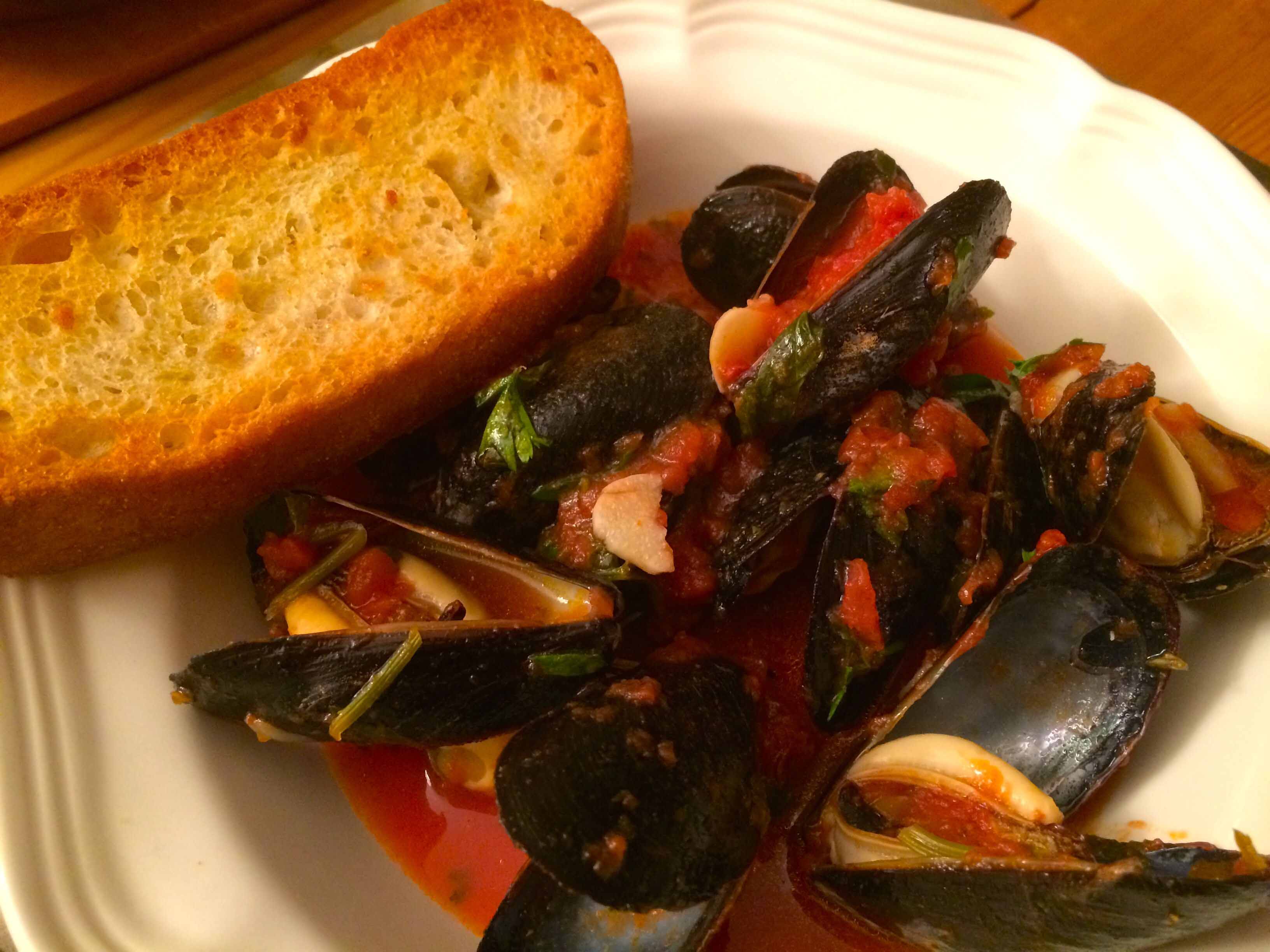
Mussels Marinara

musselsblog2small

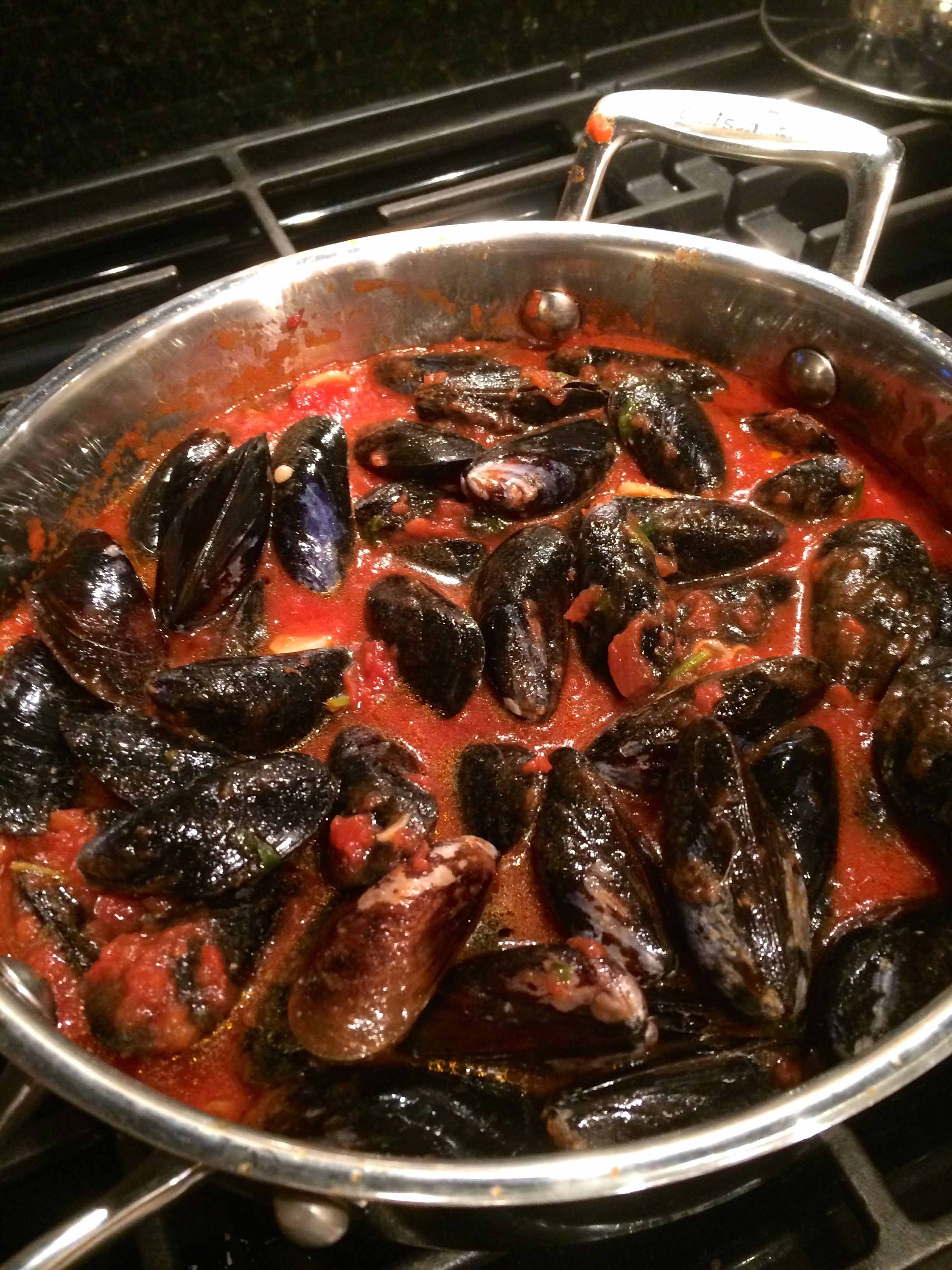
Tuesday is usually a fish day for us. So last night, I prepared Mussels Marinara. I’m not sure how I came up with this recipe, but over the years I’ve been tweaking it. The marinara sauce is based on that of my Neapolitan aunt, who would often prepare it for a weekday dinner’s first-course pasta. The process of steaming the mussels open in the sauce comes from many recipes I’ve used for preparing clams for pasta with olive oil, garlic, and parsley.

This is a relatively easy and quick dish to prepare; perfect for a weekday night.
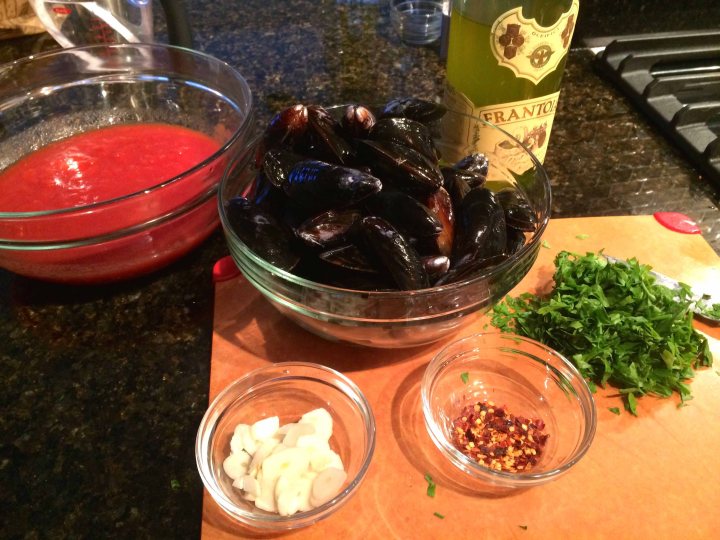
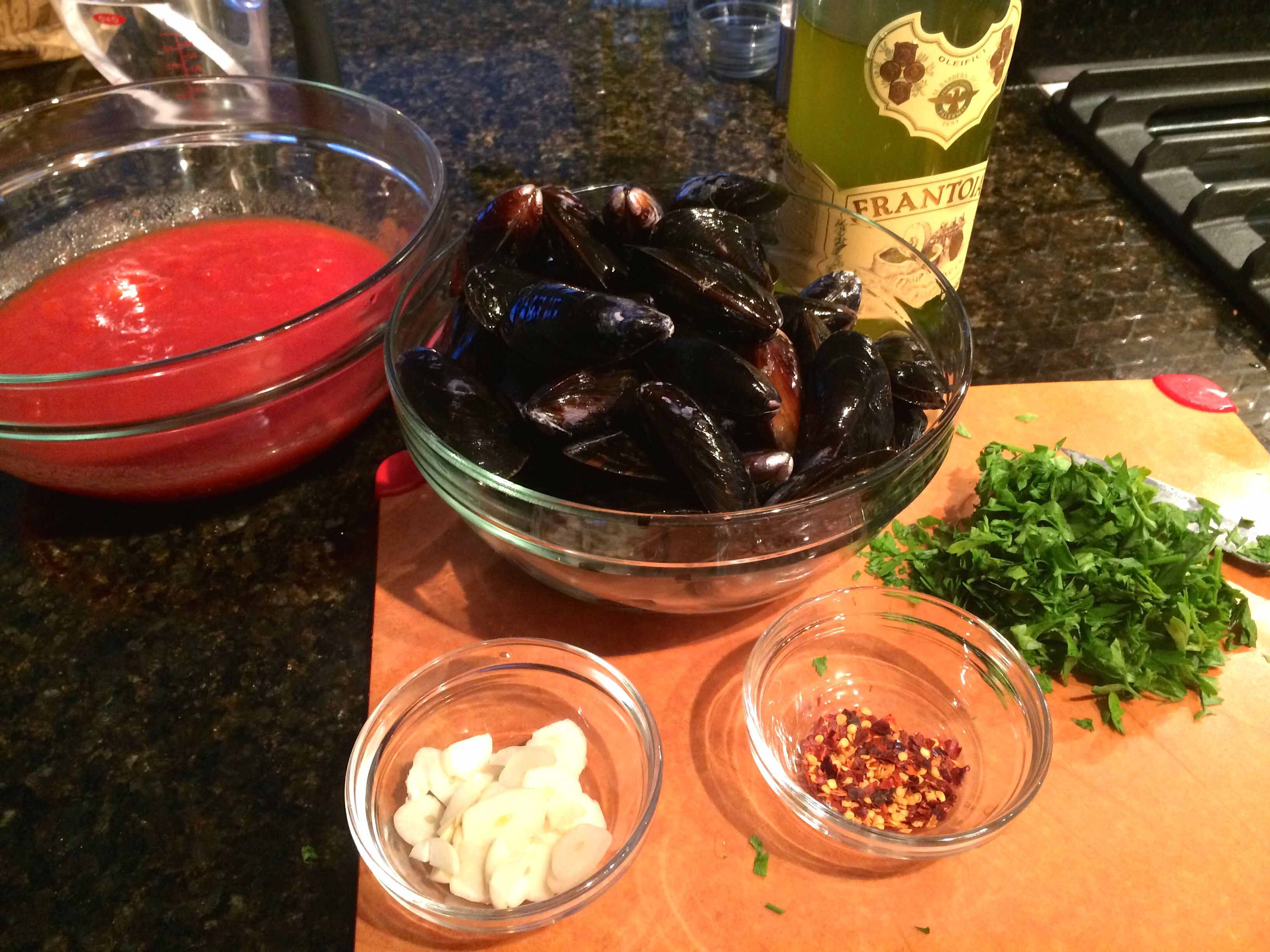
mussingredientssmall

2 pounds mussels, rinsed and debearded. (I use farmed mussels, which are easier to clean and require a minimum of debearding.)
2 Tbs extra virgin olive oil
3 cloves garlic, sliced about 1/8 inch thick
3 Tbs chopped parsley (1 for the sauce; 2 for finishing)
28 oz can of crushed Italian tomatoes
1/4 cup dry white wine
1 tsp crushed red-pepper flakes (or more to taste)
1 tsp dried oregano (If you opt for more oregano, be careful not to overdo it, as too much oregano can overwhelm the taste of the mussels.)

1. Clean and debeard mussels, discarding any cracked or opened ones. I keep them in a bowl with cold water slowly running over them and then lift them up out of the water with a spider or small sieve.

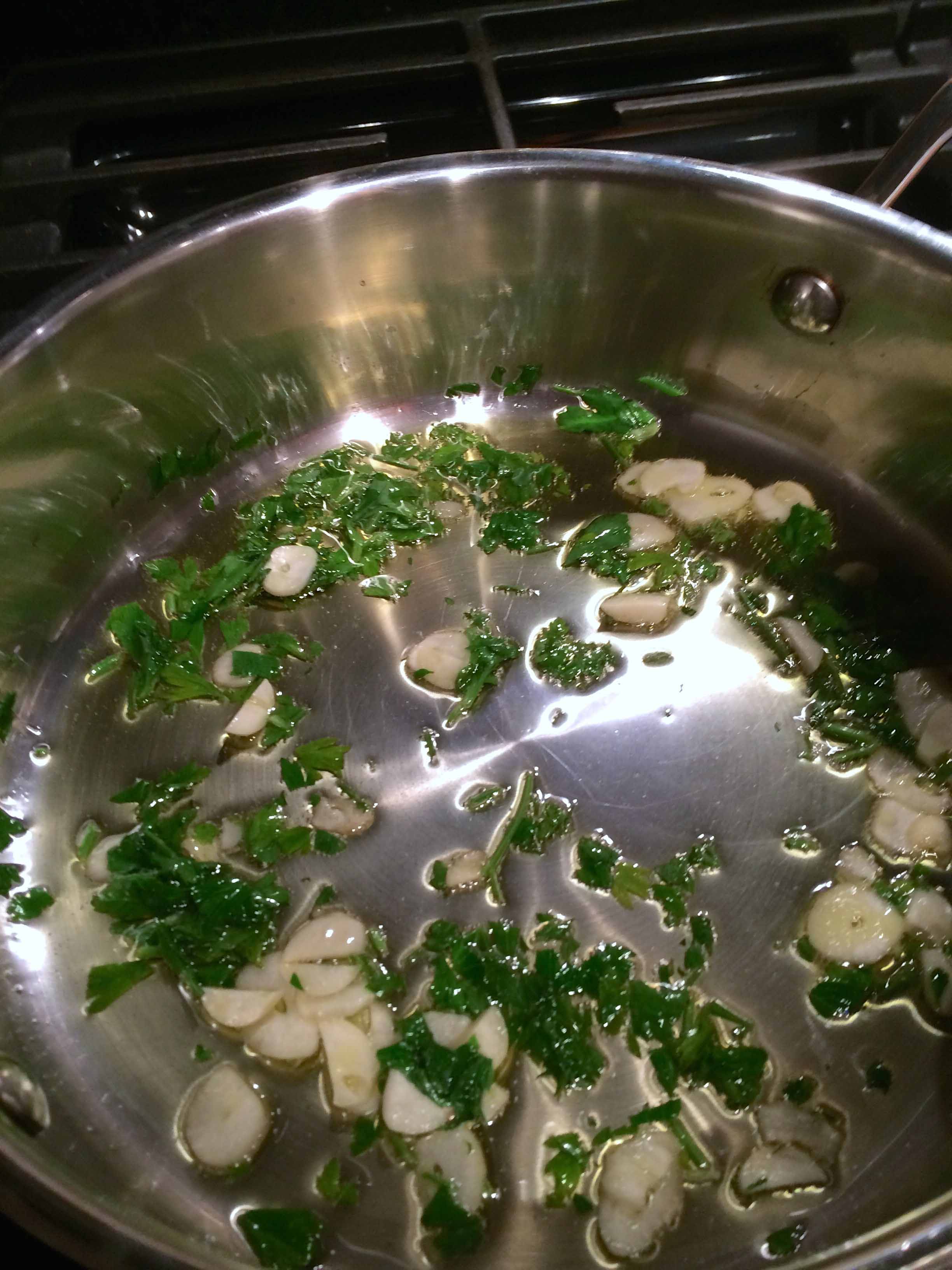
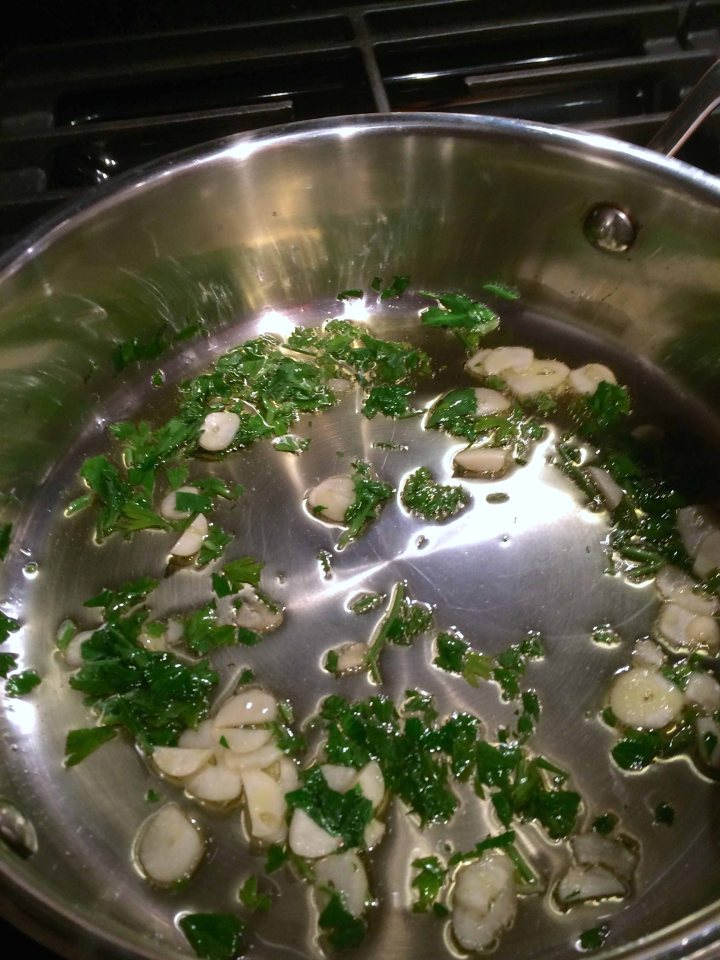
2. In a large deep, 3 quart, sauté pan, over low heat add oil and garlic. Poach the garlic slowly for about 5 minutes until they become aromatic and before they take on any color.|

3. Add 1 Tbs of the parsley and simmer for 2 to 3 minutes more.
mussstep1small
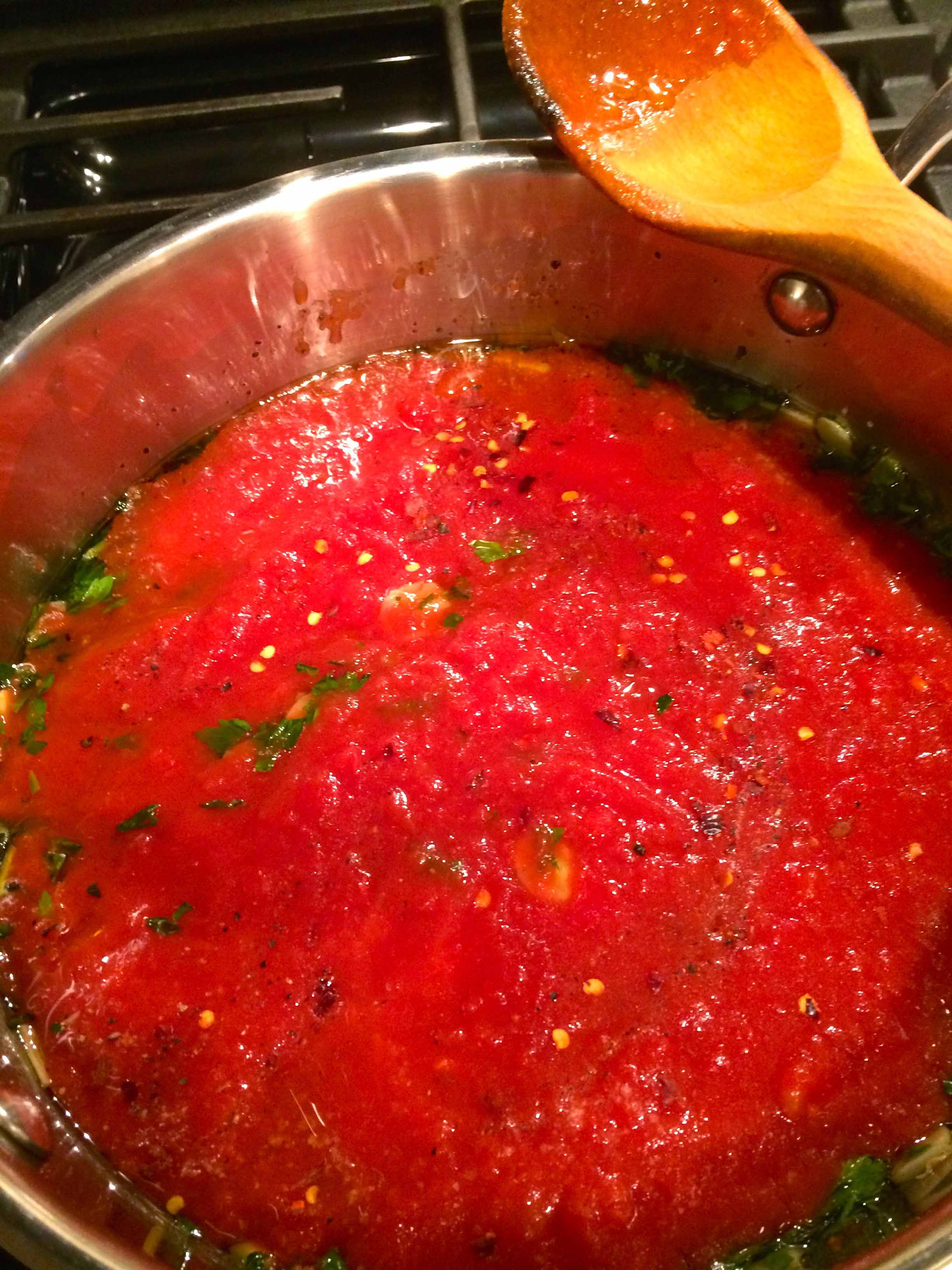
4. Add tomatoes and bring to simmer.

5. Add red-pepper flakes and oregano. Rub the oregano in your palms to release maximum flavor.

6. Add wine and simmer uncovered over medium low heat for 15 minutes.musstep2small

7. Add mussels to to the pan and stir coating them with the sauce.

mussstep3small

8. Cover the pan tightly. Raise the heat to medium-high and cook for 2 to 3 minutes, occasionally shaking the pan, until the mussels have opened.

9. Transfer to a large bowl with the sauce, discarding any mussels that have not opened. Finish with the remaining parsley and, if desired, a drizzle of olive oil.

Serve, in warmed bowls, with thick slices of grilled or toasted Italian bread to sop up the sauce.

Wine Pairing:  A young Salento Rosso for a red; a Fiano di Avellino for a white.

Steak Salad for Lunch

steaksaladsmall

I made a quick lunch today from leftover ribeye steak and chickpeas. I dressed the arugula with a touch of good balsamic vinegar, extra virgin olive oil, and salt. Topped it with lightly salted, thinly sliced leftover steak and a few chickpeas that were also tossed separately with some of the oil and vinegar. Served with a couple of slices of ciabatta.

Pasta all’Amatriciana

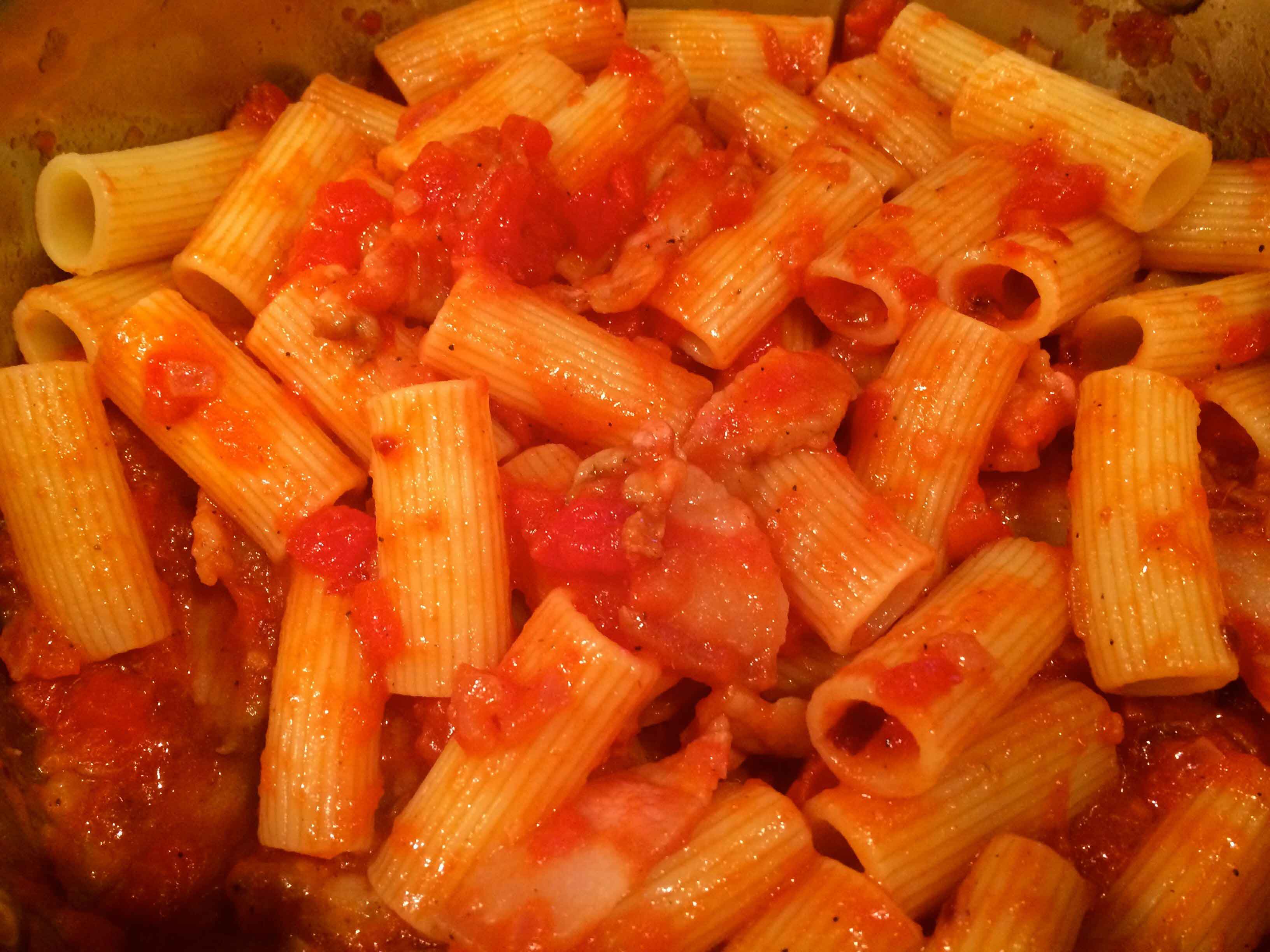
Image

I couldn’t get to the grocery store yesterday, and we both wanted pasta. Therefore, I had to rely on what was on hand: half a red onion, canned plum tomatoes, olive oil, crushed red-pepper flakes, a half pound of rigatoni.

That lineup could have worked well for a simple marinara. A second look in the fridge, however, yielded a left-over piece of guanciale. When I saw this cured pork made from a pig’s cheek, the die was cast: pasta all’ Amatriciana.

Recipes for this classic Roman pasta dish abound, as do debates over its preparation. The major disagreement seems to be over the use of onion. Many feel that it adulterates the flavor of the original. But I like the sweetness the onion adds to the sauce and, if I have some in the kitchen, will use it.

Another dispute centers on the meat: pancetta or guanciale. Most traditionalists I know call for the latter. However, two of my favorite cookbooks, Marcella Hazan ’s Essentials of Classic Italian Cooking and David Downie’s Cooking the Roman Way call for pancetta. I find pancetta too salty and therefore opt for guanciale, which maintains its silky texture during cooking and makes for a more succulent sauce. But either will do.

Finally, there are differing opinions on the pasta shape. Some purists call for spaghetti; others, for bucatini. I prefer the thicker bucatini, but when I don’t have any available, I’ll use rigatoni or even penne.

So here’s my recipe for a serving for two, based on Marcella Hazan’s.

1 Tbs Olive Oil
1 Tbs Sweet Butter
1/2 Red Onion, diced fine
4 oz of Guanciale, cut into strips about 1/4 inch thick and 1/2 inch long
1 14 oz can Italian crushed tomatoes (I prefer San Marzano if available)
1 tsp crushed red-pepper flakes or to taste (I prefer the hot Calabrian)
Salt
1/2 lb pasta (bucatini, rigatoni, penne)
1 Tbs of Pecorino Romano, grated, plus more for the table

  1. Add the oil, butter, and onion to a sauté pan and cook over medium flame until the onion is soft. Be sure to stir occasionally to avoid burning the onion. About 5 minutes.
  2. When the onions are soft, add the guanciale and cook until the guanciale starts to render its fat. About 3 minutes.
  3. Add the tomatoes, red-pepper flakes, salt to taste, and stir.
  4. Bring to a slow simmer and cook at a simmer uncovered for about 30 minutes. Taste, at the end, for salt and hot pepper.
  5. Meanwhile, bring a large pot of water to a boil. When boiling, add a generous amount of salt to the water. Add the salt slowly to avoid the water boiling over. Add the pasta and bring back to a boil and cook for about a minute or two less than indicated on the package for al dente.
  6. When the pasta is done to a good al dente stage, drain well, saving about a cup of the pasta water.
  7. Add the drained pasta to the sauce in the sauté pan and cook over a low flame, tossing for about a minute. If too dry, add a tablespoon or so of the pasta water.
  8. Turn off the flame, add the cheese, and toss again.
  9. Serve on heated plates accompanied by some additional grated cheese.

Wine Pairing: My go-to wine for this pasta is a chilled Frascati, the wine of Rome. However, for red-wine drinkers a Montepulciano d’Abruzzo would work well.

Steak Night Ribeyes

Image

After a week of being “good,” I thought we deserved some big beef. Passing by my butcher, I found some irresistible local-grown bone in ribeye steaks.  Living in New York City, many of us don’t have the luxury of an outdoor grill and need to turn to alternative methods of grilling a steak. Many opt for broiling or oven roasting, but I depend on a good grill pan.

Image

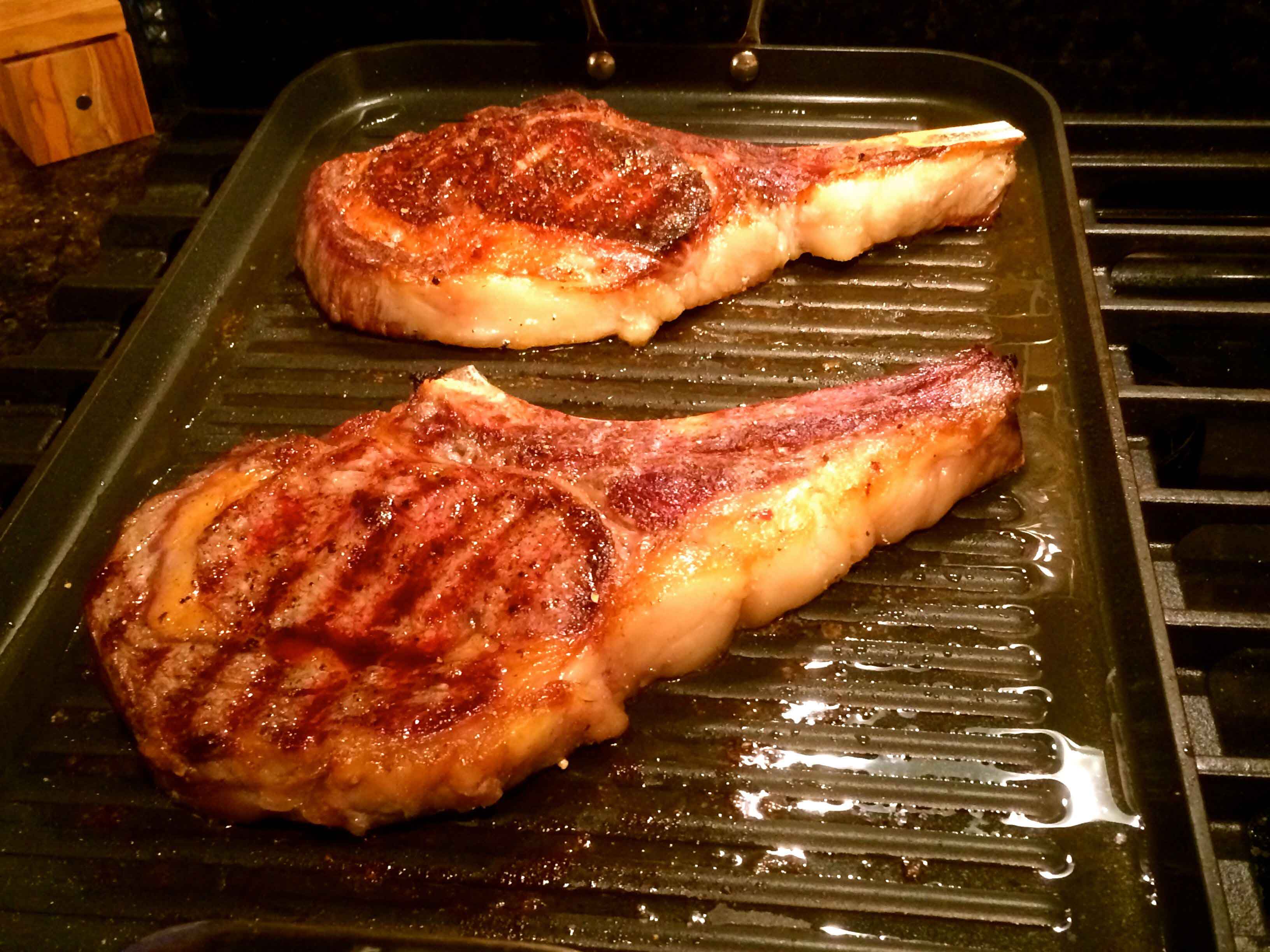
I pat the steaks dry and then season both sides liberally with kosher salt and pepper and rub the fist side to be cooked with a small amount of olive oil.

I then place the steaks on the preheated grill, pressing them down rather firmly to ensure full contact and help obtain the ever elusive grill marks. I sear the steaks on high for 1 minute and the turn the flame down to medium. I cook a 1 to 1.5 inch steak for about 7 minutes a side, cooking each side on high for the first minute.

Image

When the steaks are done, I place them on heated plates and the let them rest tented for about 5 minutes.

On serving, I drizzle each steak a bit of first quality Tuscan extra virgin olive oil.

Wine Pairing: Pinot Noir, Brunello

Roasted Sea Bass with Chickpea Puree and Parsley Sauce

Image

For Friday night supper, a Tuscan dish: Roast Sea Bass with Chickpea Puree and Parsley Sauce. Relatively thick fillets are marinated with fresh bay leaves and rosemary in olive oil and hot paprika and then roasted for 12 – 15 minutes. The fish is served on a puree of chickpeas seasoned with the zest and juice of a lemon, garlic, and minced rosemary. The parsley sauce is a puree of fresh parsley and olive oil. Perfect with a white from the coast of Tuscany: Vermentino. I found the recipe in the May issue of “Food and Wine.” Ever notice how many Tuscan dishes are beige?

Pork Chops with Peppadew Peppers

porkandpeppers1

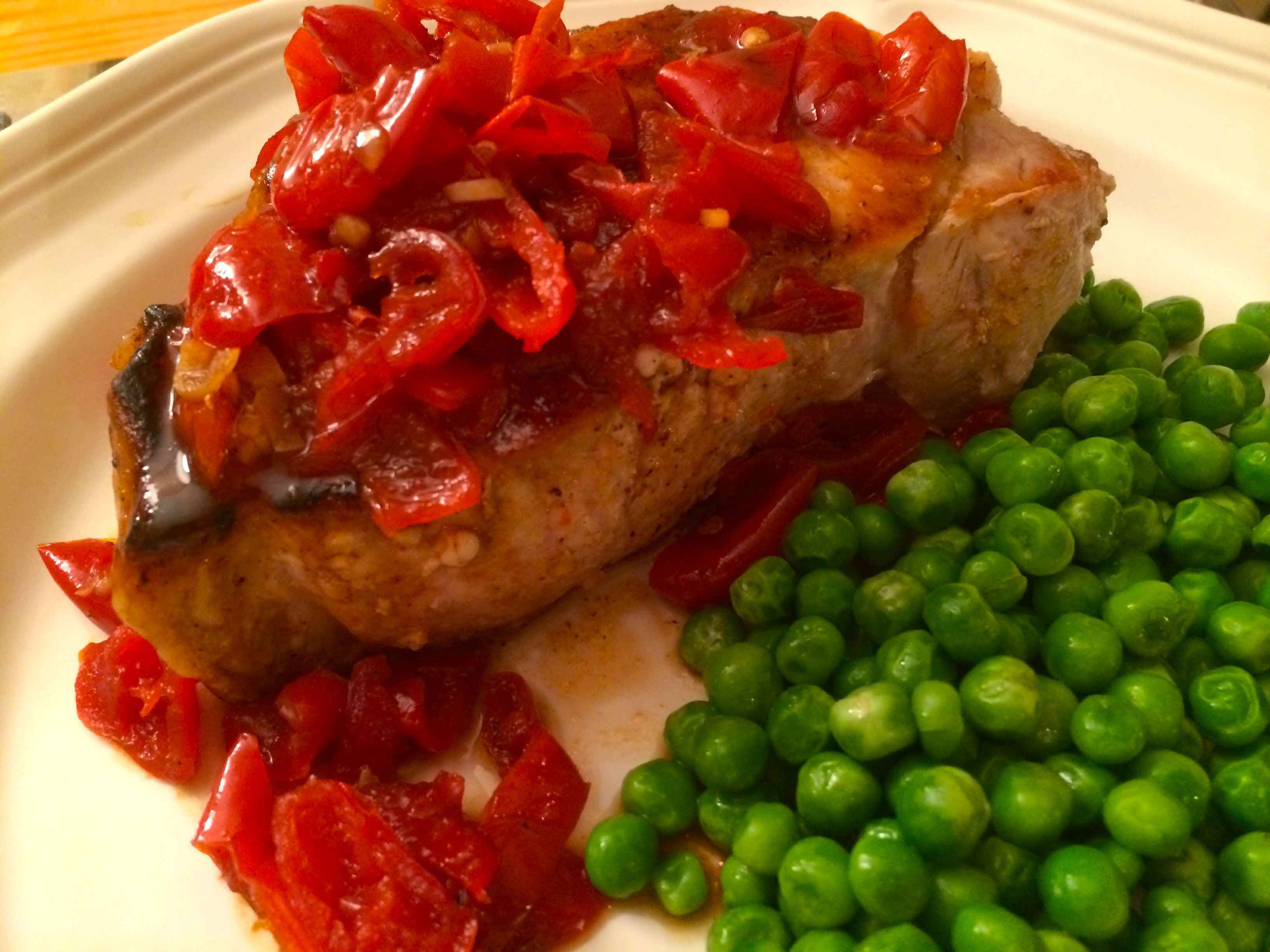
Pork chops with Peppadew peppers were on last night’s menu. I substituted hot Peppadews, a branded sweet piquant pepper from South Africa, for the traditional vinegar peppers. Another variation on this classic Italian-American dish came from a “Cook’s Illustrated” recipe, which calls for starting the pork cops in a cold pan, making for a juicier chop, and using temperature rather than time to measure doneness.

Wine Pairing: Morellino di Scansano