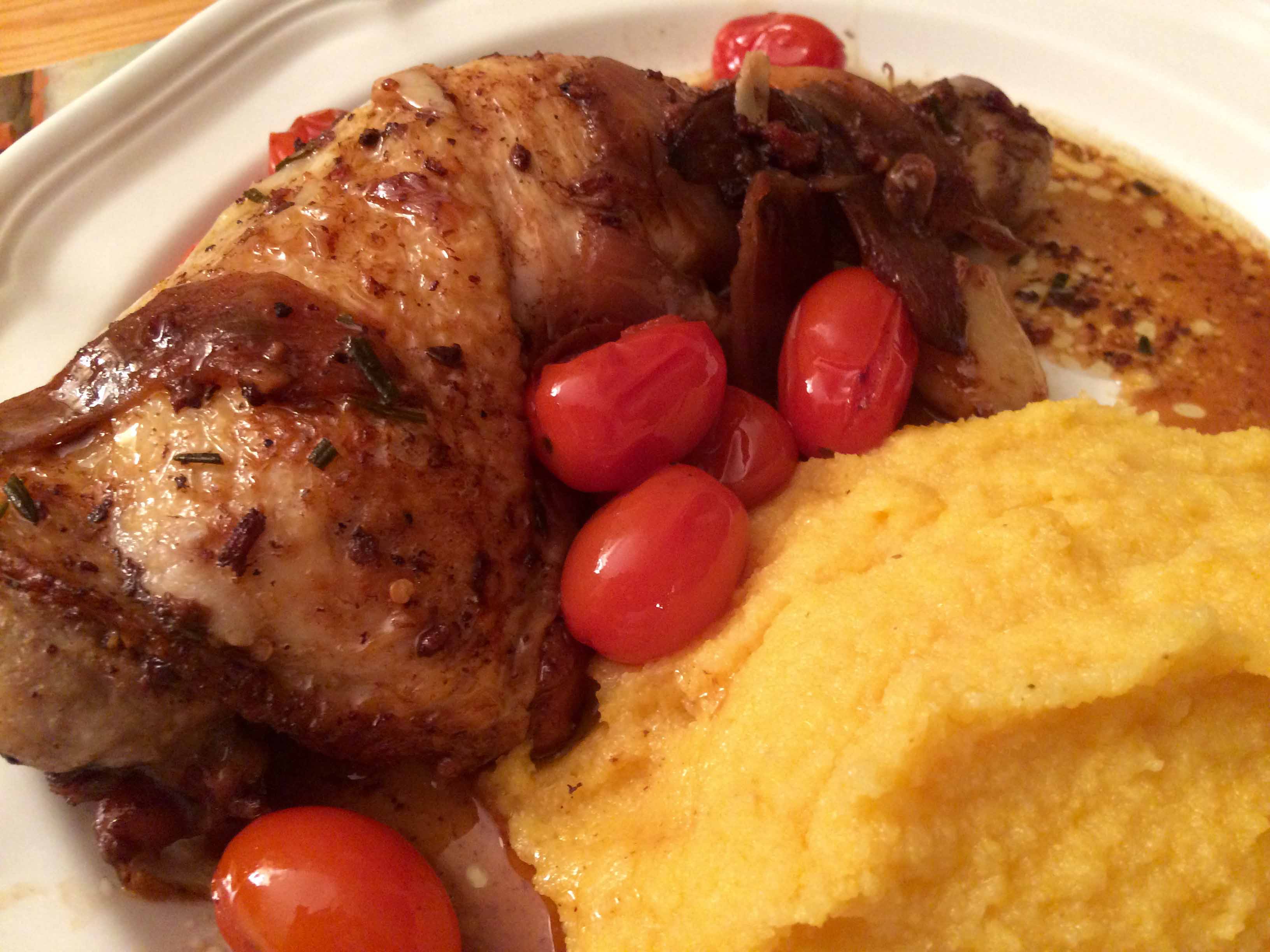
Pollo all’Arrabbiata

IMG_6251sm

I love steak. Until recently, I could eat it five times a week—pan roasted, basted with butter, cooked medium rare, served with a drizzle of olive oil. Just thinking about it makes my mouth water. Unfortunately, given my age and my doctor’s recommendations, my steak indulgence is now limited to once a week. I’m now dining more healthfully, albeit less rapturously, with at least one vegetarian and one fish meal a week, and eating more chicken than I want to admit.

One chicken recipe that’s become a weeknight favorite is Pollo all’arrabbiata from Louie Werle’s book on Italy’s cucina povera, Italian Country Cooking. As the recipe’s name implies, the chicken is cooked in a tomato sauce with hot chili peppers. Starting with a soffrito of garlic, fatty pancetta, and fresh rosemary makes this dish even more flavorful.

As was recommended in the recipe, I served the dish with polenta. Given my time constraints on a weekday night, however, I opted for an “instant” polenta, which I prepared with chicken broth, butter, and Parmigiano Reggiano.

I’ve always  followed the recipe closely, but the next time I prepare it, I’ll probably cut the tomatoes into halves to extract more of their flavor.
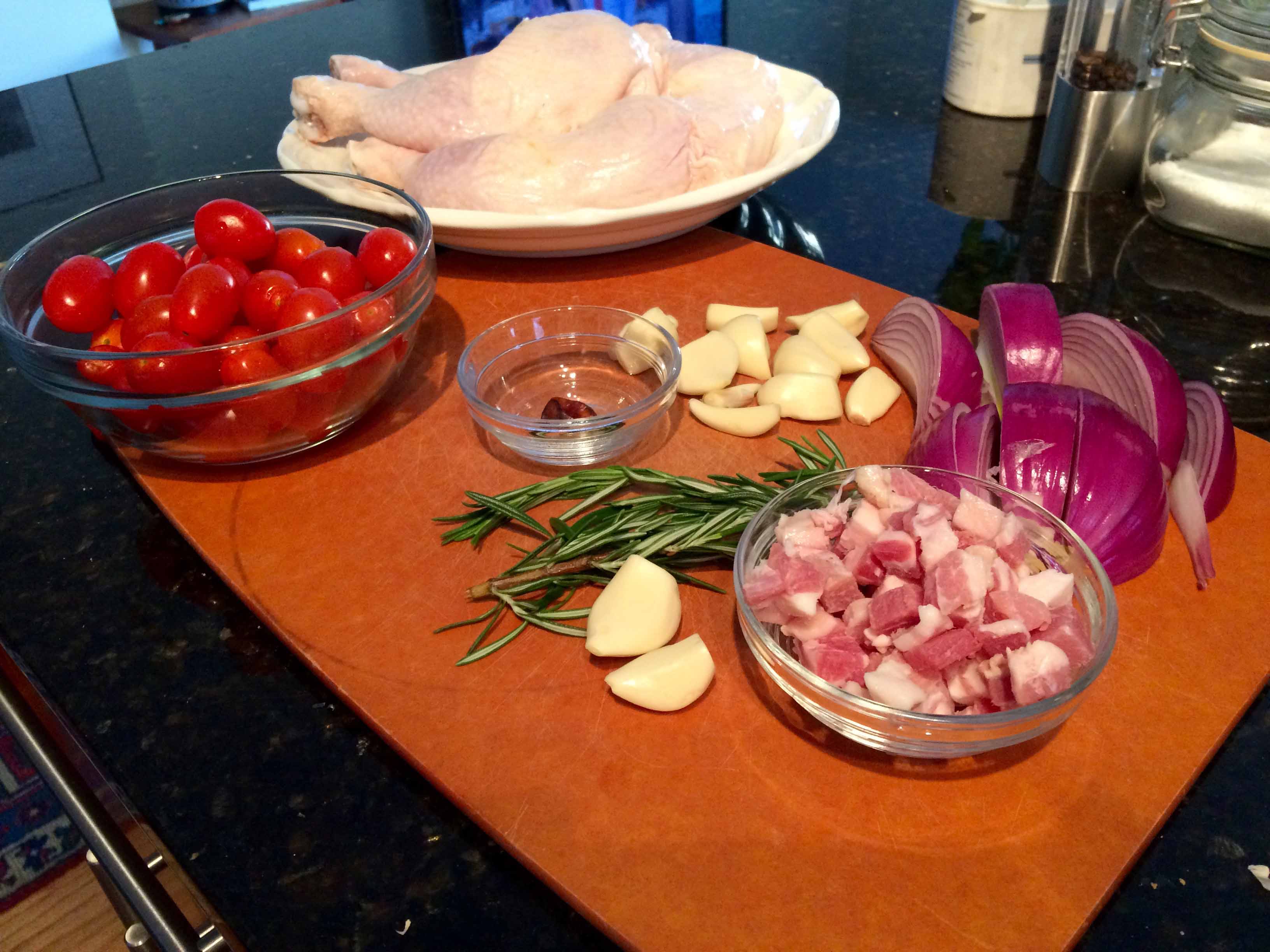
Ingredients
Ingredients

Pollo all’arrabbiata
1/4 cup extra virgin olive oil
1 red onion, cut into 8 wedges
4 whole chicken legs (thighs and legs), about 3 pounds
1 garlic bulb, cloves peeled
1/2 cup plus 2 tablespoons dry red wine
2 hot red chilies, chopped (I substituted dried Calabrian chilies, crushed.)
1 pint cherry tomatoes

Soffrito
2 large cloves garlic, peeled and coarsely chopped
2 ounces fatty pancetta, cut into cubes (I used slightly more than 2 ounces.)
1 teaspoon fresh rosemary leaves

To make the soffrito, combine the garlic, pancetta, and rosemary in a small food processor and pulse until fairly finely chopped.

The soffrito
The soffrito

Transfer the mixture to a heavy-based pot, add the oil and cook over moderate heat until the pancetta is golden, about 5 minutes, stirring frequently.

The browned soffrito

Turn the heat up to high, add the onion, chicken, and garlic cloves and brown the chicken well on both sides, about 8 minutes.

Browned chicken
Browned chicken

Stir in the wine and cook 1 minute. (I used this time to scrape any browned bits from the bottom of the pan.)

Adding the wine
Adding the wine

Then add chili and tomatoes, and season with salt.

The tomatoes and chilies

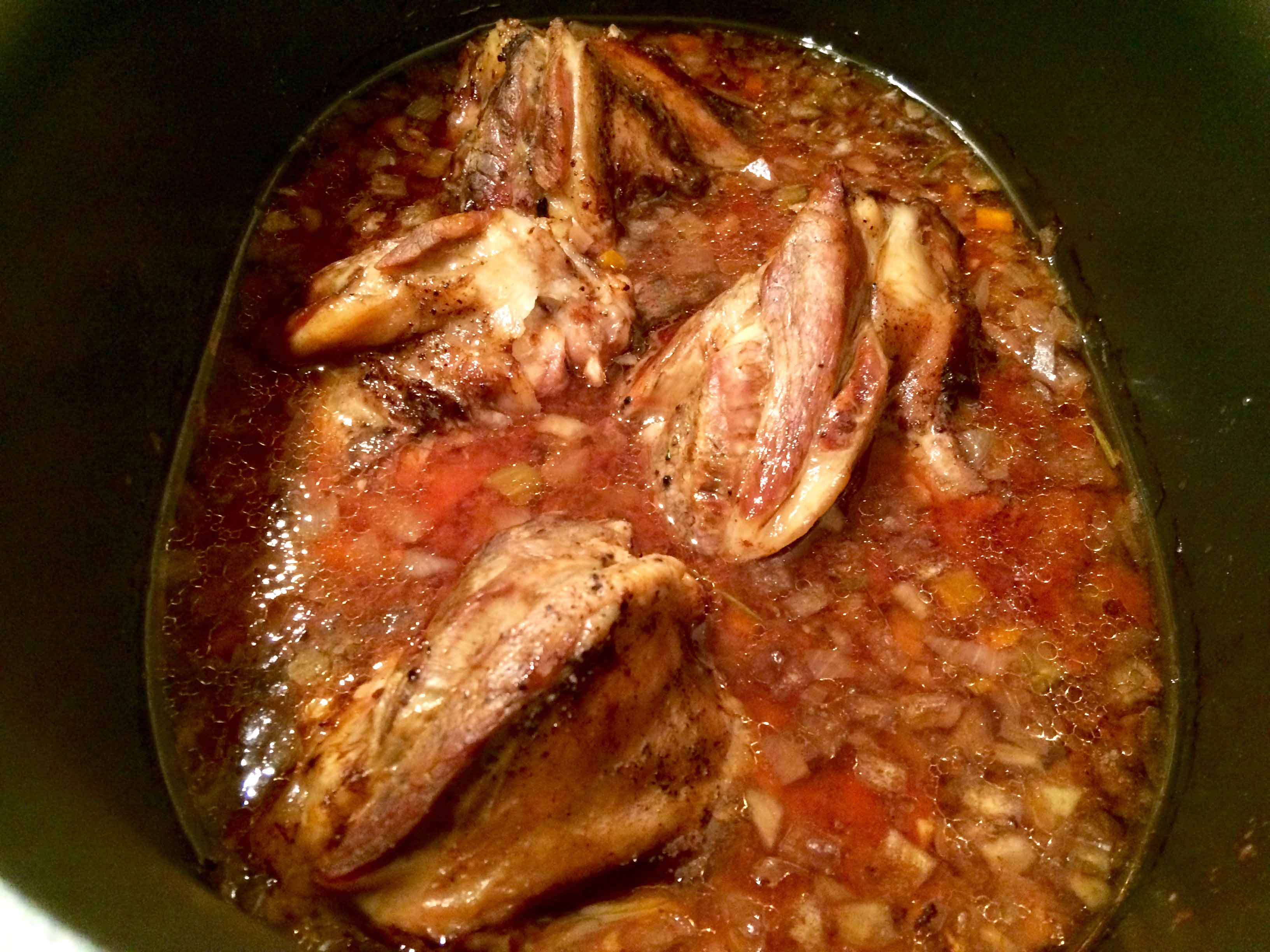
Bring to a simmer, cover with a lid, and cook gently for 40 minutes. The chicken is cooked when the juices run clear when a skewer is inserted between the thigh and leg. Check seasoning. Serve on deep, heated plates with polenta.
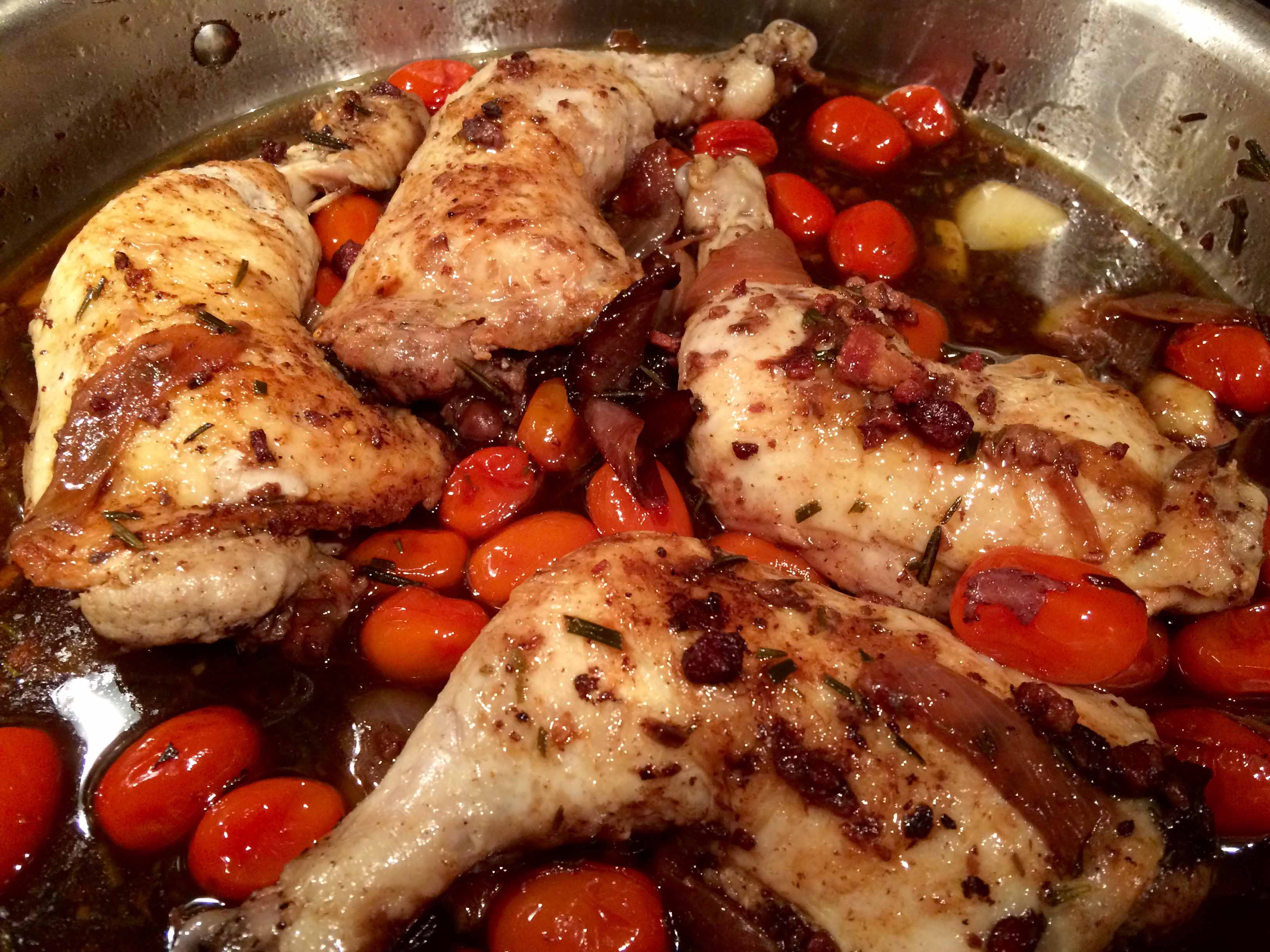
The finished dish
The finished dish

Serves 4. (Like most braised dishes, this chicken is even better when re-heated a day or tow later.)

Wine Pairing: Montepulciano d’Abruzzo

Pork Roast Braised in Milk Bolognese Style

IMG_6093sm

One of my fondest memories of my years as a young academic in Boston was spending Friday evenings with a couple of colleagues, cooking dinner, and watching “Dallas” and “Falcon Crest.” As we dined and intermittently glanced at the television, we’d offer a running, often cynical, commentary on the show’s lack of any redeeming social value and eventually wind up discussing politics and thus missing the end of the show.

Since I was often the guest, my friends typically prepared the meal, which more often than not was a roast beef. One evening, however, I offered to cook at their apartment. During these years, the late 70s, Marcella Hazan was my go-to authority on authentic Italian cooking; her two volumes of The Classic Italian Cookbook provided me with many recipes that would stun my friends with their simplicity and flavor. So the night I cooked for our Friday get-together I chose Hazan’s Bolognese-style pork roast braised in milk. I could start at 6PM and it would be ready just in time for “Dallas.”

This recipe may be one of her most popular; versions and tales of it abound on the Internet. I believe it first appeared in her the first volume of her classic series. It was so simple: brown a small pork roast in olive oil and butter; season with salt and pepper; add milk, cover the pot with the lid slightly ajar and braise for about 3 hours. When finished, remove the roast, skim the fat from sauce, and serve. The roast was moist and succulent and the milk turned into a sauce of creamy brown nutlike clusters.

I noticed that in Essentials of Classic Italian Cooking, which is a compendium of the earlier two volumes, the procedure for cooking the roast is more complicated, calling for adding the milk at three intervals, in varying quantities. I chose, however, to follow the original method, adding all of the milk at the beginning, but followed her advice of having the butcher remove the bones from the roast to enable a more thorough browning of the meat and of cooking the bones along with the roast to maximize flavor.

Note that the size of the cooking vessel is essential to the success of this dish. The pot should be no bigger than is necessary to, in Hazan’s words, “snugly accommodate the pork,” which allows about 2/3 to 1/2 of the roast to be submerged in the milk while braising. I used a small 2.5 quart Le Creuset dutch oven.

My only real variation from her recipe is the addition of some fresh nutmeg after adding the milk. I guess this comes from following Hazan’s recipe for béchamel sauce.

Pork Loin Braised in Milk Bolognese Style Adapted from The Classic Italian Cookbook by Marcella Hazan

The ingredients (missing the olive oil)

2 tablespoons unsalted butter
2 tablespoons olive oil
21/2 pound pork loin roast. (Have the ribs detached from the loin and split into two or three parts. Do not removed any fat from the meat. The roast should be tied. See picture below.)
Salt
Freshly ground black pepper
2 1/2 cups whole milk (You may need a little more in the unlikely event that the milk evaporates too much.)
1/4 teaspoon freshly ground nutmeg

The roast with bones separated and cut
The roast with bones separated and cut by great butcher at Dickson’s Farmstand Meats in NYC

1. Heat butter and oil over medium-high heat in a heavy-bottomed pot that that can later snugly accommodate the pork.

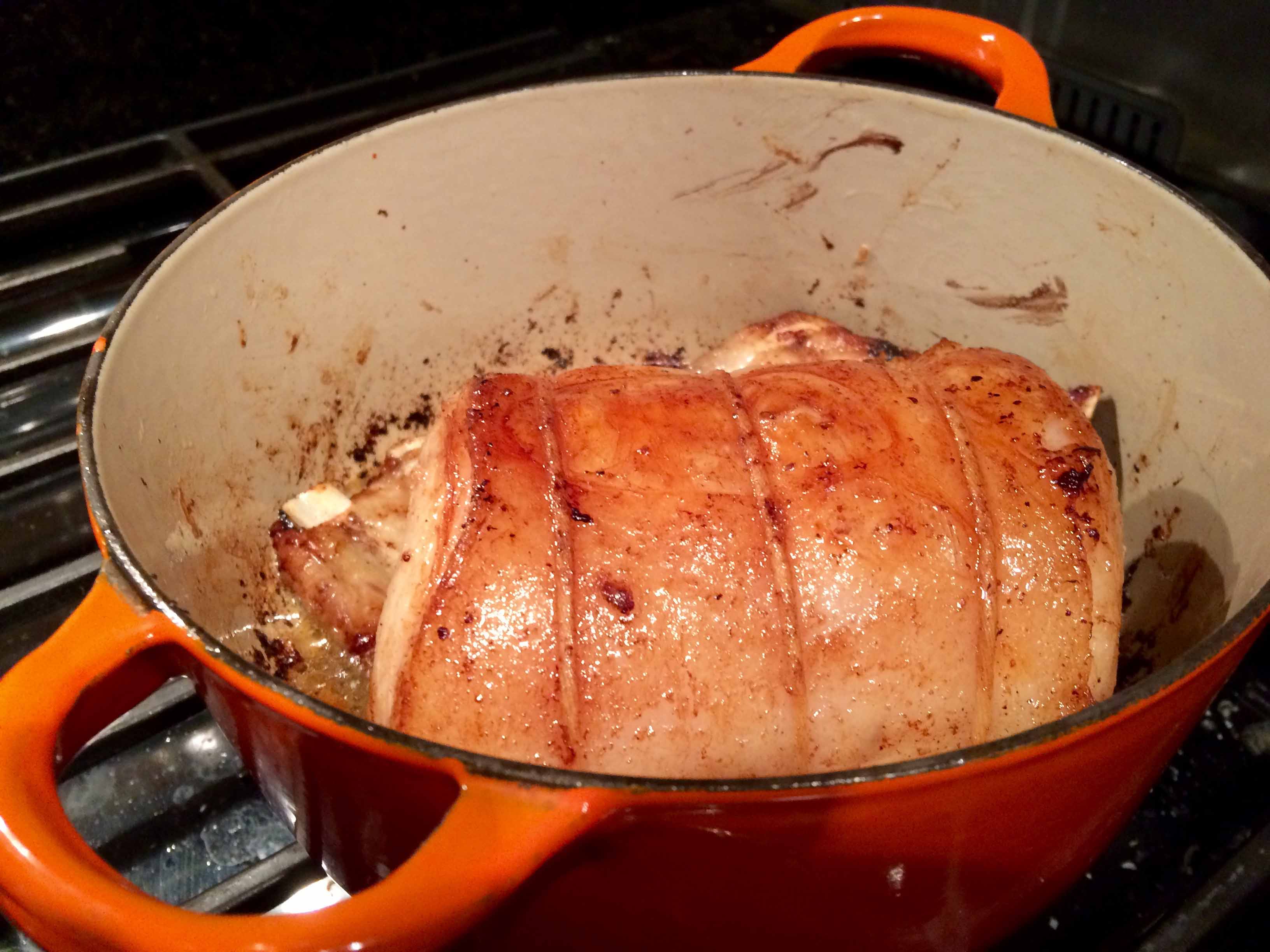
The browned roast
The browned roast

2. When the butter foam subsides, put in the roast fat-side down. Brown the meat evenly on all sides. If the fat is becoming very dark, lower the heat. Season the roast with salt and pepper. Add the milk slowly to avoid it boiling over. Add the nutmeg.

The roast in the milk

3. Bring to a boil, then reduce the heat to a simmer, and set the lid slightly ajar. Cook slowly for about 21/2 to 3 hours, occasionally turning and basting the meat. If before the meat is fully cooked, you find that the liquid in the pot has evaporated, add another 1/2 cup of milk.

Roast simmering in the milk

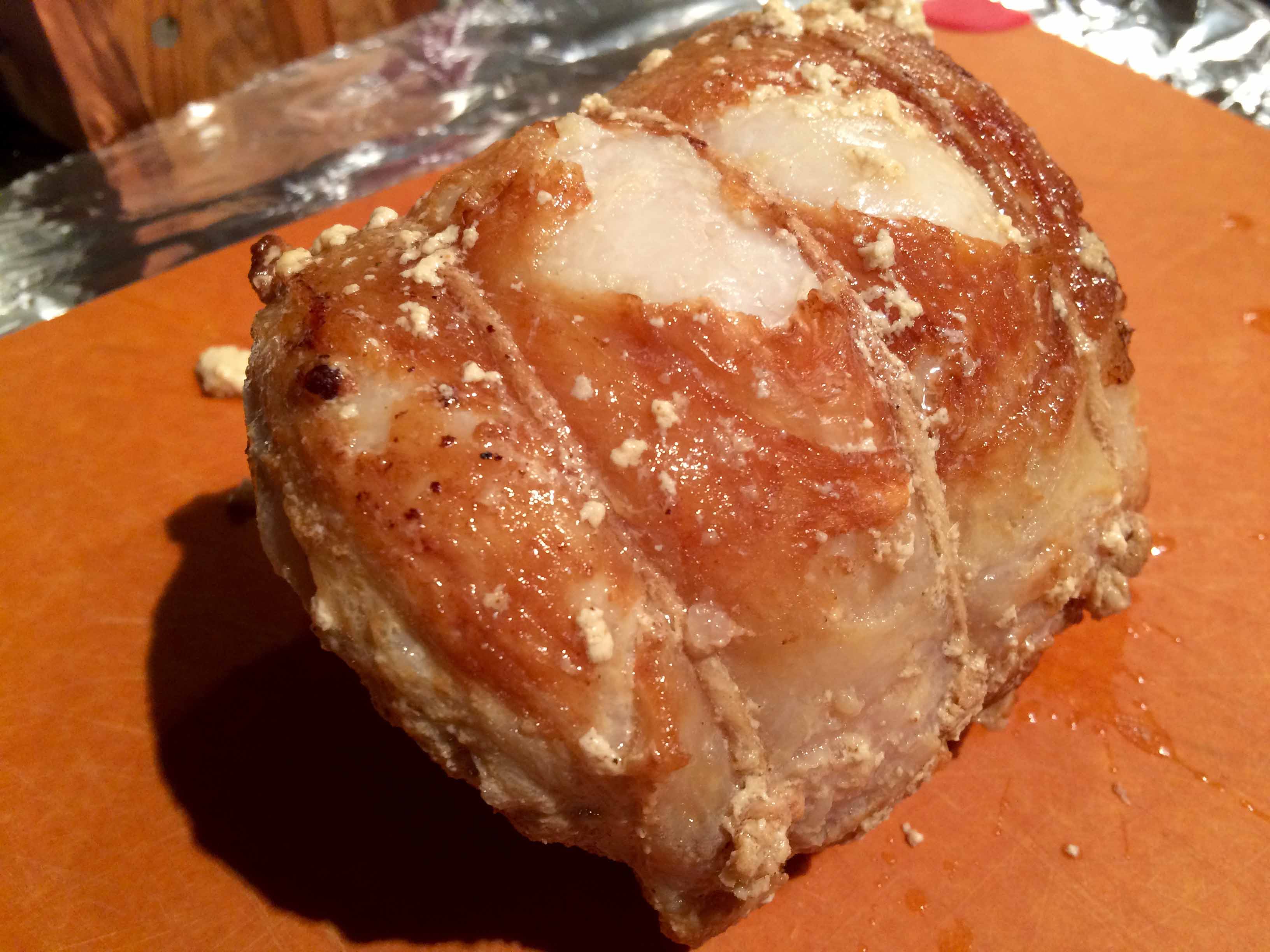
4. When the pork has become tender and all the milk has coagulated into small, brownish clusters, transfer the roast to a cutting board and tent with foil.

The finished roast
The finished roast

5. Tip the pot and spoon off most of the fat, being careful to leave behind all the coagulated milk clusters. Add 2 or 3 tablespoons of water and boil away the water over high heat using a wooden spoon to scrape loose cooking residues from the bottom and the sides of the pot.

IMG_6089sm
The skimmed sauce

6. Carve the roast into 3/8-inch slices and arrange on warm platter. Spoon all the pot juices over the pork and serve immediately.

Wine Pairing: Dolcetto d’Alba, Dry Lambrusco

Lamb Shanks with Sweet and Sour Onions

IMG_5854sm

You’ve probably been counseled by other food bloggers or cooking enthusiasts to let what looks good on any given day at your market determine what you’ll cook that night. I more or less agree with this advice, but I must admit that it definitely helps to have high-quality markets nearby. Fortunately, I live in downtown New York, where I’m surrounded by some of the city’s finest fish mongers, green grocers, and butchers, which makes being inspired by their offerings relatively easy.

Such was the case the other day when I went to my butcher, Dickson’s Farmstand Meats located in Chelsea Market, looking for inspiration. They’re know for locally sourced, humanely raised meats, and I wasn’t there long before I espied and bought some meaty lamb shanks.

As I walked home, I started to consider how to prepare them. For me, braising was the obvious choice, but I wasn’t quite sure what to braise them with. So when I got home, I looked through some of my go-to books for braising and found an appealing recipe in Michele Scicolone’s The Mediterranean Slow Cooker: “Lamb Shanks with Sweet and Sour Onions.”

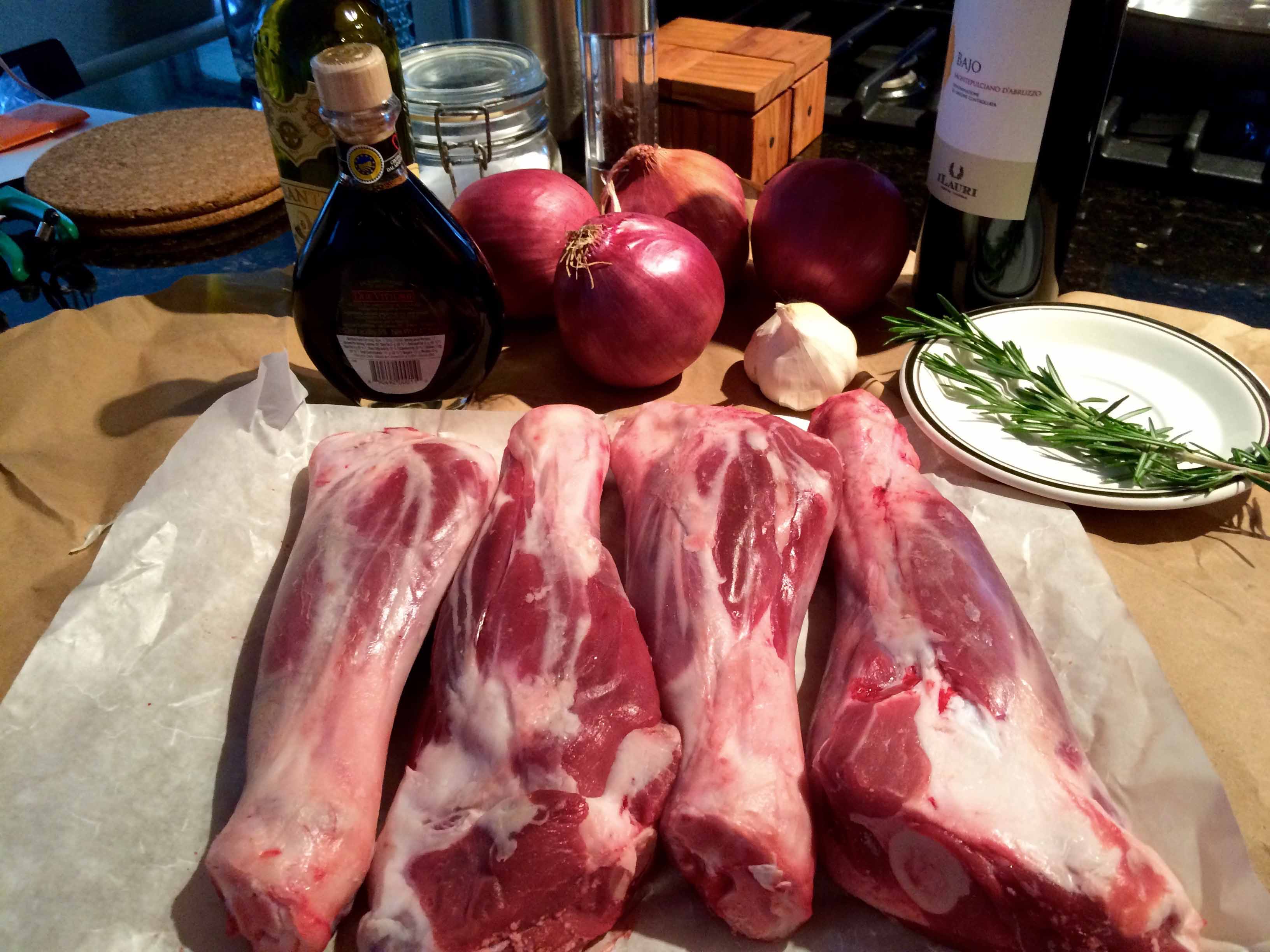
The recipe calls for just a few ingredients with which to cook the lamb: red onions, garlic, rosemary, red wine, and balsamic vinegar.

The Ingredients
The Ingredients

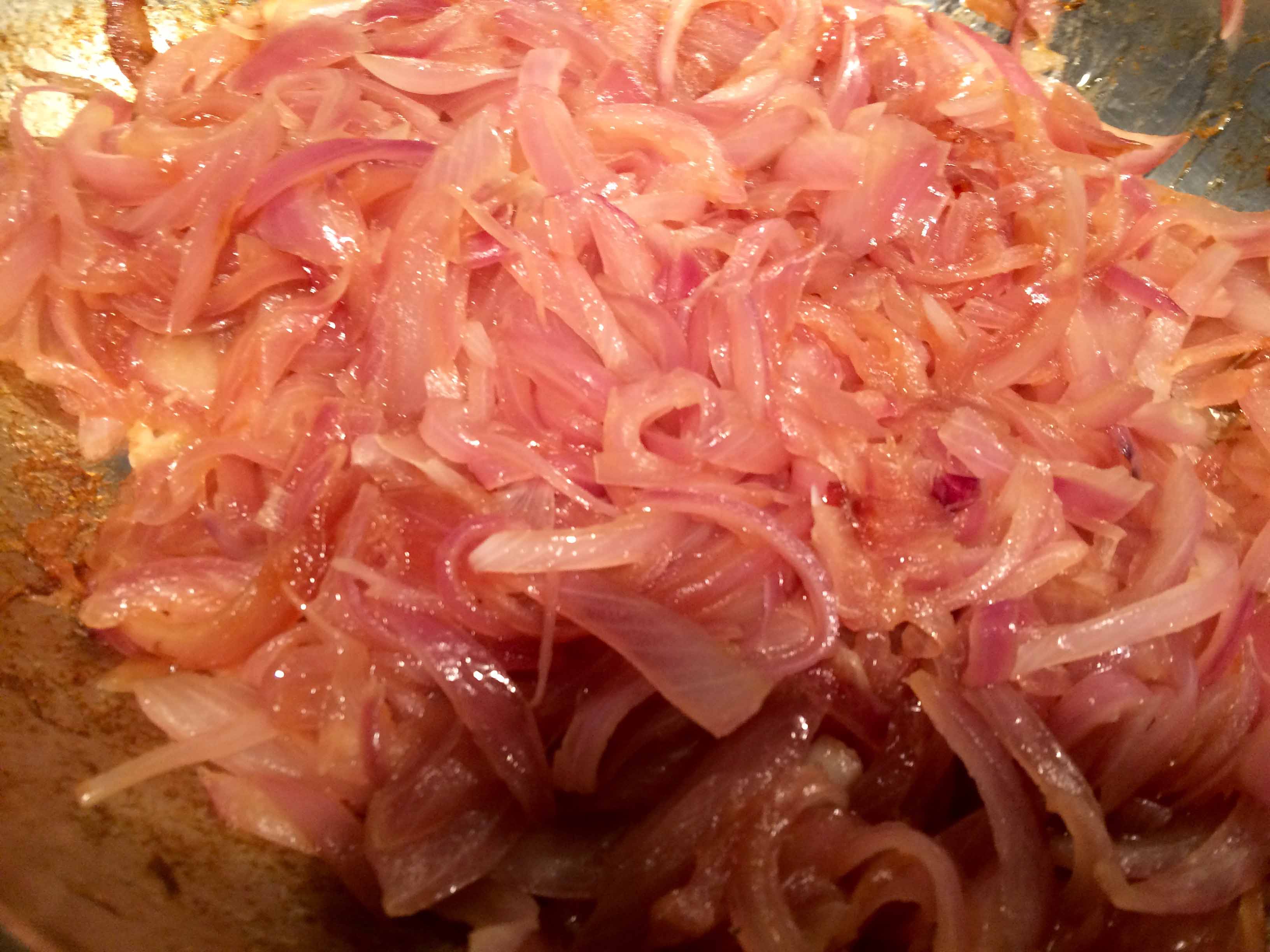
The minimal prep also made the recipe attractive: browning the onions and then combing them with the garlic (minced), the rosemary (chopped), the red wine (dry), and the balsamic vinegar. Since the vinegar plays a leading role in flavoring this dish, I recommend using a good quality balsamic.

IMG_5838sm
Browning the onions
Onions with the wine, balsamic, and rosemary

Cooked on low for 8 hours, the shanks become tender and succulent and their distinctive meaty flavors are perfectly complemented by the sweet-and-sour onions and braising liquid.

I served the shanks with polenta, made creamy with butter, cream, and Parmigiano Reggiano.

Wine Pairing: Montepulciano d’Abruzzo

Lamb Shanks with White Beans and Gremolata

IMG_5791sm

Sometimes what I choose to prepare for dinner is determined by finding something in the fridge that needs to be used up. Such was the case yesterday when I found a week-old container of mirepoix (diced onions, carrots, and celery). I considered several options, including a bean soup and pasta sauce, but then I thought why not something braised, cooked low and slow. After checking a few cookbooks for recipes, I finally settled upon one I found in Michele Scicolone’s The Italian Slow Cooker: “Lamb Shanks with White Bean and Gremolata.” My only concern was being able to find the lamb shanks early on Sunday morning. Fortunately, I was able to grab the last four shanks available at my local market.

They were from Icelandic lamb, which I discovered is a seasonal special that ’s available at Whole Foods from late September to October. They met the recipe’s size requirements (small, about 1 pound each) and were surprisingly lean. This was my first encounter with this variety of lamb and I’m happy to report that it was rich in flavor and not as gamey as some other varieties, which I believe contributed to the success of the dish. There was a prefect balance of flavors among the meat, the vegetables, beans, braising liquid, and the bright gremolata (a mix of minced garlic, lemon zest, and parsley.)

I think the next time I prepare this dish, I’ll brown the shanks before slow cooking them to develop their flavor a little more. However, even without this step, the lamb was delicious.

Lamb Shanks with White Beans and Gremolata from The Italian Slow Cooker by Michele Scicolone

Serves 4

1 medium onion, chopped
1 medium carrot, chopped
1 medium rib of celery, chopped (My mirepoix contained a little more of each of these ingredients.)
4 garlic cloves, minced
1 3-inch fresh rosemary sprig
4 small lamb shanks (about 1 pound each)
Salt and freshly ground pepper
1 cup meat broth or canned beef broth (I opted for the canned broth.)
1 cup dry red wine (I used a red-blend from California.)
2 tablespoons tomato paste (I use the imported concentrated paste.)
4 cups cooked white beans or canned beans, drained (I used a can of Goya “Small White Beans.” When using canned beans, I always rinse them under cold water.)
1/4 cup chopped fresh parsley (Italian flat-leaf parsley is best.)
2 garlic cloves, minced
1 teaspoon grated lemon zest

Scatter the vegetables, chopped garlic, and rosemary in a slow cooker. (I lightly salted the vegetables.)

The chopped vegetables, garlic, and rosemary

Trim the shanks, pat them dry with paper towels, and sprinkle with salt and pepper to taste.

The lambs shanks, before seasoning

Arrange the shanks in a single layer on top of the vegetables.

Combine the broth, wine, and tomato paste with a whisk in a bowl. Pour the mixture over the lamb and cook on low for 8 hours, or until the lamb is very tender and coming away from the bone.

The shanks atop the braising liquid.

Remove the shanks from the cooker and place on a serving platter. Cover and keep warm.

IMG_5774sm

Skim the fat off the the surface of the liquid in the cooker. Turn the heat to high. Stir in the beans and cook until thoroughly heated through.

Meanwhile chop the parsley and garlic, and combine with the grated lemon zest.

The gremolata components

Stir half of the mix into the beans.

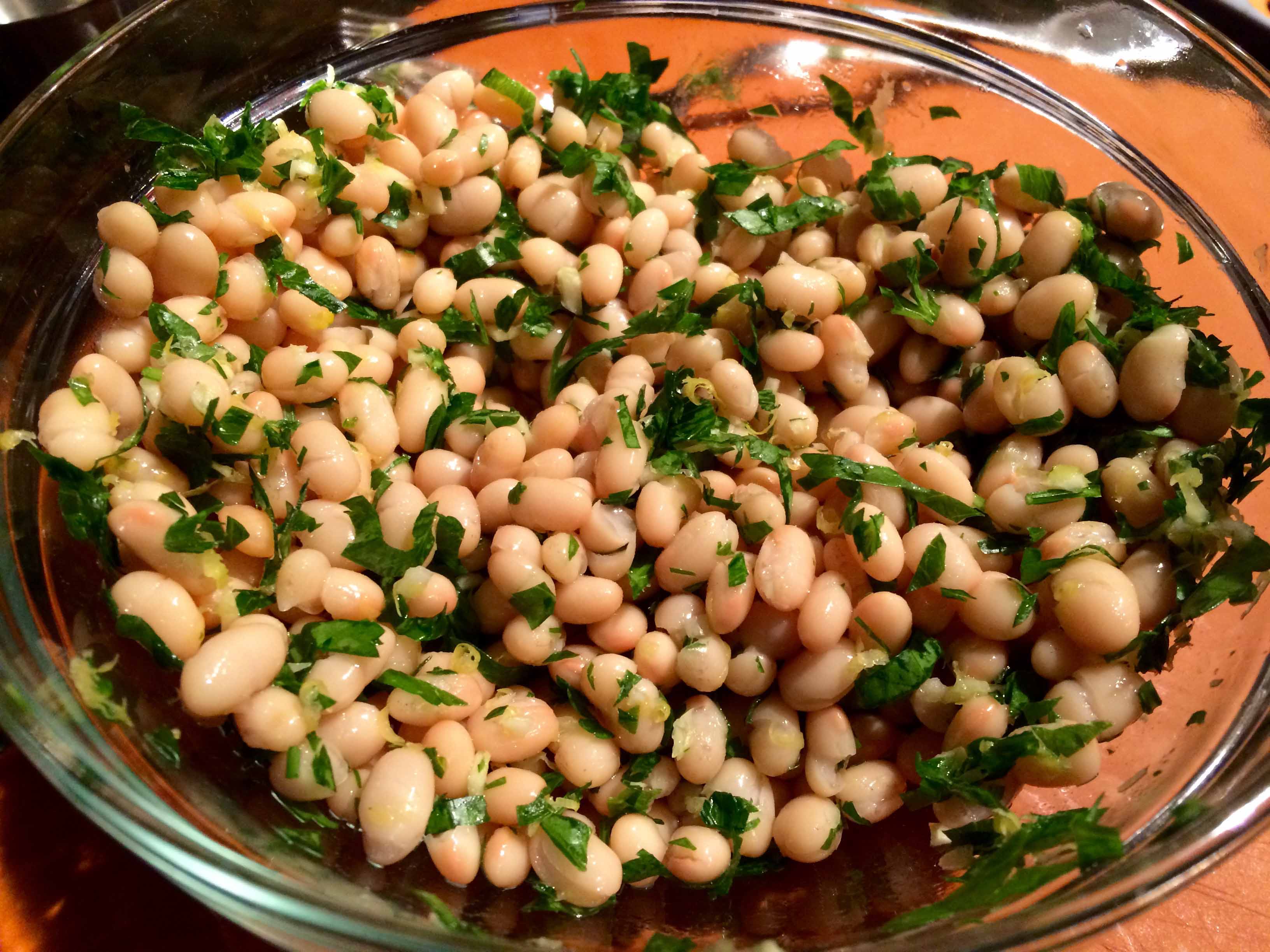
The beans mixed with the gremolata

To serve, pour the beans over the lamb and sprinkle with the remaining gremolata. Serve hot.

Wine Pairing: Dolcetto, or a cru Beaujolais

Farro with Pork Ragù

IMG_5689sm

In New York City, fall has definitely arrived and so has my appetite for heartier as well as comforting dishes like braises and stews. Perhaps this is why a recipe for farro with pork ragu looked so appealing. The fact that I had almost everything on hand except for the pork shoulder and a fresh bay leaf also increased the recipe’s appeal and thus it found its way to our table last night.

The recipe from Lidia Bastianich’s Lidia Cooks from the Heart of Italyis yet another example of the simplicity of Italian cooking: a minimum of ingredients prepared with a modicum of technique.
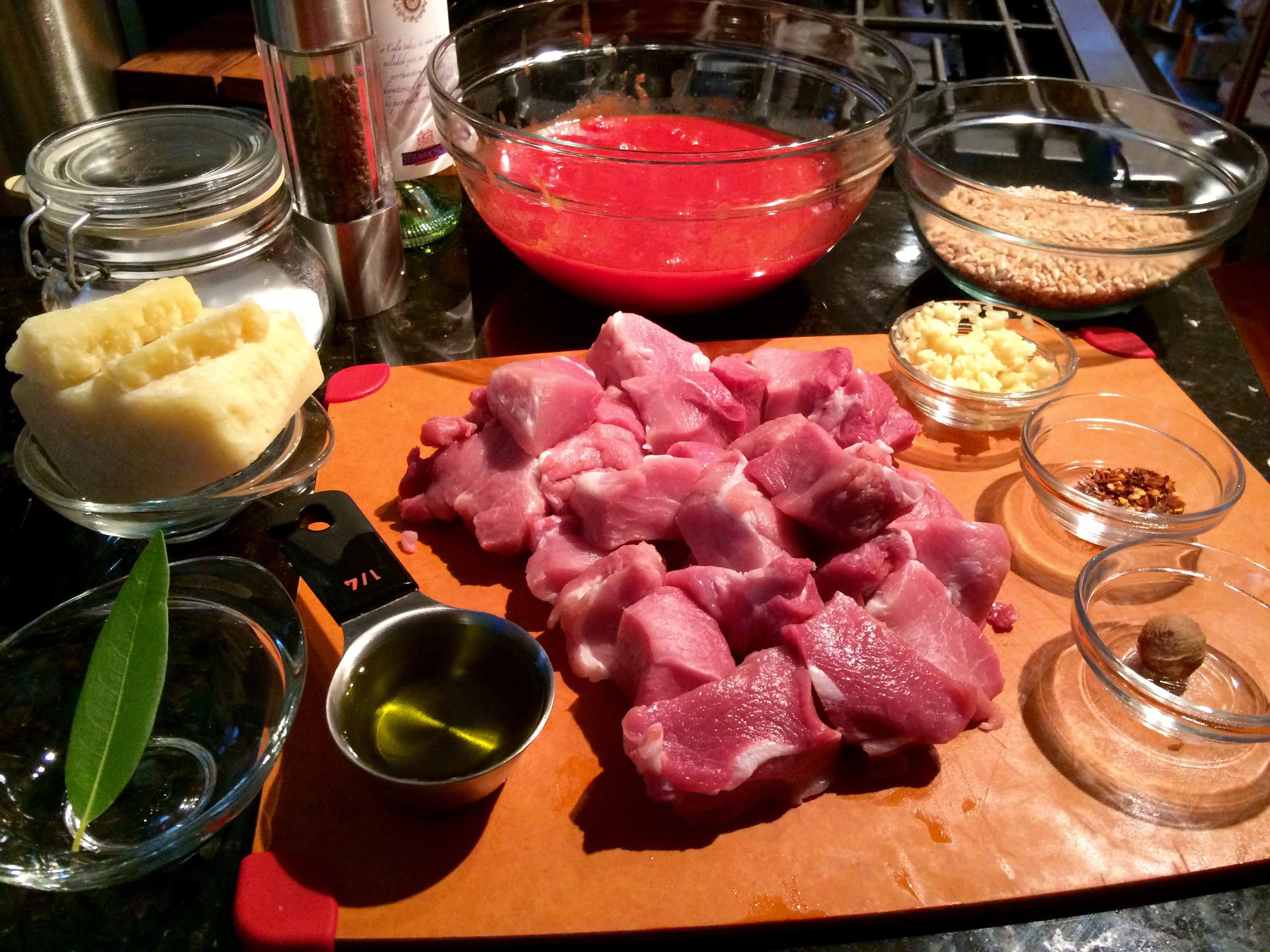
The finished dish was exquisite: succulent pork cooked slowly in a subtly spicy tomato sauce, which is then combined with earthy farro. Paired with a rich, plummy Aglianico, it met all my requirements for comforting fall fare.

Since I was cooking only for two, I prepared only 8 ounces of the farro and combined it with only half of the ragu. I also found that the pork required a longer cooking time than the one and half hours specified in the recipe. I cooked it for a full two hours, after which the meat was perfectly tender. Finally, for maximum flavor, be sure to scrape up any brown bits at the bottom of the pan after adding the wine and again after adding the tomatoes.

Farro with Pork Ragù Potenza Style from Lidia Cooks from the Heart of Italy
Makes about 4 cups, serving 6 with farro

The Ingredients
The Ingredients

For the ragù
2 pounds boneless pork shoulder
1/4 cup extra-virgin olive oil
1/2 Tbsp. kosher salt
2 Tbsp. chopped garlic (about 5 cloves)
1/2 tsp. peperoncino flakes, or to taste
1/2 cup white wine
3 cups (one 28-ounce can) canned Italian plum tomatoes, preferably San Marzano, crushed by hand
1/4 tsp. freshly grated nutmeg

For the farro and serving
1 pound farro
1 fresh bay leaf
1 tsp. kosher salt
2 Tbsp. extra-virgin olive oil
1 cup freshly grated pecorino (or half pecorino and half Grana Padano or Parmigiano-Reggiano), plus more for passing (I used pecorino.)

Recommended equipment: A heavy saucepan, such as an enameled cast-iron French oven, 5-quart capacity, with a cover; a heavy 3- or 4-quart saucepan.

For the ragù: Trim the fat from the exterior of the pork. Cut it into bite-sized morsels, about 3/4-inch cubes, trimming more fat and bits of cartilage as you divide the meat. Pat the pieces dry with paper towels.

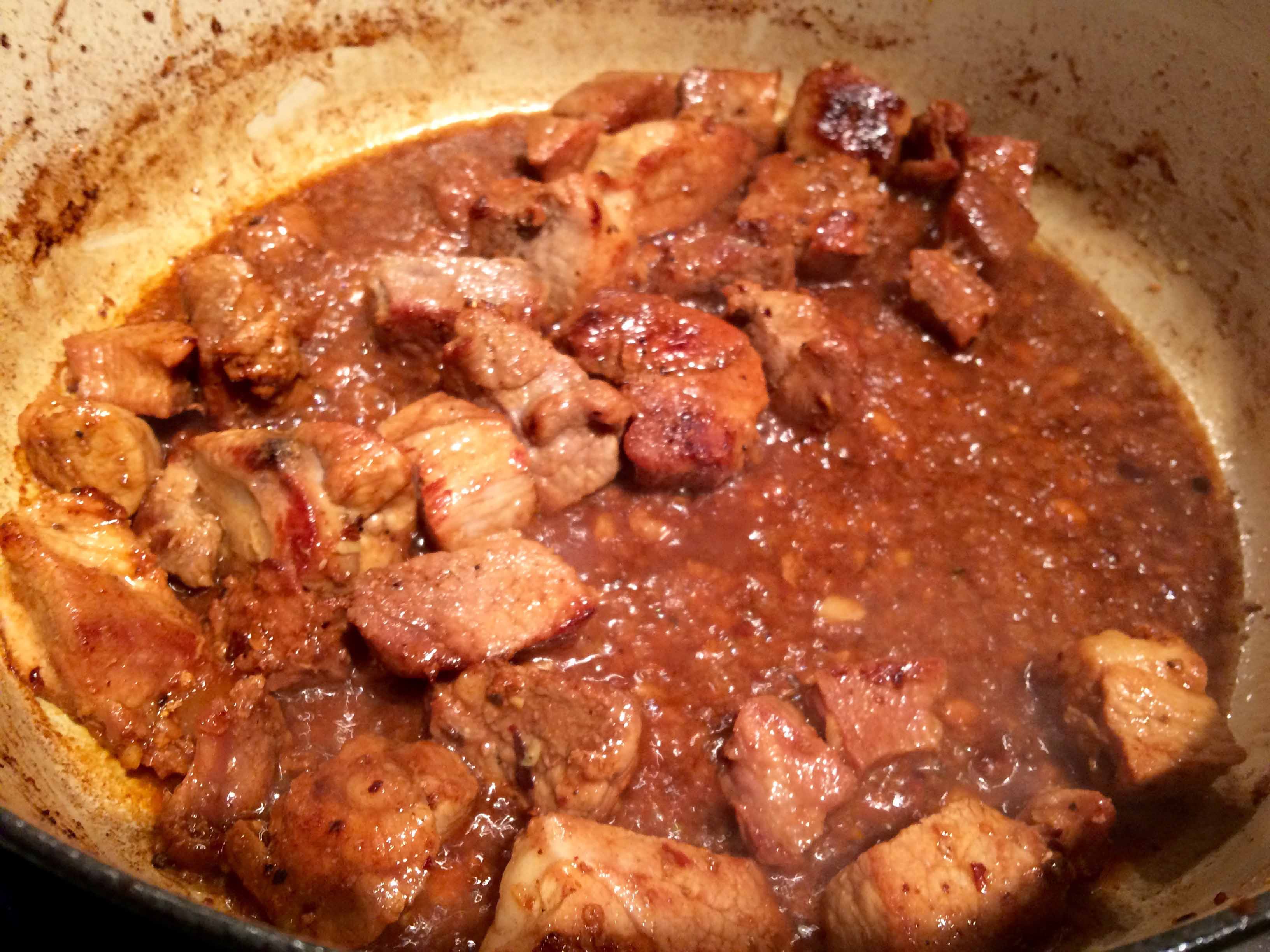
Pour the olive oil into the big pan, set it over medium heat and toss in the pork. Spread the pieces in the pan and season with the salt. Cook the pork slowly for 15 minutes or so, turning and moving the pieces occasionally as the meat releases its juices and they cook away.

Browning the pork
Browning the pork

When the pan is dry and the pork starts to sizzle and crackle, clear a hot spot on the bottom and drop in the chopped garlic and peperoncino. Stir and toast them for a minute or so in the hot spot until the garlic is fragrant and sizzling, then stir and toss with the meat cubes. Raise the heat a bit, pour in the white wine, stir and bring to a boil. Let the wine bubble until it is nearly evaporated and the pork is sizzling again.

Reducing the wine
Reducing the wine

Pour in the crushed tomatoes and a cup of water that has been sloshed around to rinse out the tomato can, grate on the fresh nutmeg and stir.

With the tomatoes
With the tomatoes

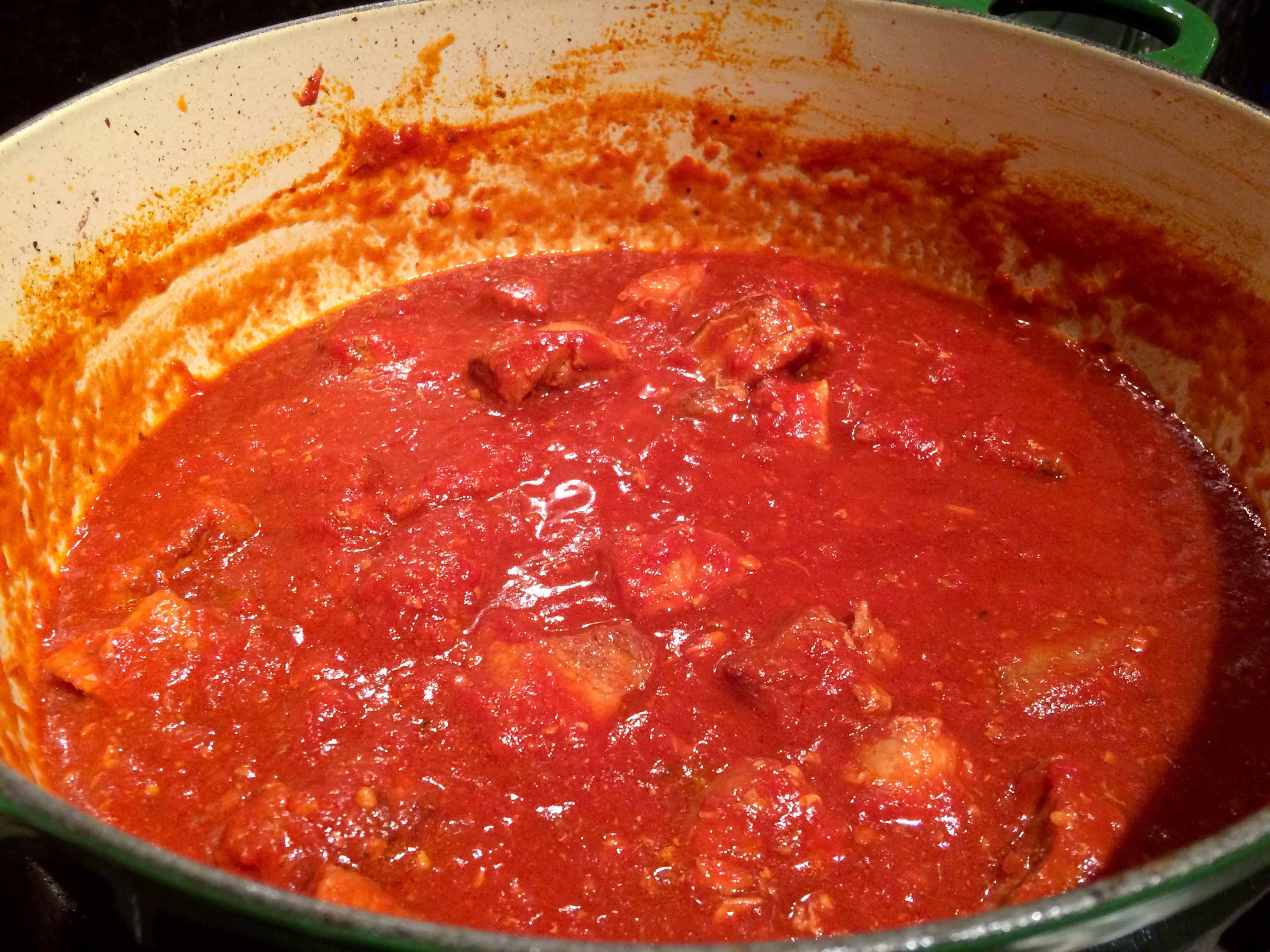
Cover the pan and heat the tomatoes to a boil, then adjust the heat to maintain a steady, gentle perking. Cook for about 1 1/2 hours until the pork is tender all the way through and falls apart under gentle pressure, and the sauce has thickened. If the liquid is still thin toward the end of the cooking time, set the cover ajar and raise the heat a bit to reduce it rapidly.

The finished ragu
The finished ragu

Meanwhile, prepare the farro, first rinsing it well and draining it in a sieve. Put it in the smaller saucepan with 6 cups cold water, the bay leaf, salt and olive oil.

The cooking liquid for the farro

Bring to a boil, stirring occasionally, then set the cover ajar and adjust the heat to maintain a steady simmer. Cook about 30 minutes, stirring occasionally until the grains are cooked through but still al dente. Turn off the heat, pour off excess liquid and keep the farro warm until the ragù is done.

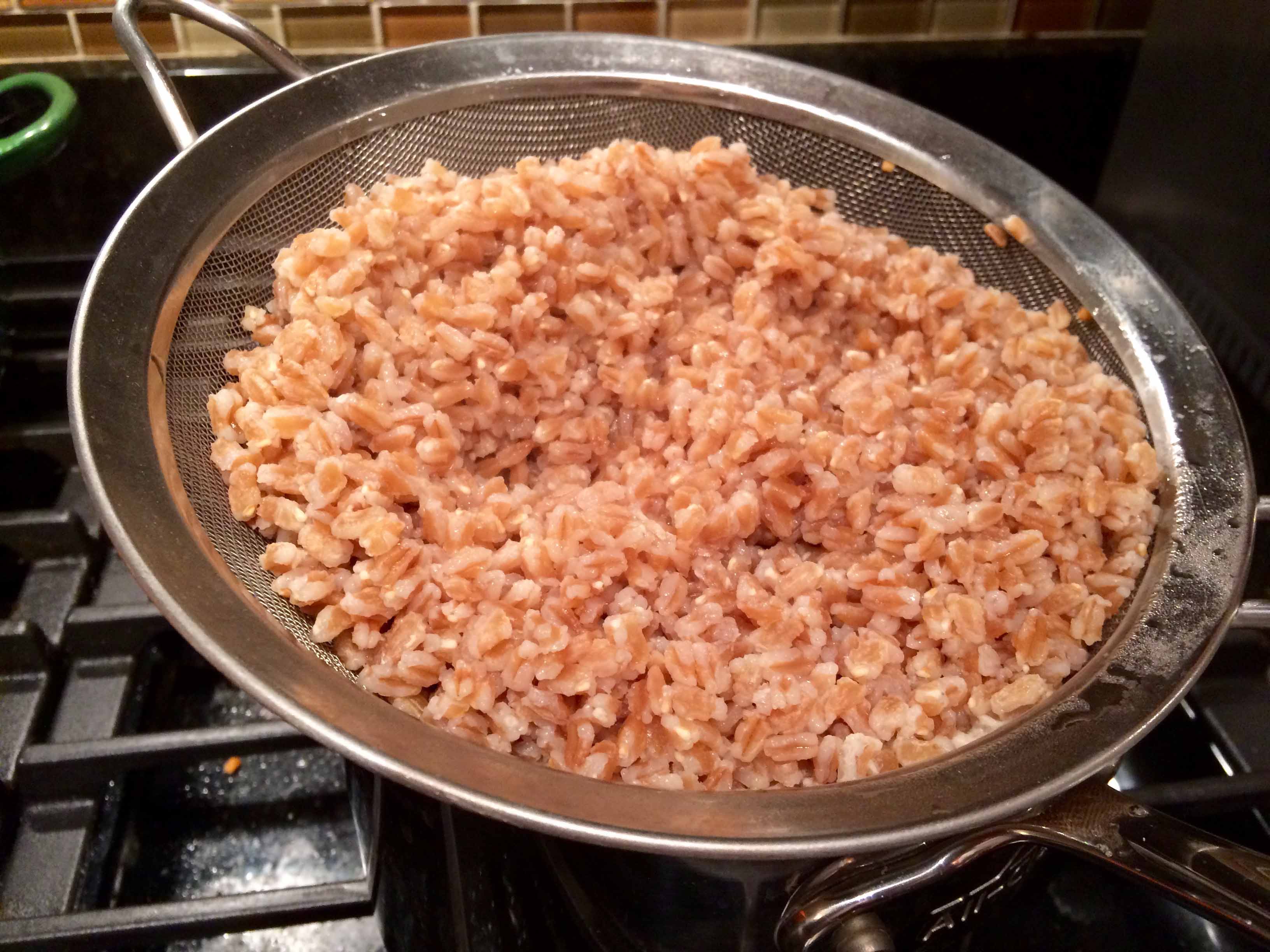
The cooked farro
The cooked farro

To finish the dish: Have the ragù simmering and stir in the farro thoroughly. Cook together for a minute, so the grain is very hot. Turn off the heat, sprinkle the grated cheese on top and stir in.

The sauced farro
The sauced farro

Spoon the dressed farro into warm bowls, and serve immediately with more grated cheese at the table.

Wine Pairing: Aglianico

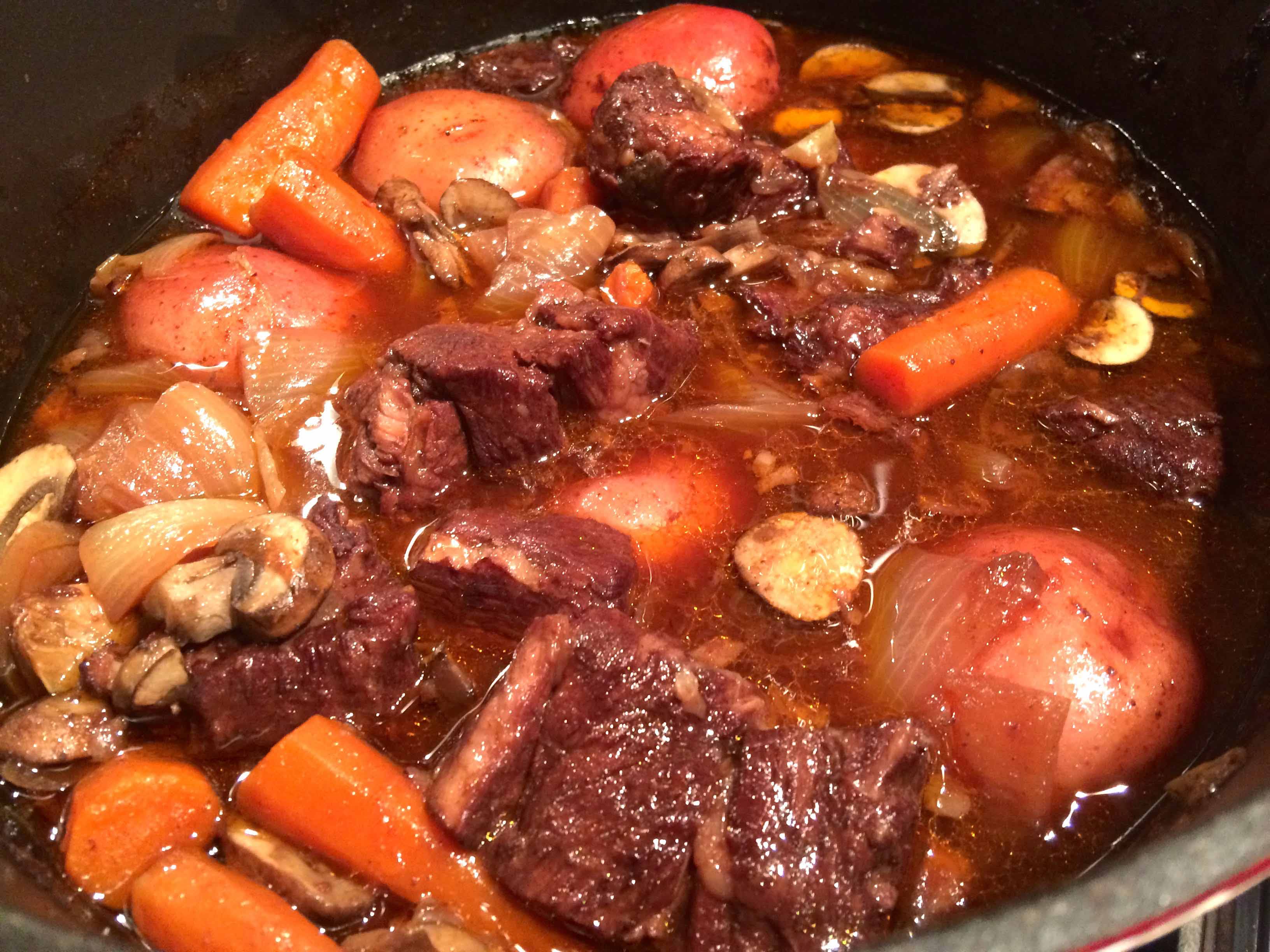
Beef Stew

stew3sm

It was a blustery Sunday afternoon when we went to our local market to shop for dinner. Seeing boneless chuck roast on sale for $2.00 off per pound made my choice easy. I wasn’t quite sure how I would prepare it, but thought I would buy the ingredients for a braise: onions, carrots, celery, cremini mushrooms, some fresh rosemary. The rest would depend on what I had at home in the pantry.

After returning home, I paged through my cookbooks looking for a beef-stew recipe. I found quite a few, but they almost all had one element in common: browning the beef. Typically I wouldn’t have let this step stop me from making a dish. But we had just finished a thorough cleaning of the kitchen, which albeit a small one, took more than 3 hours. I was not going to start cleaning again after dinner.

I went online and within minutes found a recipe for an easy 2-step beef stew from Martha Stewart, which to my surprise required no browning. I read the recipe several times just to make sure and indeed no browning of the meat was called for.

Because I wasn’t sure how this dish would turn out, we didn’t take photos during the prep or cooking. After tasting it however, I sincerely regretted not having done so. This stew was superb, one of the best I’ve ever made. Granted, I modified the original recipe but the meat was perfectly cooked, thoroughly browned, and the stew, comfortingly delicious.

stew2sm
Right from the oven

Beef Stew Adapted from Martha Stewart.com

Ingredients

5 pounds beef chuck, trimmed of visible fat and cut into 1 1/2 inch cubes

1/3 cup tomato paste; I recommend the concentrated Italian paste from a tube

4 tablespoons high-quality balsamic vinegar

3 tablespoons all-purpose flour

Coarse salt and freshly ground black pepper

1 pound medium onions (about 2), cut into 1-inch chunks

1 pound small white or red new potatoes (about 6), well scrubbed, halved if large

1 pound carrots, cut into 1 1/2-inch lengths

6 garlic cloves, smashed

3 bay leaves

1 bottle dry red wine; I used a Sangiovese blend

8 ounces cremini mushrooms

Chopped Italian parsley for garnish

Directions

Preheat oven to 350 degrees.

In a small bowl, combine tomato paste, vinegar, and flour to form a paste.

In a Dutch oven (5-quart) with a tight-fitting lid, rub the beef with the paste; season with salt and pepper.

Add onions, potatoes, carrots, garlic, bay leaves, and 1 bottle of dry red wine. Bring to a boil.

Remove from heat and place a sheet of parchment paper the size and shape of your Dutch oven over the stew.

Cover the pot with the lid, transfer to oven, and cook until meat is fork-tender, 2 to 2 1/2 hours.

After the first 2 hours add the mushrooms to the stew.

Remove bay leaves and, if desired, season with salt and pepper and garnish with chopped parsley before serving.

Wine Pairing: Sangiovese, Zinfandel

Braised Pork Shanks with White Beans

pshanks10sm

When it comes to winter comfort food, nothing beats something braised. During cooking, the heat from the stove warms the house, while the aromas tantalize the appetite. At the table, the unctuousness of the meat and the sensuousness of the sauce caress the palate. And if you’re lucky enough, or had the foresight to double the recipe, you have the leftovers, which more often than not are even better than when you first enjoyed the dish.

Last weekend, I found some great looking locally sourced, farm-raised pork shanks, each about a pound, at my butcher in Chelsea Market, Dickson’s.

Tied pork shanks
Tied pork shanks

When I got back home, I looked through my files and found a recipe from Williams-Sonoma for a classic braise with broth, wine, and aromatics complemented by cooked white beans.

The success of this dish depends a lot on thoroughly browning the shanks to develop deep meaty flavors. Finely dicing the onions, carrots, and celery makes for a richly textured sauce. My only variation from the recipe was using whole, rather than chopped, fresh thyme and removing the springs before finishing the sauce. I also used a smaller quantity of beans than called for.

Braised Pork Shanks with White Beans Adapted from Williams-Sonoma

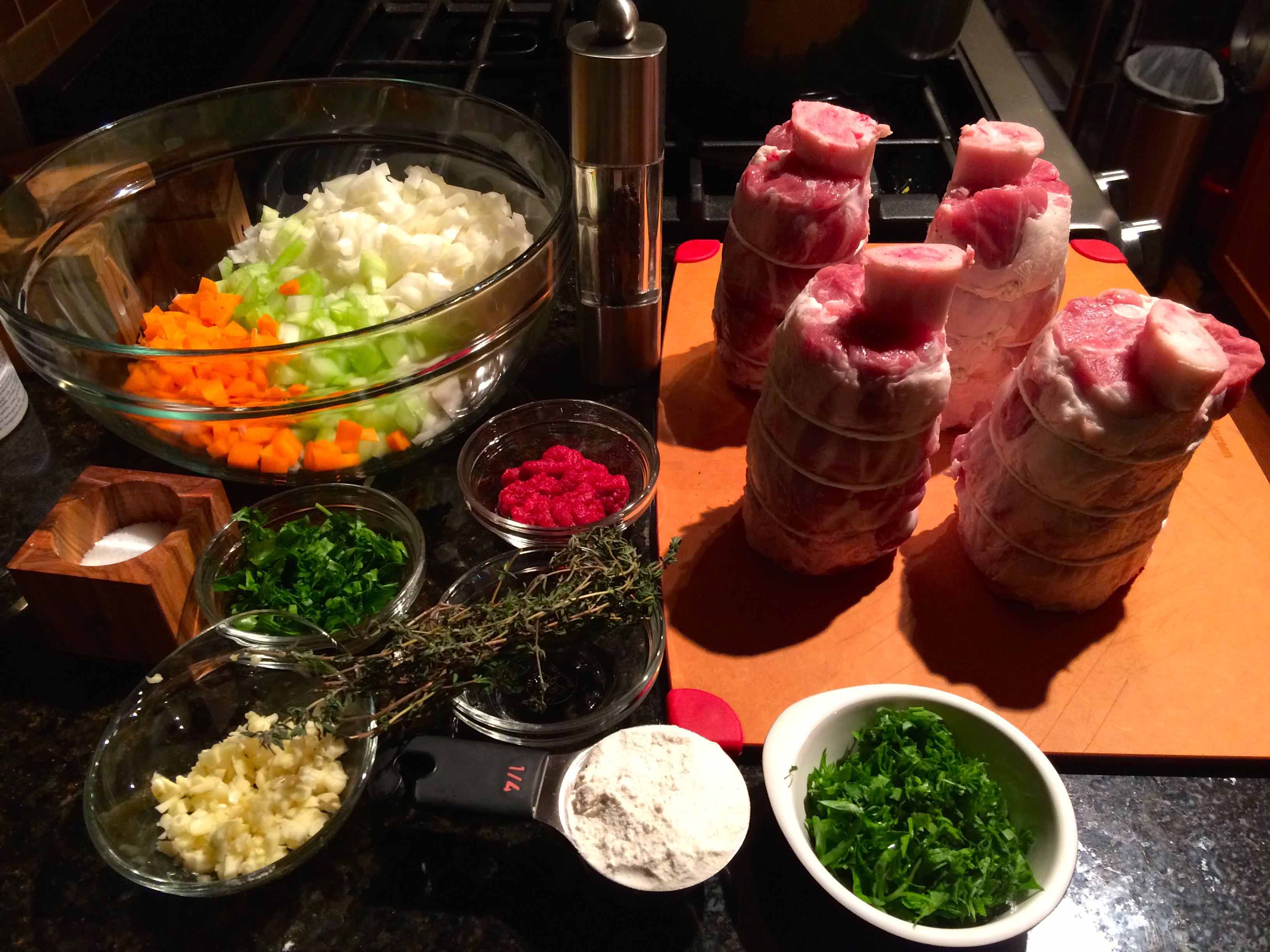
The prepped ingredients

4 fresh pork shanks, well-tied, each 1 1/2 to 2 lb.
Salt and freshly ground pepper, to taste
1/4 cup all-purpose flour
1/4 cup olive oil
2 yellow onions, cut into 1/4-inch dice
2 celery stalks, cut into 1/4-inch dice
2 carrots, peeled and cut into 1/4-inch dice
4 garlic cloves, minced
2 Tbs. tomato paste (I recommend the imported concentrated tomato paste from a tube.)
1/4 cup chopped fresh flat-leaf parsley, plus more for garnish
2 Tbs. chopped fresh thyme (I prefer to use the whole springs and remove then after cooking.)
3 cups low-sodium chicken broth
1 cup dry white wine
4 cups cooked cannellini beans (I recommend starting with 2 cups, and adding more to your taste.)

Directions:
Preheat an oven to 375°F.

Season the pork shanks with salt and pepper. Dredge the shanks in the flour, shaking off the excess. (I’m rather liberal with my salt and pepper.)

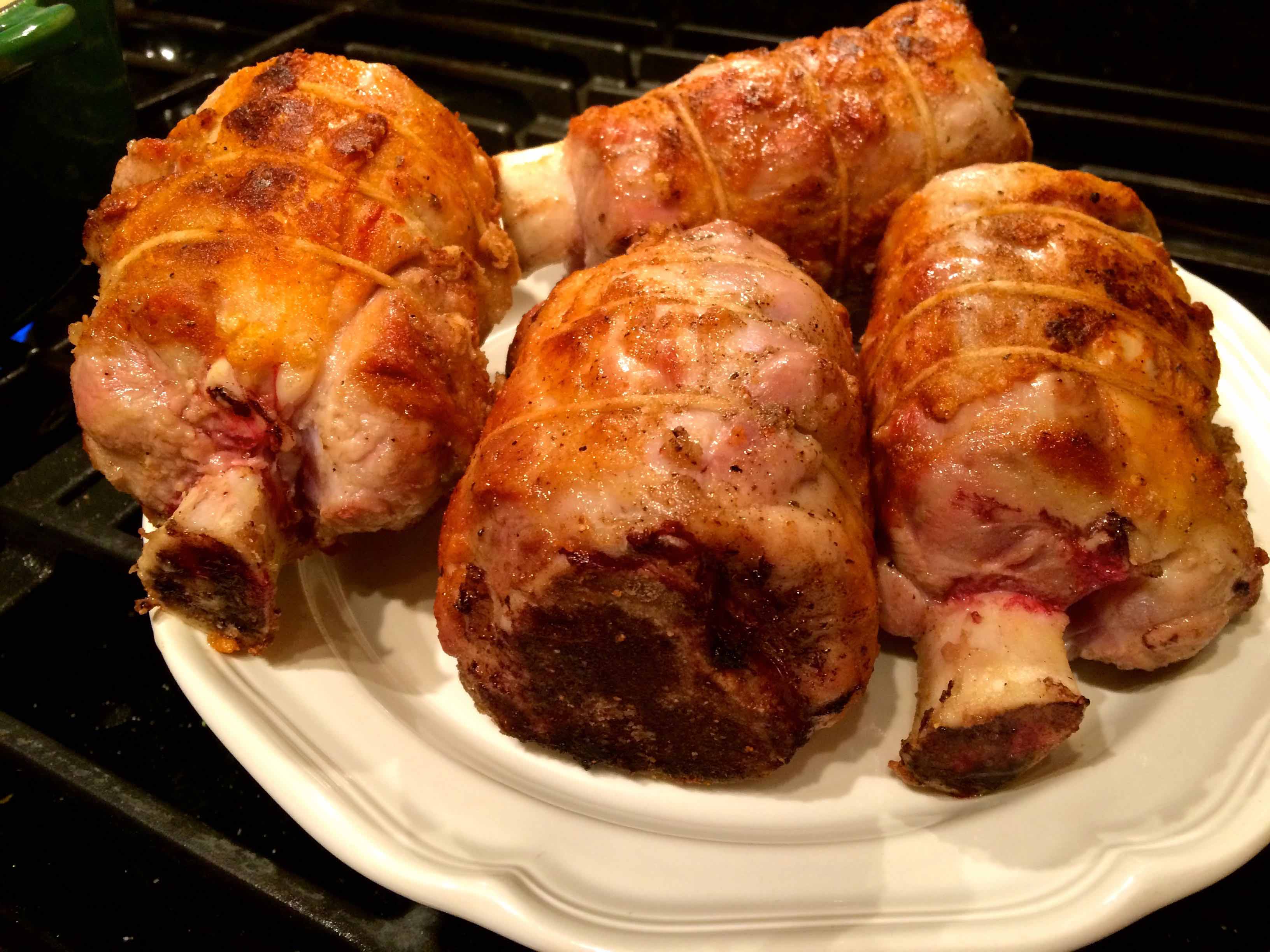
In a large braiser (enameled cast iron works best) over medium-high heat, warm the olive oil until just smoking. Add the shanks and brown on all sides, 10 to 12 minutes total. Transfer to a plate. (Take the time to brown the shanks well.)

The browned shanks
The browned shanks

Add the onions, celery and carrots to the pan and cook, stirring occasionally, until tender, 8 to 10 minutes.

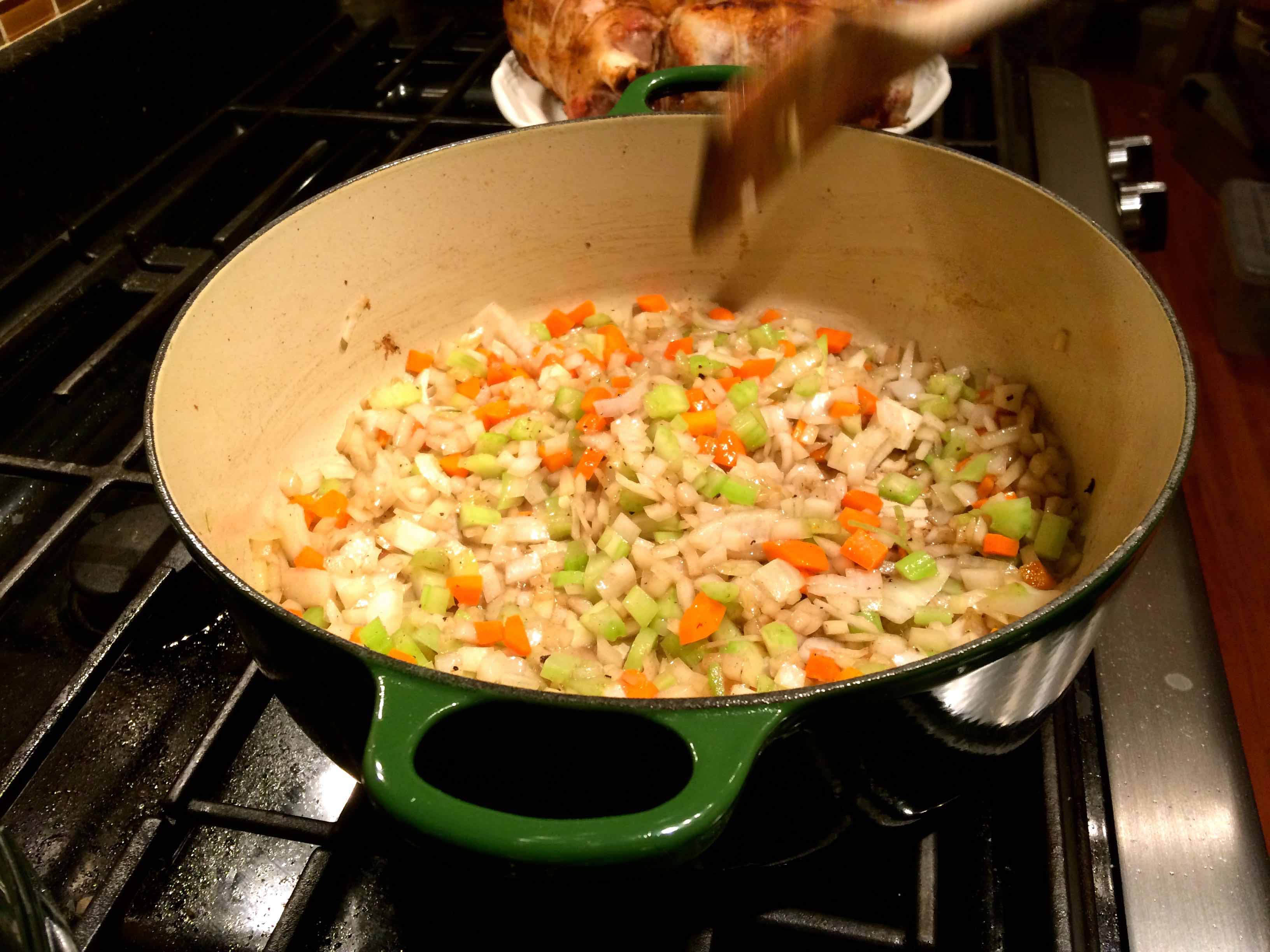
The aromatics cooking

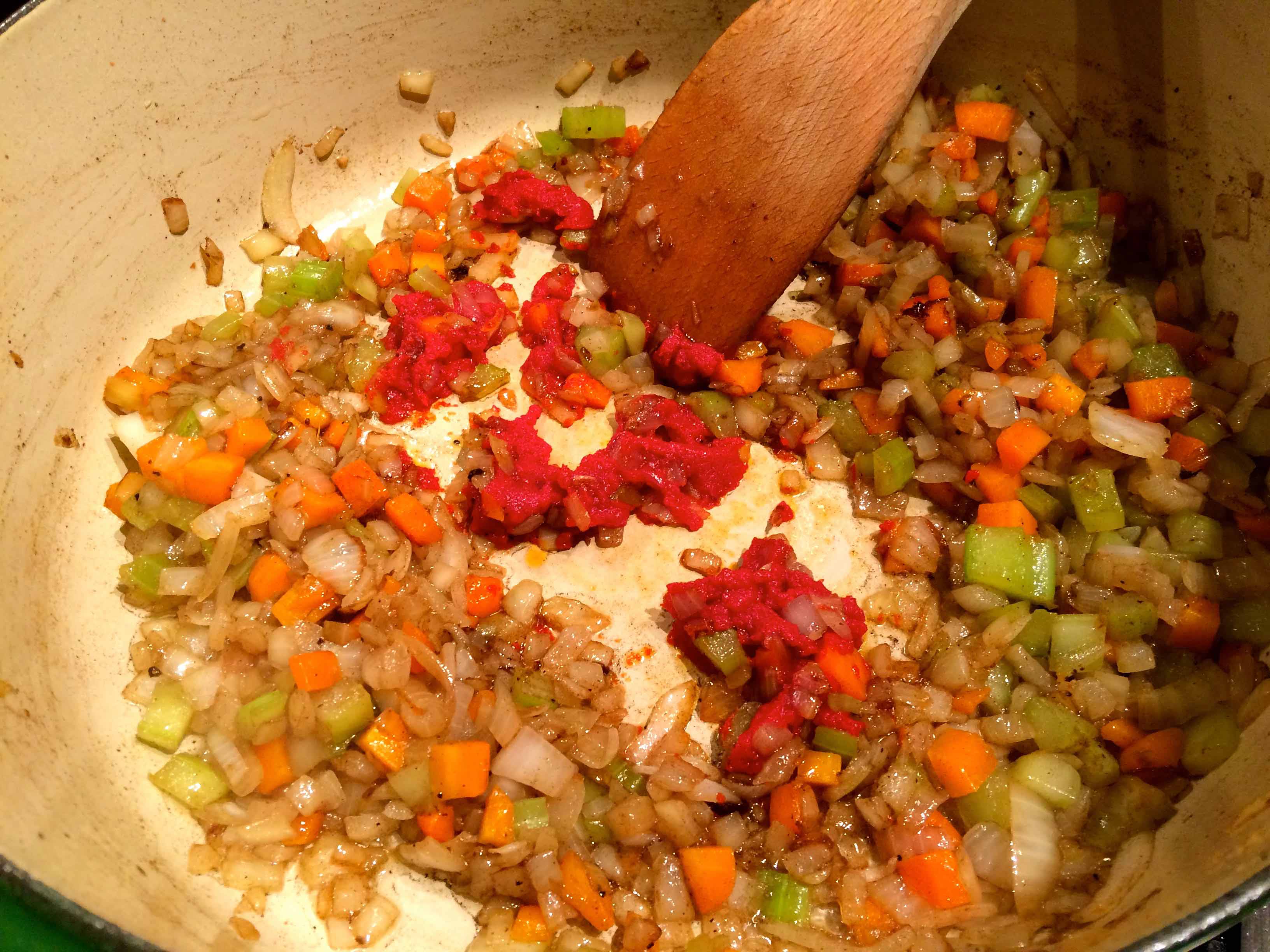
Add the tomato paste and allow to toast for about a minute. (The original recipe adds the tomato paste along with he garlic and thyme and does not call for toasting.)

Toasting the tomato paste

Add the garlic, the 1/4 cup parsley and the thyme and cook for 1 minute. Stir in the broth and wine and bring the mixture to a boil.

The garlic and thyme

Return the shanks to the pan, cover and transfer to the oven. Cook, turning the shanks once about half way through, until the meat is fork-tender and almost falls off the bone, 2 1/2 to 3 hours. Transfer the shanks to a platter and cover loosely with aluminum foil. (The original recipe says to turn the shanks occasionally; I think once is enough.)

The finished shanks
The finished shanks

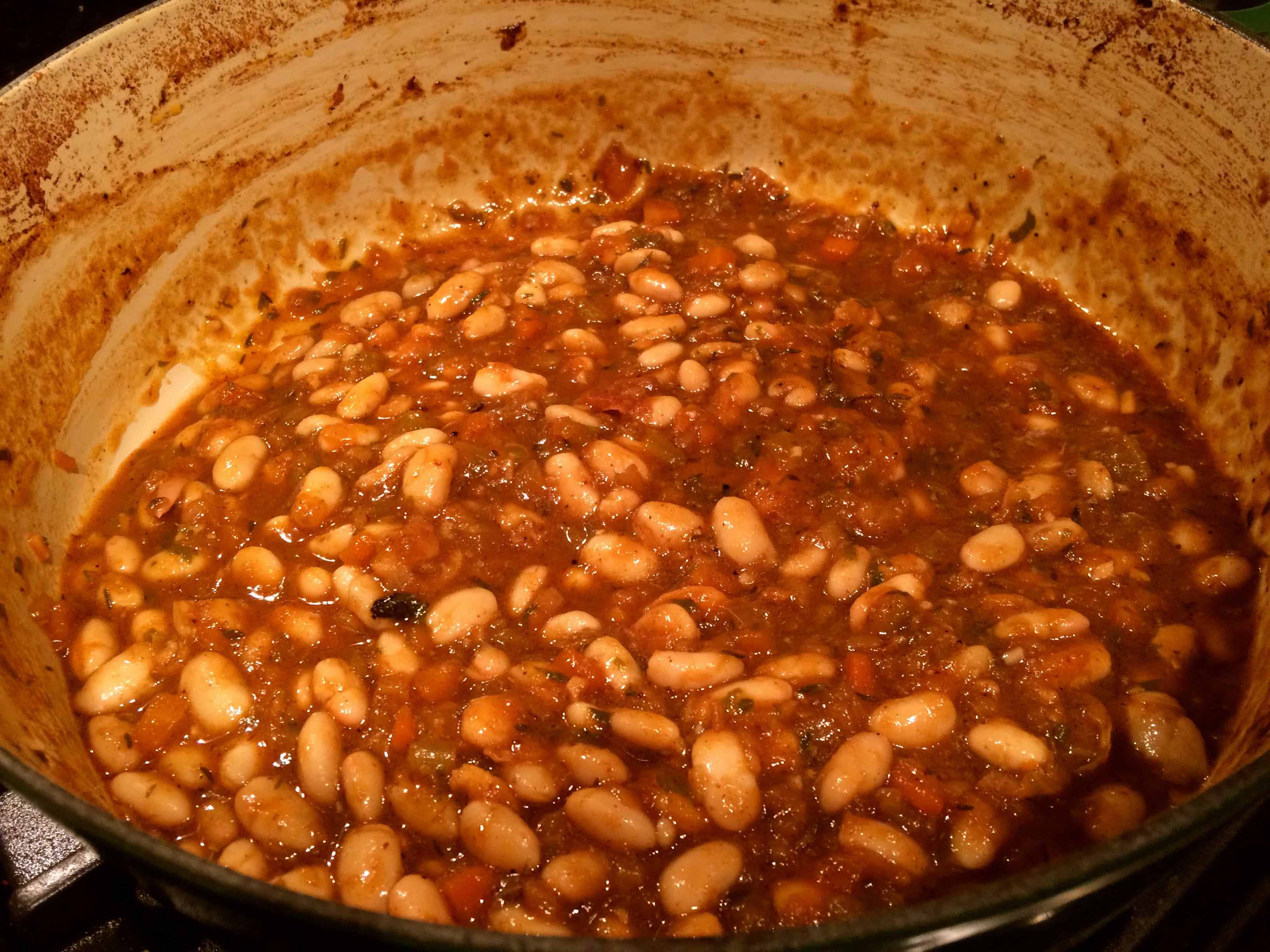
Skim the fat off the braising liquid, set the pan over medium-high heat and bring to a boil. Simmer until the liquid is thickened, 15 to 20 minutes. Stir in the cooked beans, mashing some of them into the sauce.

Beans added to the sauce


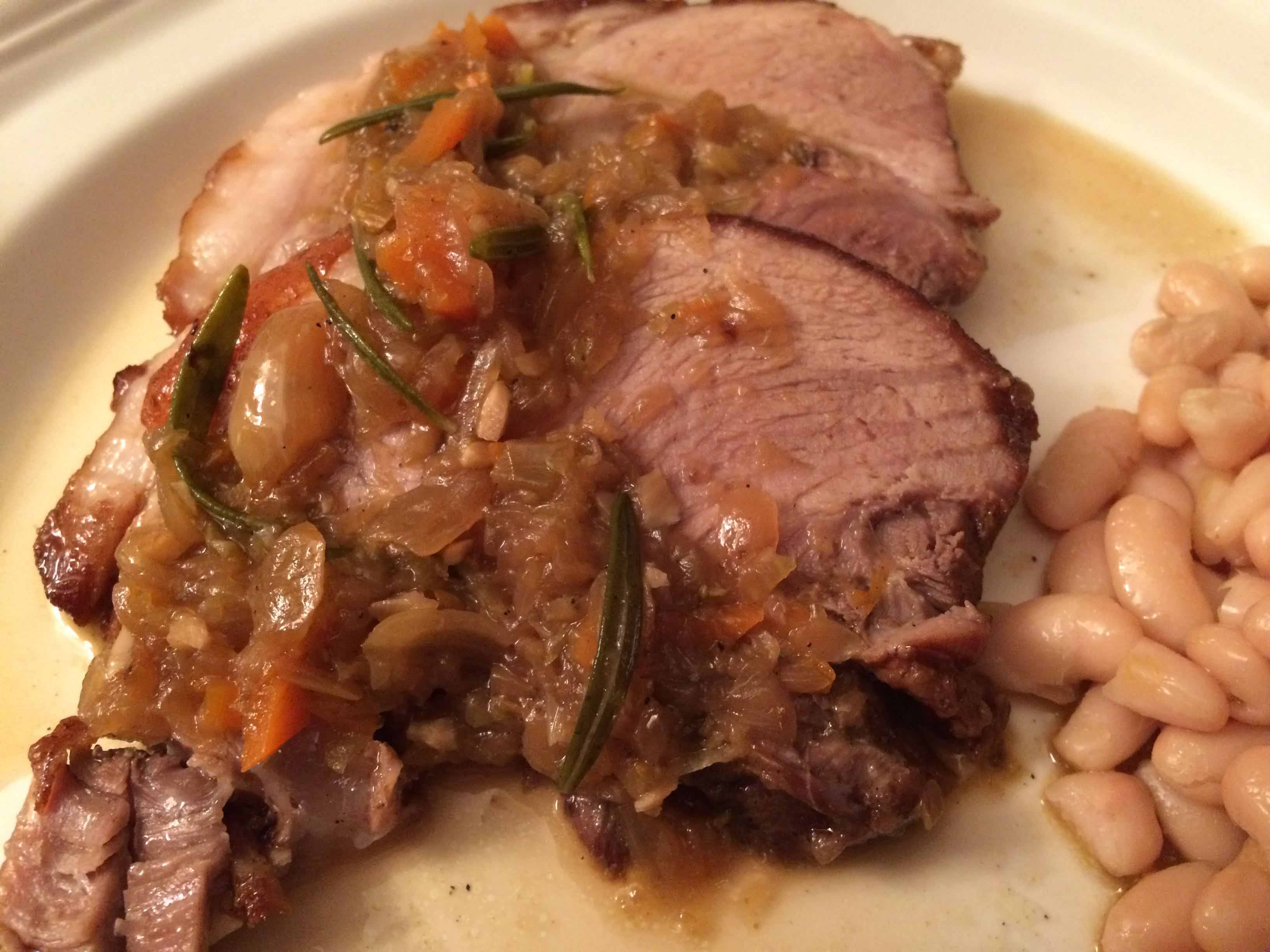
Garnish the shanks with parsley and serve immediately with the beans and braising juices. Serves 4.

Wine Pairing: Cotes du Rhone, Syrah

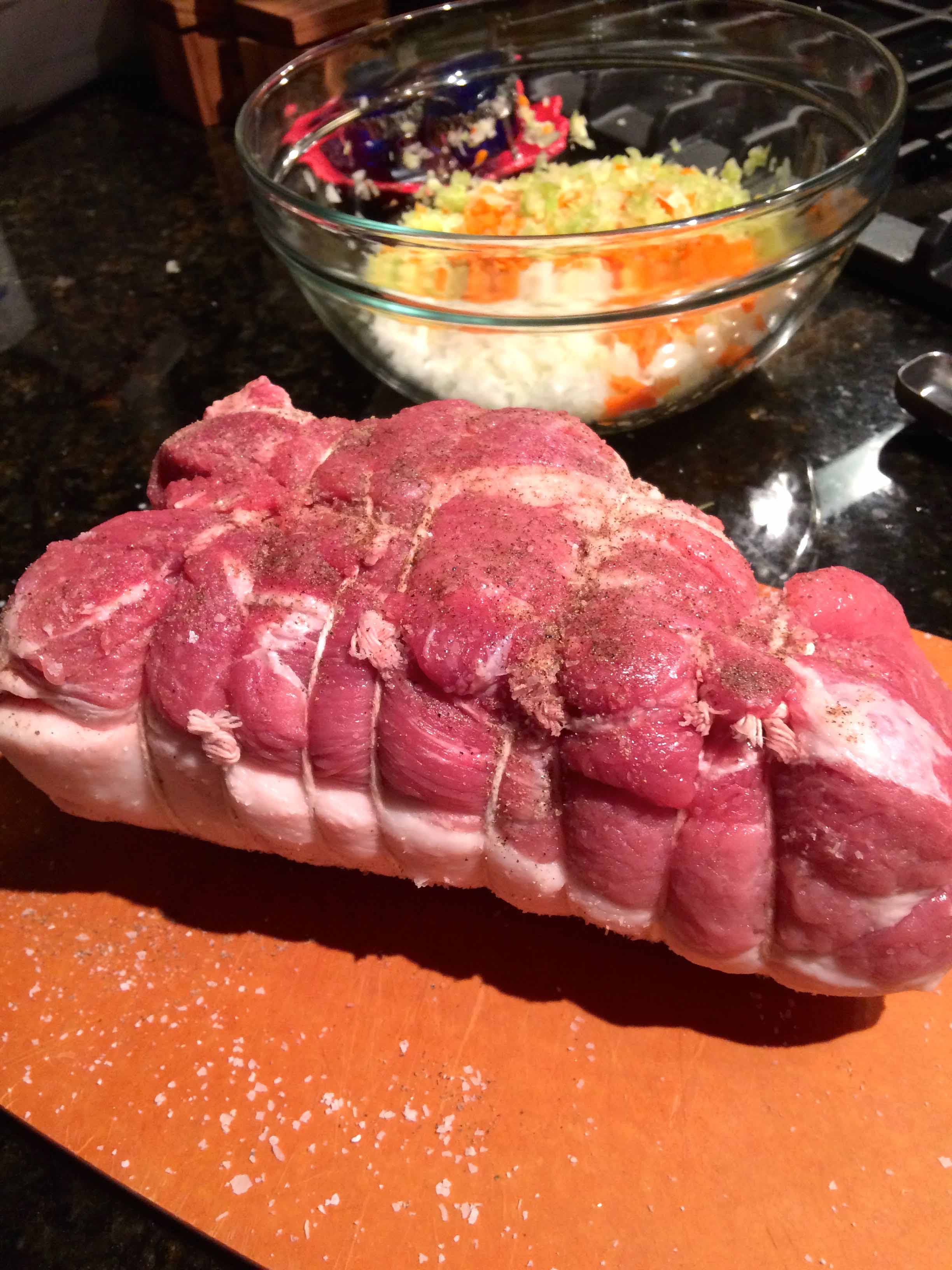
Braised Pork Shoulder Roast

platedroastsm

Yesterday morning, we went to our local butcher to purchase some pork shanks, which I had planned to braise with smoked paprika. Unfortunately, they only had two: one large, one small. That wouldn’t do. As I scanned the display, I espied a pork shoulder roast that prompted me to think of a Facebook post by cookbook author Michele Scicolone on braised pork, which called for, you guessed it, a pork shoulder roast.

Even though we weren’t having dinner guests, I bought the almost four-point roast, and used my phone’s Facebook app to bring up Michele’s post for the recipe and shopping list. She claimed that “nothing is better than a pork shoulder especially when made in the classic Italian way, braised with aromatic vegetables, rosemary and wine.” Well after making it for dinner last night I have to agree—this was indeed the best pork roast I have ever made. Succulent, juicy, and aromatic, perfectly textured, it was absolutely delicious.

I made a few variations, using one large sweet onion rather than the two medium onions called for, increasing the amount of wine and decreasing the amount of water, and adding a tad more fresh rosemary and a pinch of fennel pollen.

The most difficult part of this recipe was waiting for this roast to finish cooking while being tantalized by its seductive aromas that wafted from the oven. We were salivating as it came out of the oven.

As recommended by the author, I served the dish accompanied by white beans and chose a young Barbera d’Alba for our wine.

Here’s a link to Michele’s post: Brasato di Maile for a Festive Dinner Party. Note that a misprint in the recipe erroneously calls for a 14 pound roast as opposed to a 4 pound one.

Onions, Carrot, and Celery are finally chopped

Chopped aromatics
Chopped aromatics

The roast is patted dry and seasoned liberally with salt and pepper:

The seasoned roast
The seasoned roast

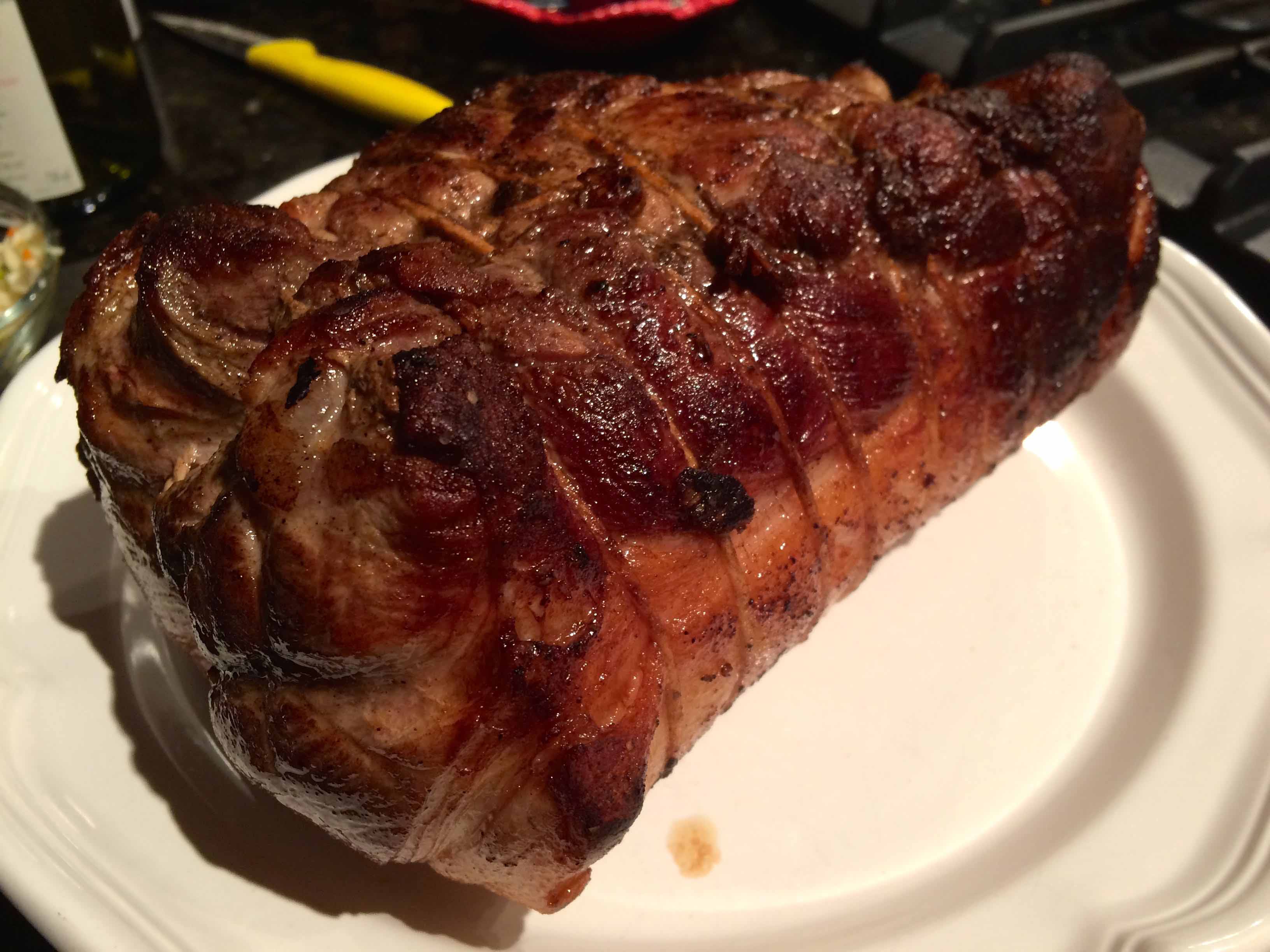
The roast is browned on all sides. It’s essential for flavor to take the time to brown the roast well.

Bronwed roast
Browned roast

After browning the roast, I removed it from the pot and sautéed the vegetables, added the garlic, rosemary, fennel pollen, and the wine, and brought them to a simmer. I then returned the browned roast, along with its juices, to the pot.

The roast cooks for about 2.5 hours, or until easily pierced by a fork.

The finished roast
The finished roast

Wine Pairing: Barbera, Chianti Classico, Petite Sirah


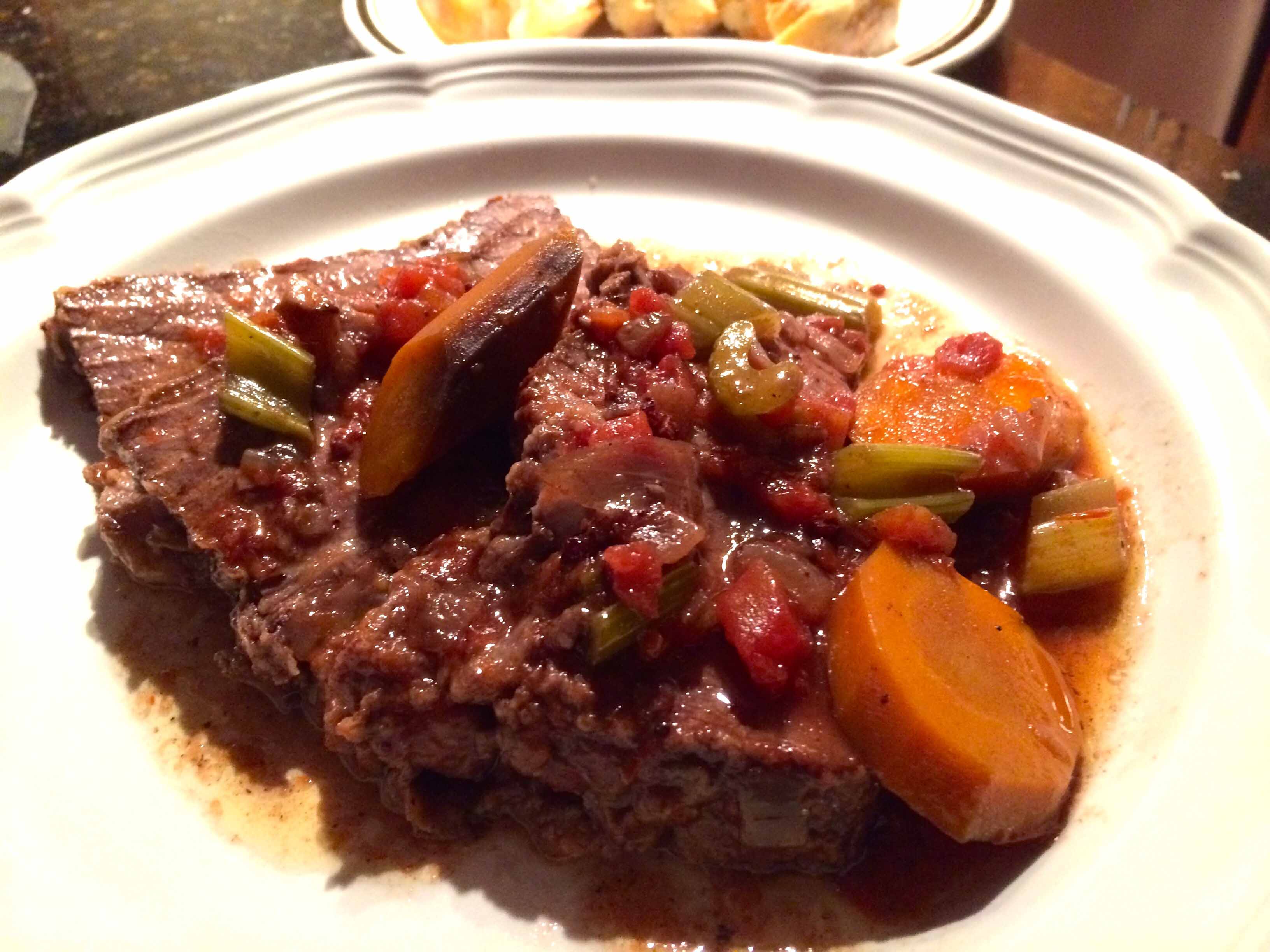
Beef in Barolo

beefbaroloplatedsmall

As summer draws near to its end, I’m anticipating the richer dishes of fall and winter.: the hearty stews, the rich braises, the luxurious roasts—all make it easy for me to bid farewell to summer and its light cuisine. So maybe it was serendipity that led me into my local Whole Foods on Saturday to find chuck roast discounted 25%. How could I resist?

We had a full schedule on Sunday, so I turned to my trusty slow cooker to cook the roast and to Michele Scicolone’s The Italian Slow Cooker for a recipe. (This author’s slow-cooker books (Italian, French, and Mediterranean) are a great resource for this appliance, offering fool-proof, authentic recipes.) I turned to the book’s “Beef, Veal, Pork, and Lamb” section and, once again, was pleasantly surprised to discover that its first recipe was for the cut of meat I had purchased: “Beef in Barolo.”

As my savings at Whole Foods could not justify the expense of a Barolo for cooking, I thought I could more than get by with a younger version of this wine made from the same grape, Nebbiolo. And one more time luck led me to a local merchant where I found a bottle of Langhe from a reputable producer at a very good price.

Here’s a link to the recipe online. If you like your carrots and celery in the braise to have some chew, you may opt, as I did, to slice them on the thick side. However, any way you choose to slice your vegetables, this recipe yields an aromatic and deliciously succulent roast that holds its shape even after six hours of cooking.

The roast before slicing

Wine Pairing: Langhe, Cabernet Sauvignon