Lamb Shanks with Sweet and Sour Onions

IMG_5854sm

You’ve probably been counseled by other food bloggers or cooking enthusiasts to let what looks good on any given day at your market determine what you’ll cook that night. I more or less agree with this advice, but I must admit that it definitely helps to have high-quality markets nearby. Fortunately, I live in downtown New York, where I’m surrounded by some of the city’s finest fish mongers, green grocers, and butchers, which makes being inspired by their offerings relatively easy.

Such was the case the other day when I went to my butcher, Dickson’s Farmstand Meats located in Chelsea Market, looking for inspiration. They’re know for locally sourced, humanely raised meats, and I wasn’t there long before I espied and bought some meaty lamb shanks.

As I walked home, I started to consider how to prepare them. For me, braising was the obvious choice, but I wasn’t quite sure what to braise them with. So when I got home, I looked through some of my go-to books for braising and found an appealing recipe in Michele Scicolone’s The Mediterranean Slow Cooker: “Lamb Shanks with Sweet and Sour Onions.”

The recipe calls for just a few ingredients with which to cook the lamb: red onions, garlic, rosemary, red wine, and balsamic vinegar.
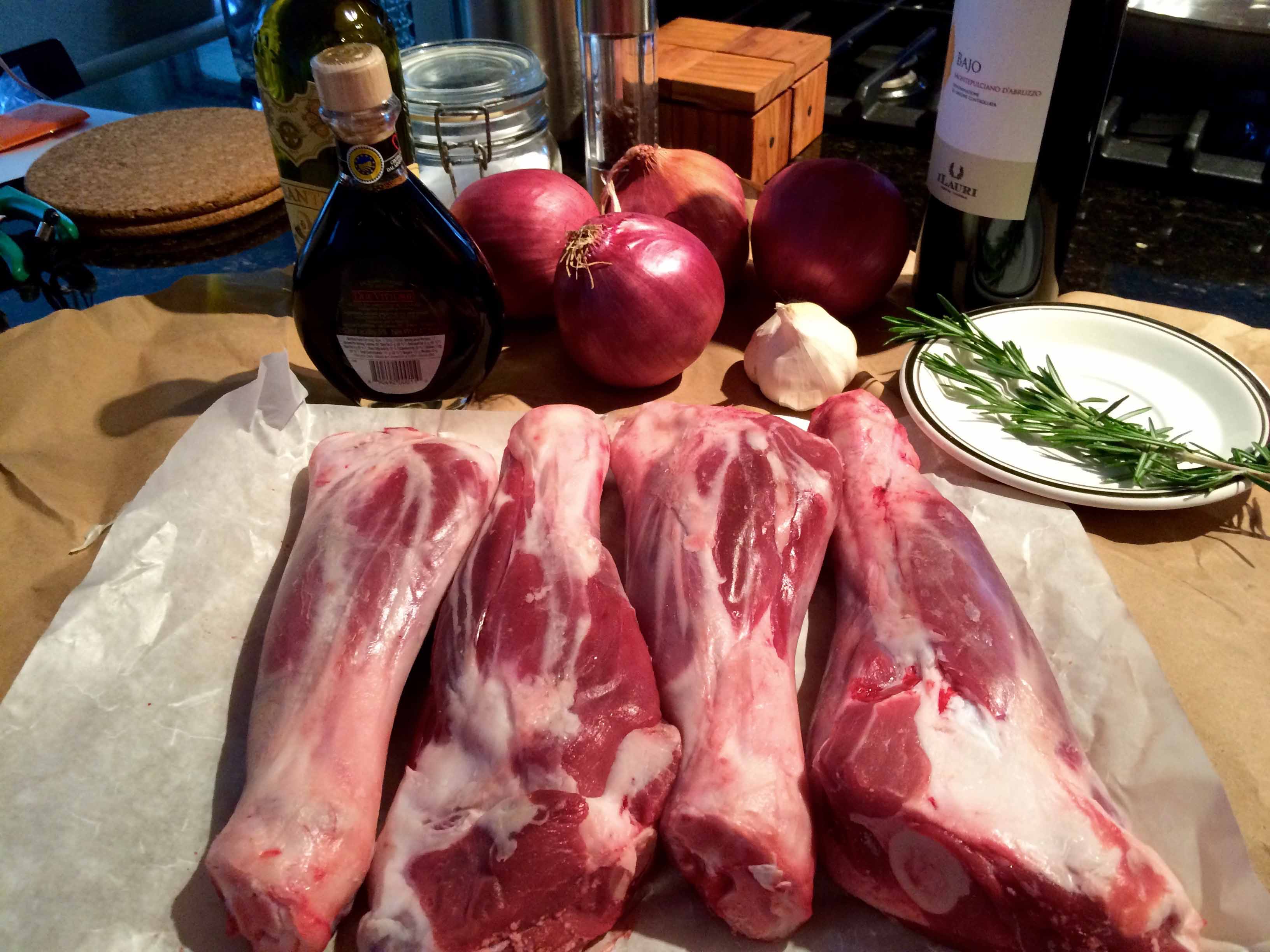
The Ingredients
The Ingredients

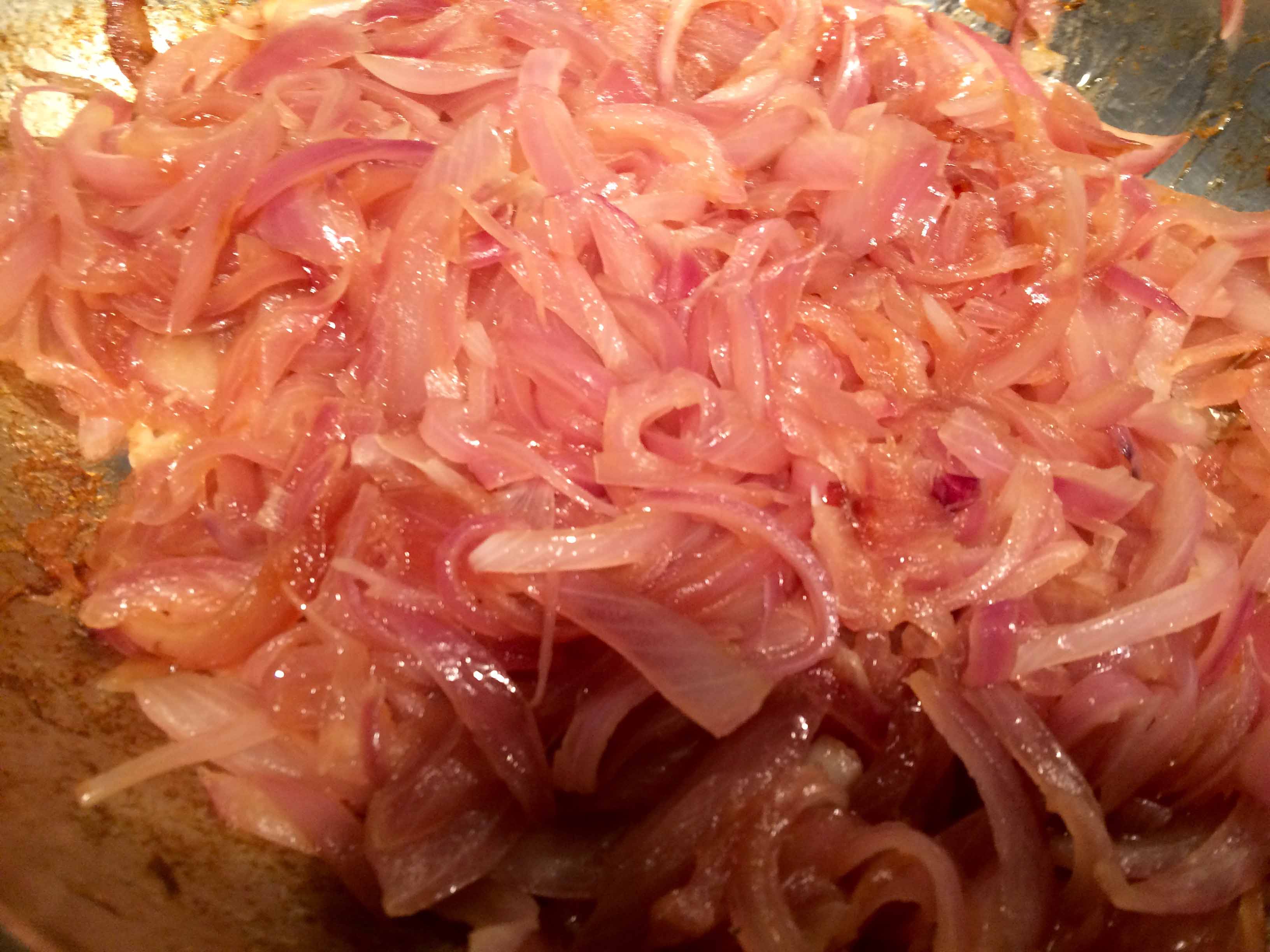
The minimal prep also made the recipe attractive: browning the onions and then combing them with the garlic (minced), the rosemary (chopped), the red wine (dry), and the balsamic vinegar. Since the vinegar plays a leading role in flavoring this dish, I recommend using a good quality balsamic.
IMG_5838sm
Browning the onions
Onions with the wine, balsamic, and rosemary

Cooked on low for 8 hours, the shanks become tender and succulent and their distinctive meaty flavors are perfectly complemented by the sweet-and-sour onions and braising liquid.

I served the shanks with polenta, made creamy with butter, cream, and Parmigiano Reggiano.

Wine Pairing: Montepulciano d’Abruzzo
Slow-Cooked Beef with Juniper Berries

IMG_4998sm

As a child, I often accompanied my mother or my aunt when they went food shopping, which they did on an almost daily basis. Much to my chagrin, however, these excursions took considerable time since they opted to shop at small mom-and-pop stores rather than at the supermarket. Typically, we’d start at the salumeria for cold cuts and cheese, move on to the greengrocer for vegetables, and then end up at either the butcher or fishmonger. At each stop, they seemed to have a warm relationship with the proprietors, asking after their children, listening to their stories, offering them advice, or lending a sympathetic ear.

On one of these trips, it seemed to me that my mother was having a rather long talk with the butcher. She kept smiling and laughing, just a little too much I thought. After we left, I told her that I was going to tell dad that she was flirting with Tony. She grinned at me and said winking, “Maybe I do, just a little, but that’s how I get the best cuts.”

It’s then that I realized one of the reasons why my mother and aunt were always so pleasant with all the shop owners: they were sure to get the best ingredients for our family.

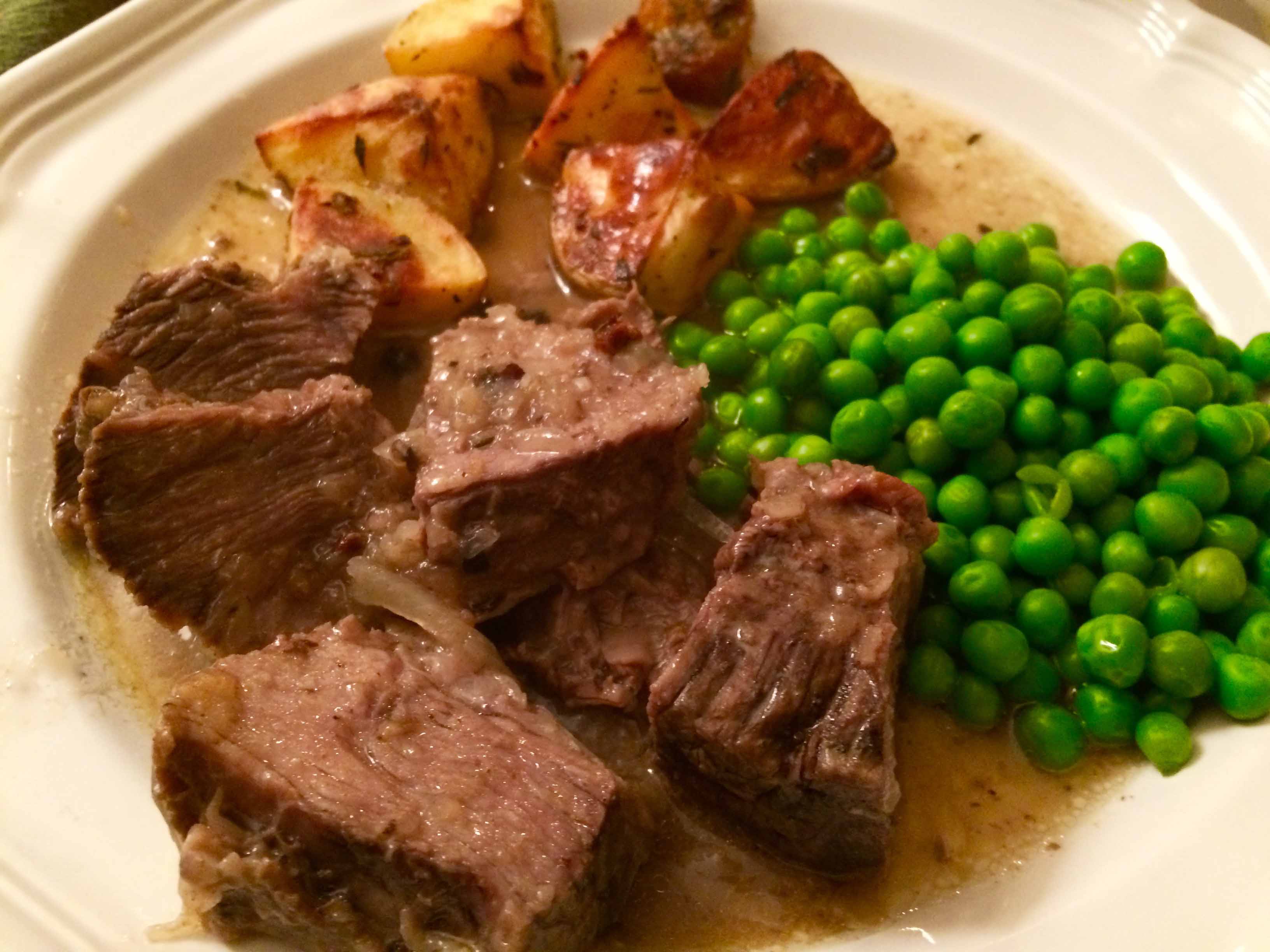
In Italian cooking, it’s essential that the basic ingredients, the prima materia, be of the highest quality because the cuisine is so minimalist. This was a continuing theme of Marcella Hazan’s cookbooks and it seems to have influenced her son, Giuliano. An example is his recipe from Every Night Italianfor beef slowly simmered with onions and juniper berries, which I prepared recently for a weekday supper and served with garlic-roasted potatoes and peas.

Slow-Cooked Beef with Juniper Berries adapted from Every Night Italian by Giuliano Hazan

2 tablespoons extra-virgin olive oil
1 1/2 cups onions, thinly sliced crosswise
2 pounds beef chuck, cut in 2 or 3 pieces so as to comfortably fit in the pot
1 teaspoon juniper berries, lightly crushed
2 tablespoons red wine vinegar
Salt
Freshly ground black pepper

Ingredients
Ingredients
  1. Choose a heavy-bottomed braising pot with a tight-fitting lid, preferably enameled cast iron, just large enough to accommodate the meat.
  2. Put the olive oil and the onions in the pot and place the meat on top. Add the crushed juniper berries, the vinegar, and season with salt and pepper.
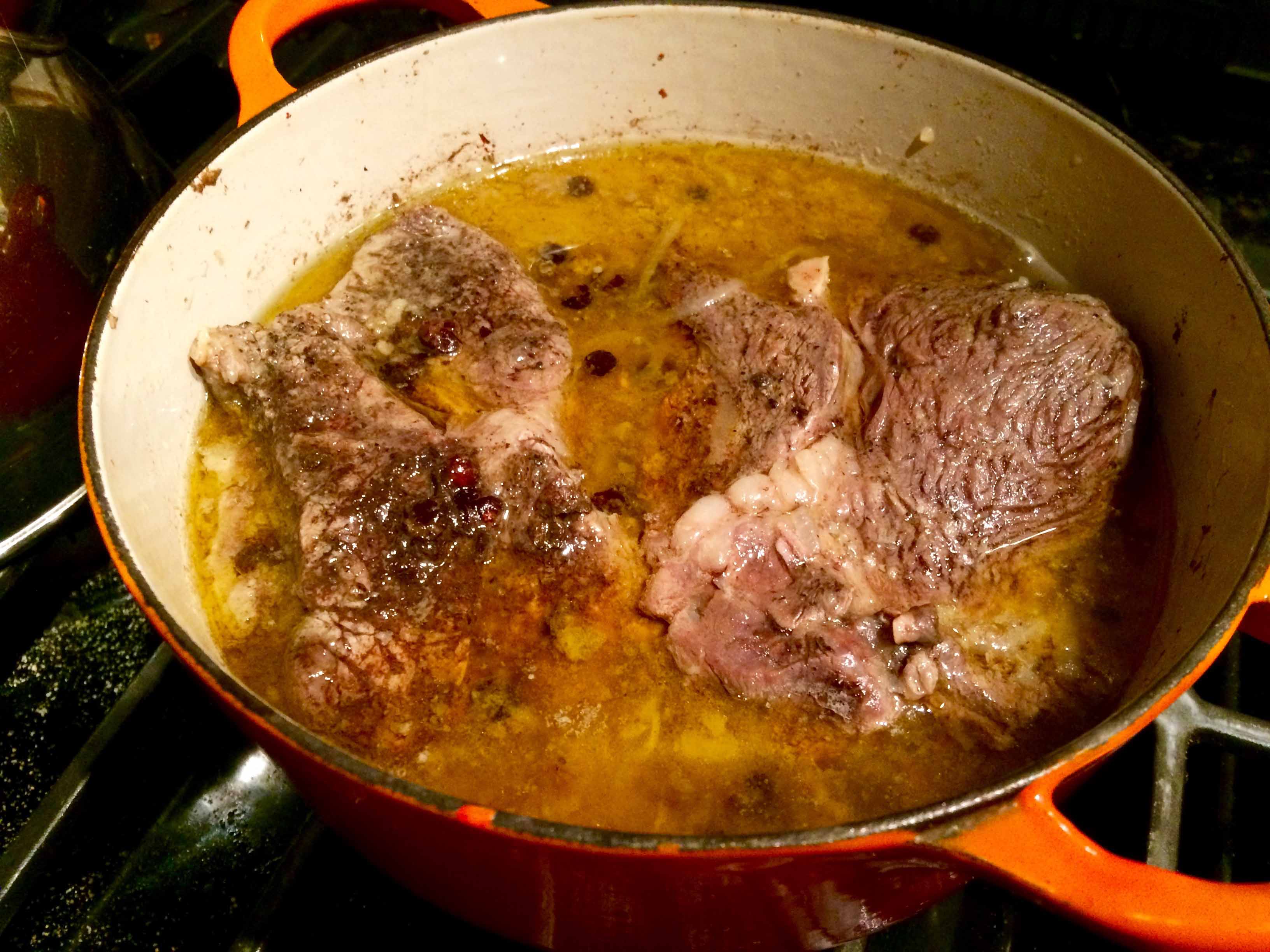
  3. When you hear the contents of the pot bubbling, remove the lid and adjust the heat so that meat cooks at a very gentle simmer. Replace the lid and simmer until the meat is extremely tender when prodded with a fork, about 2 hours. You can begin checking it after 1 hour. If all the liquid evaporates before the meat is tender, add a little water.

    The seasoned beef
    The seasoned beef
  4. When the meat is done the sauce should be thick enough to cling to a spoon. If it is too thin, remove the meat and raise the heat until it has reduced.

    Beef after cooking
    Beef after cooking
  5. Slice the meat, return it to the pot to coat with the sauce, and serve.

Note: This dish may be prepared up to 3 days ahead of time and reheated over gentle heat with a 2 tablespoons of water.

Wine Pairing: Nebbiolo, Cabernet Sauvignon