As some of you may know, I’m a fan of the pressure cooker for weeknight suppers—especially when getting home after 7. It allows me to prepare comfort food quickly and with minimal effort. Nevertheless, I have shied away from using it for pasta dishes, until I came across a recipe titled “Weeknight Meat Sauce with Rigatoni” in America’s Test Kitchen’s Pressure Cooker Perfection with a cooking-under-pressure time of 5 minutes.
What appealed to me most about the recipe was that, unlike so many that abound for pressure cooker pasta, it wasn’t loaded with cheese and seemed to allow for an al dente pasta by finishing its cooking without the lid after the steam was released.
I’m sure that my purist friends will balk at this recipe and may question my loyalty to authentic Italian cooking.To them, I must concede that the end product of the recipe has far too much sauce for my liking. Indeed, it calls for 28 ounces of crushed tomatoes, a 14.5 ounce of can diced tomatoes drained, and 1 tablespoon of tomato paste.Moreover, I was disappointed that it uses oregano and red-pepper flakes while its introduction claims its goal was a “sauce with the flavors of a Bolognese” is misleading.
The ingredients
Despite these weak points, I was pleased with how this dish turned out. Creminimushrooms, which were browned along with chopped onion, were a nice complement to the ground beef, adding to the meatiness of the sauce. I also added some ground nutmeg to the browned meat as I do when preparing a traditional ragù Bolognese.
Although I know I will never achieve the heights of a true ragù, I plan to experiment with this recipe after the holidays, using more traditional ingredients and definitely far less tomato.
For me, one of the best times to visit Venice is the winter. Although it can get cold, and even albeit rarely snow, during this period, this unique city seems to shed the facade it puts on for spring and summer tourists and shows its true colors. You stroll through the city’s narrow alleys and passageways and through the silence you can hear its citizens going through their daily routines. Somehow, you feel at one with them and are woven into the fabric of La Serenissima.
On one of my visits, I chanced upon a small restaurant, whose name escapes me now, at lunch hour. There were only a few patrons, one table of businessmen, another table with a family of five celebrating a nonna’s birthday. It didn’t take long before I was seated and handed a menu with many familiar dishes typical of the region. One of them, however, stood out, as I had never seen it before: straccetti di manzo con rucola, or “rags of beef with arugula.” I had to try it.
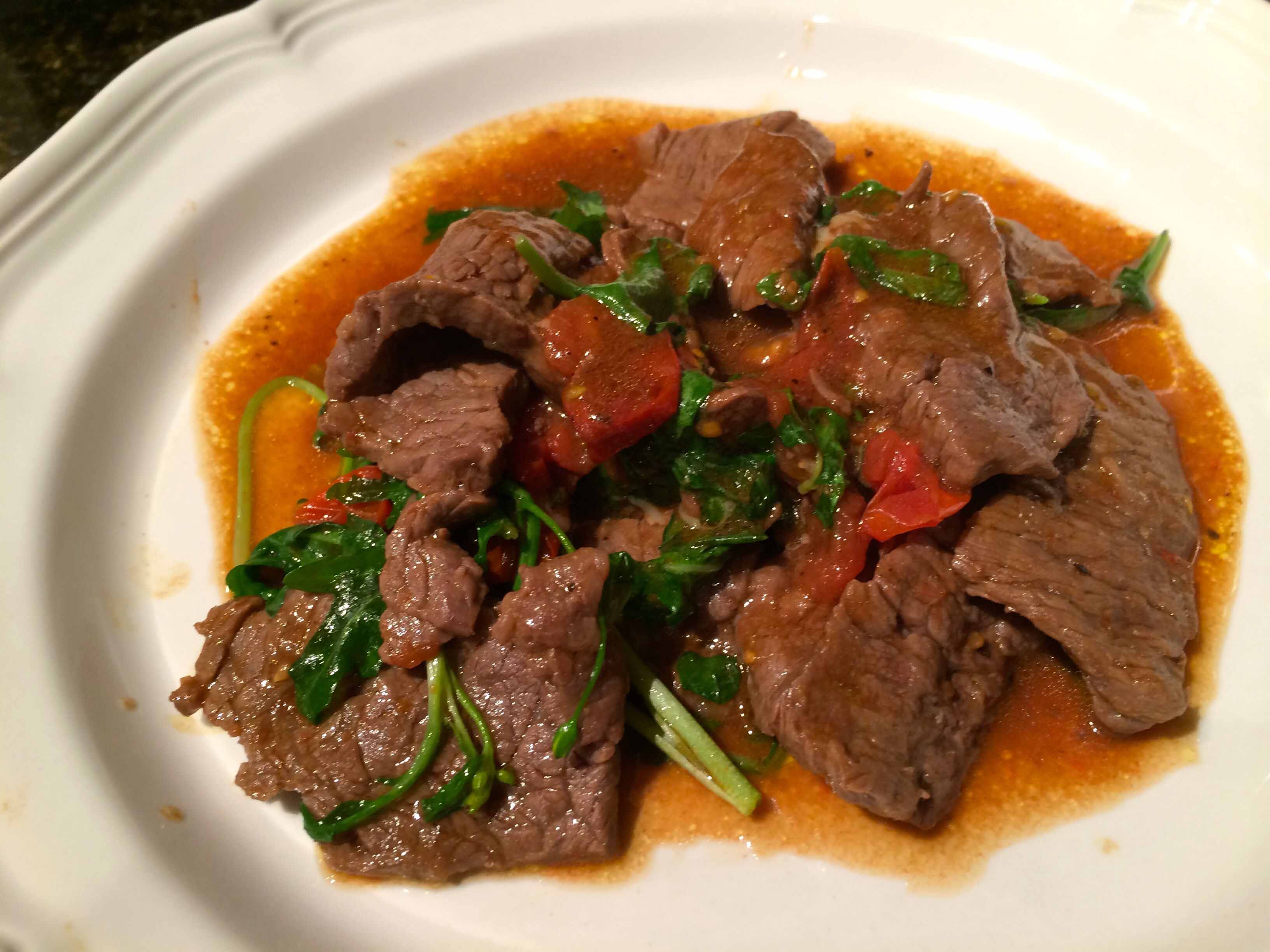
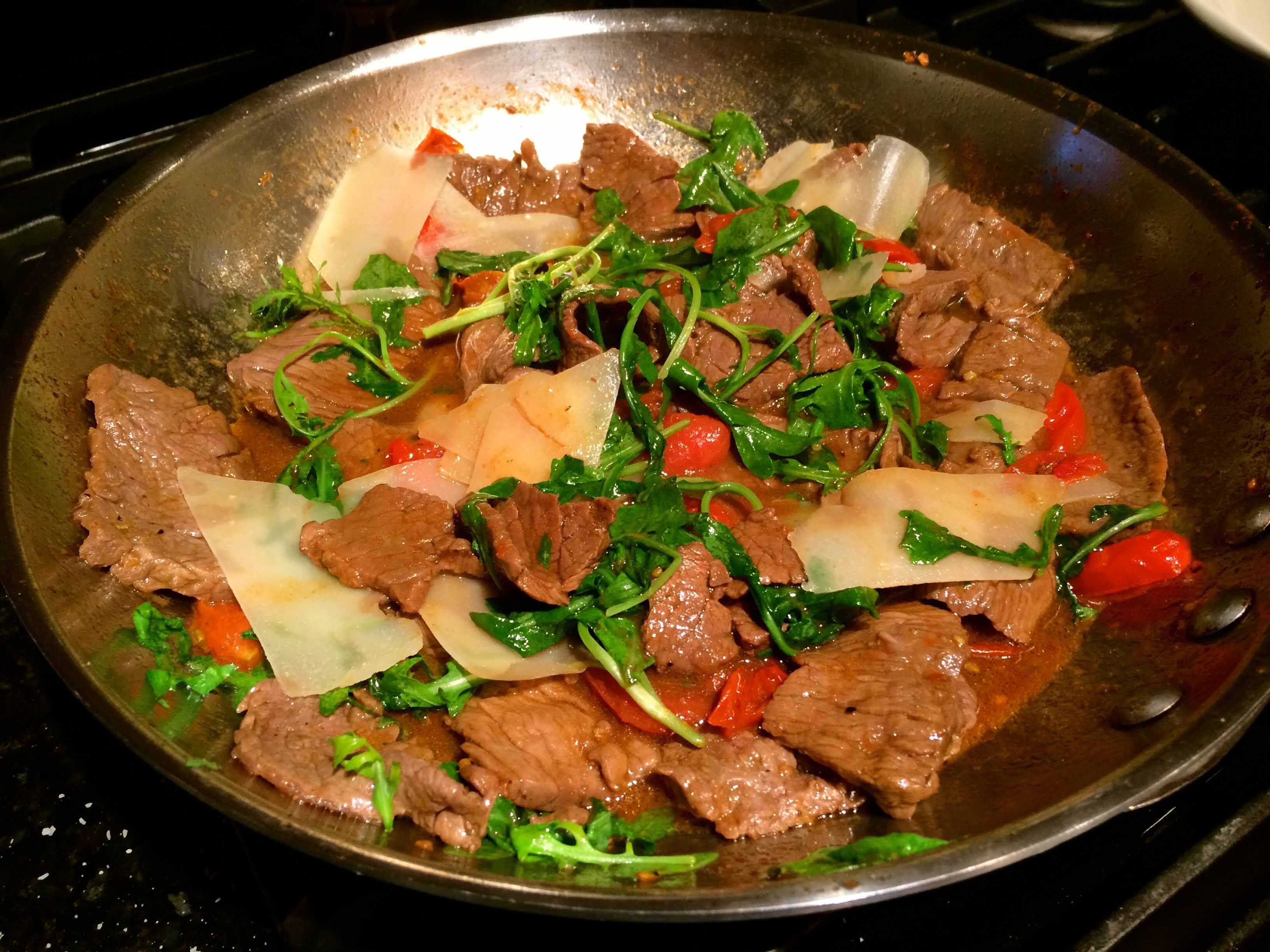
When it appeared on the table, I was struck by how much beef was on the plate, interlaced with wilted leaves of baby arugula and shavings of parmigiano-reggiano. But when I brought my fork to the beef, I saw how thinly sliced it was and realized that my serving, although more than adequate, was not as large as it had appeared at first.
I’ve been wanting to make this dish for some time now, and a recent conversation with a friend who had just been to Italy reminded me about it. So yesterday, I went to one of my butchers and told him I needed some beef for straccetti. To my surprise, he was familiar with the dish and suggested a few cuts. “It’s cooked quickly,” he said “and the meat needs to be tender. I suggest Bohemian steak.” He explained that this cut comes from the tail of the porterhouse, is well marbled, and very flavorful.”
I’m glad I followed his advice, for the dish l prepared last night could not have been better. The beef was cooked in a matter of minutes and, although no more than an eighth of an inch thick, was juicy and tender.
If you’re looking for a quick and easy dish, I highly recommend this one. A Google search yielded a plethora of recipes for straccetti and mine is an amalgam of at least four.
Straccetti di Manzo con Rucola e Pomodorini
3 tablespoons of extra virgin olive oil
1 clove garlic peeled and smashed
5 ounces grape tomatoes, halved
1 pound Bohemian steak, sliced into 1/8-inch strips
Salt
Fresh ground pepper
1 tablespoon good quality Balsamic vinegar
1 large handful of wild arugula, washed and dried
2 ounces Parmigiano-Reggiano shaved
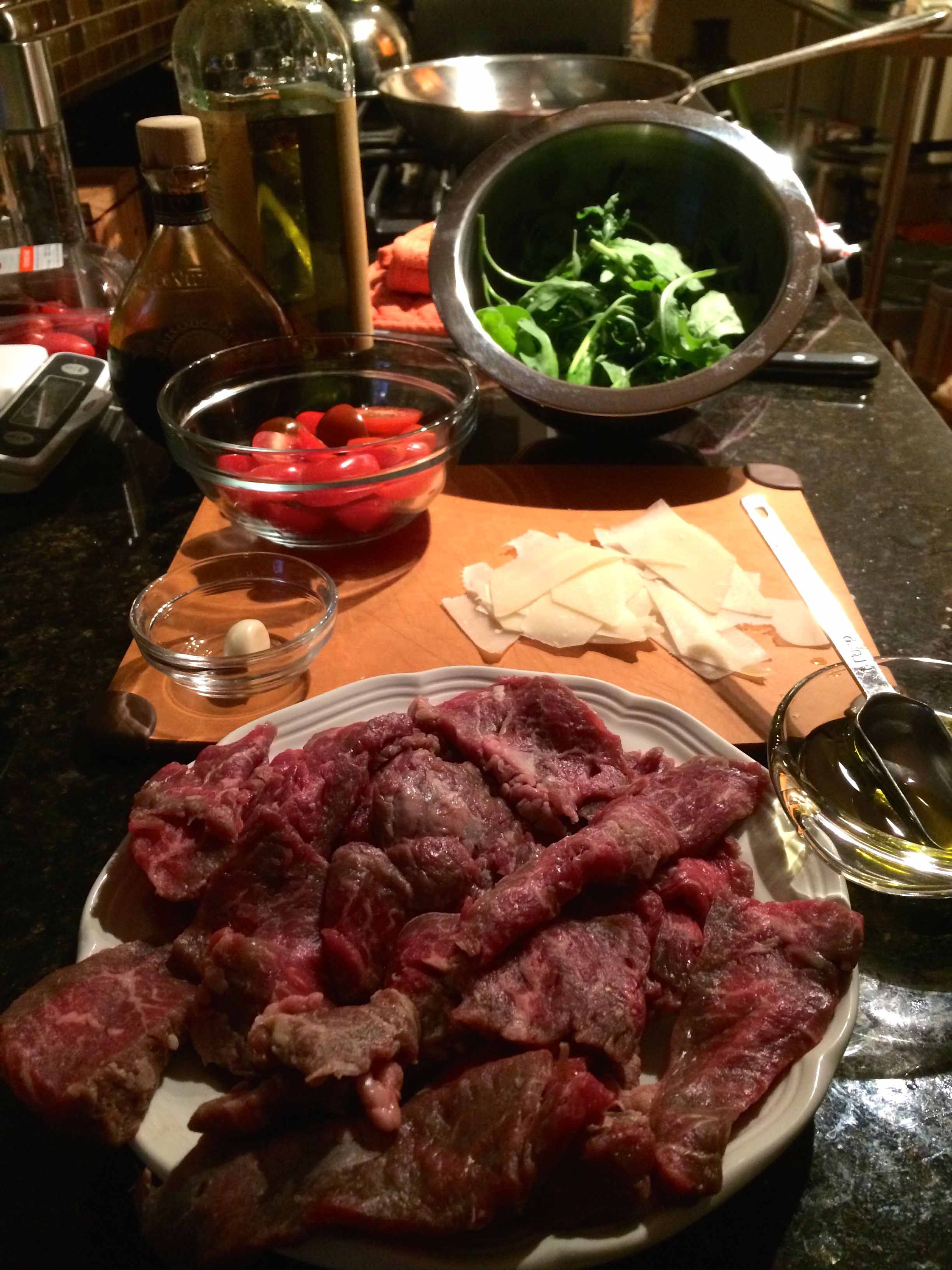
The ingredients
In a large, heavy-bottomed skillet large enough to eventually accommodate the meat in a single layer, place the olive-oil and smashed garlic and over medium-low heat poach the garlic until it becomes fragrant and a light gold.
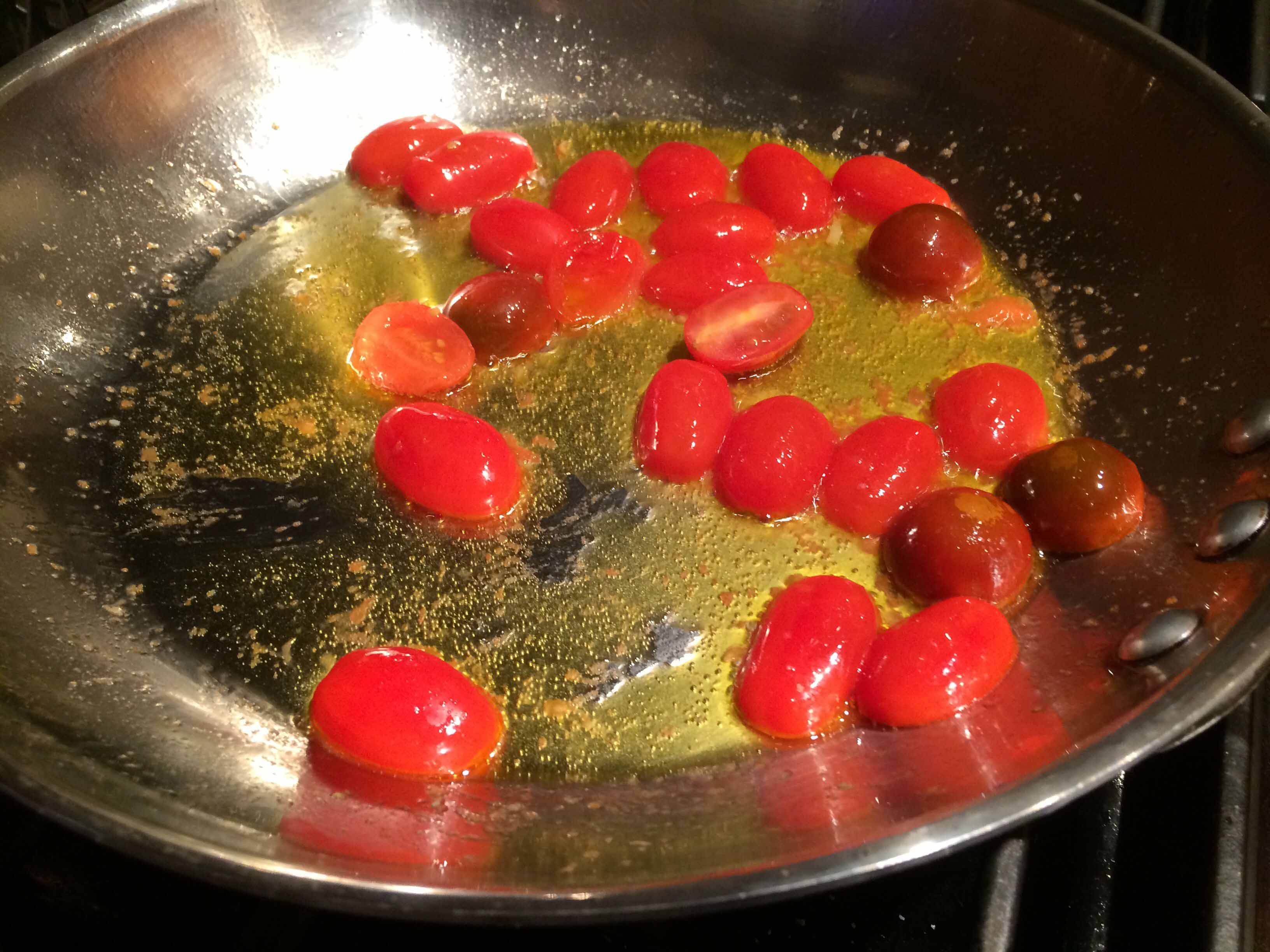
Discard the garlic and add the sliced tomatoes with a pinch of salt and cook over medium heat for about 3 to 4 minutes, or until the tomatoes just start to break down. Remove the tomatoes with a slotted spoon and set aside.
The tomatoes just breaking down
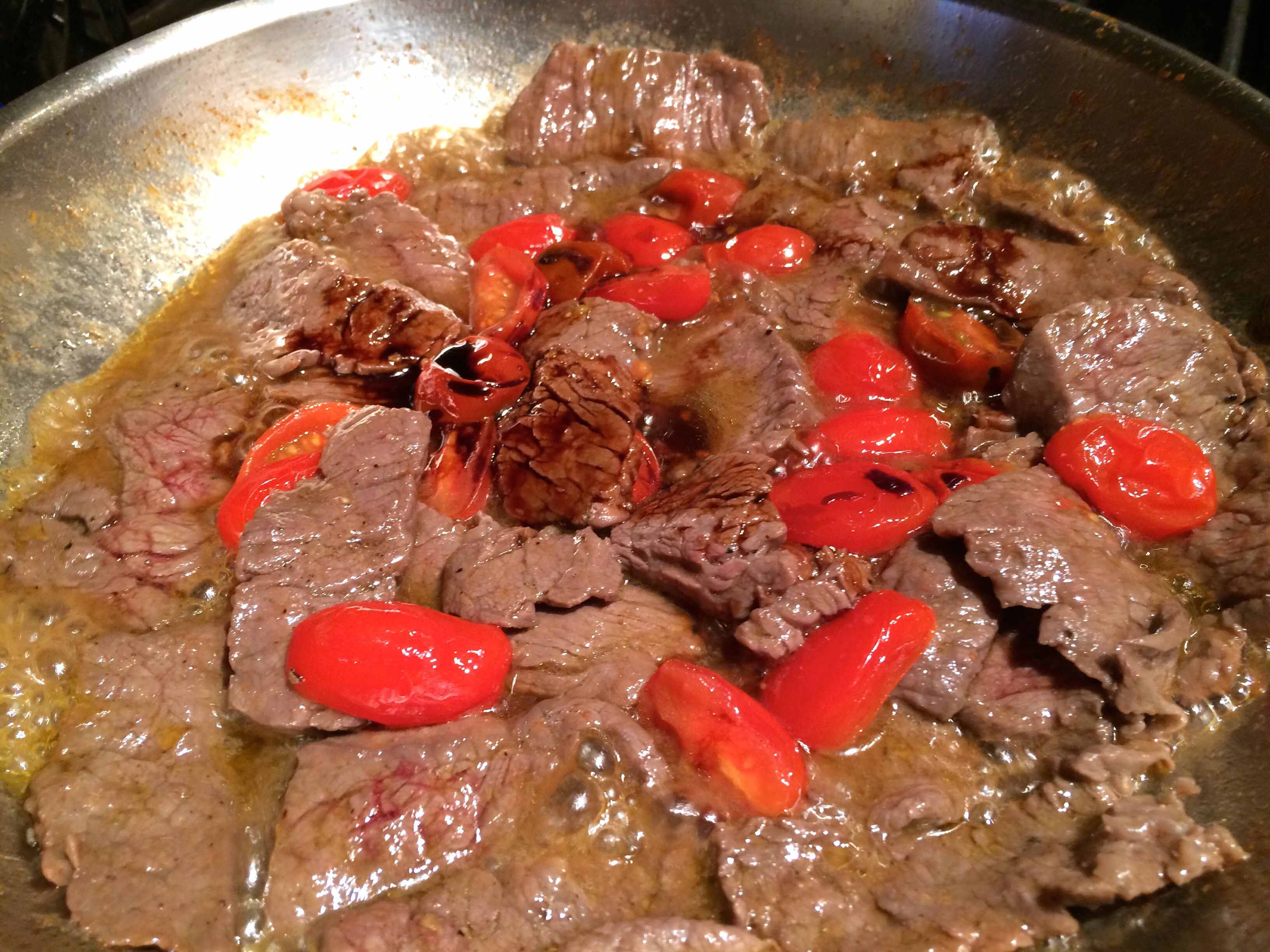
Add an additional tablespoon of oil to the remaining oil in the pan and raise the heat to medium high. When the oil is hot, add the meat separating the slices so they form a single layer. Season the meat with salt and pepper and cook the meat for 3 or 4 minutes, or until the strips are cooked through with no trace of blood. Add the balsamic and cook for about another minute until the vinegar has reduced slightly. Then add the reserved tomatoes with all of their juices. (Be careful not to overcook or the meat will be dry.)
Beef with the tomatoes and balsamic
Turn off the heat, add the arugula and toss with the beef. The arugula will start to wilt. Add the shavings of cheese and toss once.
Tossed with the arugula and the cheese
Serve immediately on heated plates accompanied with crusty bread to sop up the sauce.
As summer draws near to its end, I’m anticipating the richer dishes of fall and winter.: the hearty stews, the rich braises, the luxurious roasts—all make it easy for me to bid farewell to summer and its light cuisine. So maybe it was serendipity that led me into my local Whole Foods on Saturday to find chuck roast discounted 25%. How could I resist?
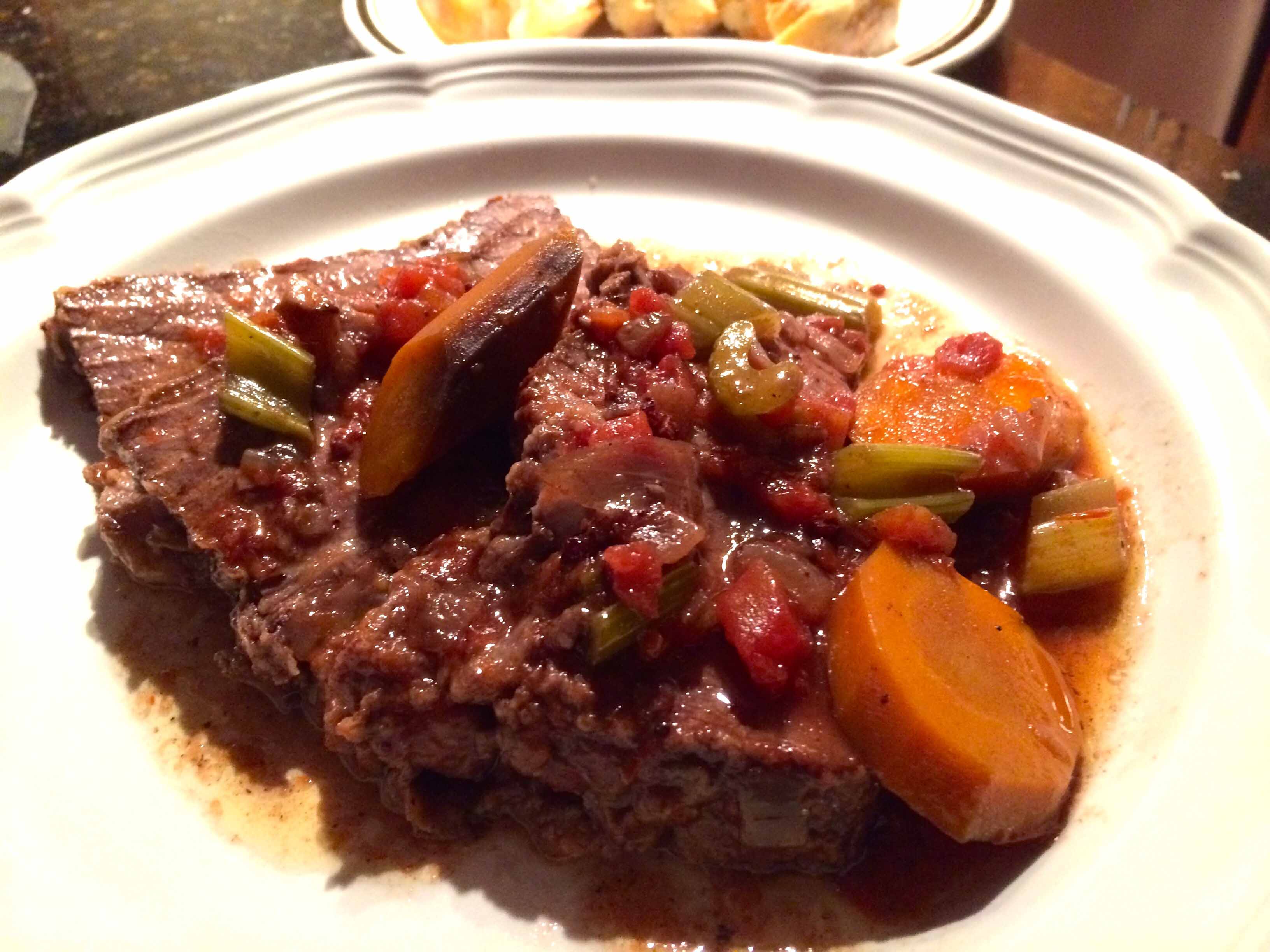
We had a full schedule on Sunday, so I turned to my trusty slow cooker to cook the roast and to Michele Scicolone’s The Italian Slow Cooker for a recipe. (This author’s slow-cooker books (Italian, French, and Mediterranean) are a great resource for this appliance, offering fool-proof, authentic recipes.) I turned to the book’s “Beef, Veal, Pork, and Lamb” section and, once again, was pleasantly surprised to discover that its first recipe was for the cut of meat I had purchased: “Beef in Barolo.”
As my savings at Whole Foods could not justify the expense of a Barolo for cooking, I thought I could more than get by with a younger version of this wine made from the same grape, Nebbiolo. And one more time luck led me to a local merchant where I found a bottle of Langhe from a reputable producer at a very good price.
Here’s a link to the recipe online. If you like your carrots and celery in the braise to have some chew, you may opt, as I did, to slice them on the thick side. However, any way you choose to slice your vegetables, this recipe yields an aromatic and deliciously succulent roast that holds its shape even after six hours of cooking.
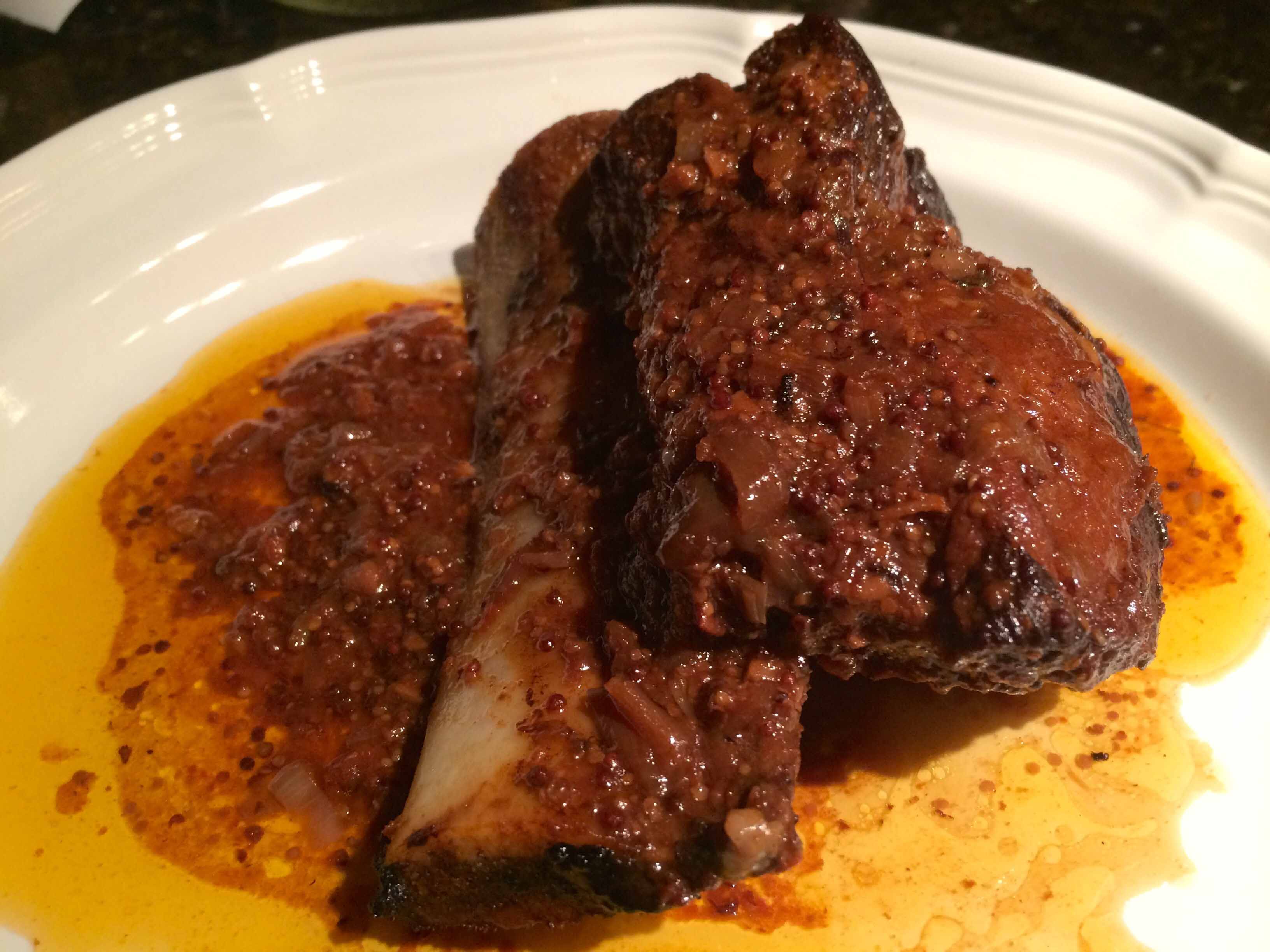
“Simply the best short ribs we’ve ever had” was all we could say after finishing these succulent and flavorful braised ribs. Although not typical summer fare, the short ribs looked irresistible when I saw them at the market and I thought we both could use a little comfort food.
For me, braising is the best way to cook this cut of meat, and the most convenient method is slow cooking. And for slow cooking, I usually turn to one of Michele Scicolone’s slow-cooker cookbooks. For last night’s supper, I selected her recipe “Beef Short Ribs with Mustard and Red Wine” from The Mediterranean Slow Cooker.
After browning the trimmed bone-in ribs well on all sides in olive oil, I removed them from the pot and discarded all but 2 tablespoons of the fat. I placed the ribs in the slow cooker and seasoned them generously with salt and pepper.
In the remaining fat, I quickly sautéed some chopped shallots and finely minced garlic followed by a generous amount of concentrated tomato paste. I decided to toast the paste for about a minute, which I believe gave the dish a deeper tomato flavor.
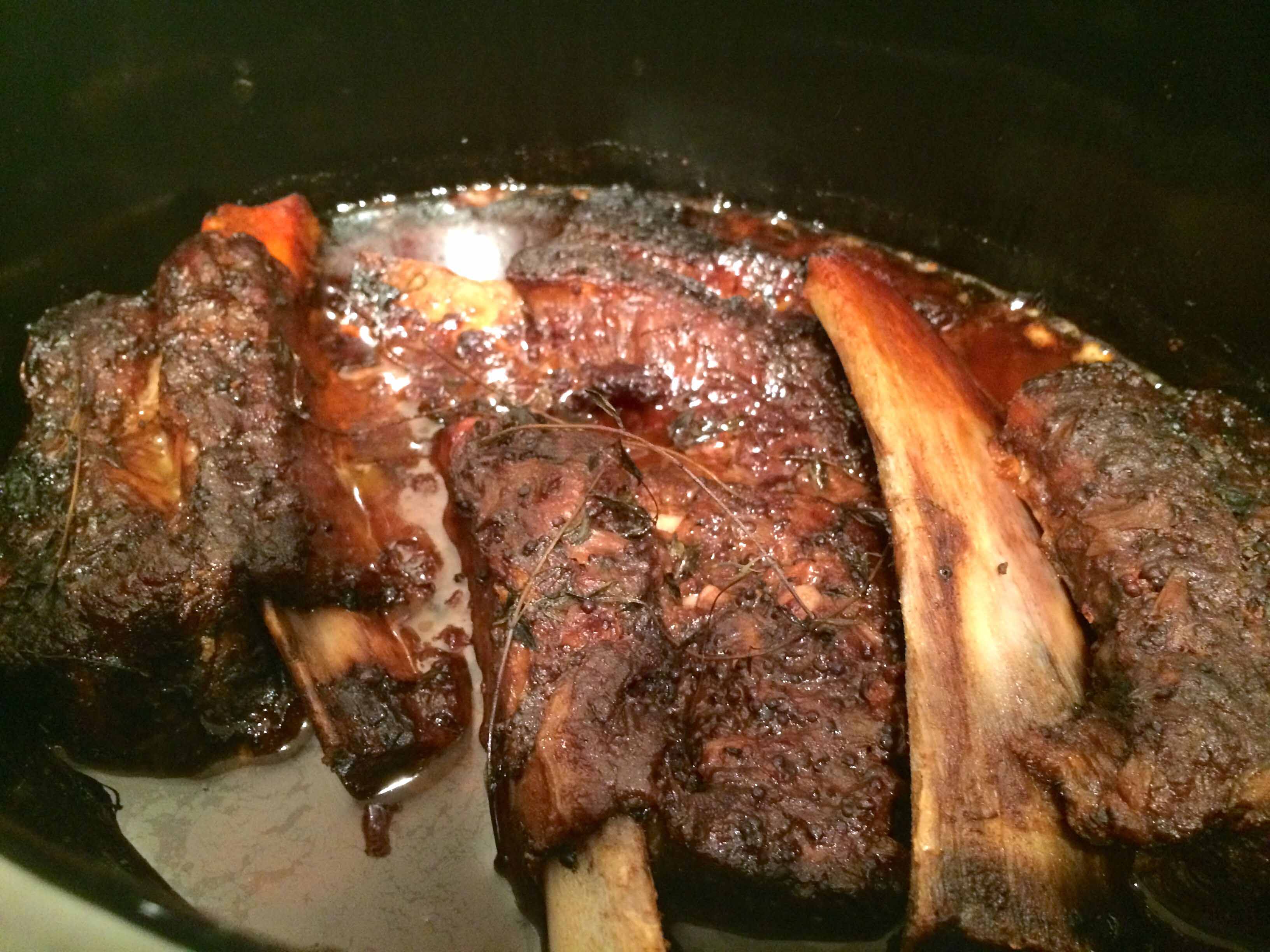
I deglazed the pan with some Côtes du Rhone along with several tablespoons of whole grain mustard. After bringing the contents of the pan to a simmer, I poured them over the ribs, tossed in a few sprigs of fresh thyme, and cooked the ribs on low for 8 hours. The recipe does call for skimming the fat from the sauce after removing the ribs from the pot. But, as you may have noticed in the first photo, I did a cursory job of this as we were so hungry.
Just after cooking
I must admit that browning the ribs can make an oily mess on the stove, but it makes a big difference in the finished dish. The whole grain mustard adds a luscious complexity to the sauce.
A Google search will yield other versions of this dish by chefs like Thomas Keller and Daniel Boulud. Scicolone’s recipe, however, delivers both a richness and a purity of flavor with a minimum of work.
Does this say how good they were?
I must admit that waiting for the ribs, as their aroma permeated the apartment, was torture, but the wait was worth it. Next time, I’ll just be sure to schedule my slow cooking for when I’m not at home for most of the day.
After making our wills yesterday, we found ourselves somewhat dispirited. Dealing with one’s own mortality, after all, isn’t easy. So we decided it was time for some Margarita Madness, a spread of chips, salsa, guacamole, and frozen Margaritas, to restore our spirits and start the evening.
To follow this festive beginning, we opted for a simple flank steak grilled and served with a compound garlic-and-parsley butter. A visit to one of our butchers yielded one of the finest looking flank steaks I’ve ever seen.
One beautiful flank steak
Because they are somewhat uneven in thickness, grilling flank steaks can be a little tricky. I get over come this hurdle by keeping the thickest part of the steak closest to the direct heat of my grill pan.
While the pan is heating, I dry the steak with paper towels and liberally season one side with Kosher salt and freshly ground black pepper and drizzle it lightly with extra-virgin olive oil. When the grill pan is hot, I place the steak on the pan, seasoned side down, with the thickest part of the steak closest to the hottest part of the pan, which is directly over the flame.
After one minute, I reduce the flame to medium and cook the steak for about 4 minutes. During this time, I season the exposed side with salt and pepper. When I see the juices starting to appear on top of the steak, I flip the steak and continue to cook for about another 4 minutes. I test for doneness by feeling the steak with my index finger. When it bounce back to the touch, it’s the perfect medium rare, for me the perfect temperature for flank steak.
I place the steak on the cutting board and place a thick round of my parsley-and-garlic compound butter in the middle of the steak and let the meat rest, tented, for about three minutes.
To serve, I slice the steak thick on an angle and serve with steamed spinach dressed with extra virgin olive oil.
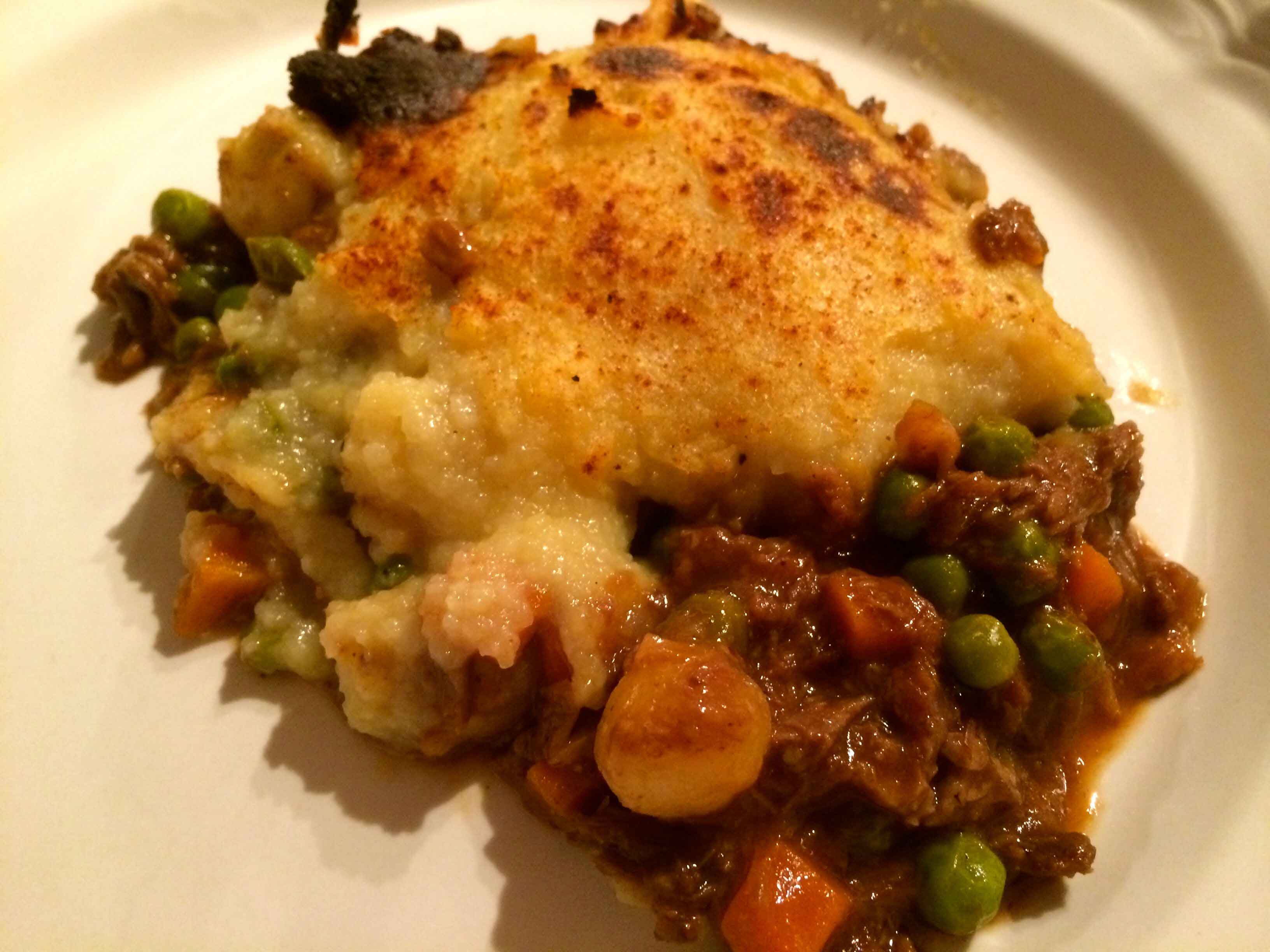
My post for 30 June highlighted a pressure-cooker pot roast with potatoes. Given the size of the roast and the number of potatoes, we had enough leftover for at least one more meal. Of course, I could have simply re-heated them, but I wanted something a little different. It didn’t take too long before I decided to make shepherd’s pie.
I realize this dish is a popular way to use up leftover lamb, but I thought why not beef. Looking at recipes in cookbooks and on the net, I started to get ideas: peas and pearl onions for more flavor, broth for more moisture, flour and butter to thicken the sauce for a gravy; olive oil for whipping the potatoes to make the topping.
I took the leftover pot roast, about 3 or 4 cups, and chopped it roughly in a food processor, reserving the juices.
I peeled the leftover cooked Yukon Gold potatoes, about 6, seasoned them with a little salt and put them through a ricer. I then whipped the potatoes with a hand mixer, adding a little chicken broth and some olive oil until they were creamy.
In a large skillet, I melted a tablespoon of butter, to which I added a cup of frozen pearl onions, and a cup of frozen peas and carrots. I sautéed the vegetables until the onions were a light gold and then seasoned them lightly with some salt.
To the sautéed vegetables, I added the juices from the roast and scraped up any brown bits on the bottom of the pan. I added the meat to reheat. After it reached a simmer, I pressed about a tablespoon of butter and the same amount of flour between my fingers to create a paste. I added as much of this to the pan stirring continuously until the sauce thickened some to become a gravy.
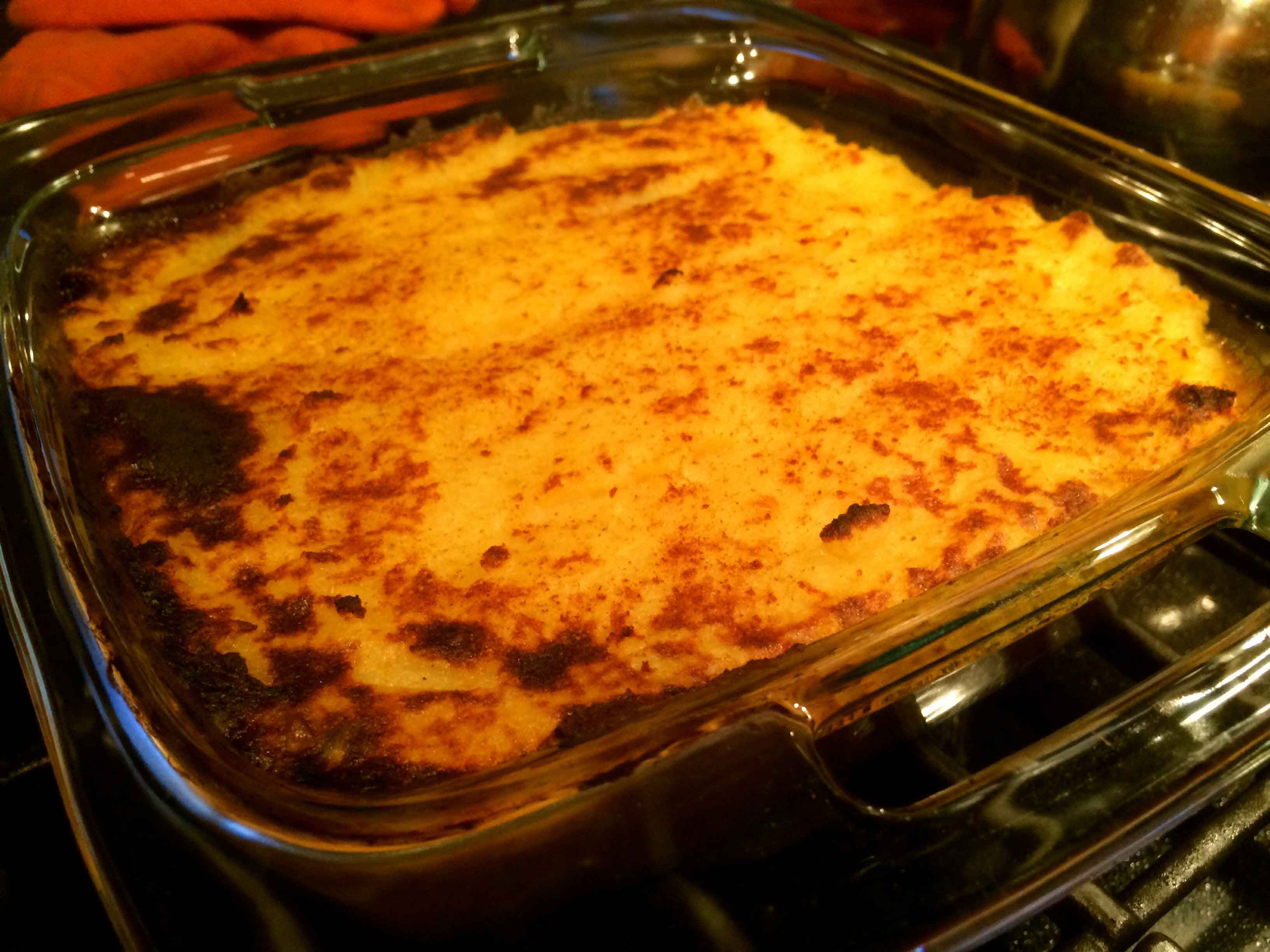
I transferred the contents of the sauté pan to a square baking dish and covered them with a thick, even layer of the mashed potatoes, which I sprinkled lightly with sweet paprika, mostly for color.
I baked the “pie” in a preheated 375° F oven for 10 to 15 minutes, and then placed it under the broiler to brown the crust for about 3 minutes.
Right from the oven
We were more than pleased with the results; the flavors were richer and more varied than the original roast.
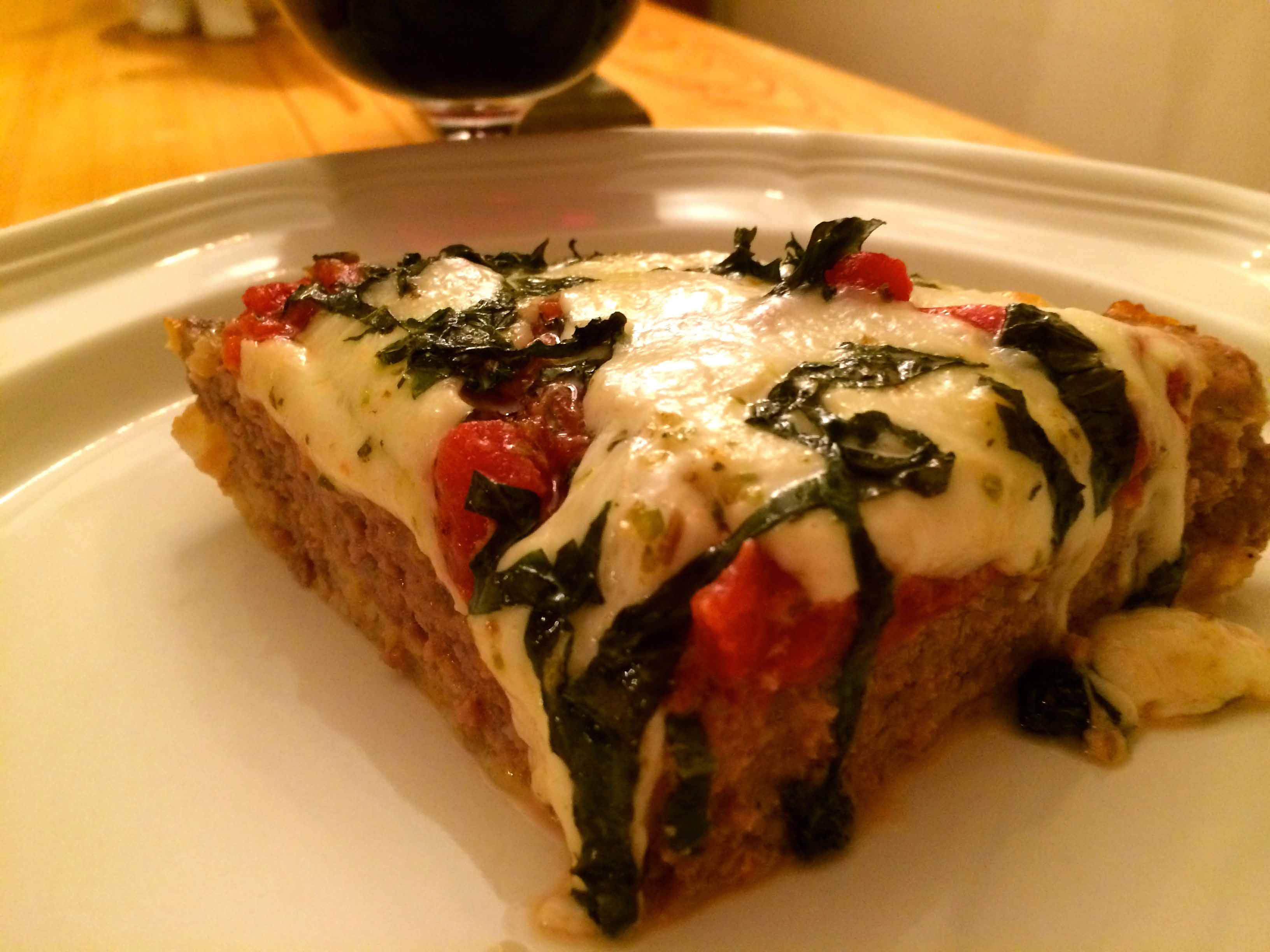
Somehow the day got away from me yesterday and I needed to get dinner on the table in a hurry, or at least in under an hour. Once again I turned to Giuliano Hazan’s Every Night Italian for his recipe for an exquisite Meat Pie “Pizza” Style. This is the second time, I’ve prepared this dish. I’ve made some modifications to the original recipe, adding a little nutmeg, increasing the amount of mozzarella, and adding a few minutes to the original cooking time.
This “pizza” consists of beef, pancetta, pecorino Romano, bread, eggs, seasoning and is topped with mozzarella, basil, and oregano. It’s essentially a meatloaf topped like a pizza Margherita. A wonderful supper in 35 minutes about from start to finish. In case you didn’t know, Giuliano is the son of Victor and Marcella Hazan.
Meat Pie, “Pizza” Style Adapted from Every Night Italian by Giuliano Hazan
INGREDIENTS
2 slices white bread, trimmed of crusts
2 tablespoons whole milk
1 pound ground beef 85% lean
1/2 cup pecorino Romano cheese, freshly grated
2 tablespoons plain fine bread crumbs
2 eggs
2 ounces pancetta, thinly sliced and chopped
1/8 tsp freshly ground nutmeg
Salt
Freshly ground black pepper
Butter (for greasing the baking dish)
2 tablespoons fresh basil leaves, shredded
3/4 cup canned whole peeled tomatoes drained of juice, coarsely chopped
4 to 5 ounces fresh mozzarella cheese
1/2 teaspoon dried whole oregano leaves crushed between thumbs
Olive oil for drizzling
DIRECTIONS
1. Preheat the oven to 425°.
2. Put the trimmed bread and the milk in a small bowl and mash it with your hands until you get a smooth pasty mixture. Transfer it to a large mixing bowl and add the beef, the grated pecorino, the bread crumbs, the eggs, the chopped pancetta, and ground nutmeg.
3. Season lightly with salt and pepper, then mix everything together thoroughly with your hands.
4. Grease the bottom and sides of a round pie dish approximately 10 inches in diameter. Put in the ground beef mixture and push it down with your hands until it is evenly spread out. Cover with the tomatoes. Cut the mozzarella into strips and arrange them over the tomatoes. Sprinkle the shredded basil and dried oregano on top, drizzle lightly with olive oil, and bake in the preheated oven for 20 to 25 minutes.
Before baking
Let the “pizza” settle for about 5 minutes after you take it out of the oven, then transfer it with two spatulas to a serving plate. Serve it hot or lukewarm.







 Cooking from Books