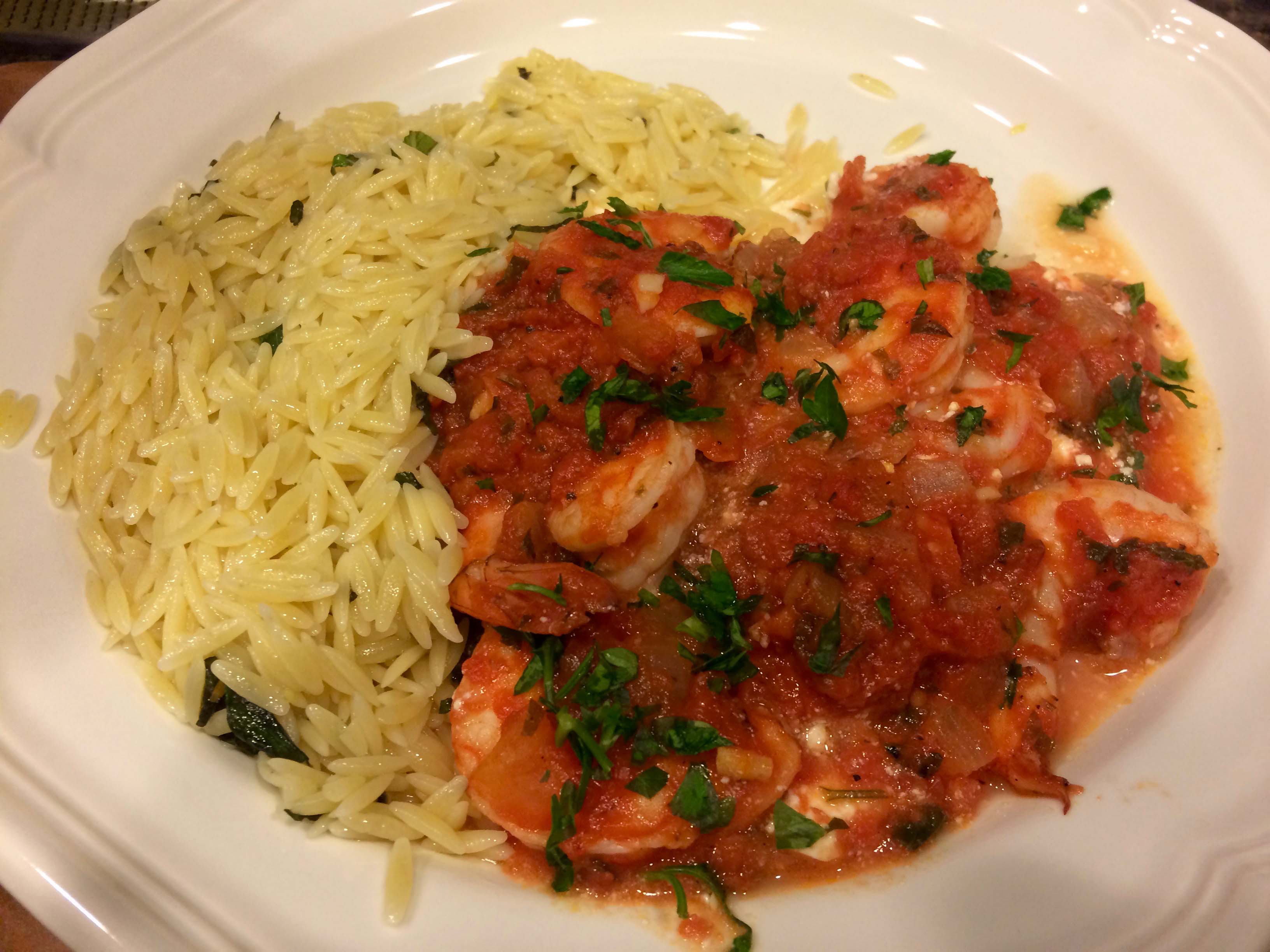
Shrimp in Tomato Sauce with Feta

Shrimp in Tomato Sauce with Feta

I really started cooking seriously in the late 70s, always inspired by my Neapolitan aunt’s and Sicilian mother’s cooking, but sparked even more so by the not yet celebrated Julia Child on my local PBS channel. I read and read books by chefs like Elizabeth David and later on Alice Waters who focused on seasonal cuisine; on fundamental cookbooks like the Grammar of Cooking by Carol Braider or The Saucier’s Apprentice by Raymond Sokolov; on the standard cookbooks like The James Beard Cookbook, The Joy of Cooking, The New York Times Cookbook. I consulted huge tomes like the Larousse Gastronomique and the two-volume Gourmet Cookbook as well as tiny books like The Omelette Cookbook by Narcissa Chamberlain. And at the same time subscribed to almost every food magazine there was. I read and experimented; often failing but sometimes blissfully successful.

Perhaps I’m growing nostalgic (I just turned 70), but I think there was a golden age of cookbooks between the mid 80s and early 90s when I saw more serious and scholarly writers like Nancy Harmon Jenkins, Lynn Rosetto Kasper, Fred Plotkin, to name a few, and Paula Wolfert, who introduced today’s recipe in her 1985 cookbook Mediterranean Cooking.

Before I knew it, I had amassed quite a collection of cookbooks, somewhere between two and three hundred. Disaster struck, however, and I lost 90% of my collection in 2012 to a flood caused by Hurricane Sandy.

Finding Wolfert’s recipe online started me thinking about cookbooks and motivated me to make it once again.

For a side dish, I served orzo sprinkled with olive oil and seasoned with fresh mint and lemon zest

Shrimp and Feta Cheese a la Tourkolimano
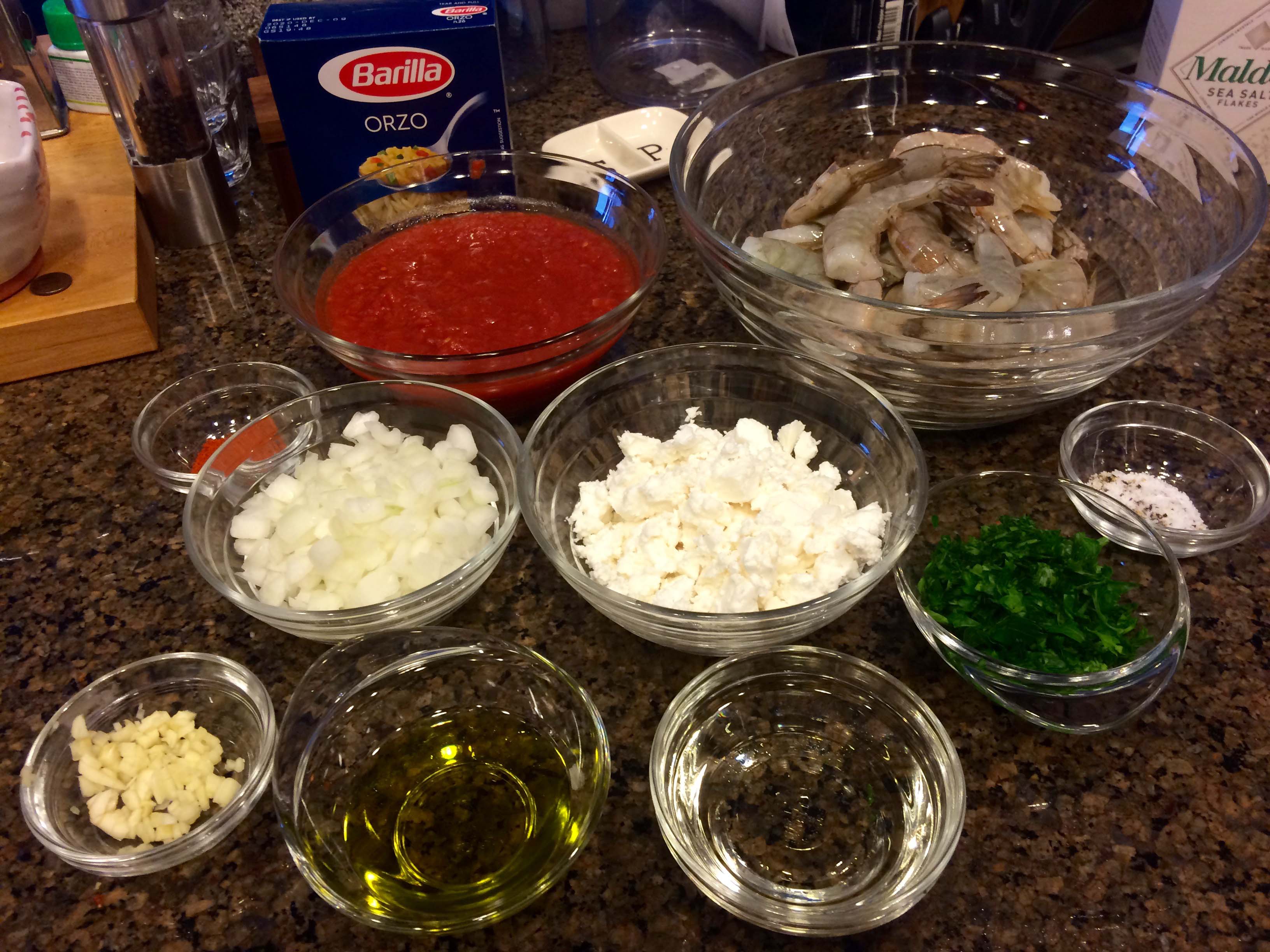
Ingredients

Ingredients

1/2 cup chopped onion

3 tablespoons olive oil

1 clove garlic, peeled and chopped

2 cups fresh or canned tomato sauce

1/4 cup dry white wine

1/4 cup chopped parsley

Freshly ground pepper and a dash of salt

Pinch of cayenne

1 1/2 to 2 pounds raw shrimp (about 50)

1 cup crumbled feta cheese

Preparation

1.- Preheat oven to 450 degrees. Peel and de-vein the shrimp.

2.- In a skillet cook the onions in olive oil until translucent.

Sweating the onions

3.- Add the garlic, tomato sauce, wine, half the parsley, salt, pepper and cayenne. Simmer, uncovered, for 15 minutes, stirring often. The tomato sauce should be rather thick.

Prepared Sauce

4.- Add the shrimp to the sauce and cook 5 minutes.

Adding shrimp to sauce

5.- Place the cheese in the baking dish.
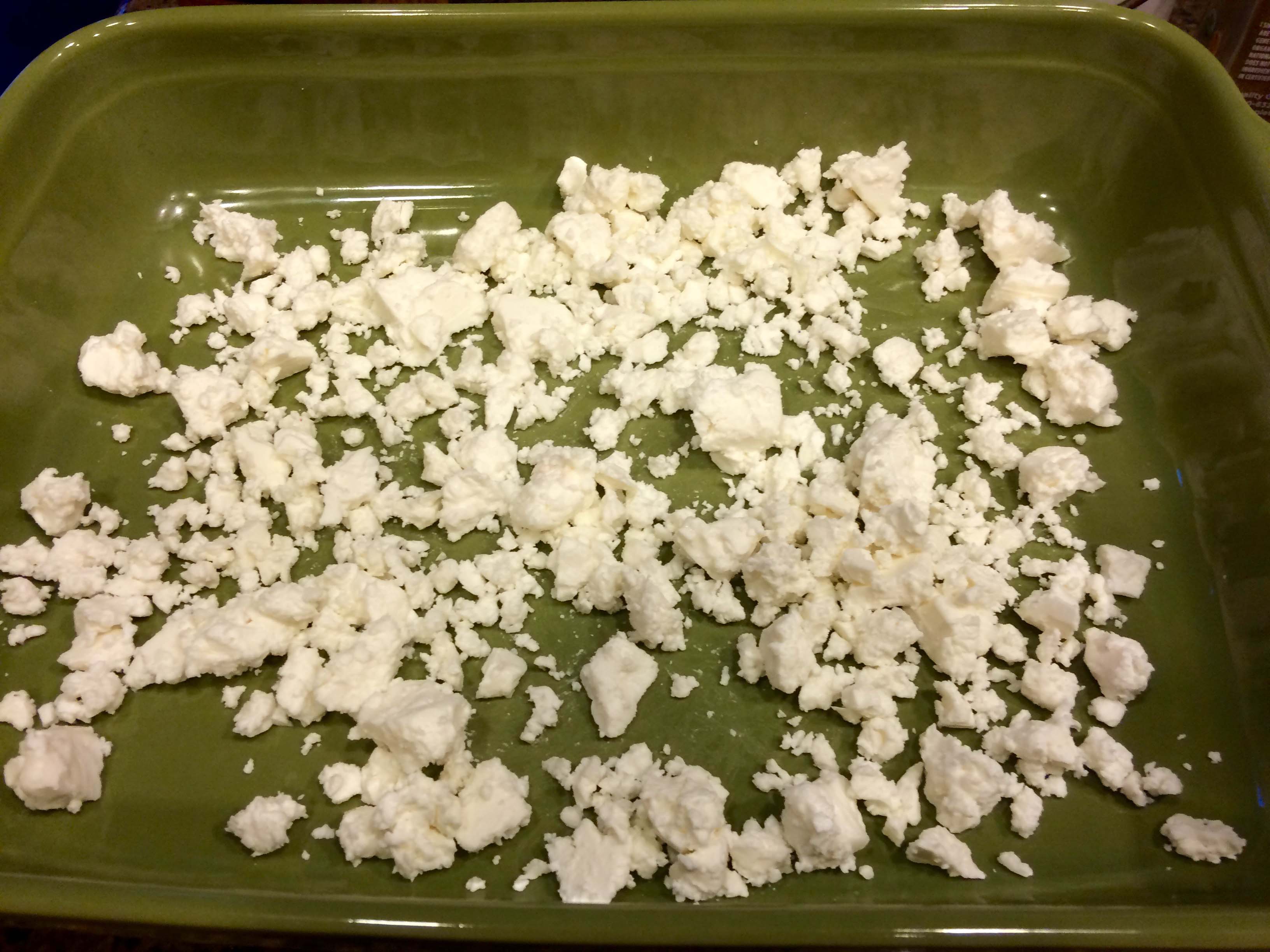
The cheese

6.- Cover with the shrimp and tomato sauce and set in the oven to bake 10 minutes.
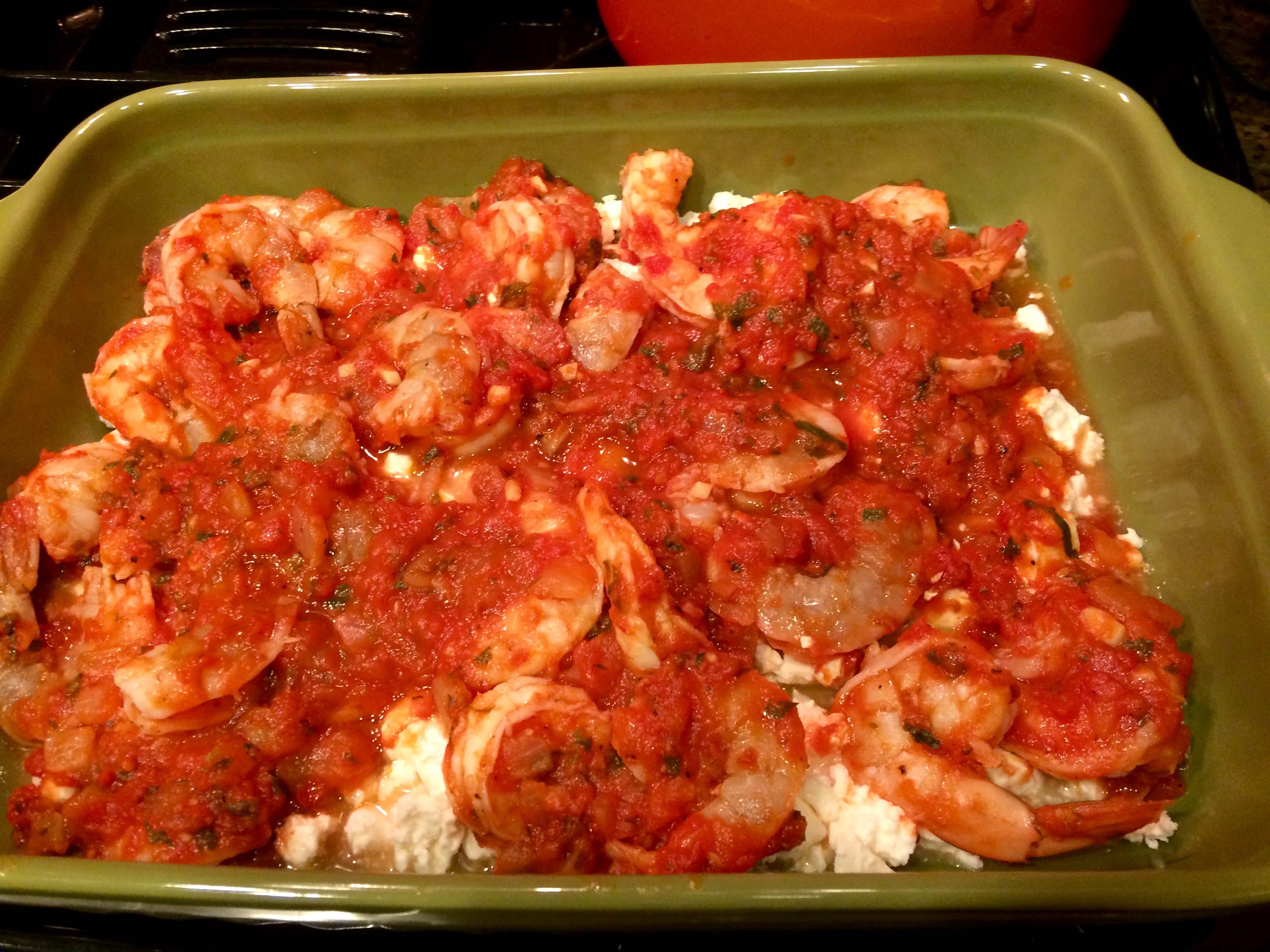
The cooked shrimp

7.- Sprinkle with remaining parsley and serve very hot.
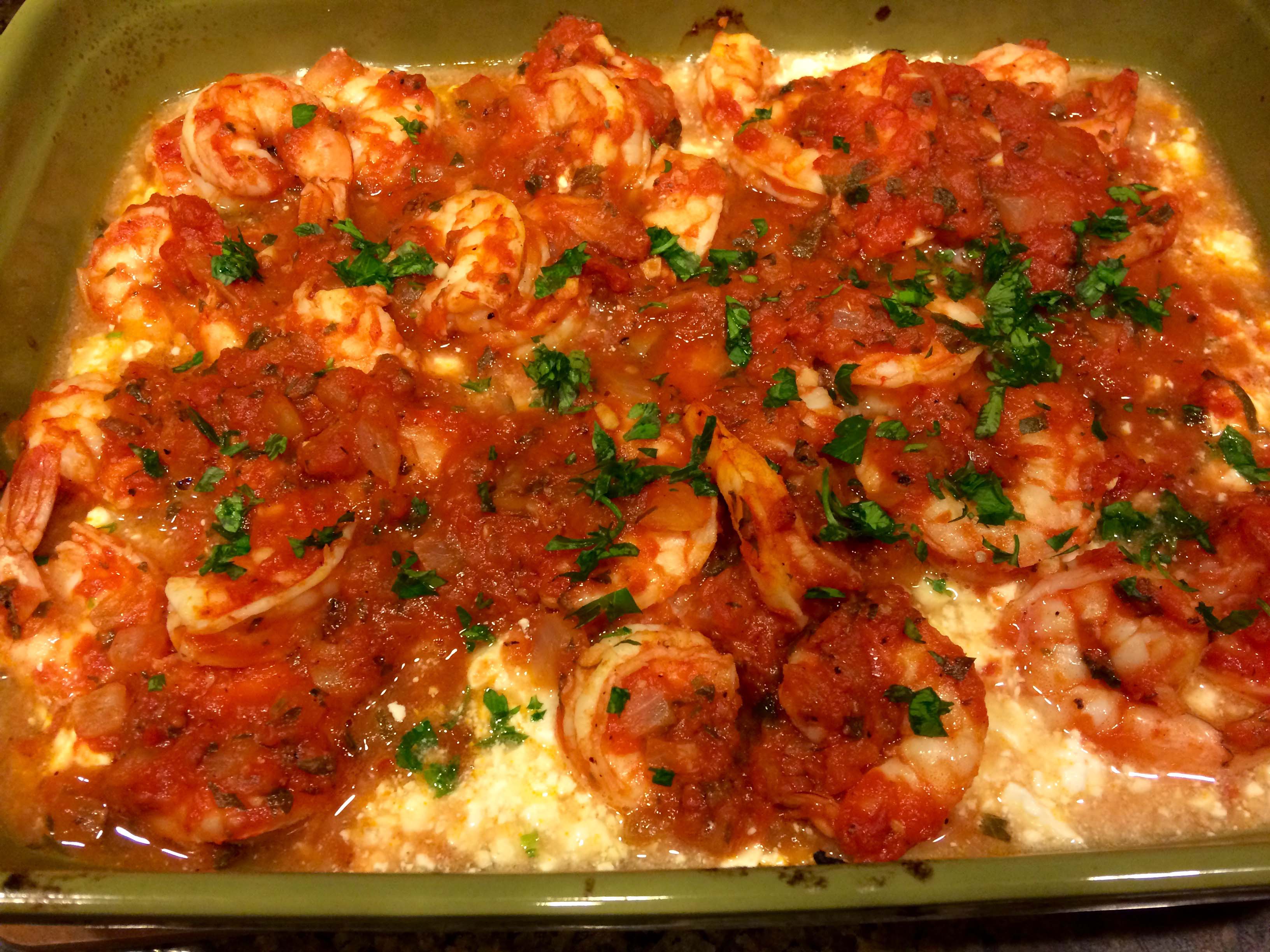
Ready to serve

Makes 4 servings.

Wine Pairing: Syrah, Rose

Penne with Cauliflower Ragu

Penne with Cauliflower Ragu

Sometimes I find that it’s the end of the week, and I’ve served nothing but meatcentric meals. More often than not this is due to buying what’s on sale at the market, re-purposing leftovers, or just my hankering for a steak.

It’s at times like these that I start to look for a non-meat dish, which usually winds up being pasta or, as my better half bemoans, “all too seldom,” fish. In my search, I came across this recipe from Mario Batali’s cookbook Molto Gusto. Just the word “ragu” made my mouth water.

Except for the frequent stirring of the cauliflower, it’s a relatively simple dish to prepare and, as the recipe points out, it can be made days in advance. I did find, however, that I needed to extend the three cooking times for the cauliflower, especially at the third stage. I’ve given the recipe’s original times, but strongly suggest that you taste the cauliflower for tenderness at each stage.

Ingredients

Ingredients
Serves 6 people

1 medium cauliflower (about 2 pounds)

¼ cup extra virgin olive oil

1 medium white onion cut into 1⁄4-inch dice

3 garlic cloves, smashed and peeled

Maldon or other flaky sea salt

1 ½ to 2 teaspoons hot red pepper flakes

6 tablespoons unsalted butter, cut into 6 pieces

Kosher salt

1 pound pennette

¾ cup freshly grated Parmigiano-Reggiano, plus extra for serving

½ cup coarse fresh breadcrumbs fried in olive oil until golden brown

1 ½ teaspoons minced fresh rosemary

Directions
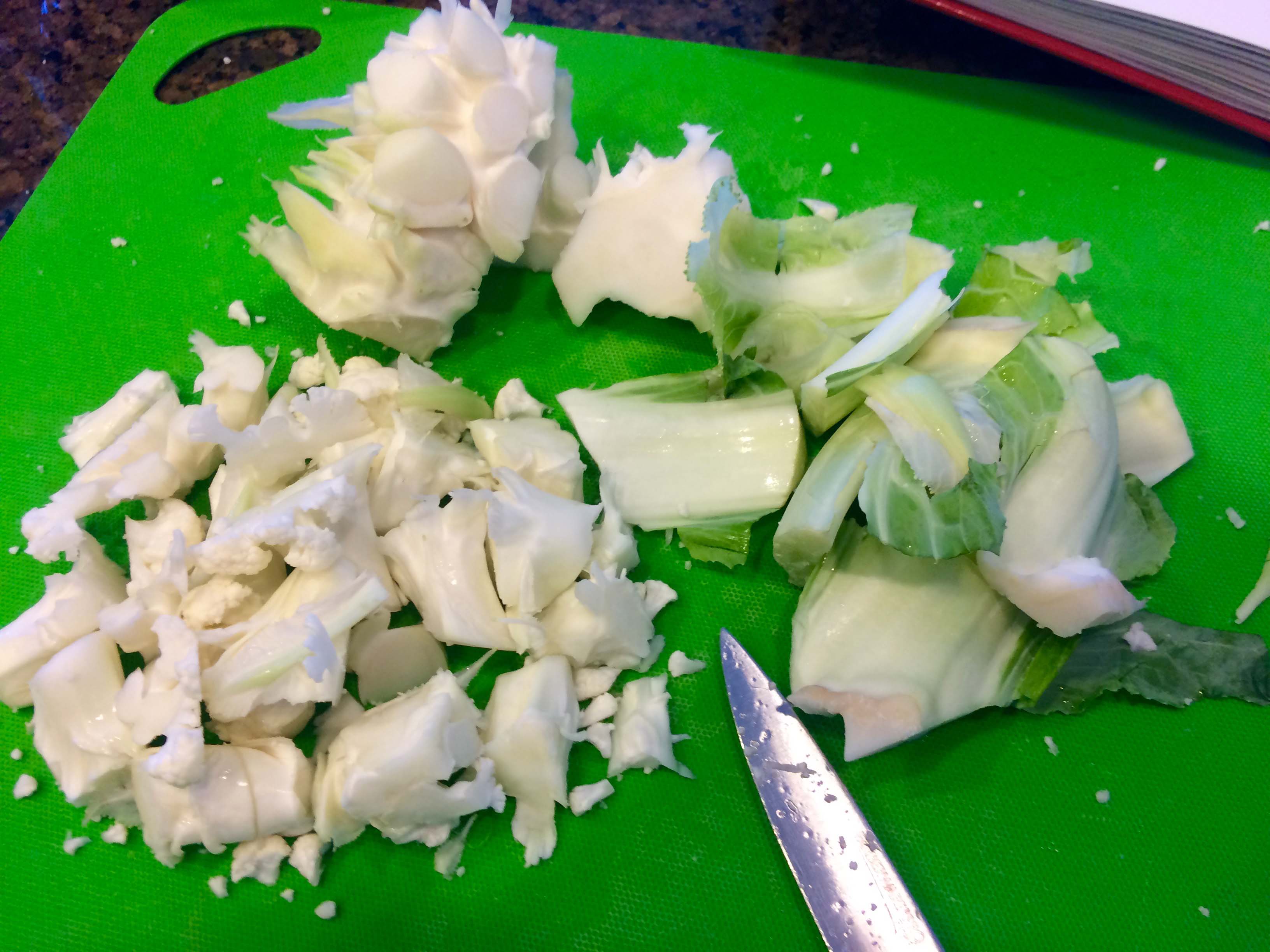
1.  Halve the cauliflower. Cut off the leaves and reserve them. Cut out the core and reserve it. 2. Cut the cauliflower into small bite-sized florets, reserving the stalks.

Core, stalks & leaves

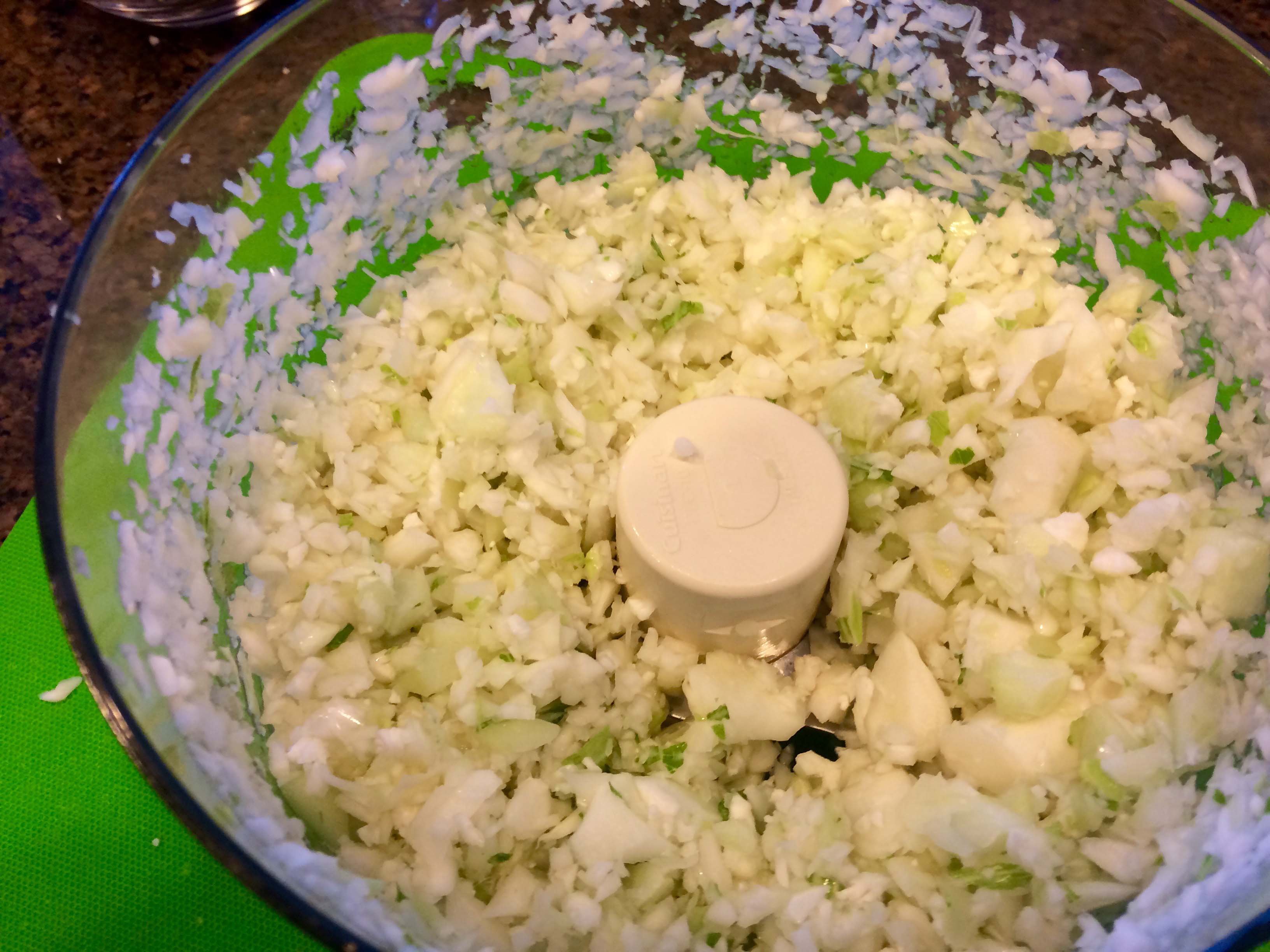
3. Chop the core, stalks, and leaves. (I used a food processor for this step.)

Chopped core, stalks & leaves

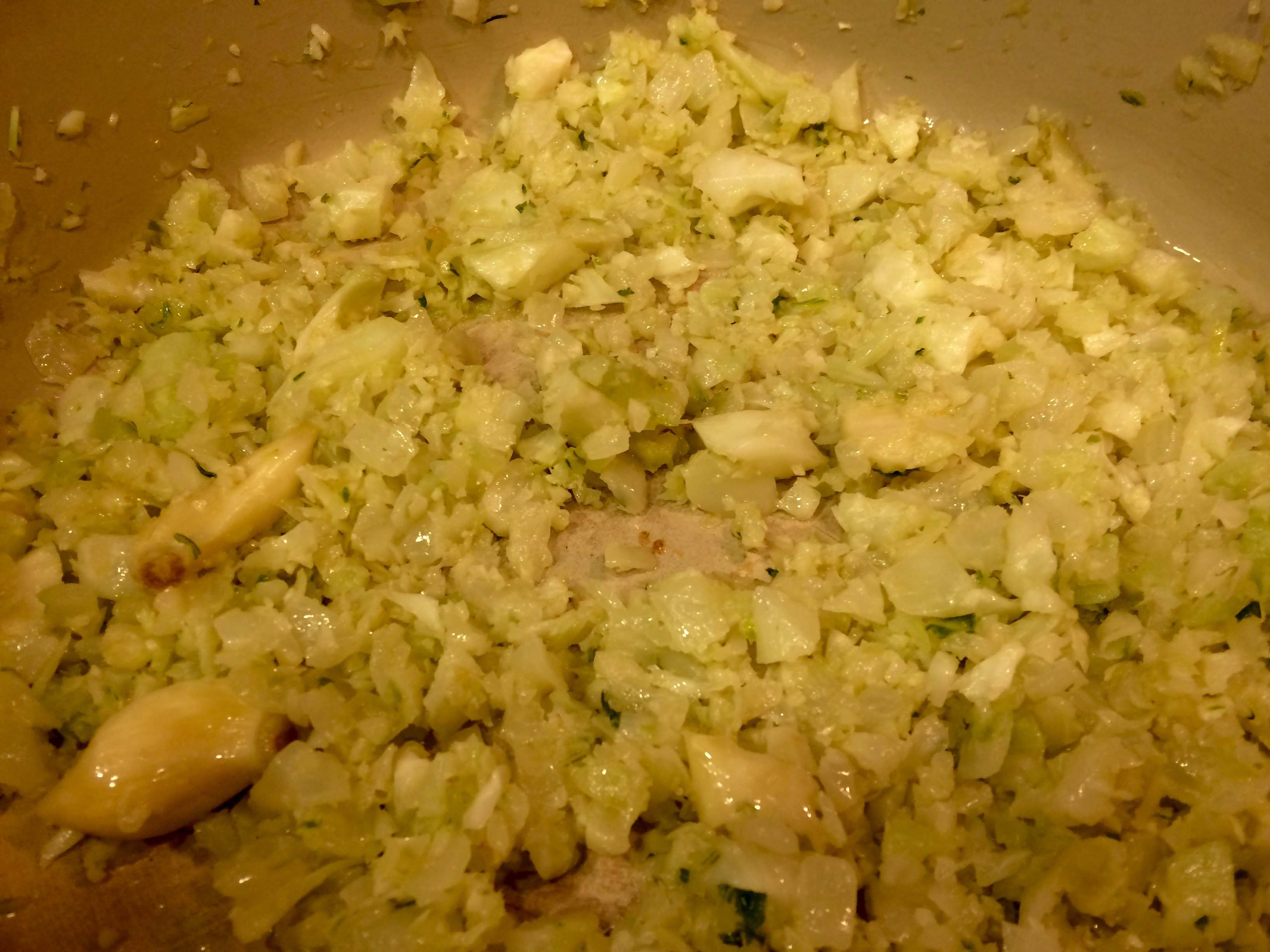
4. Combine the oil, onion, garlic, and cauliflower leaves, stalks, and core in a large pot, season with Maldon salt, and cook over medium heat, stirring frequently, until the leaves are just beginning to wilt, about 3 minutes. (This step took me at least six minutes.)

After 3 to 5 minutes of cooking.

5. Reduce the heat to low and cook, stirring frequently, until the cauliflower leaves are just tender, 18 to 20 minutes. (This step took me at least 26 minutes.)

After 18 to 25 minutes of cooking

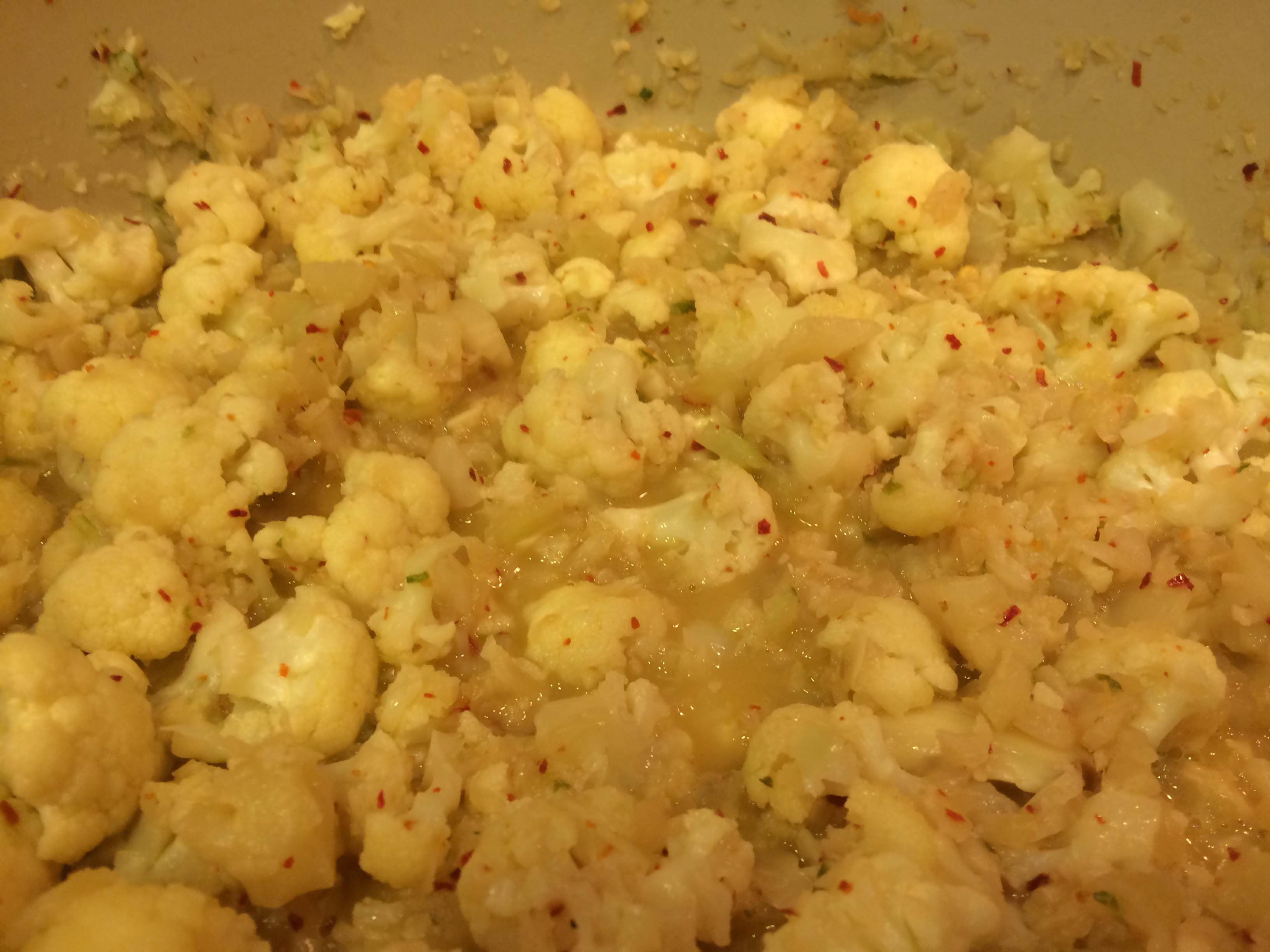
6. Add the cauliflower florets, red pepper flakes, and 1 cup water and bring to a simmer over medium-high heat, then reduce the heat to a gentle simmer, cover, and cook, stirring occasionally, until the cauliflower is very soft and almost falling apart, 22 to 25 minutes. (I added about 10 minutes to this step.)

Cooked florets with red-pepper flakes

7. Add the butter, stirring gently until it melts, then season well with Maldon salt and remove from the heat.

Adding the butter

The cauliflower ragú can be prepared up to 3 days ahead. Let cool, then cover and refrigerate; reheat in a large pot over medium-low heat before adding the pasta.

Ragu awaiting cheese and pasta

8. Bring 6 quarts water to a boil in a large pot and add 3 tablespoons Kosher salt. Drop in the pasta and cook until just al dente.

9. Drain the pasta, reserving about 2/3 cup of the pasta water.

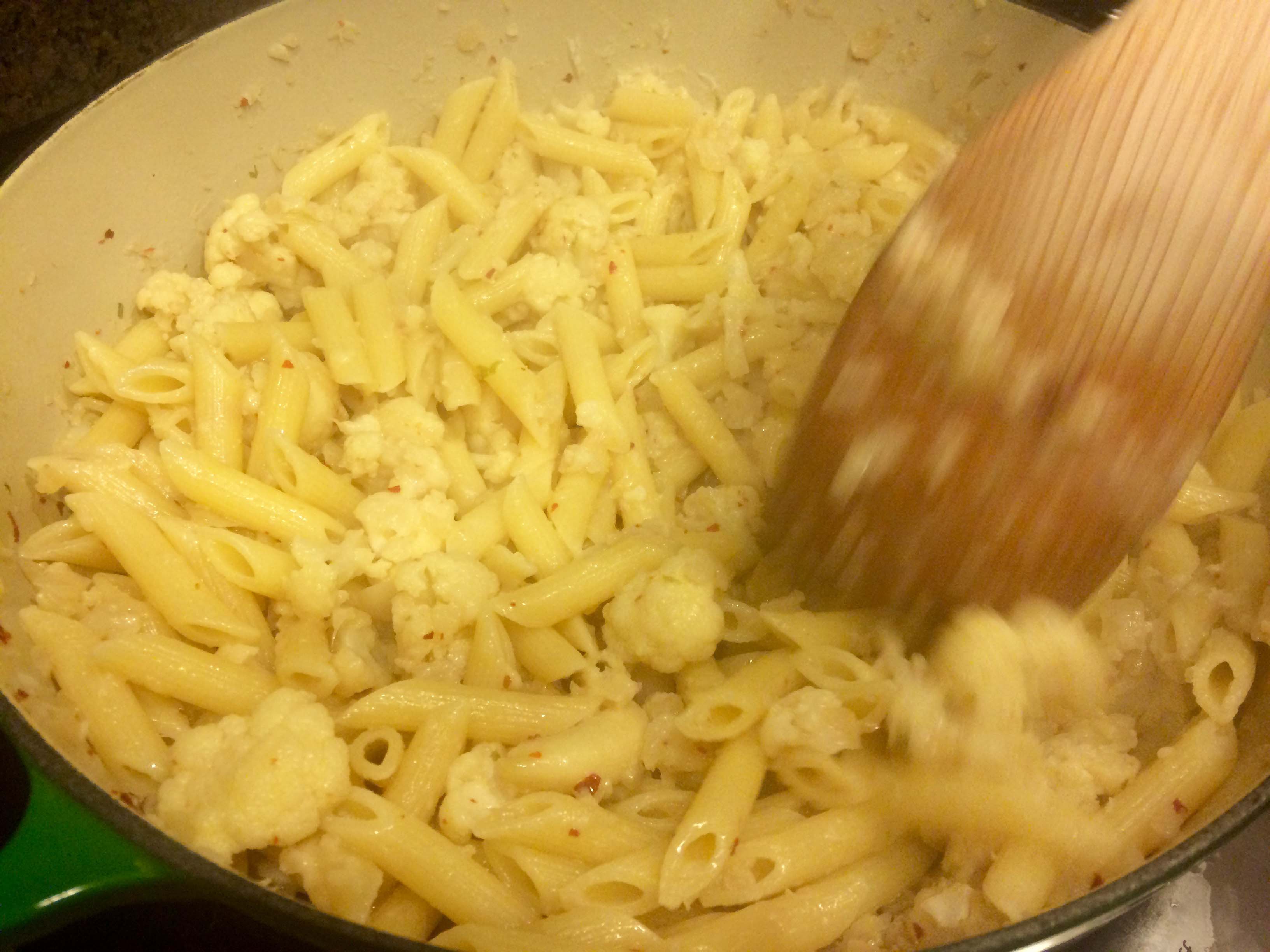
10. Add the pasta and 1/3 cup of the reserved pasta water to the cauliflower ragú and stir and toss over medium heat until the pasta is well coated (add a splash or two more of the reserved pasta water if necessary to loosen the sauce).  Stir in the cheese.

Stirring in the cheese

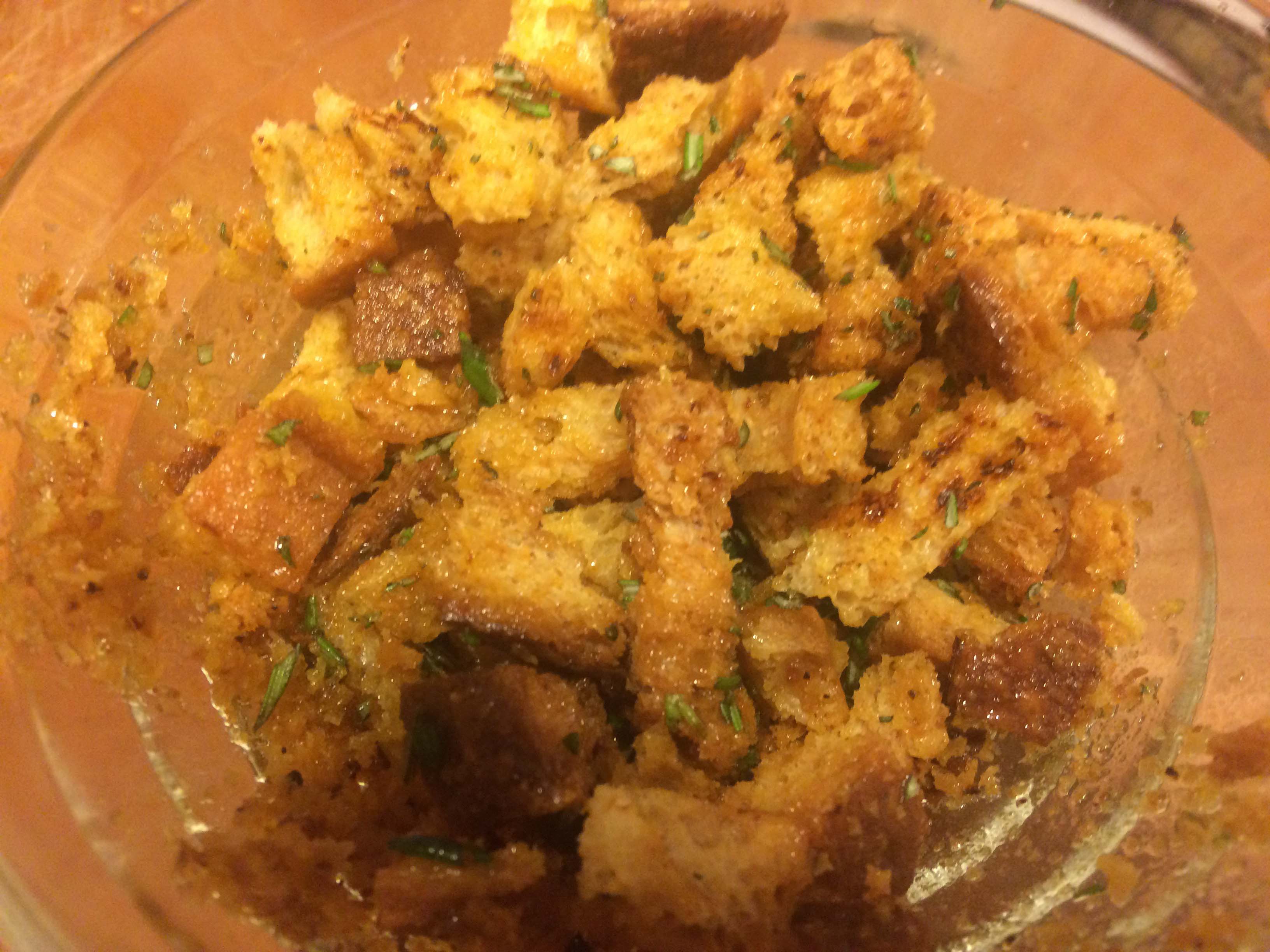
11.  Transfer the pasta to a serving bowl, sprinkle with the bread crumbs and rosemary, and serve, with additional grated cheese on the side.

Bread crumbs and rosemary

As you can see, I opted for big boy breadcrumbs.

Wine Pairing: Sauvignon Blanc, Pinot Grigio

Zucchini Salad

Zucchini Salad

One memory I have about my childhood summers was my aunt planting zucchini at our country house and harvesting vast quantities of them through the season. This routine assured her an adequate supply of zucchini flowers, which she would fry or use to make fritters, frittatas, and even pizza. (In the 50s and 60s, zucchini flowers–not then known as “blossoms”–were hard to come by.)

With the zucchini themselves, she would prepare a variety of dishes: among them, ciambotto, an Italian version of ratatouille; cocozelle (zucchini sauteed with onions and then combined with gently scrambled egg); a simple saute with garlic and oil as a side dish; scapece (fried slices of zucchini marinated with vinegar, garlic, and mint) and this simple salad similar to scapece but not fried.

Ingredients

Ingredients

2 small zucchini
2 cloves garlic
2 sprigs mint
salt
1/4 cup apple cider or white wine vinegar
1 tablespoon oil

Preparation

1- In a 3 quart sauce pan bring water to a boil.

2- Partially peel the zucchini in alternating strips. If the zucchini are very young, you can leave the peel on.

Peeled Zucchini

3- Quarter the zucchini and then slice into 2-inch wedges and thinly slice the garlic.

Prepped Zucchini & Garlic

4- Tear the mint leaves.

Torn Mint Leaves

5- Add salt to the boiling water and slide in the zucchini wedges. Blanch for approximately 3 minutes.

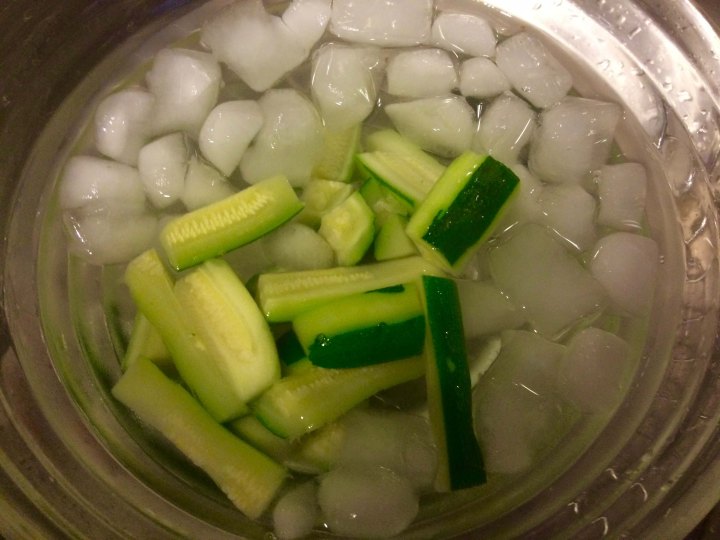
6- When done, place the blanched zucchini in an ice bath.

Zucchini Chillin’

7- Drain the zucchini and transfer to a small serving dish just big enough to hold them in a single layer.

8- Salt the zucchini and then drizzle with the vinegar and oil. Add the garlic and mint leaves.

8- Cover and refrigerate for at least 3 hours stirring once or twice.

Serve as a side dish or with crusty bread as an appetizer or salad.

Served as a salad

I served this as a salad after Mark Bittman’s Deviled Chicken Thighs.

Deviled Chicken Thighs

Wine Pairing: Southern French Rose

Calabrian Chili Pasta

Calabrian Chili Pasta

I know this recipe may offend some traditionalists; nevertheless, I’m posting it for two reasons. First of all, it’s my first encounter with Calabrian chili paste, an unctuous spicy condiment that I see becoming a staple in my pantry. Secondly, the recipe takes an innovative approach to cooking pasta that eliminates using a dedicated pot for its boiling. I admit that I was skeptical about this method, but for someone who cooks at home almost every night, having one less pot to clean seemed most appealing.

This relatively quick and easy recipe is from an episode of Giada DeLaurentiis’s “Giada at Home” that I saw while having breakfast early on a Sunday morning. The finished dish looked so good that immediately after church I made a trip to my local Italian specialty store to look for the chili paste. I was surprised to find there a couple of varieties, both imported and domestic, but chose the imported one from Tutto Calabria.
My only variation on the recipe was using heaping tablespoons of the chili paste, which although quite spicy, is not very hot.

Rather than pairing this dish with a southern Italian red, I opted for a Cerasuolo d’Abruzzo–perfect for a warm spring evening.

Here’s a link to the original recipe and video.

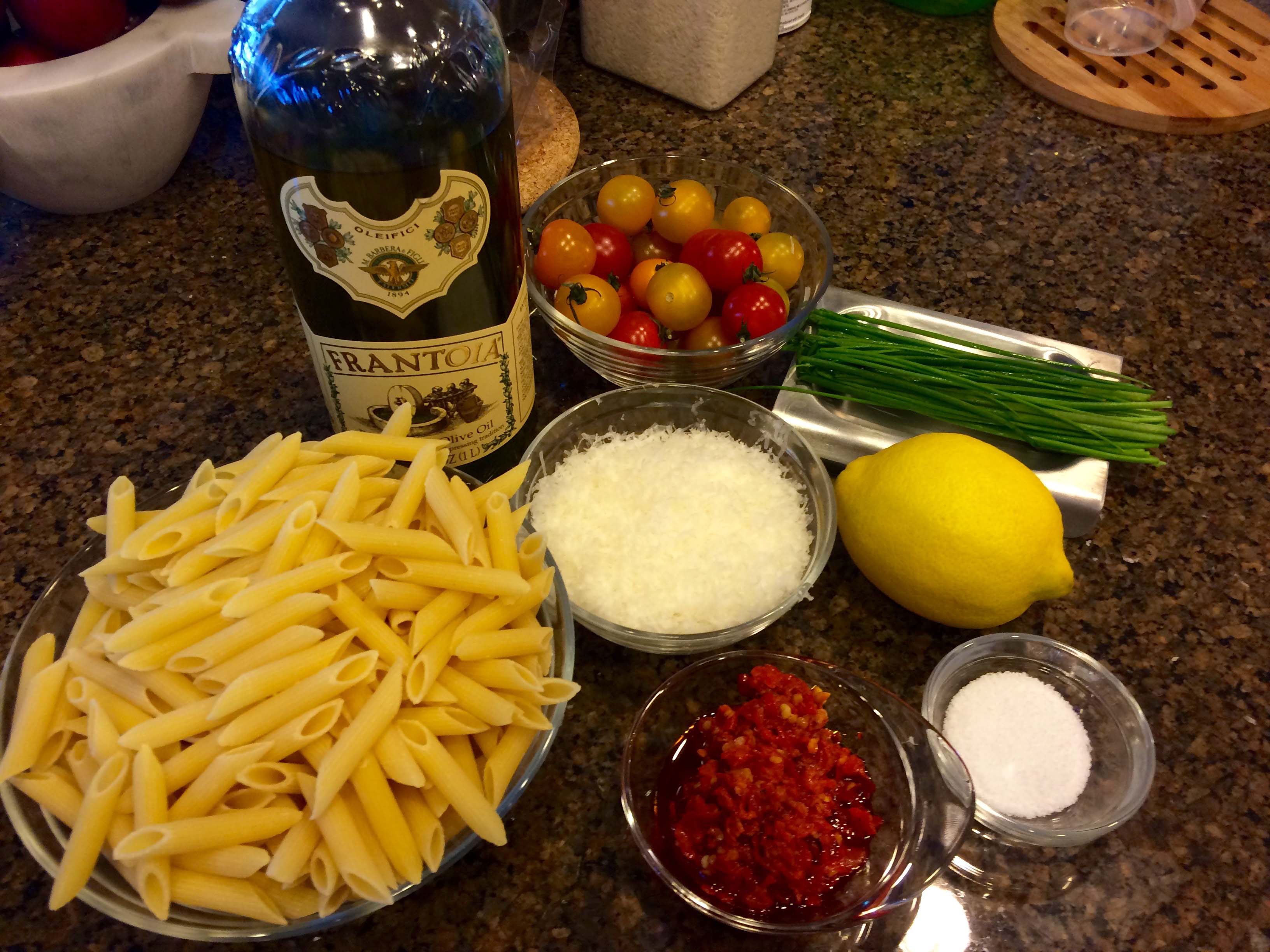
Ingredients

1 pound penne pasta
2 teaspoons kosher salt
1 cup grated pecorino
1 pint cherry tomatoes, quartered
3 tablespoons Calabrian hot pepper paste
1/3 cup chopped chives
1 teaspoon grated lemon zest, from 1 lemon
1 teaspoon lemon juice, from 1/2 lemon
1/3 cup extra-virgin olive oil

In a 10-inch high-sided saute pan, bring 1 inch of water (about 4 cups) to a boil over high heat. Add the penne and the salt.

Pasta with about an inch of water

Cook, stirring often, until the pasta is al dente, about 9 minutes; there should be a little water left in the pan.

The cooked pasta

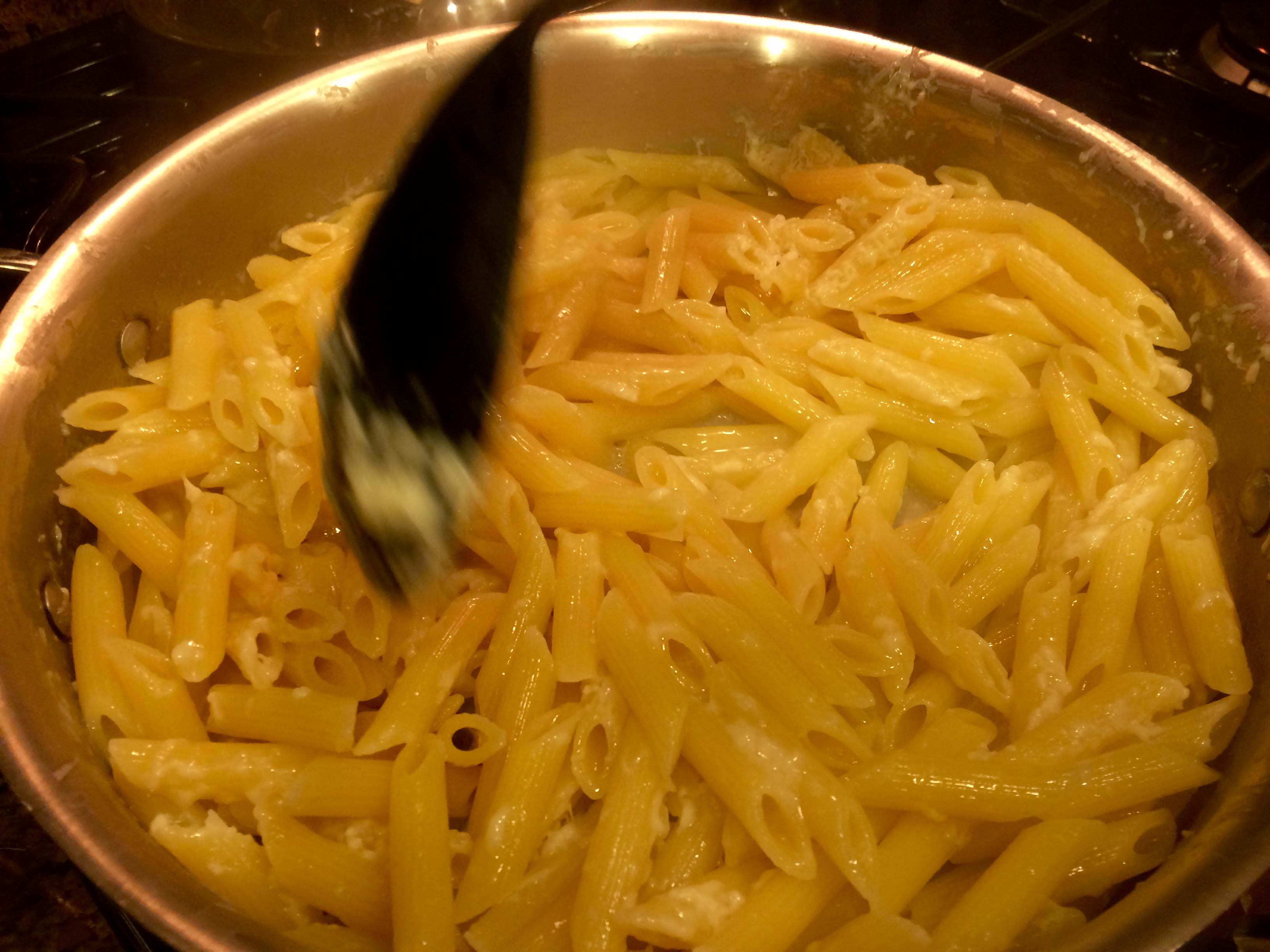
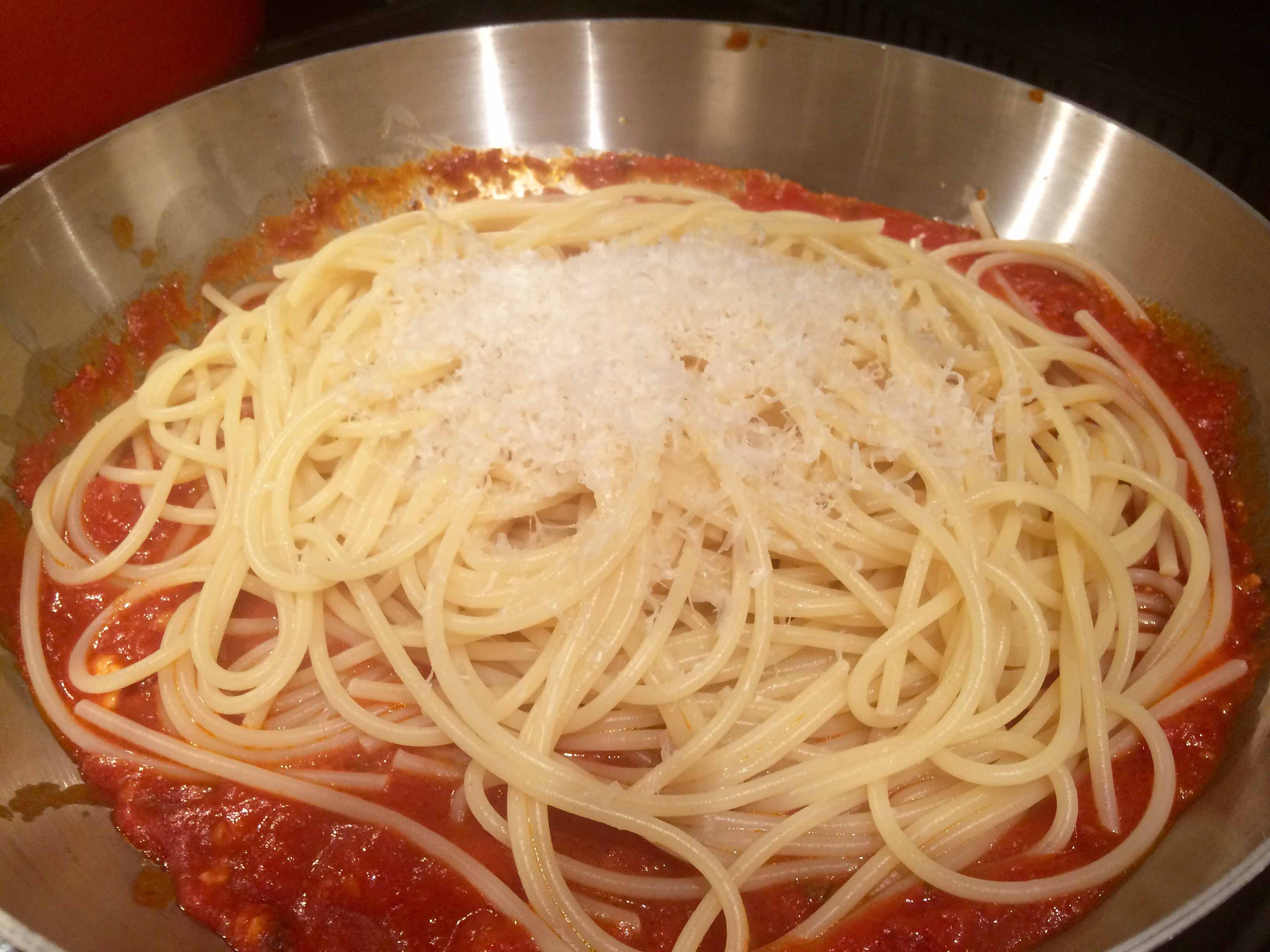
Sprinkle the pecorino over the pasta; toss to coat. (Work quickly, making sure that the cheese doesn’t clump together and is evenly distributed.)
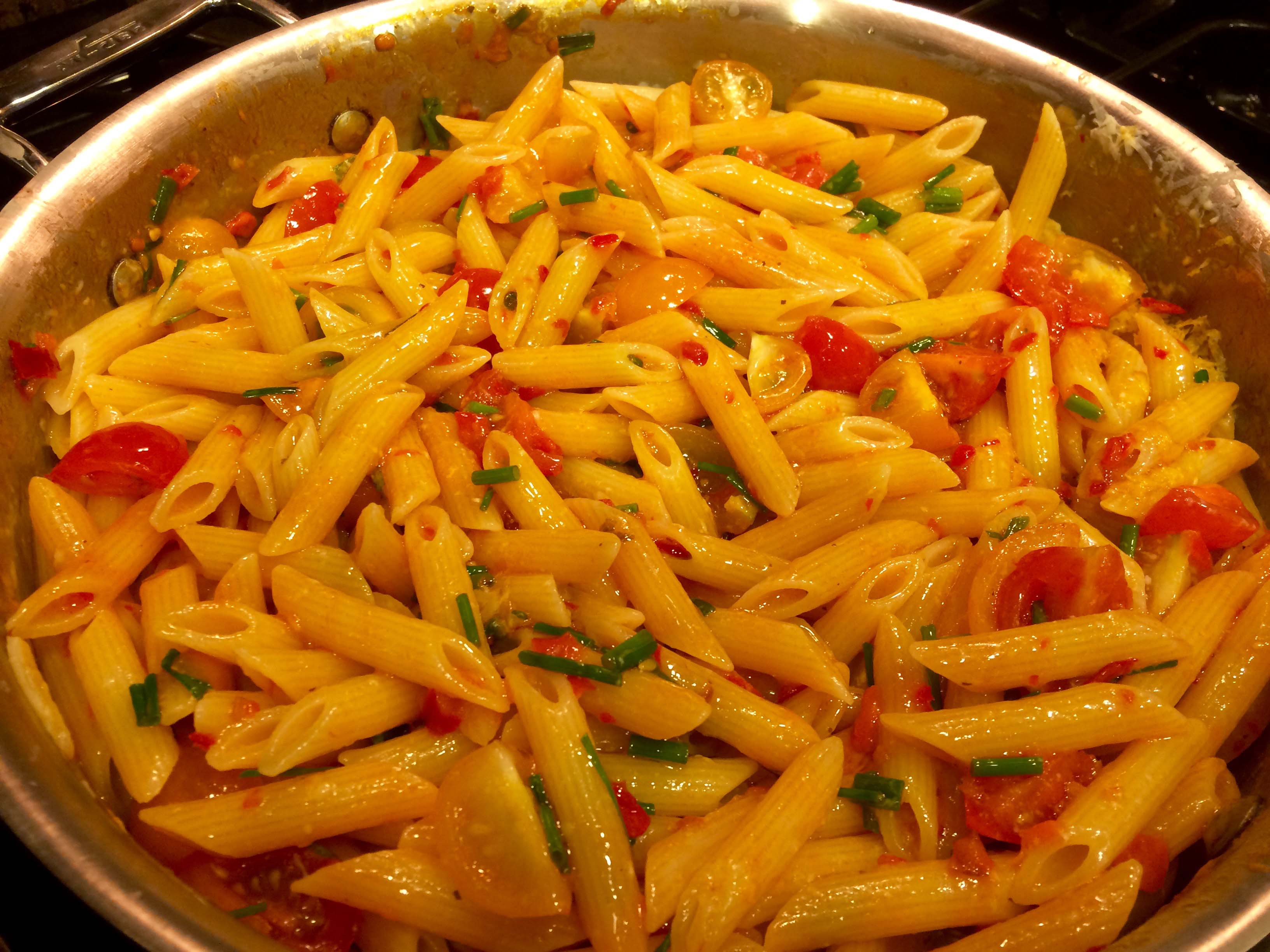
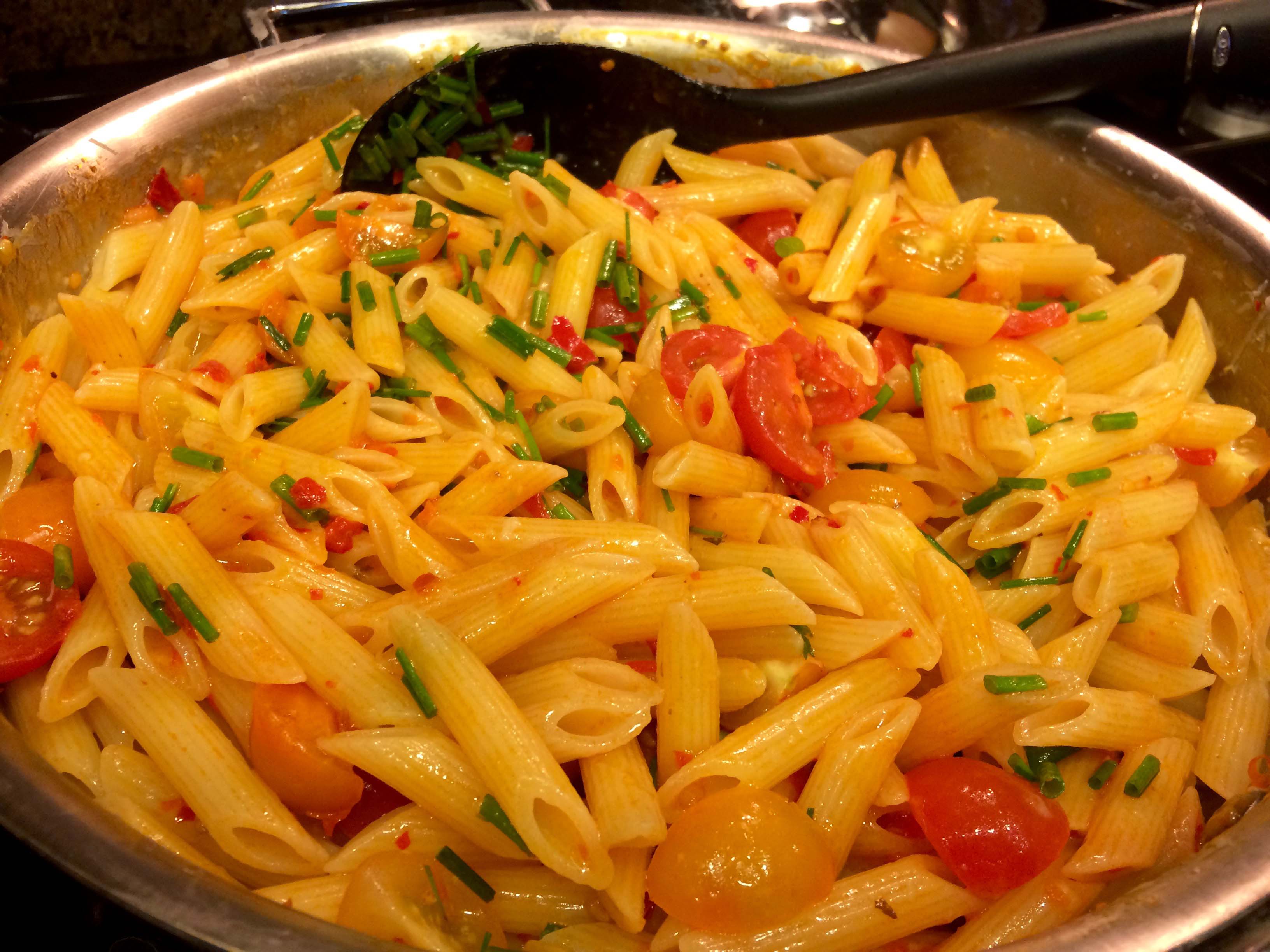
Add the tomatoes, chili paste, chives, lemon zest, lemon juice and olive oil, and toss.
Wine Pairing: Cerasuolo d’Abruzzo or Sauvignon Blanc

Pasta con Ceci

Pasta Con Ceci

A few years ago, I posted my family’s recipe for pasta with chickpeas, Pasta Ceci. It’s always been one of my favorite dishes passed down to me during my grad-school days from my Sicilian mother.

Recently, however, I came across another version of this dish on the Food52 website, adapted from Victoria Granof’s cookbook, Chickpeas. This recipe seems to have Neapolitan roots, with much of its flavor derived from frying tomato paste in garlic infused olive oil.

What made this dish immediately appealing for a weeknight meal is that it requires only one pot, as the pasta is cooked along with the chickpeas with a minimal amount of water. My only variations on the recipe were sautéing some crushed red pepper flakes along with the olive oil and garlic, adding some chopped rosemary during the last five minutes of cooking, and doubling the amount of pasta.

I also recommend using the imported double-concentrate Italian tomato paste in a tube. I find it has deeper flavor than most canned varieties.

While this may not be the most authentic version of this dish, it is nonetheless most delicious and quite satisfying.

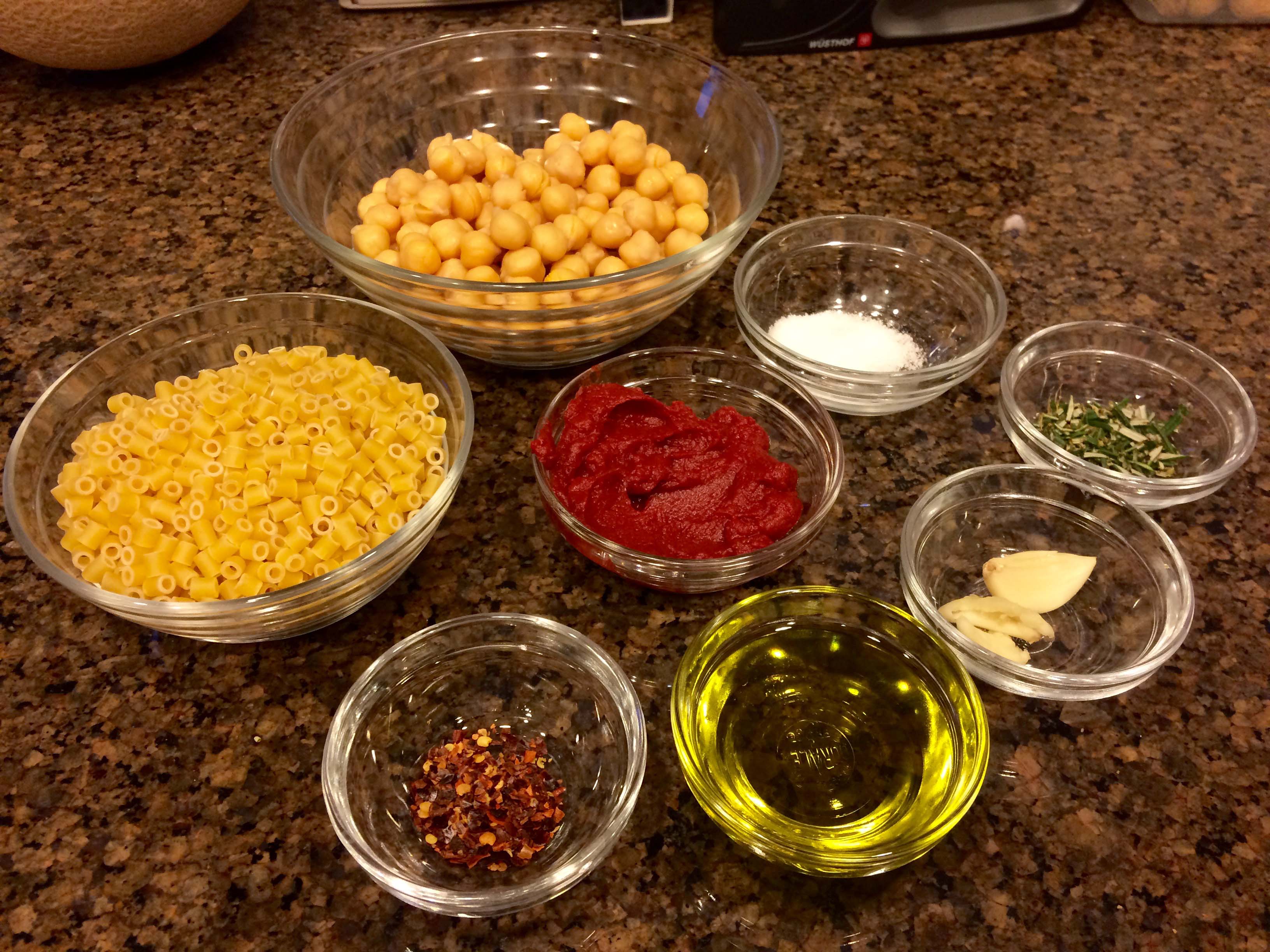
VICTORIA GRANOF’S PASTA CON CECI Adapted from FOOD52

Ingredients

4 tablespoons extra-virgin olive oil, plus more for drizzling
3 cloves garlic, peeled and smashed
3 tablespoons good tomato paste (I used heaping tablespoons.)
1 teaspoon kosher salt, or more to taste
1 1/2 cups cooked chickpeas (or one 15-ounce can, drained and rinsed)
1/2 cup uncooked ditalini pasta (or another small shape, like macaroni) (I used a full cup)
2 cups boiling water (You may need to adjust the amount of water if you add more pasta.)
1 tablespoon chopped fresh rosemary
Crushed red pepper flakes, for serving (I added the crushed pepper to the pasta during the last 5 minutes of cooking.)

In a large heavy-bottomed pot, heat the olive oil until it shimmers. Add the garlic and cook, stirring until it becomes lightly browned and fragrant.

Browning the Garlic

Stir in the tomato paste and salt and fry for 30 seconds or so.

Frying the tomato paste

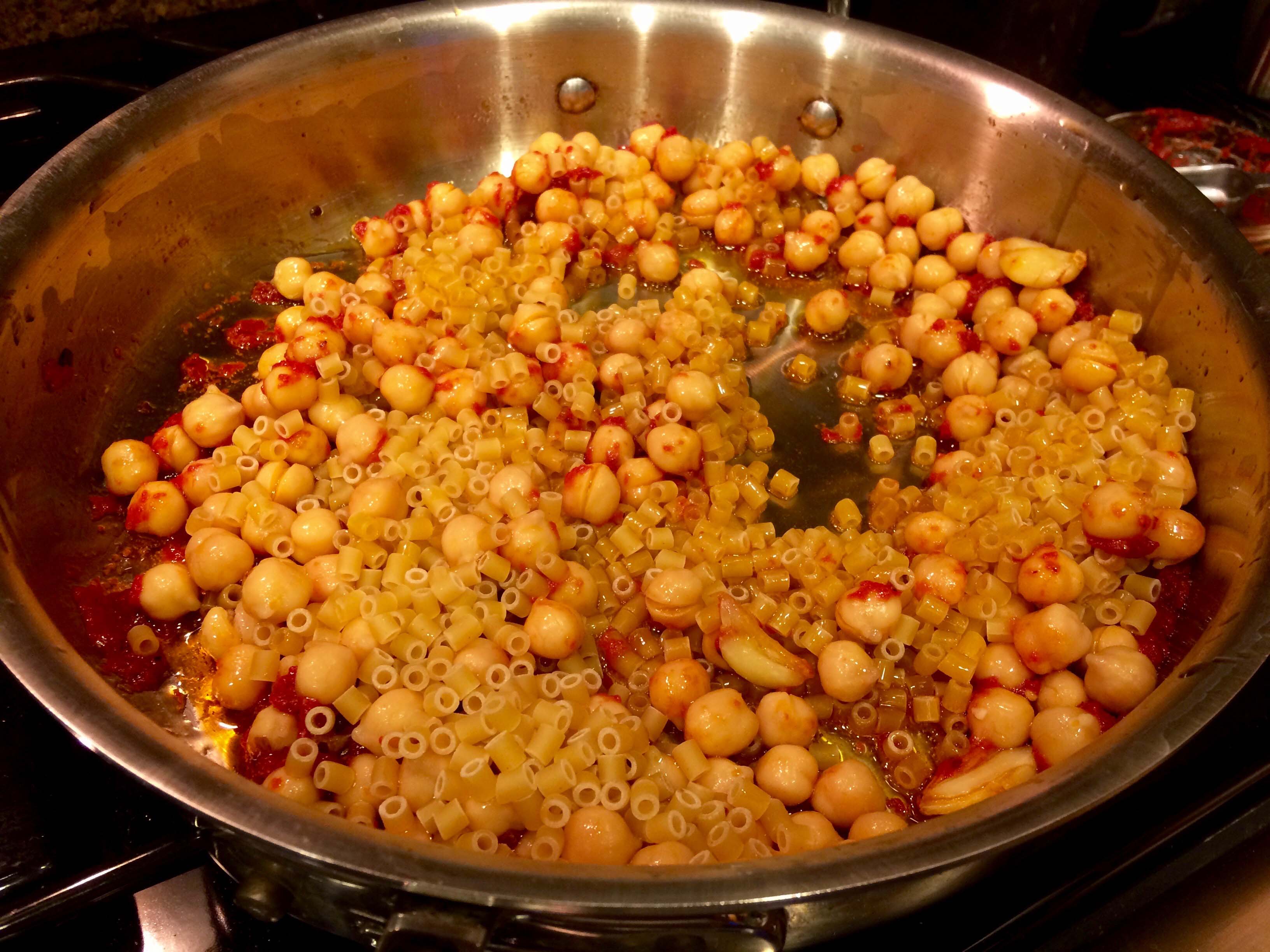
Add the chickpeas, pasta, and boiling water.

Adding chickpeas and pasta
Adding the water

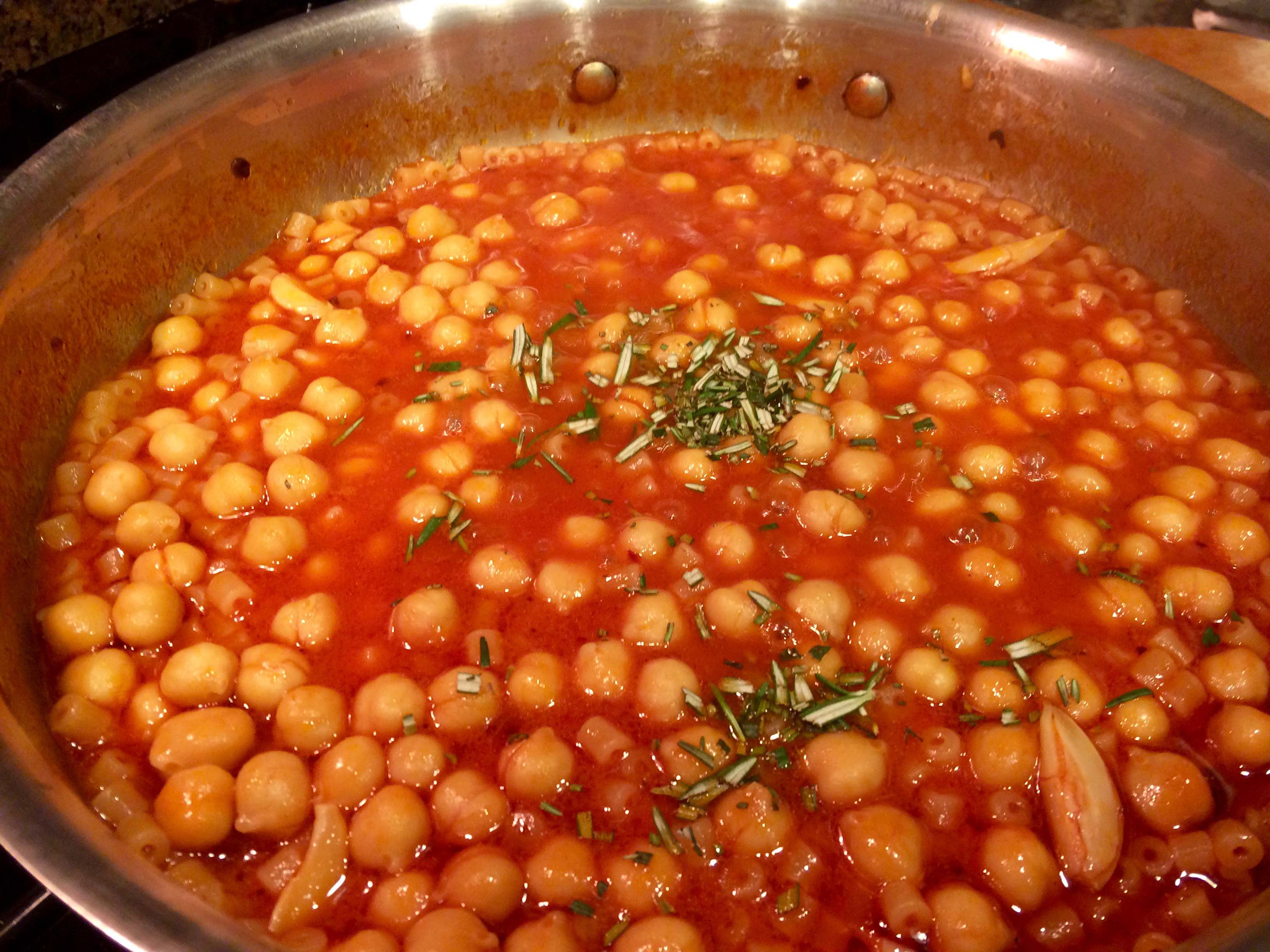
Stir to scrape up any browned bits on the bottom of the pot, lower the heat, and simmer until the pasta is cooked and most of the liquid has been absorbed, about 15 to 20 minutes.

Adding the rosemary
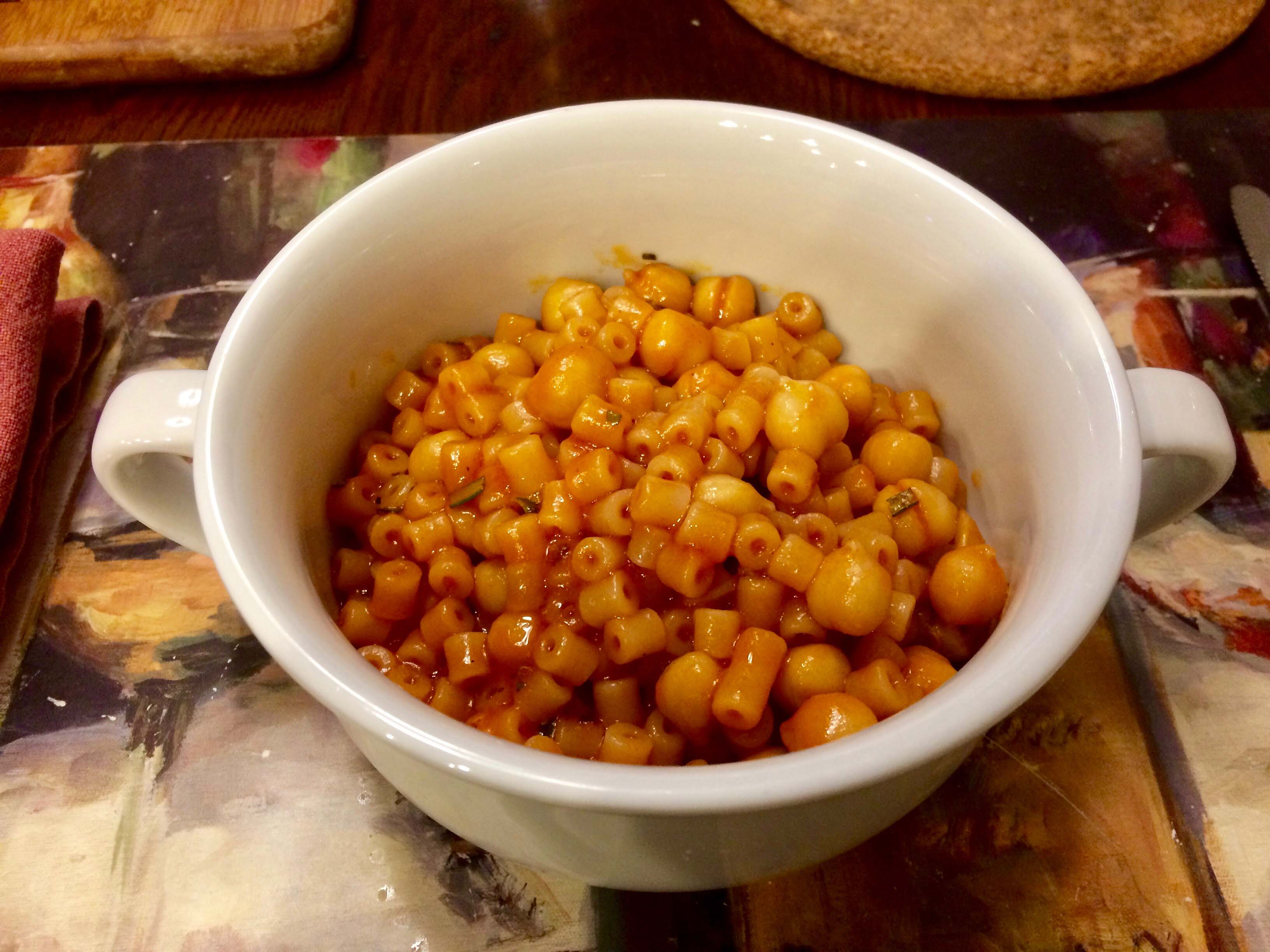
The finished dish

Taste and adjust seasoning. To serve, ladle the pasta into shallow bowls, sprinkle with crushed red pepper flakes, and drizzle a bit of extra-virgin olive oil on top.

Wine Pairing: Montepulciano d’Abruzzo

Asparagus Frittata

Asparagus Frittata

I’ve always like omelets. Growing up in an Italian household, my introduction to them was through frittatas. Large and made with plenty of eggs and grated Romano, they typically featured fried peppers or potatoes and sometimes even left over spaghetti, which was sautéed until a light crust formed on the pasta.

I remember how my aunt stood over the frying pan, wooden spoon in hand, pushing the eggs towards the center allowing the more liquid portion to fall to the sides. “You can’t rush these,” she’d say. Then came the moment of the flip, where she placed a large plate over the pan and, in a flash, inverted the frittata and then slid it from the plate into the pan to finish cooking. Another few minutes of slow cooking followed during which she’d gently shake the pan. When I asked, how did she know it was done, she replied “il naso,” the nose. “You can smell when it’s done.”

The finished frittata was puffy and light, never dry, and the eggs seemed like pillows to whatever the filling.

Eventually, I discovered the French omelet; totally different from the Italian, but that’s a story for another post.

One morning, not too long ago, over breakfast I saw Lidia Bastianich prepare an asparagus frittata on television. The 10 minute spot evoked memories of my aunt and so I decided to make one for dinner that evening. Below is her recipe along with a link to the video i saw that morning.

I modified the recipe by adding a generous handful of grated Parmigiano Reggiano to the eggs before beating. I also flipped the frittata as my aunt did to finish cooking the other side.

Wine Pairing: Falanghina

Lidia Bastianich’s Asparagus Frittata

Ingredients

1 pound pencil-thin asparagus
2 tablespoons extra-virgin olive oil
Kosher salt and freshly ground black pepper
8 large eggs

Preparation

1. Remove and discard the tough lower ends of the asparagus. Cut the spears into 2-inch lengths.

2. In a large nonstick skillet, sauté the asparagus spears in olive oil, sprinkling them lightly with salt. Cover the pan and cook over medium heat, stirring occasionally, until asparagus is tender but still firm, about 5 minutes.

3. Beat the eggs lightly in a bowl with salt and pepper. Add the eggs to the asparagus, scrambling the mixture lightly with a fork. Cook 2 minutes, or less depending on the texture desired, until eggs are set, and serve immediately.

Video Link

Spaghetti and Meatloaf

img_7347sm

Yes, you read the title of this post correctly. Meatloaf, not meatballs, was served with spaghetti. What’s more, the meatloaf was leftover. We’re both fans of this most comforting of comfort foods, so much so that I generally make one once a week. Because I’m generally preparing dinner just for two, we often have at least a half loaf left over, from which we typically make sandwiches or use to serve with fried eggs.

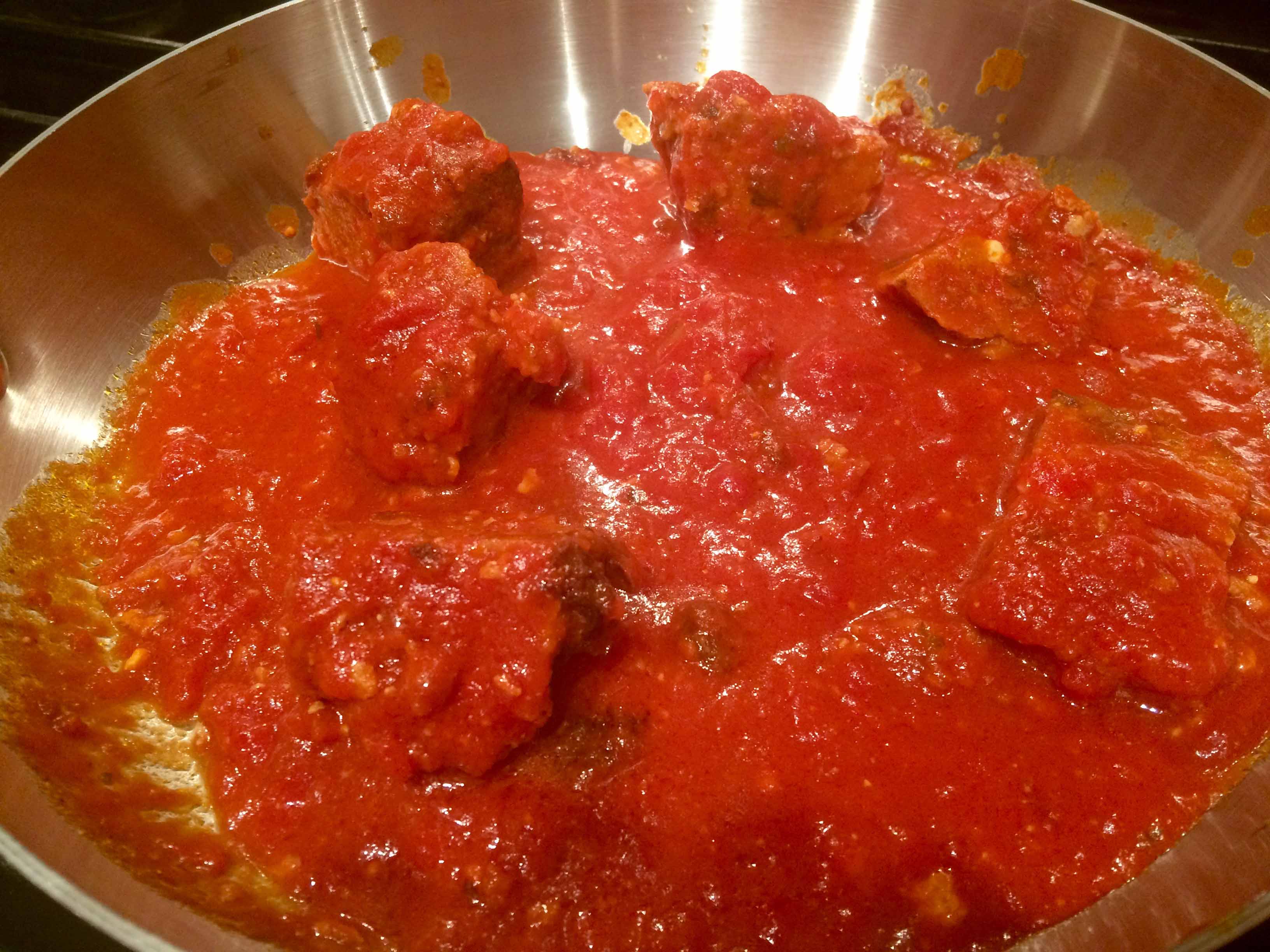
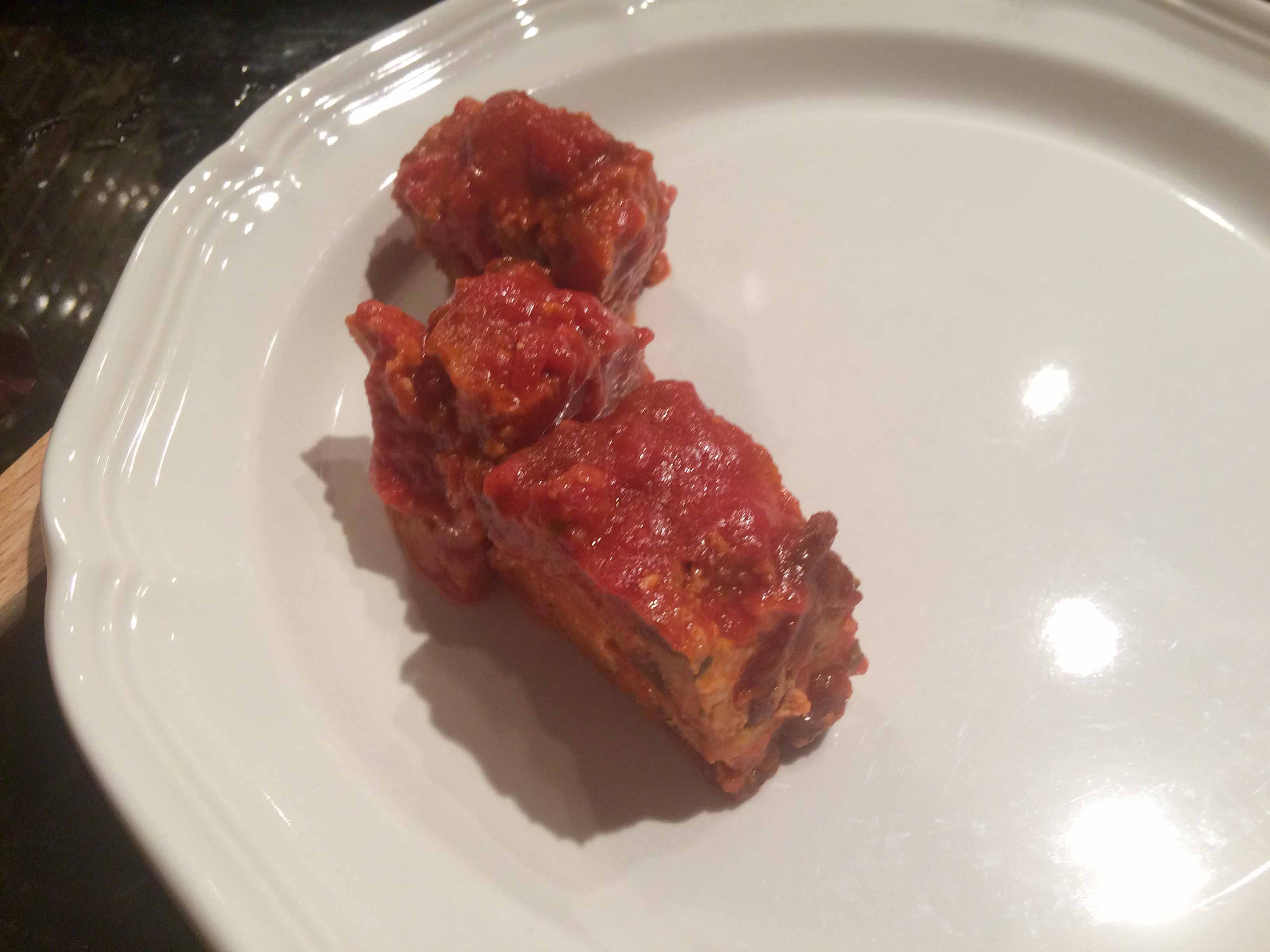
But last night I thought I would use the meatloaf as a substitute for meatballs in a red sauce. I cut the leftover loaf into 1½ cubes, which I then cooked in a plain tomato sauce for about 30 minutes.

The recipe for the sauce was Marcella Hazan’s Tomato, Butter, and Onion. Place an onion cut in half along with a 28-ounce can of San Marzano tomatoes (crushed) and their juice, 5 tablespoons of butter in a heavy-bottomed sauce pan. Season to taste with salt and pepper. Cook at a slow simmer for 45 minutes, stirring occasionally. When done remove the onion.

My meat loaf is a combination of recipes, but is made from ground dark meat turkey or beef, diced pancetta, bread crumb, parsley, garlic, cubed feta cheese, raisins, eggs and milk and seasoned with salt, pepper, and cumin. I think however that you could substitute almost any meat loaf you like.

After adding the cubed meat loaf to the sauce, cook for 30 minutes stirring occasionally but be careful not to break the cubes. When done, transfer to a large skillet.

img_7324sm

Just before serving, place the cubes of meat loaf on warmed serving plates.

img_7329sm

When the pasta is just shy of al dente, transfer it to the skillet and toss with the sauce and some grated cheese, either Parmigiano-Reggiano or Pecorino Romano.

img_7333sm

Transfer the sauced pasta to the plates with the cubed meat loaf.

img_7337sm

Not a fancy dish; but on a chilly winter weekday night, it provides loads of comfort and joy.

Wine Pairing: Montepulciano d’Abruzzo

Greek Chicken Stew with Cauliflower and Olives

img_7266smAfter four turkey-sandwich lunches and several leftover-turkey improvisations, it was time for a change. We savored our first dinner without the bird–NY strip steaks with mashed potatoes and buttered peas. But then, given our cholesterol levels, it was time to get back to non red-meat meals. One of these was last night’s entrée, a recent New York Times recipe for Greek Chicken Stew With Cauliflower and Olives. Its use of cinnamon in the tomato-based sauce and feta-cheese garnish intrigued me.

I must admit that a shopping error gave me some pause when I discovered that rather than purchasing skinned chicken thighs, I had purchased not only skinless but boneless thighs. Despite this mistake, the dish turned out quite well, with moist meat and a succulent savory sauce. I still believe, however, that it would have been even better with bone-in thighs.

I should also note a few other changes that I made to the recipe. I used a little more cinnamon, dried thyme, vinegar, olives and parsley than was called for in the recipe. To heighten the Greek character of the dish, I also added some dried oregano. Most of these changes were done for flavor, but the additional vinegar was required to fully deglaze the pot after browning the chicken.

Rather than adding the cauliflower after the first twenty minutes of cooking, I added it at the beginning along with the chicken since I’ve learned from cooking this vegetable in a plain tomato sauce requires at least 40 minutes for my tastes.

I’m providing the recipe in its original format with my notations, but I think you can alter it in a variety of other ways to make it your own. One alternative cited in readers’ comments to the recipe was roasting the cauliflower in the oven before adding it to the pot.

Greek Chicken Stew With Cauliflower and Olives (adapted from the New York Times)

Ingredients

  • 2 tablespoons extra virgin olive oil (I needed a little more oil than was called for.)
  • 1 large red onion, chopped
  • 2 to 4 garlic cloves (to taste), minced (I used two large cloves.)
  • 6 to 8 chicken legs and/or thighs, skinned (I opted for nine thighs.)
  • 2 tablespoons red wine vinegar (I used at least 4 tablespoons.)
  • 1 28-ounce can chopped tomatoes, with juice, pulsed in a food processor (I chose Pomi’s Finely Chopped Tomatoes rather than pulsing.)
  • ½ teaspoon cinnamon ( I used about ¾ teaspoon.)
  • Salt and freshly ground pepper
  • ½ teaspoon dried thyme, or 1 teaspoon fresh thyme leaves (I used ¾ teaspoon dried.)
  • ½ teaspoon dried oregano (This is my addition.)
  • 1 small or 1/2 large cauliflower, cored, broken into florets, and sliced about 1/2 inch thick
  • 12 kalamata olives (about 45 grams), rinsed, pitted and cut in half (optional) (I used about 24 olives.)
  • 1 to 2 tablespoons chopped flat-leaf parsley (I upped this to 3 tablespoons.)
  • 1 to 2 ounces feta cheese, crumbled (optional) (The feta is essential.)

Preparation

  1. Heat 1 tablespoon of the oil over medium-high heat in a large, deep, heavy lidded skillet or casserole and brown the chicken, in batches if necessary, about 5 minutes on each side. Remove the pieces to a plate or bowl as they’re browned. Pour off the fat from the pan. Add the vinegar to the pan and scrape up all the bits from the bottom of the pan.

    Browning the chicken
    Browning the chicken
  2. Add the remaining tablespoon of the olive oil to the pan, and turn the heat down to medium. Add the onion and a generous pinch of salt and cook, stirring often and scraping the bottom of the pan, until it begins to soften, about 5 minutes. Turn the heat to low, cover and let the onion cook for 10 minutes, stirring from time to time, until it is lightly browned and very soft.

    img_7255sm
    The browned onions
  3. Add the garlic and stir together for a minute or two more, until the garlic is fragrant, then add the tomatoes and their juice, the cinnamon, thyme, and salt and pepper to taste. Bring to a simmer and simmer 10 minutes, stirring from time to time, until the mixture is reduced slightly and fragrant.

    The simmered sauce
    The simmered sauce
  4. Return the chicken pieces to the pot, along with any juices that have accumulated in the bowl. If necessary, add enough water to barely cover the chicken. Bring to a simmer, reduce the heat, cover and simmer 20 minutes. (As I said above, I added the cauliflower at this point.)

    Adding the chicken, cauliflower, parsley, and olives
    Adding the chicken, cauliflower, parsley, and olives
  5. Add the cauliflower and kalamata olives, (I also added some parsley here) and simmer for another 20 minutes, or until the cauliflower is tender and the chicken is just about falling off the bone. Stir in the parsley, taste and adjust seasonings. Serve with grains, with the feta sprinkled on top if desired. (I served with steamed rice.)

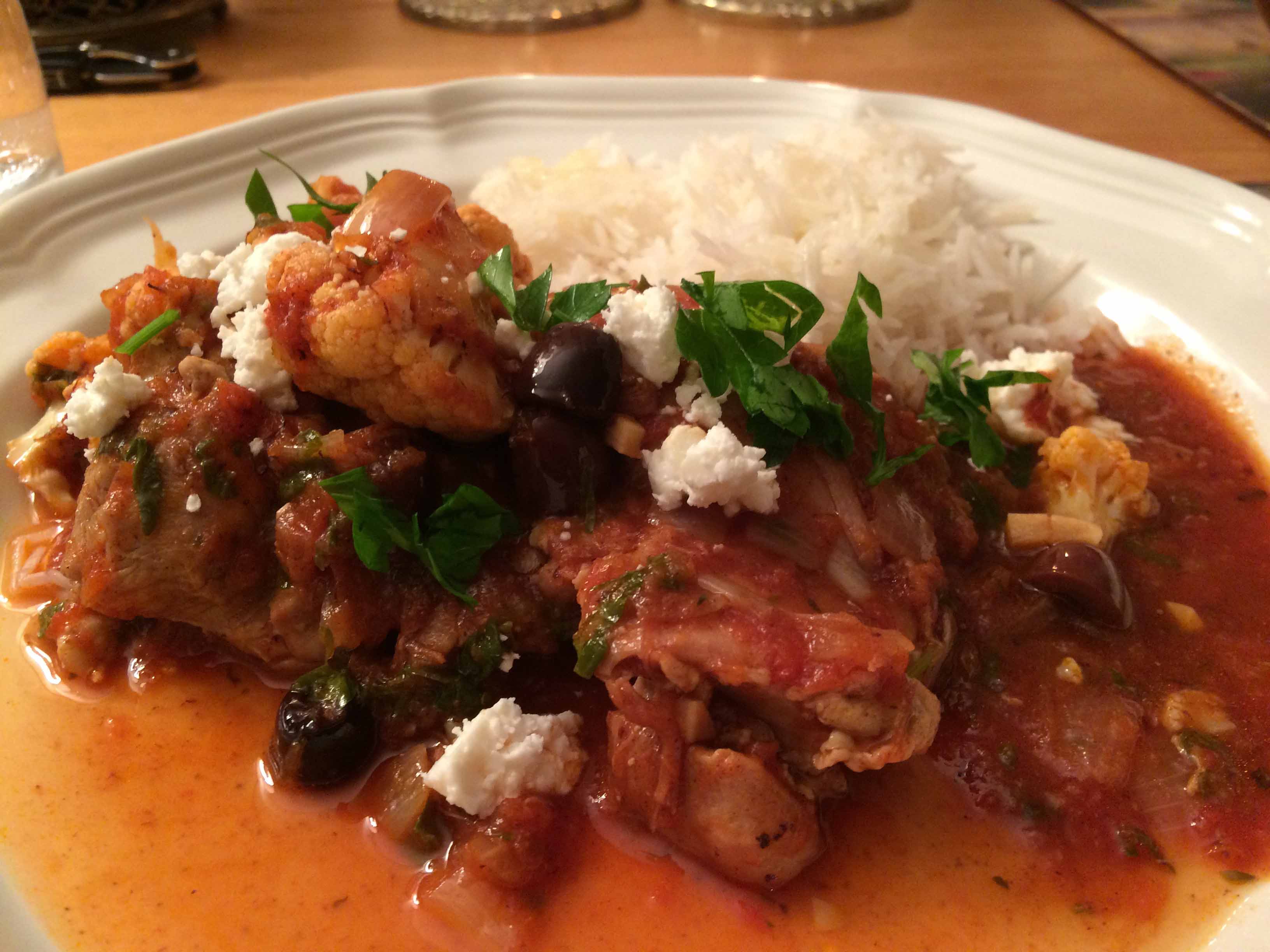
    The finished stew
    The finished stew

Wine Pairing: Syrah, Cotes du Rhone

Penne with Tomato and Goat-Cheese Sauce

img_7218sm

My go-to recipe for a simple tomato sauce is Marcella Hazan’s. With only 3 ingredients (plus some salt) and 3 steps, it’s the easiest sauce I know:

One 28-ounce can of whole peeled San Marzano tomatoes, crushed, along with their juices
5 tablespoons unsalted butter
1 onion, peeled and cut in half length-wise, so the root end keeps the layers together
Salt

1. In a heavy bottomed, non-reactive sauce pan, combine the tomatoes and their juices, the butter, and the onion. Add salt too taste.

2. Bring to a simmer over medium heat, and then reduce the heat to maintain a gentle simmer. Cook uncovered for 45 minutes, stirring occasionally and mashing any large pieces of tomatoes with your spoon.

3. Discard the onion; adjust for salt.

You can search the internet for more versions of this recipe, like this one from the New York Times Cooking site.

Hazan’s recipe makes enough sauce for a pound of pasta. Given that I’m usually cooking for two, I often have a half portion of it on hand. Such was the case last night, when after a weekend of red-meat indulgence, I decided to make one of my favorite meatless dishes: penne with tomato and goat-cheese sauce.

Penne with Tomato and Goat-Cheese Sauce

Ingredients
1/2 portion of Marcella Hazan’s tomato onion sauce
2.5 ounces goat cheese or chèvre
1/4 teaspoon of crushed red pepper flakes
8 ounces penne rigate, or any short cut pasta
Freshly ground black pepper
Parmigiano-Reggiano for serving

1. In a large skillet slowly bring the tomato sauce to a simmer. When the sauce is warmed through, crumble the cheese into the sauce and still until well blended. Add the crushed red pepper. Be careful not to overdo the pepper flakes, which can overwhelm the flavor of the cheese.

2. Meanwhile, cook the pasta until one minute before al dente (about 9 minutes). When the pasta is done, drain well and add it to the skillet with the sauce. Toss with sauce over low heat and allow the pasta to finish cooking, about 1 minute.

Tossing the pasta with the sauce

Before serving, sprinkle with some ground black pepper and grated Parmigiano-Reggiano.

Wine Pairing: Rosso di Montalcino

Roasted Sausage, Peppers, and Onions

img_1694sm

Sausage and Peppers has been a family favorite for years. My aunt would often prepare this for lunch on Saturdays, after we returned from shopping in our neighborhood’s Italian section on Avenue U in Brooklyn. She would serve them with bread still warm from the baker and a selection of cheeses from her favorite salumeria. These days, I often make it for an easy weeknight supper.

Like most cooks, my aunt would fry up the sausages and then use their fat to fry the onions and peppers. This is the way I too have prepared this dish—that is, until last night.

Although I enjoy this Italian staple, I hate cleaning up the greasy mess it makes all over the stove. I thought there must be an easier alternative using my oven. I did a Google search and found several recipes that looked promising.  I combined a few of them and came up with the one below.

Once again, I hadn’t planned on writing about this dish, but it turned out so well that I had to share it with you. I don’t think I’ll ever use the stove top again to make it.

Roasted Sausage, Peppers, and Onions

Ingredients
4 Italian sweet sausages
4 bell peppers (2 red, 1 yellow, 1 orange) cored, seeded, and sliced 1/2-inch thick
1 large onion, thinly sliced or chopped
3 garlic cloves, lightly smashed
Kosher salt
Freshly ground black pepper
1/4 cup olive oil
1 lemon, quartered for serving with the sausage (optional)

  1. Preheat the oven to 400°F.
  2. Spray a large roasting pan with olive-oil spray.
  3. Place the sausages, peppers, onion, garlic, in the pan. Sprinkle with salt and pepper. Drizzle with olive oil and toss, making sure the sausages are in a single layer.
  4. Roast the sausages and vegetables for about an hour. About mid-way through, turn the sausages to ensure even browning.

When the sausages and vegetables are browned to your liking, remove from the oven and serve. Squeeze some lemon on the sausage for added flavor.

Wine Pairing: Zinfandel