Beef Barley Soup with Oxtails

img_7191

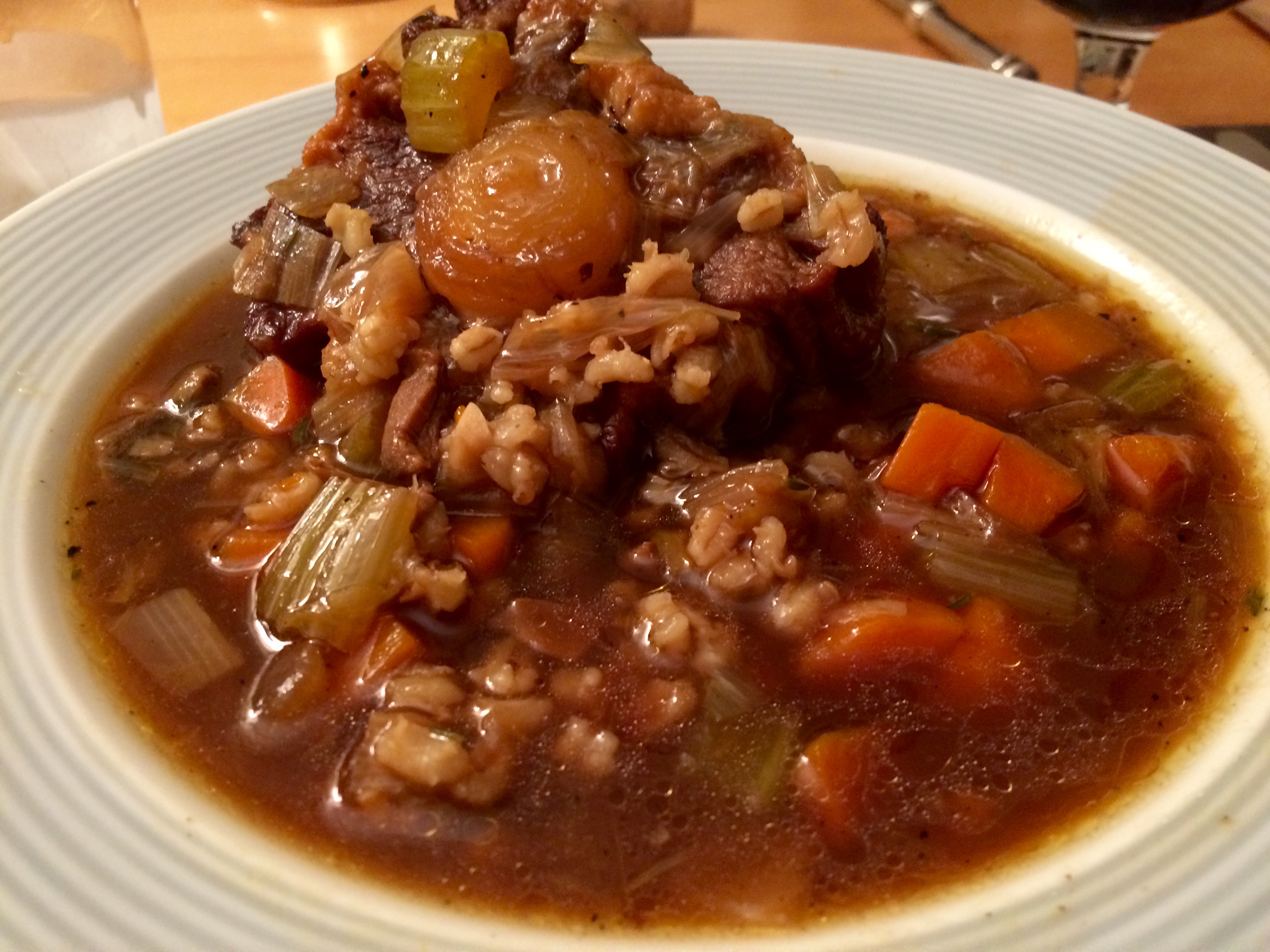
With the first chill of autumn came a desire for a rich soup. My better half asked for beef barley, a childhood favorite. So after searching my cookbooks and the internet, I came upon a great recipe from Food Network star, Ina Garten. Served along with the recipe’s oxtails, the soup makes a complete meal that will satisfy even the most ardent carnivore.

It’s a relatively simple recipe, but I modified it slightly. The original recipe called for 10 cups of beef broth, but my local grocery only had two 32-ounce boxes available. Originally, I thought I would simple add some chicken stock to make up the difference. But then I thought that making up the difference with a broth made from soaking dried porcini would provide even more flavor with the added benefit of adding some mushrooms to the soup. I made my broth with a half cup of porcini, but regretted afterwards that I didn’t use more. So, as you will see in the recipe, I’ve upped the dried porcini to 1 cup.

As you may have noticed, this posting has far fewer photographs than is my norm. This is because I wasn’t planning on posting this recipe until I first tasted the soup for seasoning about mid-way through.

Rich Beef Barley Soup (adapted from Ina Garten recipe on foodnetwork.com)

Ingredients

1 tablespoon good olive oil
2 pounds beef oxtails
Kosher salt and freshly ground black pepper
2 cups chopped leeks, white and light green parts (2 leeks)
2 cups (1/2-inch) diced carrots (4 carrots)
1 cup chopped yellow onion
1 cup (1/2-inch) diced celery (2 stalks)
2 garlic cloves, minced
2 sprigs fresh thyme leaves
3 bay leaves
8 cups canned beef broth
2 cups wild porcini broth (made from soaking 1 cup of dried porcini in 2 1/2 cups of boiling water for about 30 minutes)
1 cup pearled barley

Directions

Heat the olive oil in a large pot or Dutch oven, such as Le Creuset. Add the oxtails, 1 teaspoon salt, and 1/2 teaspoon pepper and cook over medium-high heat, stirring occasionally, for 10 minutes until browned all over. Remove the oxtails with a slotted spoon and reserve.

Add the leeks, carrots, onion, celery, and garlic to the fat in the pot and cook over medium heat, stirring occasionally, for 10 minutes, until the vegetables start to brown. Tie the thyme sprigs together with kitchen string and add to the pot along with the bay leaves. Return the oxtails to the pot and add the broth, the soaked porcini,1 teaspoon of salt, and 1 teaspoon of pepper. Raise the heat and bring to a boil. Lower the heat, cover, and simmer for 1 hour. Discard the thyme bundle and the bay leaves, and skim off the fat.
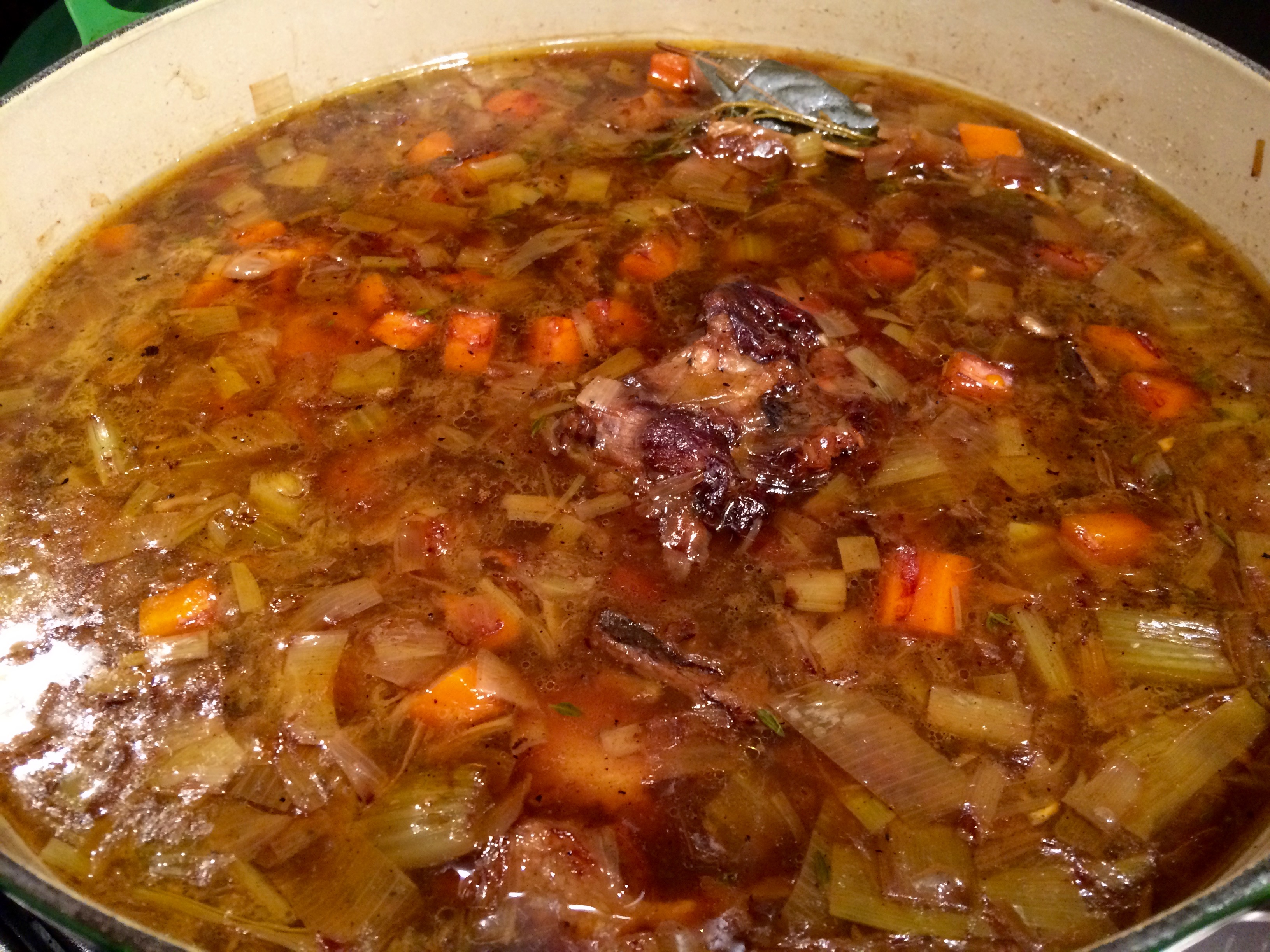
Oxtails returned to the soup

Meanwhile, bring 4 cups of water to a boil and add the barley. Simmer uncovered for 30 minutes, drain, and set aside.

When the soup is ready, add the barley and cook the soup for another 15 or 20 minutes, until the barley is tender. Depending on the saltiness of the stock, the soup might need another teaspoon of salt and some pepper.

The finished soup
The finished, skimmed soup

Serve the soup hot together with the oxtails in heated bowls.

Wine Pairing: Zinfandel

Pasta with Cauliflower

img_7163sm

Recently, my brother called me to ask for my mother’s recipe for cauliflower in tomato sauce. It’s one of the dishes we had as kids that came from the Sicilian side of our family. More often than not it was served on its own, without pasta, as a primo, or first course. However, once I a while my mother would mix it with pasta most likely to satisfy my father who wanted pasta almost on a daily basis.

The dish calls for just a few ingredients and requires minimal preparation, which makes it perfect for a weeknight meal.

Pasta with Cauliflower

img_7142sm

Ingredients
1 small onion, sliced thin
2 tablespoons extra-virgin olive oil
Kosher salt
¼ teaspoon ground cloves (optional)
1 small head of cauliflower, rinsed and cut into small florets
1 28-ounce can San Marzano whole tomatoes, crushed, with their juices
Freshly ground black pepper
1 pound pasta like farfalle, shells, orecchiette
½ cup grated Romano or Parmigiano
6 leaves basil, torn

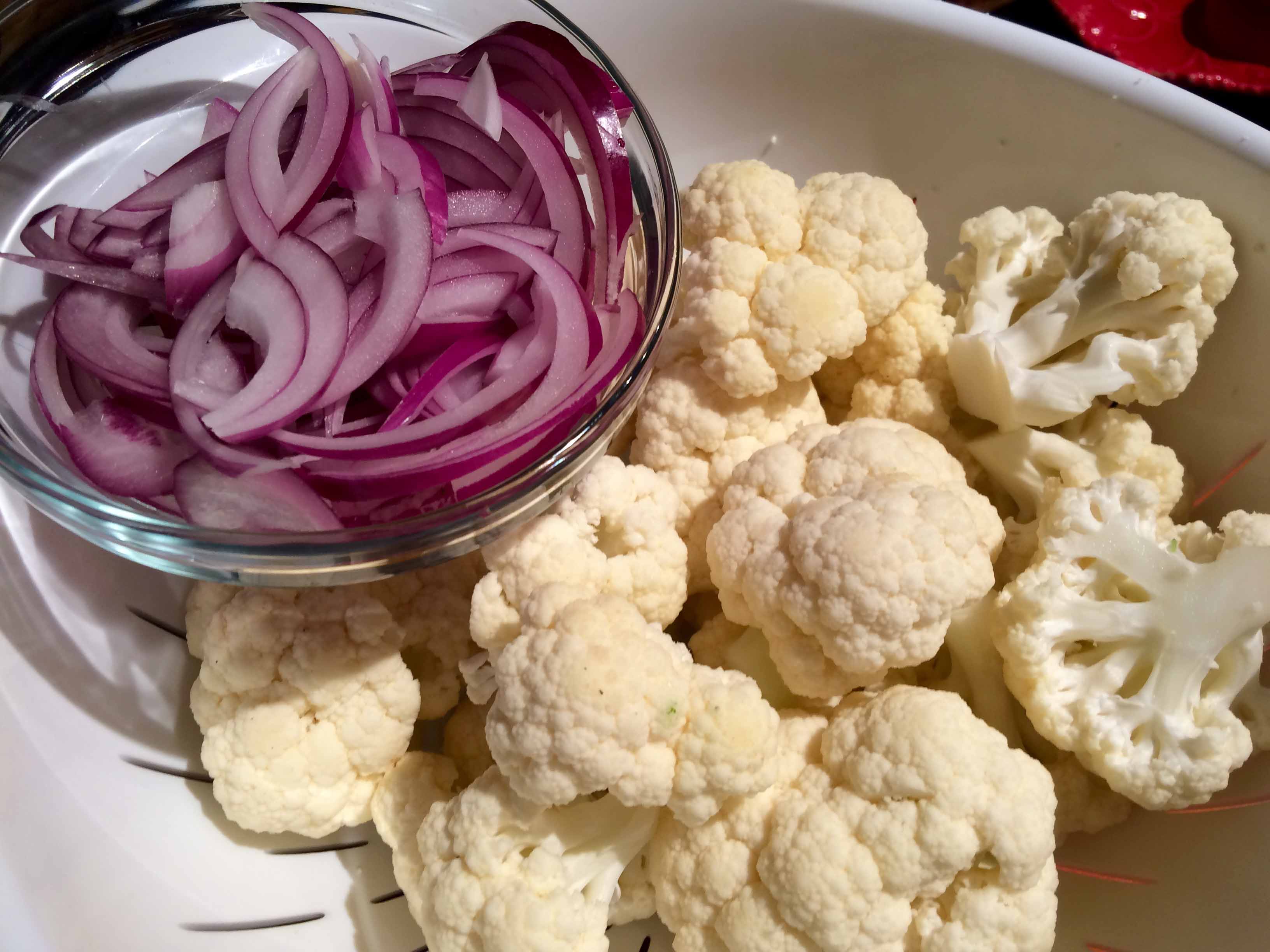
Prepped cauliflower and onions

In a heavy-bottomed 3 to 4 quart (preferably enameled cast-iron) casserole, over medium heat sauté the onion with a pinch of salt in the oil until translucent and just lightly colored. As the onions are sautéing you may add the optional ground cloves.

img_7146sm

When the onions are done, add the tomatoes and their juices and season with salt and pepper. Continue to cook over medium heat until the tomatoes come to a simmer.

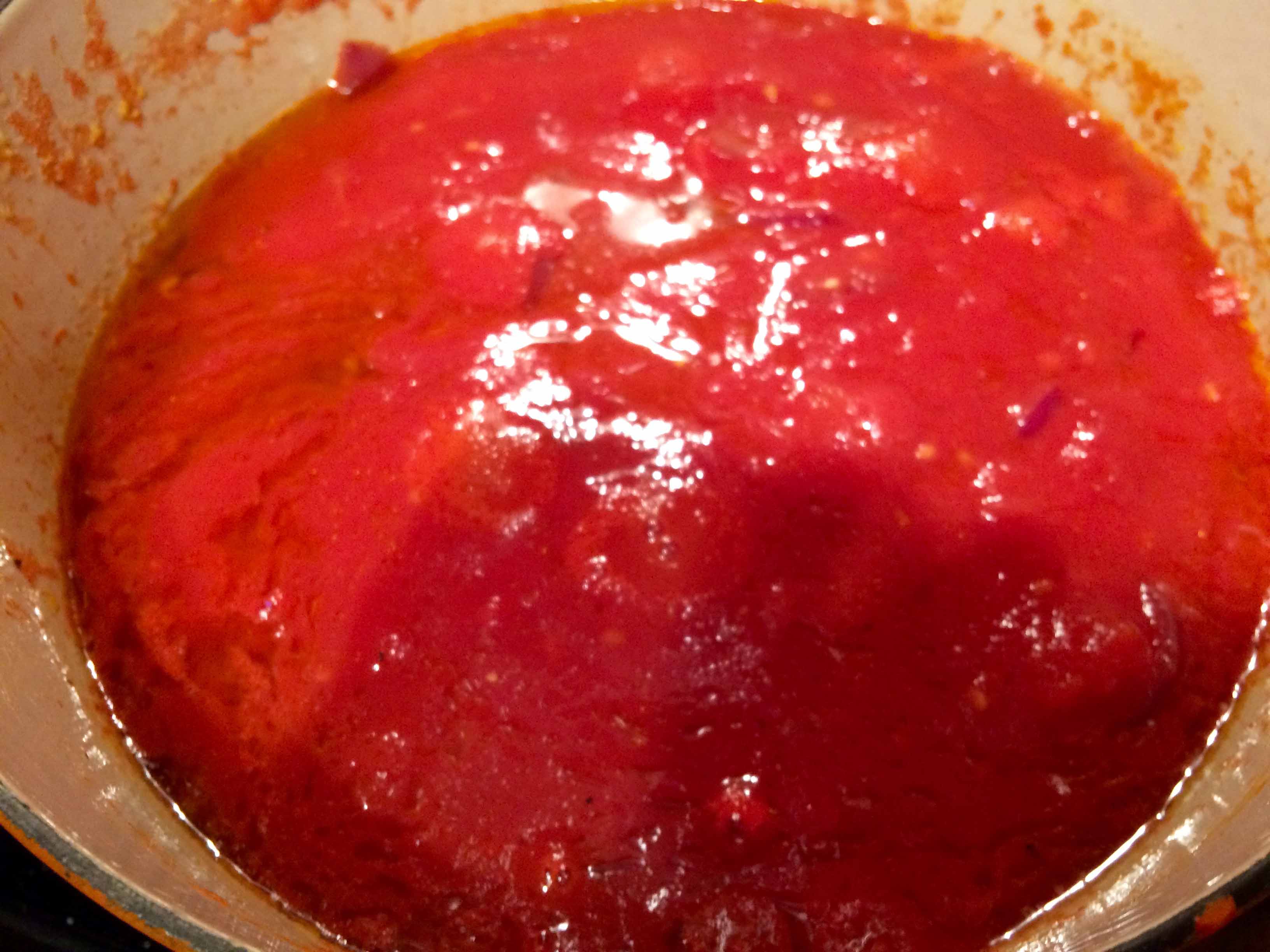
Simmered tomatoes
Simmered tomatoes

At this point, add the cauliflower, gently pushing down on them so that they are lightly covered with the tomatoes. If there is not enough sauce to cover the cauliflower add a little water.

After adding cauliflower to the sauce

Reduce the flame to low, cover the pot, and continue to cook , stirring occasionally, for about 40 minutes or until the cauliflower is tender.

Cooked Cauliflower
Cooked Cauliflower

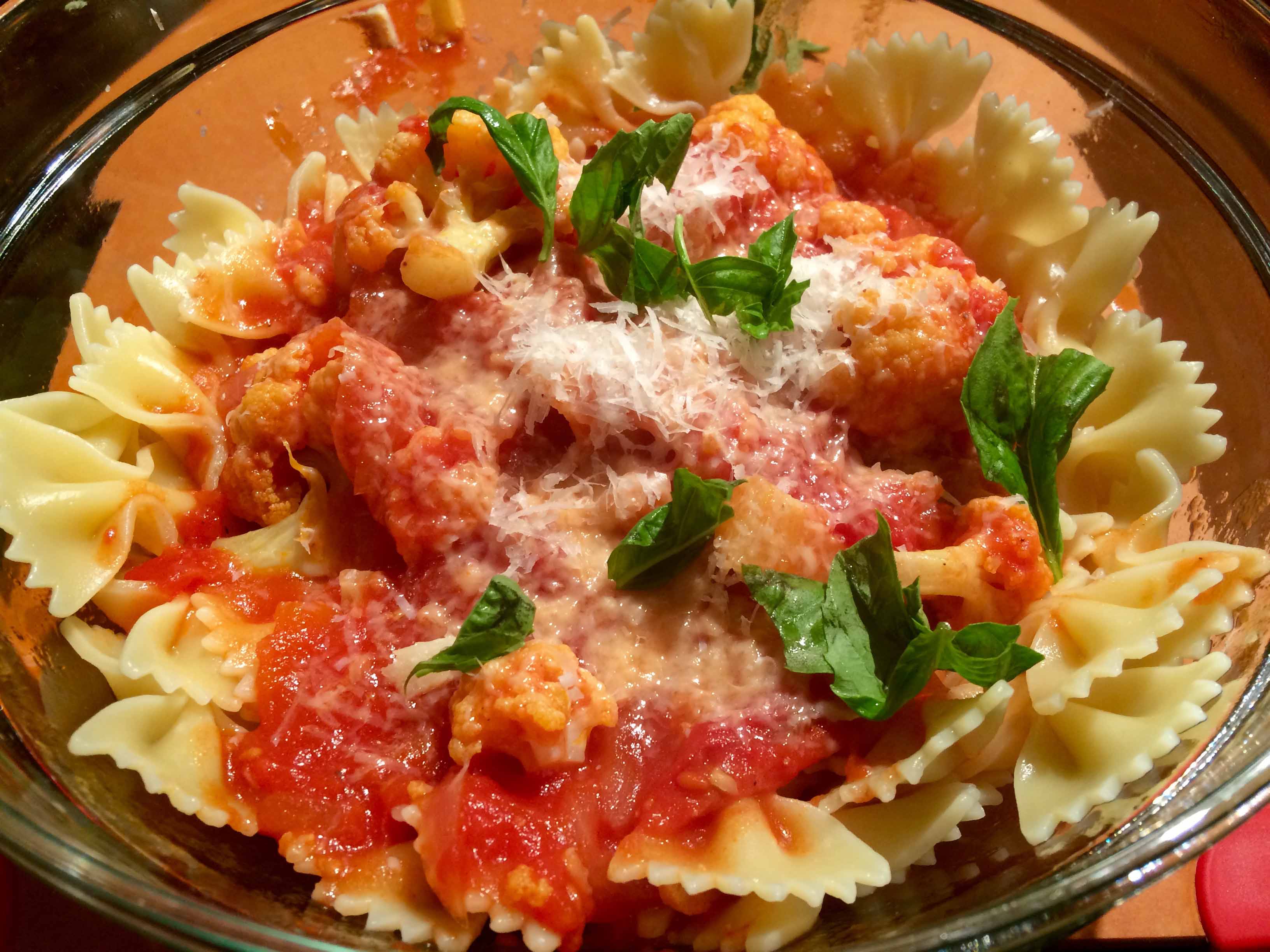
Meanwhile,cook the pasta until al dente. Then drain well and transfer to a large bowl. Add the cooked cauliflower, grated cheese, torn basil, and toss.

Cauliflower with Pasta

Wine Pairing: Nero d’Avola

Roasted Chicken Provencal

img_7110

Saw this 70s-style recipe for roasted chicken Provencal yesterday on the NY Times “Cooking” site and driven by memories of my first encounter with the classic mix of herbs had to make it. Here’s a link to the recipe.

I chose to drizzle the chicken with some olive oil before roasting and since neither the chicken nor the shallots had taken on much color, finished the dish under the broiler.

Wine Pairing: Cotes de Provence Rose

Calabrian Pork Chops with Peppers and Potatoes

IMG_7035sm

Last week, a friend sent me a recipe for Calabrian pork chops. Upon reading I thought that it was a great example of Italian-American cooking and prepared it a few days later. It was simple and straightforward, required minimal prep, and yielded some of the most delicious pork chops I’ve ever made.

When I called my friend to report on the dish, he started to laugh and said “If you had known the source, you’d never have made it.” Later that day, he arrived at our apartment with a copy of the cookbook from which he had copied the recipe: Fabulicious!: Teresa’s Italian Family Cookbook. The author, Teresa Giudice, plays a leading role in Bravo’s Real Housewives of New Jersey and is known for flipping tables in restaurants, lavish spending, and yes, going to Federal prison for declaring fraudulent bankruptcy.
I doubt that I would have ever purchased this book even though I admit that the the Bravo reality show is one of my guilty pleasures. Having paged through the book, however, I think its a good collection of authentic Italian-American recipes, some of which may find their way into future posts on this blog.

When I prepared this dish, I opted to used jarred vinegar hot and sweet cherry peppers that I had in my cupboard and that author suggested as an alternative to fresh cherry peppers in her recipe. I also chose to deglaze the pan, after browning the pork, which I think enhanced the flavor.

I guess this experience confirms the adage, “You can’t judge a book by its cover.”

Calabrian Pork Chops with Peppers and Potatoes (Adapted from Fabulicious by Teresa Giudice)
4 serving(s)

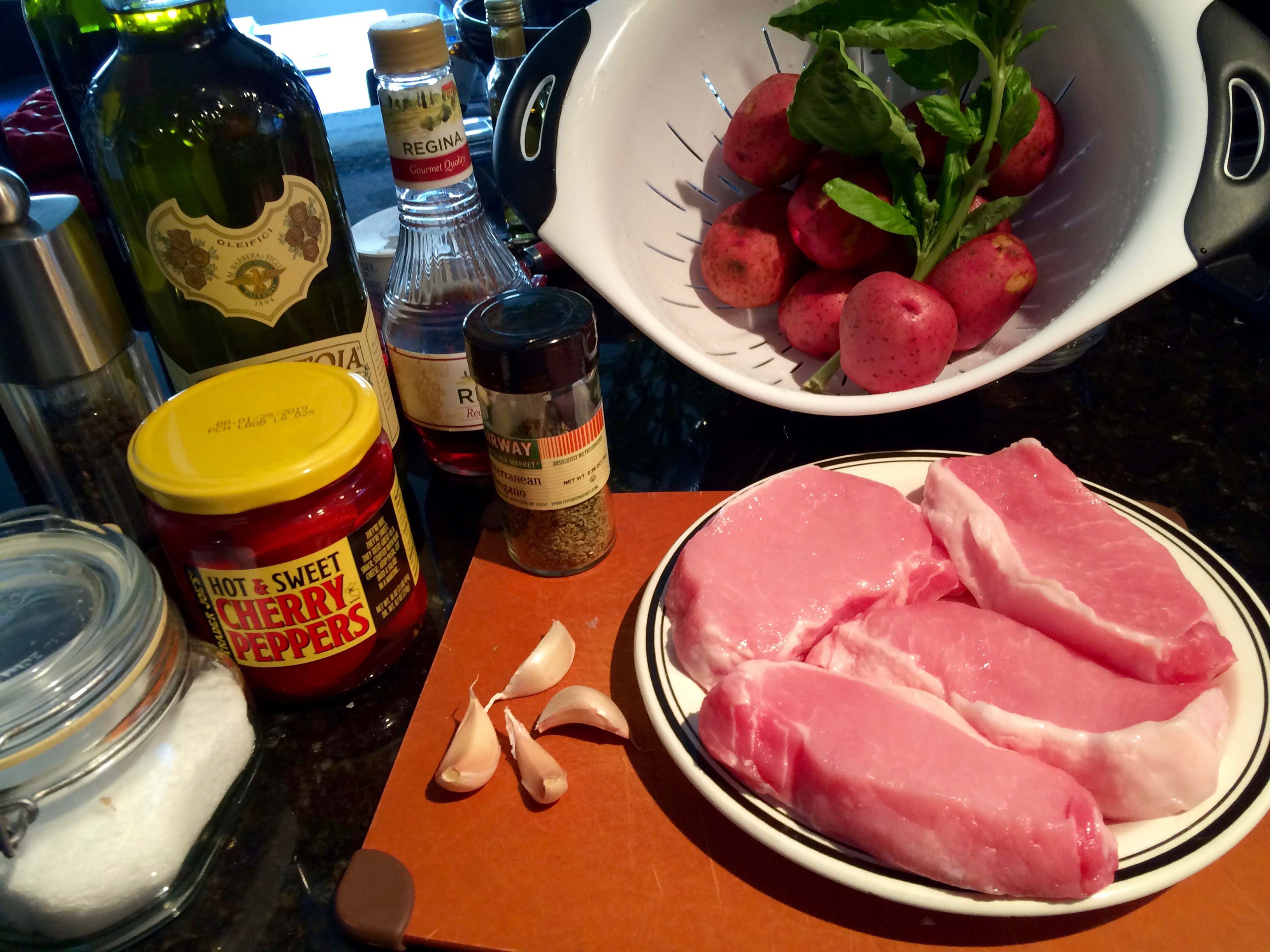
Ingredients
Ingredients

7 tablespoons extra-virgin olive oil
2 tablespoons red wine vinegar
2 teaspoons finely chopped fresh basil
1 teaspoon dried oregano
2 garlic cloves, minced
1/2 teaspoon salt
1/4 teaspoon freshly ground black pepper
4 (6-ounce) boneless pork loin chops, cut into 1-inch pieces
1/4 cup white wine for deglazing
1-1/4 pounds medium red potatoes, cut lengthwise into sixths
6 hot or sweet fresh cherry peppers, tops removed, seeded and quartered
(In a note to her recipe, Giudice writes “If you can’t find fresh cherry peppers, you can use pickled cherry peppers. . . .These won’t need cooking, so just add them to the potatoes with the browned pork.)

In a medium glass or ceramic mixing bowl, whisk 3 tablespoons of oil with the vinegar, basil, oregano, garlic, salt and pepper. Let stand for 15 minutes. Mix in the pork and let stand another 15 minutes.

The marinade
The marinade

Heat 2 tablespoons of the oil in a large skillet over high heat. Remove the pork from the marinade, letting the excess marinade drip back into the bowl.

Marinating the pork
Marinating the pork

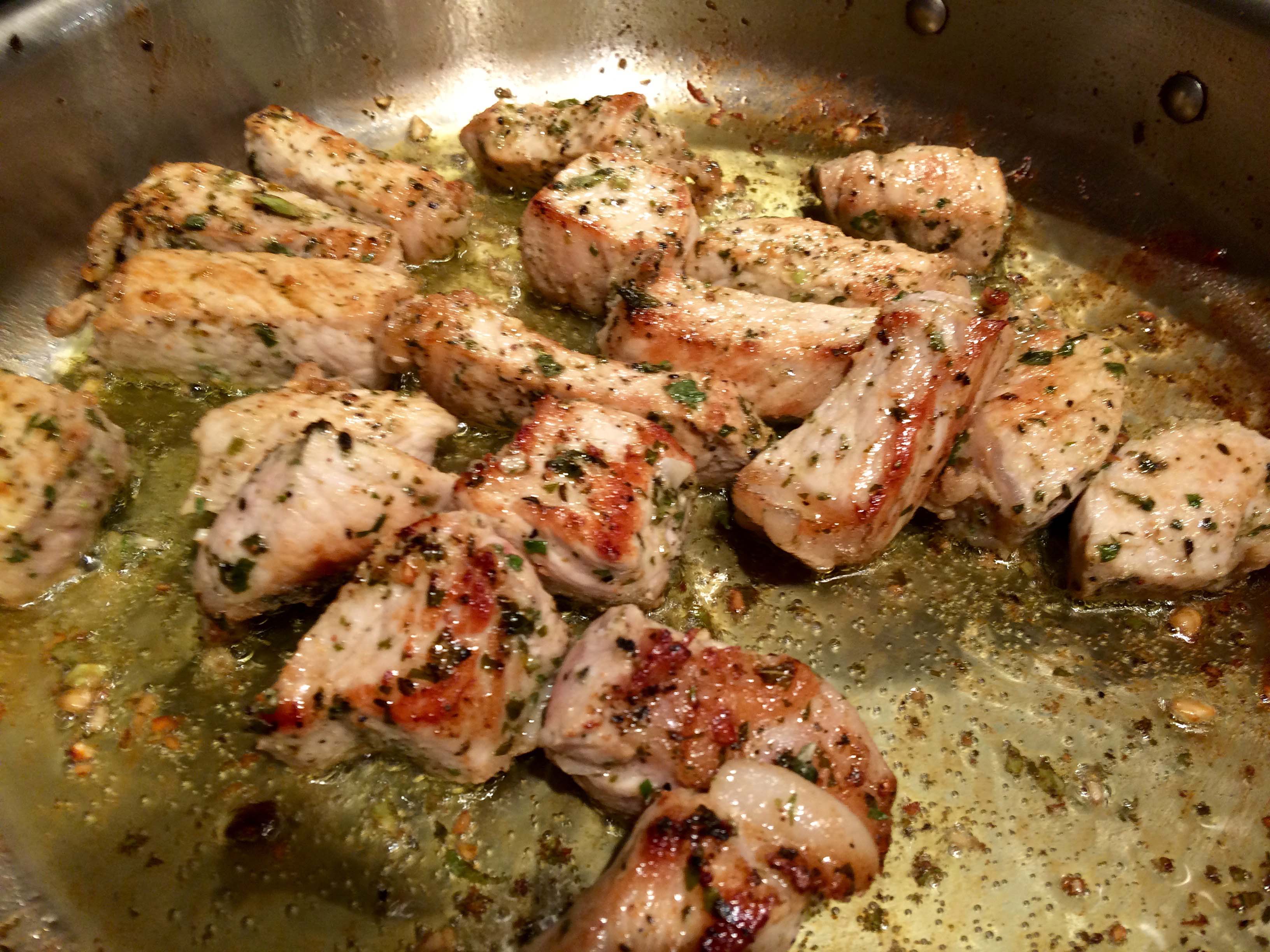
In batches, add the pork to the skillet and cook, turning occasionally, until the pork is browned, about 4 minutes. Transfer the browned pork to a plate. Leave any remaining fat in the skillet.

Browning the pork
Browning the pork

(At this point in the cooking, I chose to deglaze the pan with a 1/4 cup of white winning, scraping up the brown bits at the bottom of the pan.)

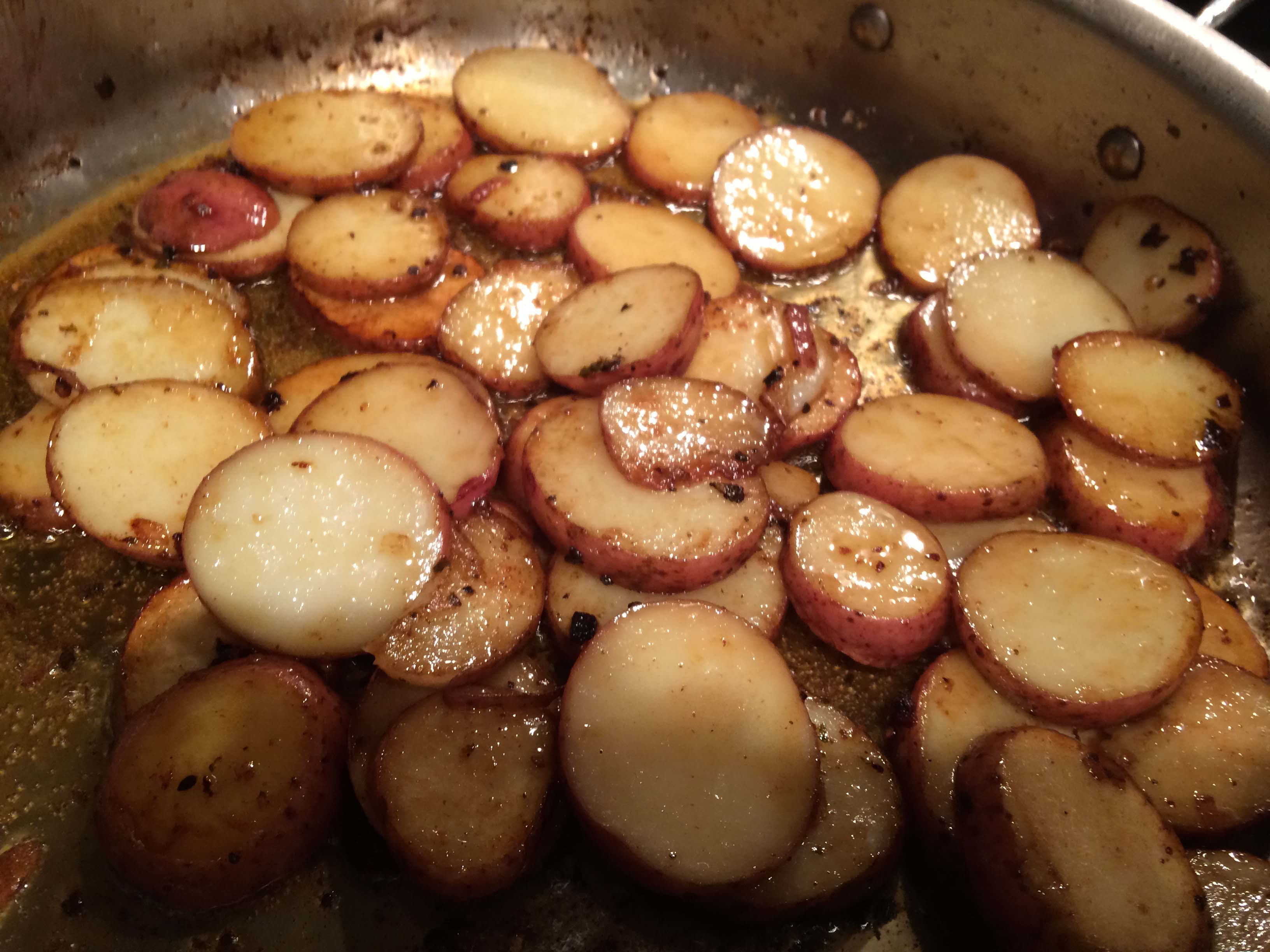
Add the remaining 2 tablespoons oil to the skillet and reduce the heat to medium. Add the potatoes and fresh peppers and stir well.

Browning the potatoes

Cook, stirring often, until the potatoes begin to soften, about 5 minutes. Add 1/2 cup water and cover. Cook, stirring occasionally, until the water evaporates and the potatoes are almost tender and lightly browned, about 15 minutes.

Return the pork to the skillet; cover and cook until the potatoes are tender, about 5 minutes more. Season with salt and pepper to taste. Serve hot.

The finished dish
The finished dish

Wine Pairing: Primitivo

Leftover Roast Lamb with Tomatoes, Scallions, and Parsley

IMG_6955sm

Last week, we acquired a new (“used” would be more accurate) kitchen appliance, a vintage Farberware open-hearth grill and rotisserie. Actually it is a replacement for the one I had in storage, which hurricane Sandy “washed” away a while back. I came across this one on e-bay while I was searching for something totally unrelated to cooking, which made me feel that fate brought us together.

The fact that this rotisserie cooks a hefty roast or whole chicken without any smoke and a minimum amount of heat and is easy to clean and store makes it perfect for a NYC-apartment kitchen, where smoke alarms are overly sensitive and space is at a premium.

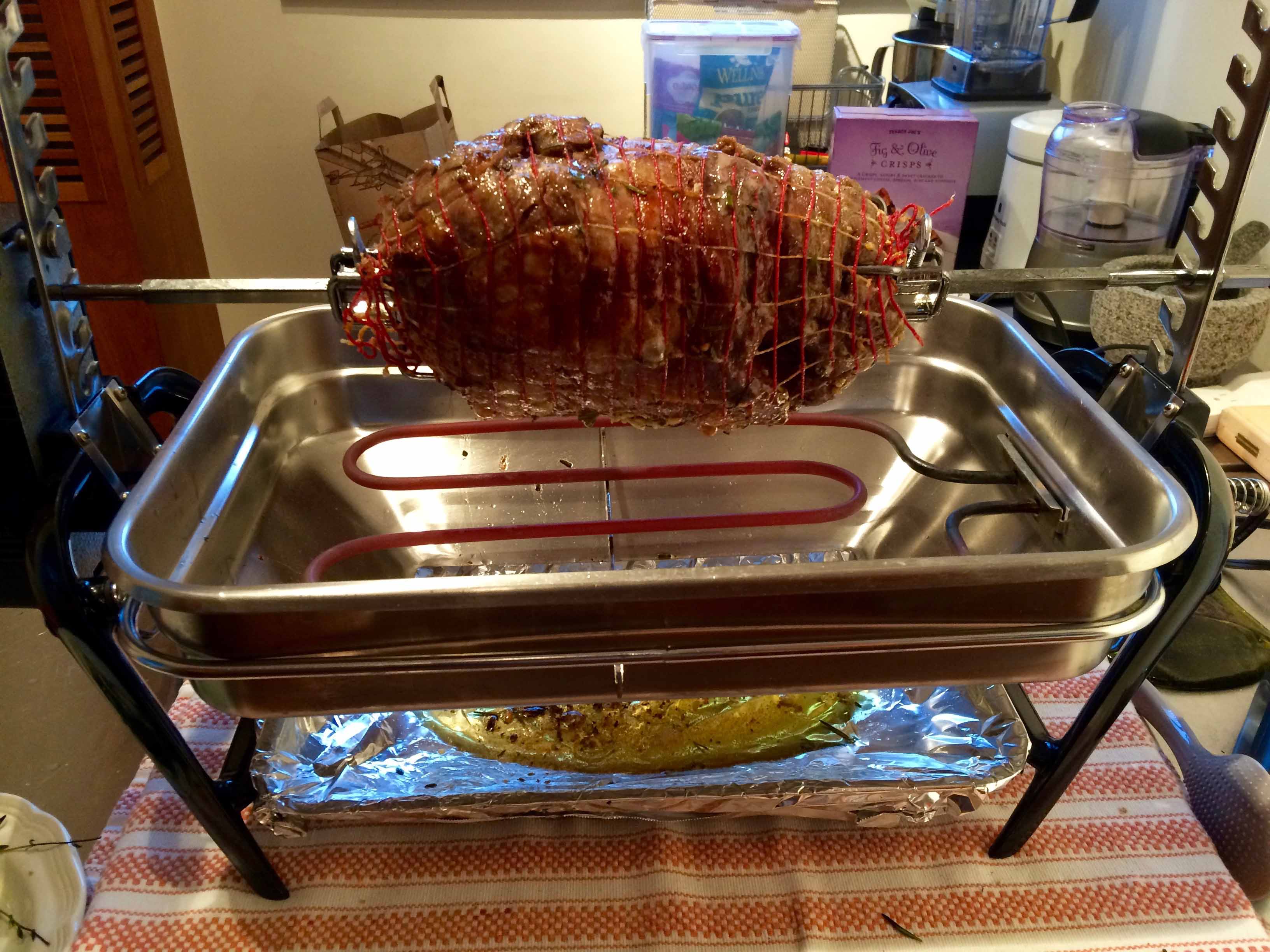
The first food I cooked on this one is the same that I made on my last one: a roast boneless leg of lamb. Because I wasn’t sure if this used appliance would work, we didn’t take any photos of the lamb and its preparation until its final minutes of cooking. But after a little more than an hour of steadily turning over the glowing cooking element, the roast was a thing of beauty.

Lamb on the rotisserie

The recipe I used is by Joshua Bousel on Seriouseats.com and is relatively simple. That it uses only a marinade to flavor and baste the meat, as opposed to making holes in the meat for stuffing it with herbs and garlic, keeps the leg juicer during cooking on the spit. Basting it every fifteen minutes with some reserved marinade and a brush made from fresh herbs also helps. While the original recipe is for an outdoor gas grill/rotisserie, I adapted it for my indoor one.

Because we had plenty of meat left over from this 4.5-pound roast, I turned to one of my older cookbooks for a recipe. Published in 1967, a time when America seemed to rediscover serious cooking, Michael Field’s Culinary Classics and Improvisations is a collection of classic recipes for meats, poultry, fish, and vegetables, each of which is followed by a variety of improvisations for the leftovers from the classic dish. Many of these improvisations, like the one I chose for my leftover lamb, reflect America’s fascination at that time with international cuisine. Today, however, many may question these recipes’ authenticity or their ethnic accuracy. Yet one must remember that when Field wrote his book, a lot of the imported ingredients and spices we readily find today, not only in gourmet shops but even in supermarkets, were not widely available.

Field titled this improvisation for leftover roasted lamb, “Lamb in a Skillet with Fresh Tomatoes, Scallions, and Parsley in the Turkish Style.” I must confess that I cannot explain what is Turkish about this dish. Nonetheless, it has long been one of my favorites for repurposing a leftover roast.

In his recipe, Field calls for peeled, seeded, and cut tomatoes and provides instructions for peeling. However, while I cut and seeded the tomatoes as directed, I opted to skip the peeling.

Lamb in a Skillet with Fresh Tomatoes, Scallions, and Parsley in the Turkish Style (from Michael Field’s Culinary Classics and Improvisations)

IMG_6913sm

2 cups roast leg of lamb cut into ¾- to 1-inch pieces
1 teaspoon garlic, finely chopped
Salt
½ teaspoon freshly ground black pepper
4 tablespoons olive oil
½ cup fresh tomatoes, peeled, seeded and cut into julienne strips 1 inch by ½ inch
½ cup scallions, cut into paper-thin rounds (include some of the green stem also)
½ cup parsley (flat-leaf is possible), coarsely chopped
1 teaspoon lemon peel, grated
Lemon quarters

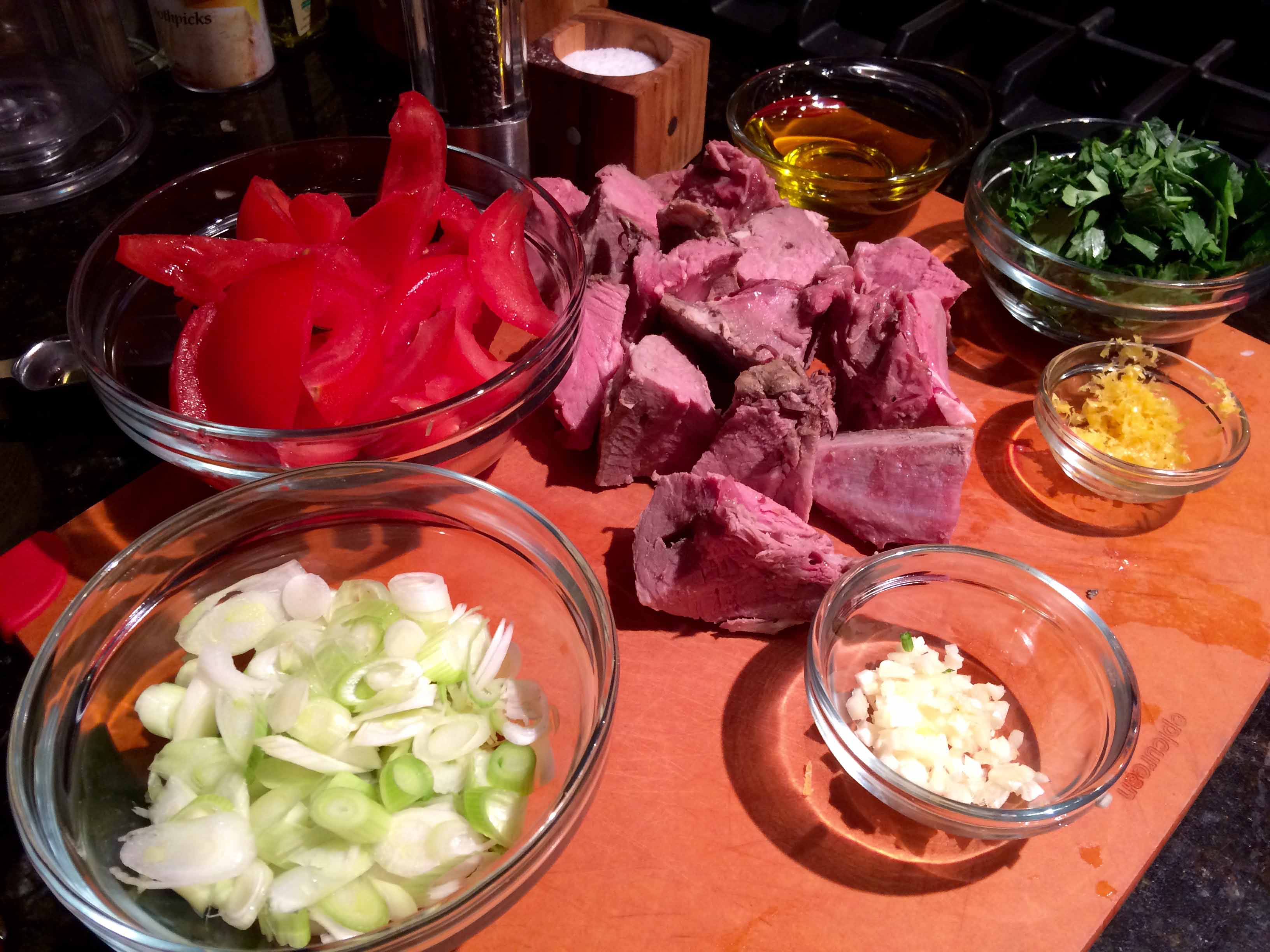
Prepped ingredients
Prepped ingredients

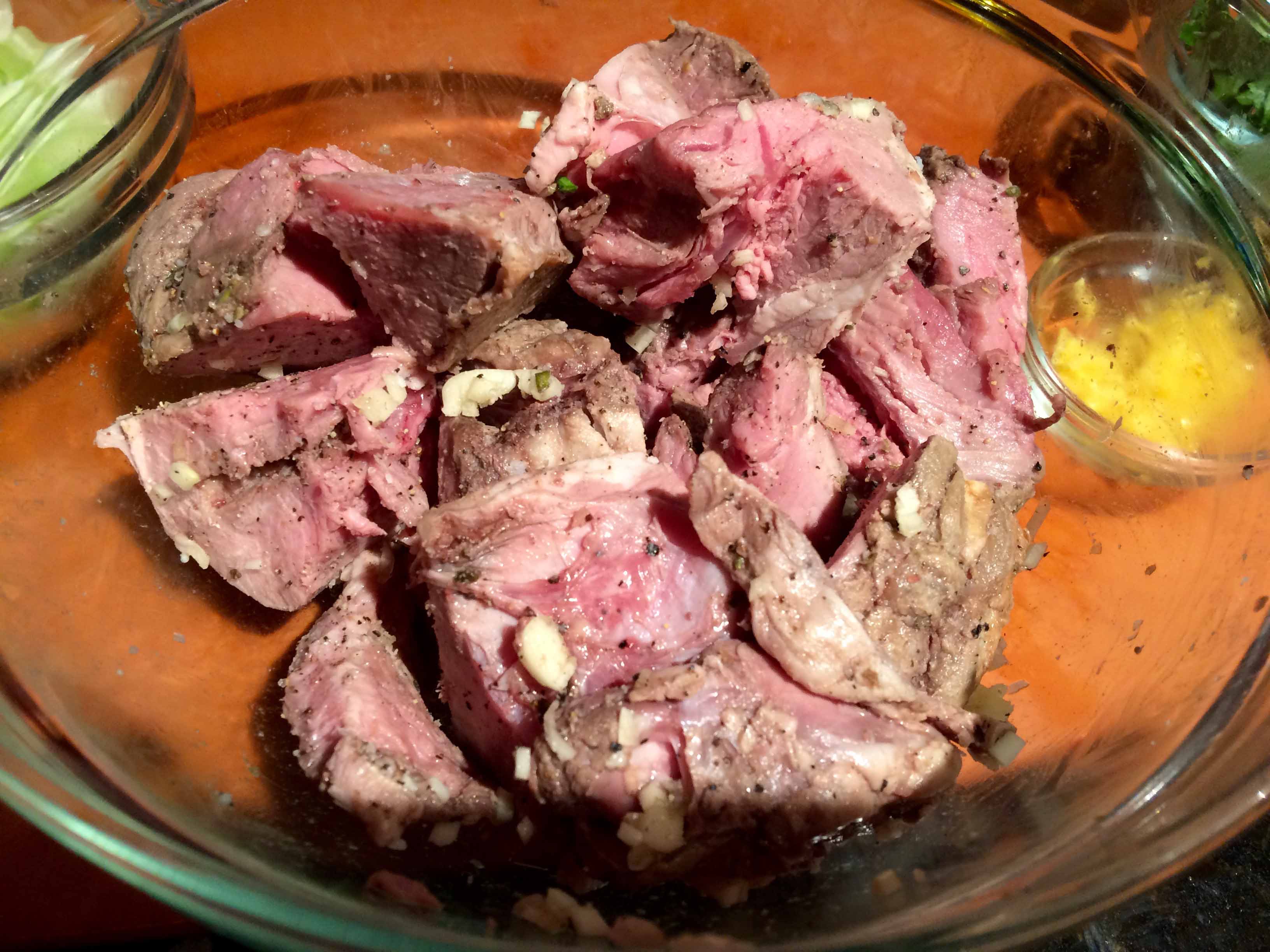
Combine in a small bowl the pieces of lamb, the chopped garlic, salt to taste, and the freshly ground pepper. Mix together thoroughly.

The seasoned lamb
The seasoned lamb

Choose a 10-inch traditional sauté pan or any deep heavy frying pan attractive enough to bring to the table.

Heat 4 tablespoons of olive oil in the pan until it almost begins to smoke. Add the seasoned lamb and, over high heat, brown the pieces quickly, turning them with a large spoon or spatula for about 8 minutes, taking care not to let them burn.

The browned lamb
The browned lamb

Toss in the tomato strips* and, stirring continuously, cook them for about 3 minutes with the lamb; they should be barely cooked through and should retain more than a hint of their original texture and freshness.

Lamb with tomatoes
Lamb with tomatoes

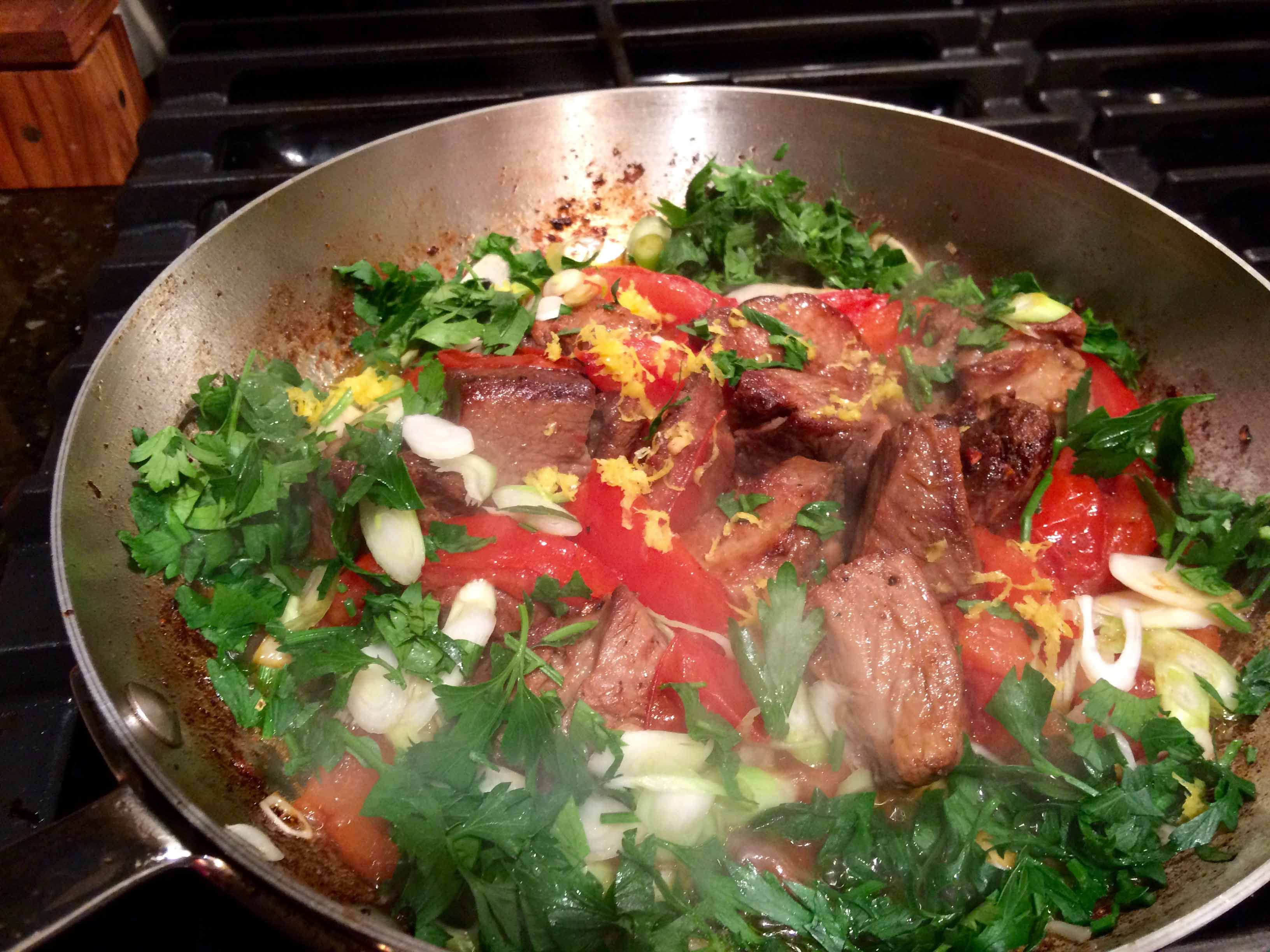
With a spatula, push the meat and tomatoes toward the center of pan and surround them with the scallions and parsley, arranged in a ring. Sprinkle meat with the lemon peel and cover the pan tightly.

After adding the parsley, scallions, and lemon zest

Turn off the heat and let the residual heat in the pan warm the herbs through. Serve directly from the pan after about 5 minutes.

The finished dish
The finished dish

Lemon quarters are the perfect accompaniment to the lamb and French or Italian bread should be served to sop up the tomato and herb-flavored olive oil.

*Note: To prepare the tomatoes, drop them into boiling water for about ten minutes. Peel them at once and cut them into quarters. Run a small sharp knife under the pulp of each quarter and cut it away, leaving the thin outer shell of the tomato. Cut the shells into julienne strips and use the tomato pulp for other purposes.

As I said earlier, I skipped the blanching and peeling of the tomatoes to preserve their texture. I also added a bit of cumin to the initial seasoning of the lamb and, as may be seen in the photos, took some liberties with measuring the ingredients. Finally, rather than serving bread, I opted for basmati rice to sop up the delicious sauce.

Field’s book is out of print, but can be found used here on Amazon: Michael Field’s Culinary Classics and Improvisations, Creative Leftovers Made From Main Course Masterpieces, 1967.

Wine Pairing: A cru Beaujolais, Pinot Noir

Cacio Pepe

IMG_6269sm

Whenever I get to Rome, one of my first stops is at a small trattoria, Orso 80, steps away from the Piazza Navona, where I always order the same dish: cacio pepe, spaghetti with pecorino cheese and black pepper. One of the city’s classic pastas, it perfectly reflects the essence of Roman cooking: a few ingredients, carefully prepared, and served unadorned.

I’ve often prepared this dish at home with a modicum of success, but I’ve never really been able to achieve the texture of the sauce that I’ve enjoyed while abroad, where the cheese smoothly melts as it’s tossed with the pasta and forms something like a creamy emulsion with the pasta water and the pepper that seems to coat the spaghetti. Recently, however, I saw a New York City chef prepare his version of the dish on morning television and was amazed to see how closely he came to achieving this texture.

Later that day, I went to the show’s website, which had a video of the chef as well as his recipe. Interestingly, the recipe was for one serving. So, when I prepared it for two, I simply doubled the ingredients. As the pasta came together with the cheese, I was ecstatic; there it was: the cheese and pepper smoothly clinging to the spaghetti. But when we sat down and tasted it, the pepper was so strong and pungent that the dish was more like caciOWWWWWW! pepe.

I’m providing a link here to the recipe and video online, but should you decide to follow it, I advise using your own taste to determine the amount of pepper of you use. 

Ingredients
Ingredients

Ingredients
10 quarts water
Salt
3 ounces linguine pasta, dried (85g)
2 teaspoons freshly ground coarse black pepper (10g or 30 turns from a pepper mill)
Olive oil
4 tablespoons Pecorino cheese, finely grated (60g)

Preparation
1. Bring 10 quarts of water to a boil and season liberally with salt. Cook the pasta for 7 minutes.

2. While the pasta is cooking, toast the black pepper in oil in a large sauté pan until fragrant.

Toasting the pepper
Toasting the pepper

3. Ladle 4 ounces (two small ladles full) of pasta water to stop the cooking.

With the pasta water

4. Keep the heat off until the pasta is done.

5. Once the pasta is cooked, drain and add to the sauté pan.

6. Turn the heat on medium high and slowly sprinkle in the Pecorino.

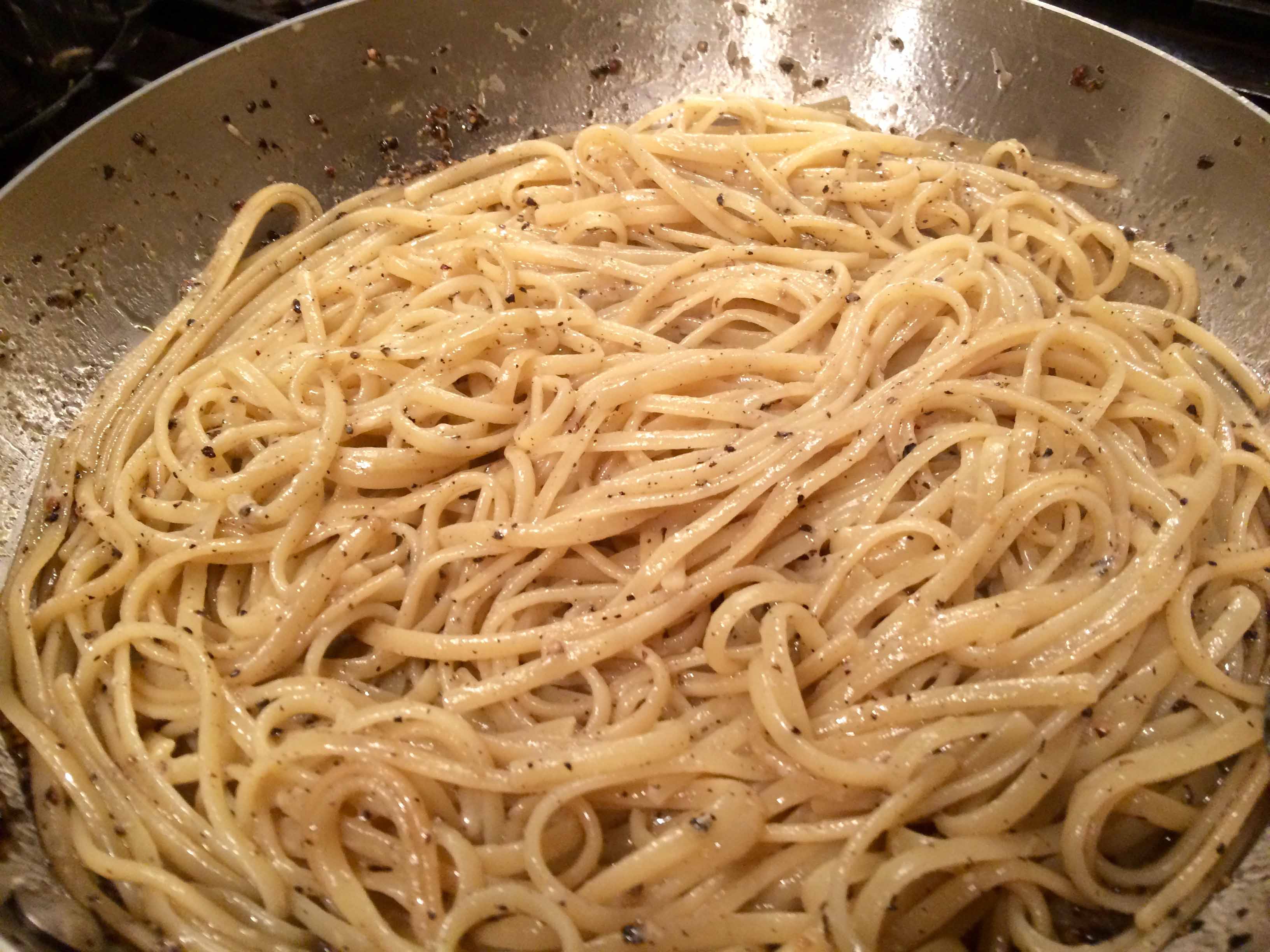
Spaghetti tossed with cheese and pepper

7. Toss the pasta while you add the cheese to emulsify. Once all the cheese is added, adjust your sauce with some more pasta water so it’s not too thick. Serve immediately, top with some freshly grated cheese and a few cracks of pepper.

Wine Pairing: Frascati, Sauvignon Blanc

Balsamic-Glazed Short Ribs

balribs6platedsm

With the change of seasons, out comes the slow cooker for meals that you can start in the morning and come home to your home infused with mouth-watering aromas that elevate your spirits on the gloomiest of grey days.

One of my favorite books for slow cooking is Michele Scicolone’s The Italian Slow Cooker, and amongst its fool-proof recipes, I continually return to her balsamic-glazed short ribs. Just a few ingredients, beef short ribs, olive oil, garlic, red wine, balsamic vinegar, and fresh rosemary, yield an extraordinary savory dish that will wow your guests and have them asking for seconds.  (I also add some grated nutmeg and a bay leaf.) Any leftover ribs, can be shredded and warmed in the remaining de-fatted sauce, and served with fettuccine or pappardelle.

For contorni, side dishes, I typically serve a simple polenta and peas.

The recipe is available online here.

I find this dish works best with thick, well trimmed bone-in short ribs that will stand up to a cooking time of eight hours on low. Each rib about 1.25 pounds.

balribs1sm
Ingredients


For maximum flavor, take the time to brown your ribs well on all sides.

Browned short ribs
Browned short ribs

If your budget allows, use a high-quality aged balsamic that is thick and rich. It will contribute to the final glaze. In the past, I’ve made this dish with additional aromatics like onions and carrots but have found that the vegetables dilute the intensity of the sauce.

balribs4sm
Ribs in slow cooker with herbs and sauce


Also take the few minutes required to reduce the wine and balsamic sauce before adding to the slow cooker.

balribs5sm
Finished ribs in slow cooker


Wine Pairing: Nebbiolo, Corvina, Valpolicella Ripasso.

Grilled Fennel Sausage and Peperonata

sausagepepperssmall

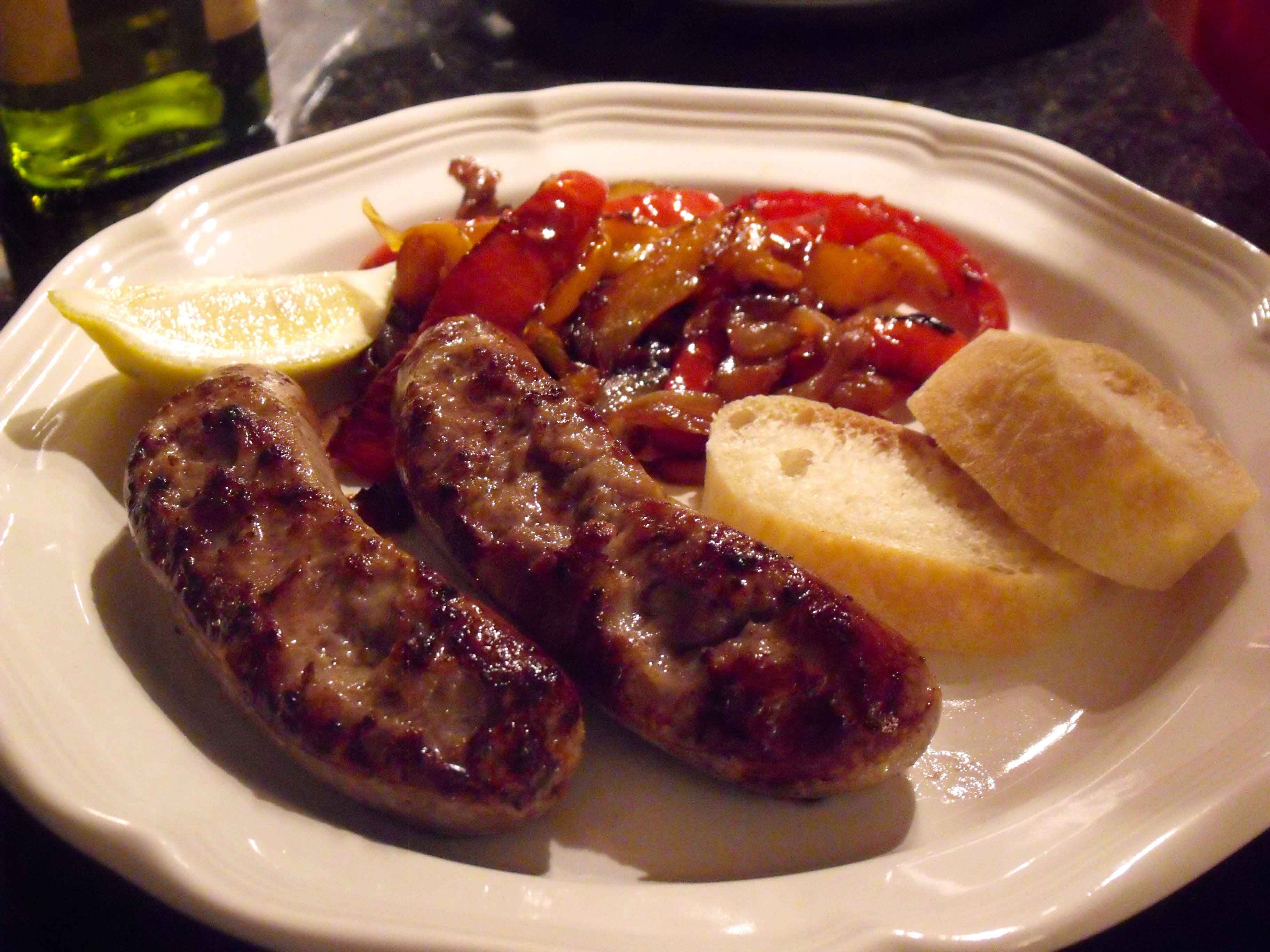
I cannot count the number of times I’ve prepared Italian fennel sausages. Last night, however, influenced by some cooking show, I opted to grill rather than fry them. Not as fortunate as the show’s chef, who used an open fire, I was limited to a stovetop grill pan. Yet despite this restraint, I’m happy to report that this grilling method yielded thoroughly cooked links that were delectably moist and juicy.

To grill the sausages, I made a shallow slit, about a 1/4-inch deep, lengthwise along one side of each sausage and spread it slightly open to expose the meat. I then placed the sausages slit-side down on a hot grill pan over medium-high heat and cooked them for 5 minutes. When they were nicely browned, I turned and cooked the sausages for about an additional 5 minutes.

I served the sausages accompanied by this classic peperonata inspired by my Neapolitan aunt.

Peperonata
3 tablespoons extra-virgin olive oil
3 bell peppers, sliced into 1/4-inch wide strips (I prefer red, yellow, and orange to green)
1 large sweet onion, sliced lengthwise
3 small cloves garlic, peeled and smashed
Kosher salt
1 tablespoon dry Marsala

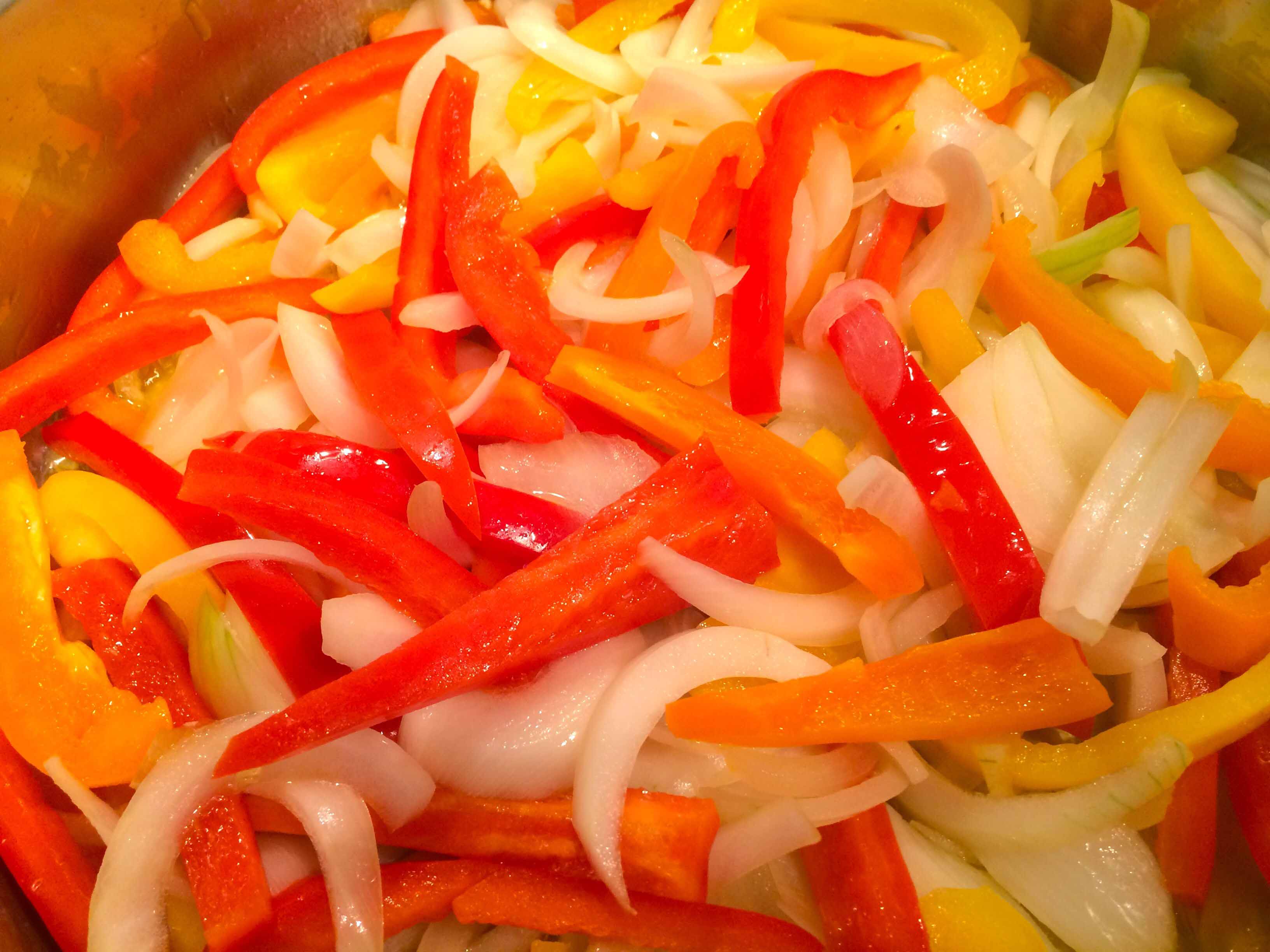
In a large sauté pan heat the olive oil until shimmering. Add the sliced peppers and cook them, tossing occasionally, over medium-high heat for about 10 minutes, or until they start to become tender and slightly charred.

Add the sliced onion and garlic, sprinkle with some salt, and cook them with the peppers, still over medium-high heat, for about another 10 minutes, again tossing occasionally, until golden brown. Add the Marsala, scraping up any browned bits on the bottom of the pan. and cook for an additional minute or so. Transfer to a serving bowl.

Pairing the peperonta with the grilled sausages makes a perfect weekday supper as we start to enter fall.

Wine Pairing: Barbera d’Alba, Syrah

Pressure Cooker Pot Roast and Potatoes

pot roast platedsmall

I know it’s summer, but despite the season, I was in the mood for beefy comfort food last night, specifically: pot roast. However, time got away from us yesterday and we got home way too late to prepare a traditional roast. I then remembered a recipe for a pressure-cooked version in Pressure Cooker Perfection from America’s Test Kitchen.

It’s a four-step recipe that yields a perfectly cooked pot roast in 30 minutes under high pressure. With releasing pressure and skimming the sauce, I had the roast on the table in a little more than an hour from start to finish.

The key to this recipe is a “secret ingredient,” something that you’ll probably never find in a gourmet store or even in the fine-foods section of a grocery. It’s not imported and it sells for under $2.00. It’s condensed French onion soup. I used Campbell’s; I don’t know of any other.

If the thought of using this ingredient turns you off, the recipe may still win you over with its use of dried porcini. It yields an aromatic, juicy roast with creamy, flavor-infused potatoes. Granted you may not want to make this roast this summer, but when fall approaches, you may want to give it a try.

Note: Before attempting this recipe, be sure you are thoroughly familiar with your pressure cooker. Read the manual to know its capacity and to understand how to lock the lid, the cooker’s high-pressure indicator, the methods of releasing (natural and quick release), and the like.

Weeknight Pot Roast and Potatoes Adapted from Pressure Cooker Perfection by America’s Test Kitchen

Ingredients
1 ounce dried porcini mushrooms (the original recipe calls for 1/2 ounce)
1 can (10.5 oz) condensed French onion soup
2 tablespoons tomato paste (I recommend the double concentrate from a tube.)
1/4 teaspoon ground cumin (not in the original recipe)
2.5 – 3 pound boneless beef chuck-eye roast, trimmed and cut across the grain into 1 inch slices
2 pounds small or medium Yukon Gold potatoes, washed

1 – In a small bowl, rehydrate the mushrooms in 1/2 cup warm water for about 20 minutes; remove the mushrooms from the water, squeezing any excess water back into the bowl. Strain the soaking water through a coffee filter or strainer lined with cheesecloth to remove any grit and reserve. Mince the mushrooms.

2 – Whisk soup, tomato paste, mushrooms, and their strained soaking water in the pressure cooker pot. Lay the sliced meat over the mixture. Season with ground cumin. Place the potatoes on top of the meat. Lock the pressure-cooker lid in place and bring to high pressure over medium-high heat. As soon as pressure cooker reaches high pressure, reduce the heat to medium-low and cook for 30 minutes, adjusting heat as needed to maintain high pressure.

3 – Remove the pressure cooker from the heat and allow the pressure to release naturally for 15 minutes. Quick release any remaining pressure, then carefully remove the lid, allowing steam to escape away from you.

4 – Transfer meat and potatoes to a warmed platter. Using a large spoon, skim excess fat from the surface of the sauce. Serve the meat and potatoes with the sauce.

Wine Pairing: Cabernet Sauvignon

Pepper and Onion Frittata

frittataplatedsmall

After several heavy meals, I like to prepare something simple, light, and quick. Such was the case last night, when we came home after 7PM from a day of errands and shopping and wanted to have dinner before 8. The answer was a a frittata made from onions, peppers, eggs, Pecorino, Romano, and flat leaf parsley.

I learned to make frittatas as I was growing up from watching my aunt at the stove. Unlike a French omelette, which should take about a minute to cook, a frittata takes cooks slowly on a low flame. And rather than rolled liked it French counterpart, it’s flipped over to finish cooking.

It’s great served hot, room temperature, and yes, even cold.

3-4 Tablespoons extra virgin olive oil
1 large garlic clove, peeled
1.5 pounds bell peppers (red, yellow, orange; I don’t like the taste of green) sliced thin
1 large Vidalia onion, sliced thin
10 extra large eggs
2 Tablespoons milk
1/3 cup Pecorino Romano, grated
1/4 cup, Italian parsley, chopped
Salt and Fresh ground black pepper, to taste

Peppers and onions uncooked

In a large sauté pan heat the oil and the garlic clove until shimmering. Add the peppers and onions and sauté over medium high heat, tossing frequently until browned. Remove the garlic clove before it gets brown. Set aside.


Browned peppers and onion

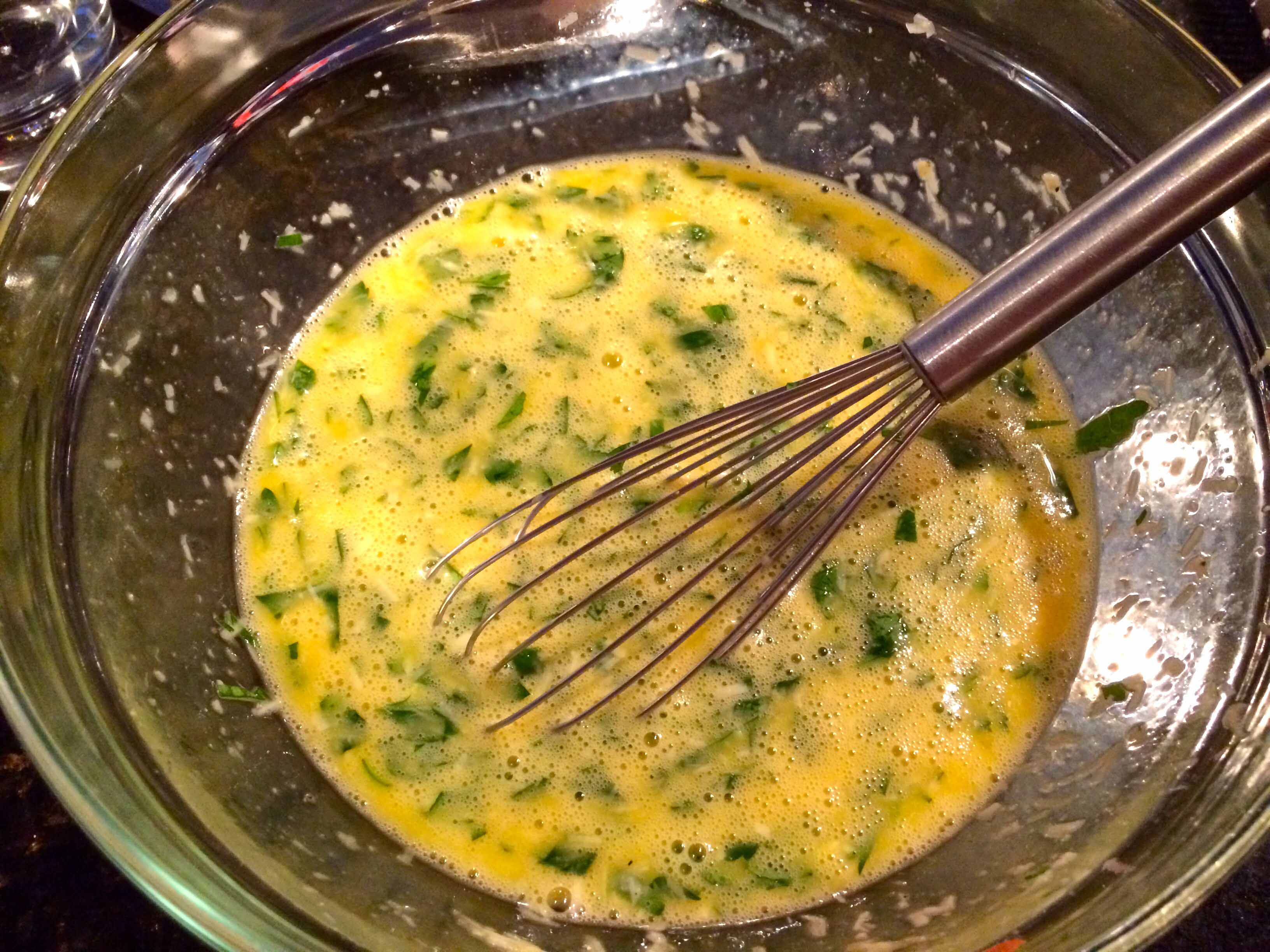
In a large bowl, beat the eggs, milk, cheese, parsley, salt and pepper, until thoroughly mixed.

Egg mixture
Egg mixture

In a 10 inch non-stick pan, transfer the peppers and onions from the sauté pan being sure to capture any remaining olive oil that’s in the pan.

Heat over a low flame and when hot, add the egg mixture. Stir the eggs and the vegetables to combine. Still over a low flame, as the eggs set around the edge, push the set portion into the center and allow the wet potion of the egg mixture to flow into the sides of the pan. Continue to do this, until most of the eggs are set.

frittata4small
Eggs setting on first side

When the eggs are almost fully set yet slightly wet on the top, remove from the heat, and then cover with a round pizza pan or plate large enough to cover the pan and flip onto the pizza pan or plate, using oven mitts.

Slide the frittata back into the pan and continue to cook, still over low flame, until lightly browned, about 2 to 3 minutes.

Finished frittata on cutting board

Slip the cooked frittata onto a cutting board, slice and serve.

Wine Pairing: Pinot Grigio, Trebbiano d’Abruzzo, Sangiovese