Beans and Sausage

sausagesplatedsmall

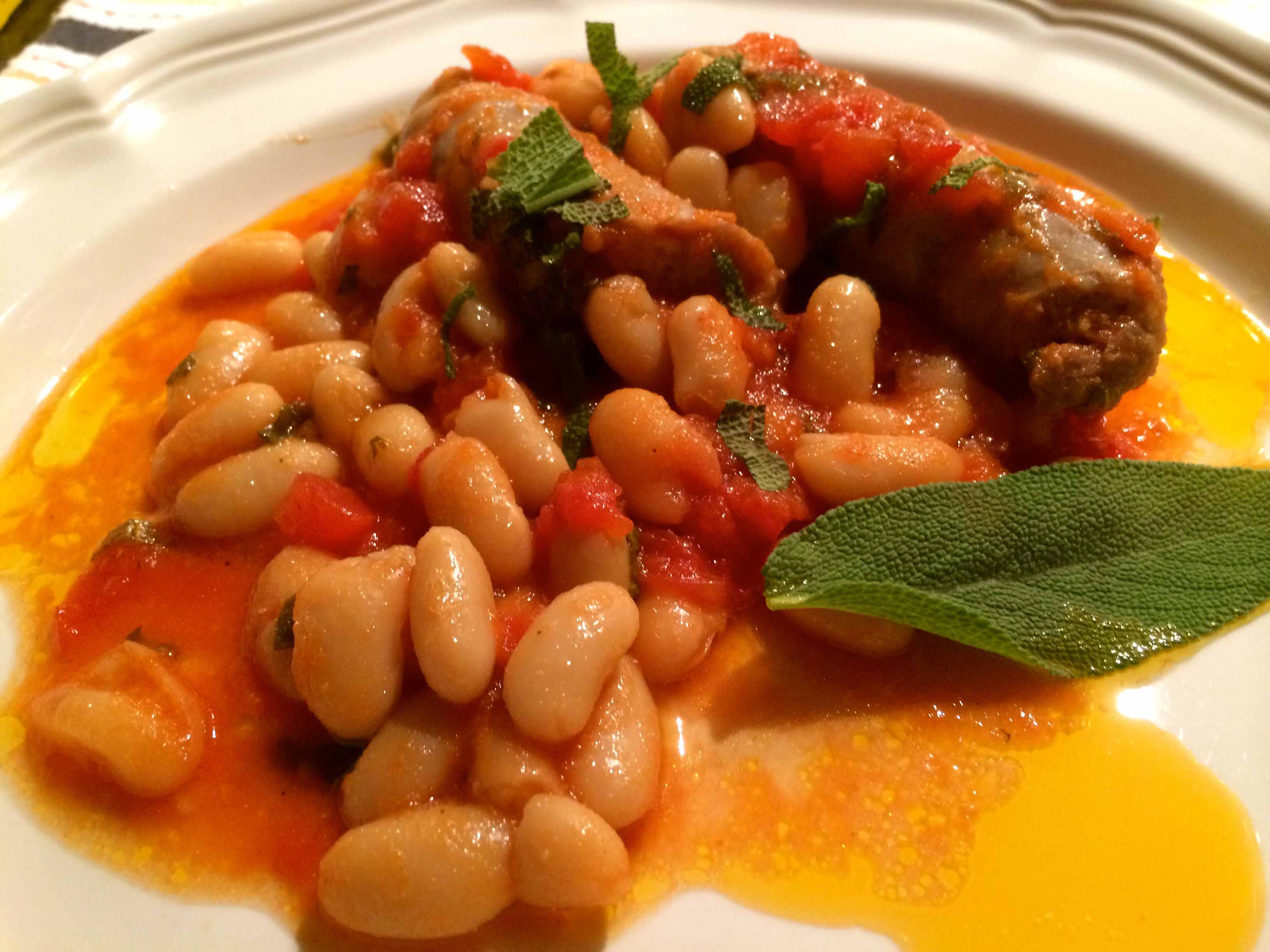
Earlier this month, I posted a Tuscan recipe from the Food Network for sausages and cannellini all’uccelletta that has always been one of our favorite weeknight dishes. However, I recently came across a variation on this recipe in Giuliano Hazan’s Every Night Italian.

The ingredients are almost identical, except for fresh sage leaves replacing fresh bay; however, in preparing this dish, Hazan skips the browning of the sausages and opts to braise them slowly along with the beans and tomatoes. (This also makes for a less messy stove top.)

This small variation makes for a big difference in taste. I found that both the sauce and the beans take on more flavor from the sausage and the sausages themselves are moister and richer in texture.

Of course, the southern Italian in me added just a pinch of Calabrian red-pepper flakes to spice things up a bit.

Beans and Sausage (Salsicce e Fagioli) adapted from Giuliano Hazan’s Every Night Italian.

2 tablespoons extra-virgin olive oil, plus more for serving
3 large garlic cloves, lightly crushed and peeled
1 tablespoon fresh sage leaves, coarsely chopped
1 can (15 oz) cannellini beans drained and rinsed
1 can (16 ounce) crushed Italian tomatoes
Salt
Freshly ground black pepper
1 pinch dried red-pepper flakes
1 pound sweet Italian pork sausages (without fennel seeds)

Put the olive oil and garlic in a heavy bottomed sauté pan large enough to hold the sausages in a single layer. Place it over medium-high heat and sauté the garlic cloves until lightly browned on all sides.

When the garlic has browned, discard it and add the chopped sage to the pan and cook stirring for about 1 minute. Add the tomatoes and beans. Season with salt and black pepper, keeping in mind that the sausages are already fairly salty. Add a pinch of dried red pepper flakes.
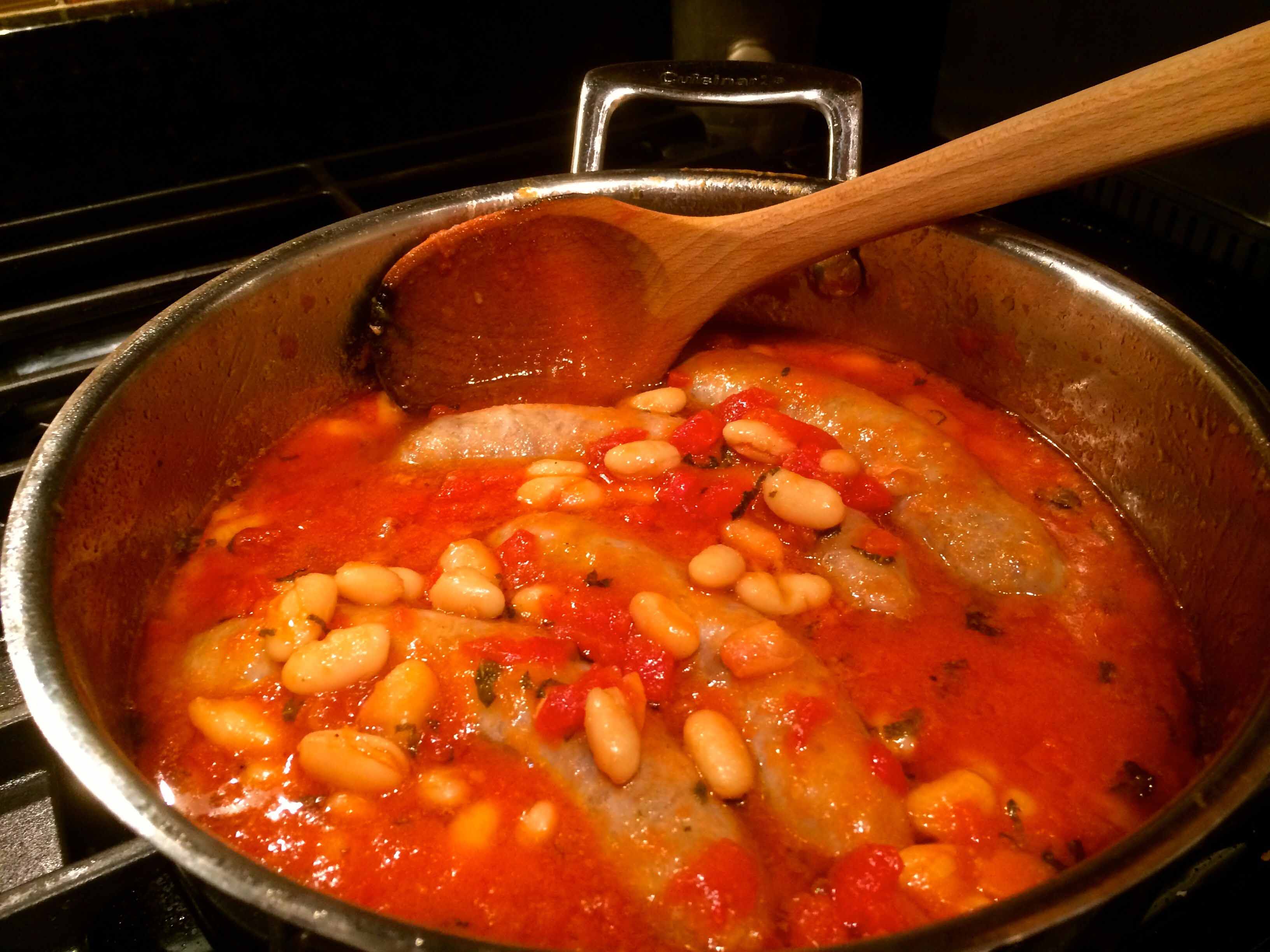
After adding the sausage to the pan

Add the sausage. When the tomatoes begin to bubble, turn the heat down to medium-low. Cover the pan and cook at a gentle simmer until the sausages feel tender when pricked with a fork, about 20 minutes. Check the pan occasionally and add a little water if all the liquid in the pan evaporates before the sausages are done. Also turn the sausages once with tongs, being careful not to pierce them.

Serve hot, drizzled with additional extra virgin olive oil and accompanied by crusty bread.

Wine Pairing: Barbera d’Asti, Rosso di Montalcino

Pork Chops Smothered in Creamy Onions

porkchopsonionsaucesmall

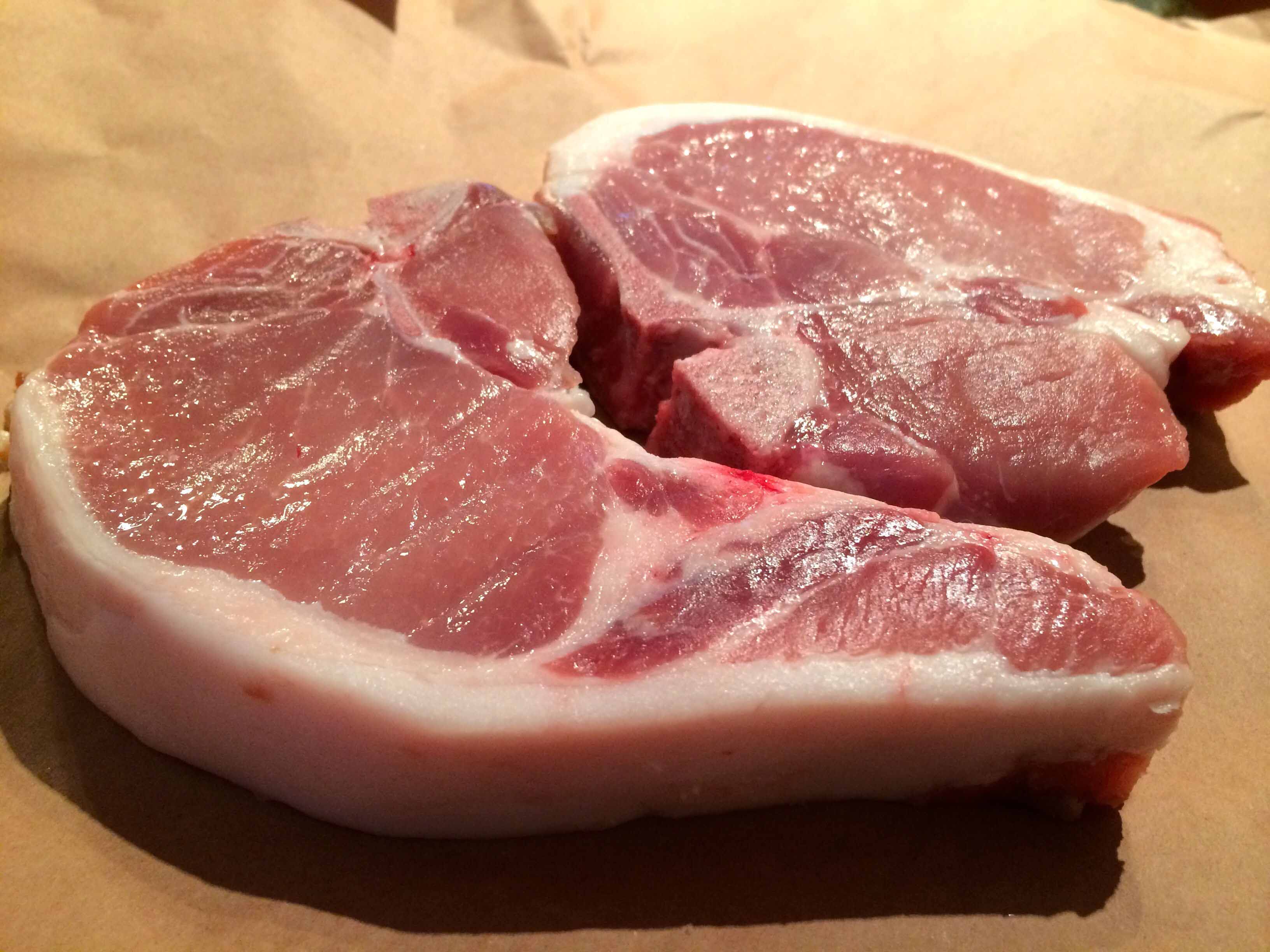
Often my choice of what we’ll have for dinner is determined by what’s in the market. Such was the case yesterday, when I went to our butcher and found some pretty good looking heritage pork chops sourced from local farms.

Locally sourced, heritage pork chops

I wanted a recipe for them that would do justice to their juicy fat and rich flavor. It didn’t take long before I settled on one from Carol Field’s In Nonna’s Kitchen. What attracted me to the recipe was its Tuscan austerity, using essentially only one ingredient other than the meat, onions. The onions are sliced very thin and are stewed for about an hour until they become a creamy sauce for the chops.

This sauce, however, reminded me of Marcella Hazan’s Smothered Onions for pasta, which is quite similar to Field’s except that at the end of the stewing, the onions are browned on high to sharpen their flavor. I thought this would work well with the chops.

One other influence on last night’s dish was James Peterson’s new book, Done.: A Cook’s Guide to Knowing When Food Is Perfectly Cooked. It had just arrived in the mail and I thought why not see what he says about pork chops. The section on sautéed pork chops illustrates with detailed photos exactly when to turn the chops (“When juices start to form on the top and sides. . .”) and suggests an internal temperature of 130° F as opposed to the typically recommended 145° F for the perfect medium. I incorporated Peterson’s instructions for cooking the chops into the original recipe from Field.

I am happy to report the results were. . .extraordinary. The pork chops came out perfectly cooked and juicy; the sauce was sweet and piquant. It may have taken three cookbooks to turn out this dish, but the prep and cooking were minimal.

Braciole di Maiale Contadine
Pork Chops Smothered in Creamy Onions Adapted from In Nonna’s Kitchen

3 onions, sliced very fine (I used two rather large Vidalia onions sliced 1/8” thick with a mandolin.)
4-5 tablespoons extra-virgin olive oil (I used 4 tablespoons of oil and 2 tablespoons of butter.)
1-2 tablespoons of water (I skipped the water as my onions were quite moist.)
Salt
Freshly ground black pepper
6 pork chops (about 2 3/4 pounds) (I used 2 bone-in chops, about 1.5 pounds total.)
All-purpose flour with salt and pepper for dredging
1/2 cup dry red wine
1 – 2 tablespoons of unsalted butter (As I used butter when cooking the onions and did not puree the onions, I did not use it here.)

Put the onions in a large heavy sauté pan with 2 tablespoons of the olive oil, a tablespoon or two of water, salt, and pepper. (I used the oil but added 1 tablespoon of unsalted butter and omitted the water.)

Cover the pan and cook the onions at the lowest simmer over the lowest possible heat for 45 minutes to one hour, stirring occasionally. At the end the onions will be smooth creamy. (I cooked the onions for a full hour and at the end uncovered them, raised the heat to medium high and cooked them until they were deep gold in color. I then added a little dry vermouth and cooked until the wine evaporated and followed this with a tablespoon of chopped parsley.)

Set the sauce aside.

Dredge the pork chops in the the seasoned flour so they won’t stick while cooking. Drizzle the remaining oil into a heavy sauté pan large enough to hold the chops comfortably without crowding, add the pork chops, and brown them, turning so they cook evenly. (I used 2 tablespoons of oil and 1 tablespoon of butter. Following Peterson’s book, I heated the fats and cooked the chops on a medium heat about 5 minutes a side; they were about 3/4 of an inch thick. I turned them only once, when juices and blood started to appear on top of the bones and the meat—about 5 minutes and cooked the second side for about another 3 minutes.)

When they have browned, 2 to 3 minutes a side (again, note my comments about browning above) pour in the red wine and boil until it evaporates. (Before adding the wine, I drained off most of the accumulated cooking fat.)


Pork chops after adding the wine.

Put the cooked onions on top of the pork chops, cover and cook together briefly on top of the stove so the flavors meld, turning the chops several times. (I cooked the chops for about 2 minutes covered and turned them only once.)

The onions cook into a really thick sauce; at the end puree them in a processor or blender, adding a little water or a tablespoon or two of butter. (I skipped this step altogether because I wanted the sauce to have a little more texture and had already used enough butter in the sauce and in the browning of the chops.)

I know that with my commentary, this recipe may appear complicated; but trust me when I say it really isn’t difficult.

I served the chops accompanied by oven-roasted broccoli.

Wine Pairing: Morellino di Scansano, Chianti Classico


Sausages and Cannellini all’Uccelletta

sausagesbeanssmall

Last year, I came across a recipe for turkey sausages and cannellini beans all’uccelletta on The Cooking Channel’s show, Extra Virgin. It’s a classic Tuscan dish, where the beans are cooked in a similar fashion as one would small birds, that is, seasoned with sage or, as in this case, with fresh bay leaves.

We enjoyed this dish a lot; but after experimenting with it, I developed my own recipe, using sweet Italian pork sausages and canned crushed Italian tomatoes rather than fresh cherry tomatoes.

Enjoy this dish all year round, served with crusty Italian bread to sop up the sauce.

INGREDIENTS
2 tablespoons olive oil
8  sweet Italian pork sausages
5 cloves garlic, peeled and sliced into chunks
1 28-ounce can crushed Italian tomatoes
Pinch of crushed red pepper flakes
Salt and freshly ground black pepper
2 (15-ounce) cans cannellini beans, drained and rinsed
5 fresh bay leaves
small pinch fennel pollen (optional)
2 handfuls fresh flat-leaf parsley, leaves picked and chopped
Extra virgin olive oil

DIRECTIONS
Heat a sauté pan large enough to hold the sausages in a single layer over medium-high heat. Add the olive oil to heat. Once hot, add the sausages and brown on all sides, for about 10 minutes total. Remove the sausages from the pan to plate and reserve.

Add the garlic, and sauté just until golden. With a wooden spoon, stir in the chopped tomatoes and crushed red pepper flakes and season with salt and pepper. (When seasoning, be aware that the sausages may already contain salt.) Lower the flame, and cover the pan with a lid, simmer for about 10 minutes, until the tomatoes have thickened to a sauce-like consistency.

Add the browned sausages (and any juice left on the plate), the beans, bay leaves, and optional fennel pollen to the thickened tomatoes. Stir well and simmer uncovered for another 10 minutes.

Drizzle lightly with olive oil and sprinkle with the chopped parsley before serving.

For those interested in the original Cooking Channel recipe, here’s a to that recipe.

Wine Pairing: Chianti Classico, Sangiovese, Merlot

Barbecued Baby Back Ribs

ribsplatedsmall

For us, Friday often means “Margarita Madness.” Consequently, frozen margaritas dictate the menu, which often means something other than Italian and, more than likely, something along the lines of grilled meat, Tex-Mex or, as we enjoyed last night, barbecue.

I wanted pork ribs with meat falling off the bones, which meant either slow-cooking or pressure-cooking. Given my schedule, I opted for the latter. One of my go-to books for pressure cooking is Pressure Cooker Perfectionfrom America’s Test Kitchen, which is where I found a great recipe for Barbecued Baby Back Ribs.
When I went to the butcher, he was actually butchering a pig. He said he could only provide me with a small rack of baby backs so I opted for standard pork spare ribs to have enough for our party.

ribsrawsmall
Local sourced pork ribs

One gripe I have with the book I used is their highlighting the pressure cooking time in the recipe, which was 30 minutes. It leads one to believe that it’s a 30-minute recipe, when in fact it’s more like a 60 minute one. Lesson learned, at least for now: READ THE ENTIRE RECIPE BEFORE STARTING TO COOK!

When I cook, I like to have all the prep completed. I’ve therefore modified the book recipe to follow my style of cooking.

This recipe yielded some of the most mouth-watering ribs I’ve ever had, with a sauce that was the perfect balance of sweet, spicy, and savory. Neither the generous dry nor and the ketchup-molasses sauce overpowered the succulence of these local sourced ribs.

Unbuttered corn on the cob was the side.

Barbecued Baby Back Ribs Adapted from Pressure Cooker Perfection

Ingredients
3 tablespoons paprika
2 tablespoons packed brown sugar
2 teaspoons chili powder
Salt and pepper
1/4 teaspoon cayenne pepper
2 (1 1/2-to 2-pound) racks baby back ribs, cut into 2-rib sections
1 tablespoon vegetable oil
1 onion, chopped fine
2 garlic cloves, minced
1 cup ketchup
1/2 cup water
1/4 cup molasses
2 tablespoons cider vinegar
2 tablespoons Dijon mustard

1. Prepare Dry Rub: Combine paprika, sugar, chili powder, 1 teaspoon salt, 2 teaspoons pepper, and cayenne, then rub mixture evenly over ribs.

2. Prepare Sauce: Combine ketchup, water, molasses, vinegar, and mustard. Measure out and reserve 1 cup sauce.

3. Heat oil in pressure-cooker pot over medium heat until shimmering. Add onion and cook until softened, about 5 minutes. Stir in garlic and cook until fragrant, about 30 seconds. Add the sauce, except for the reserved cup, and stir.

4. Arrange ribs upright in pot with meaty sides facing outward, then pour reserved sauce over ribs.

5. Lock pressure-cooker lid in place and bring to high pressure over medium-high heat. As soon as pot reaches high pressure, reduce heat to medium-low and cook for 30 minutes, adjusting heat as needed to maintain high pressure.

6. Remove pot from heat and allow pressure to release naturally for 15 minutes. Quick release any remaining pressure, then carefully remove lid, allowing steam to escape away from you.

ribscookedsmall
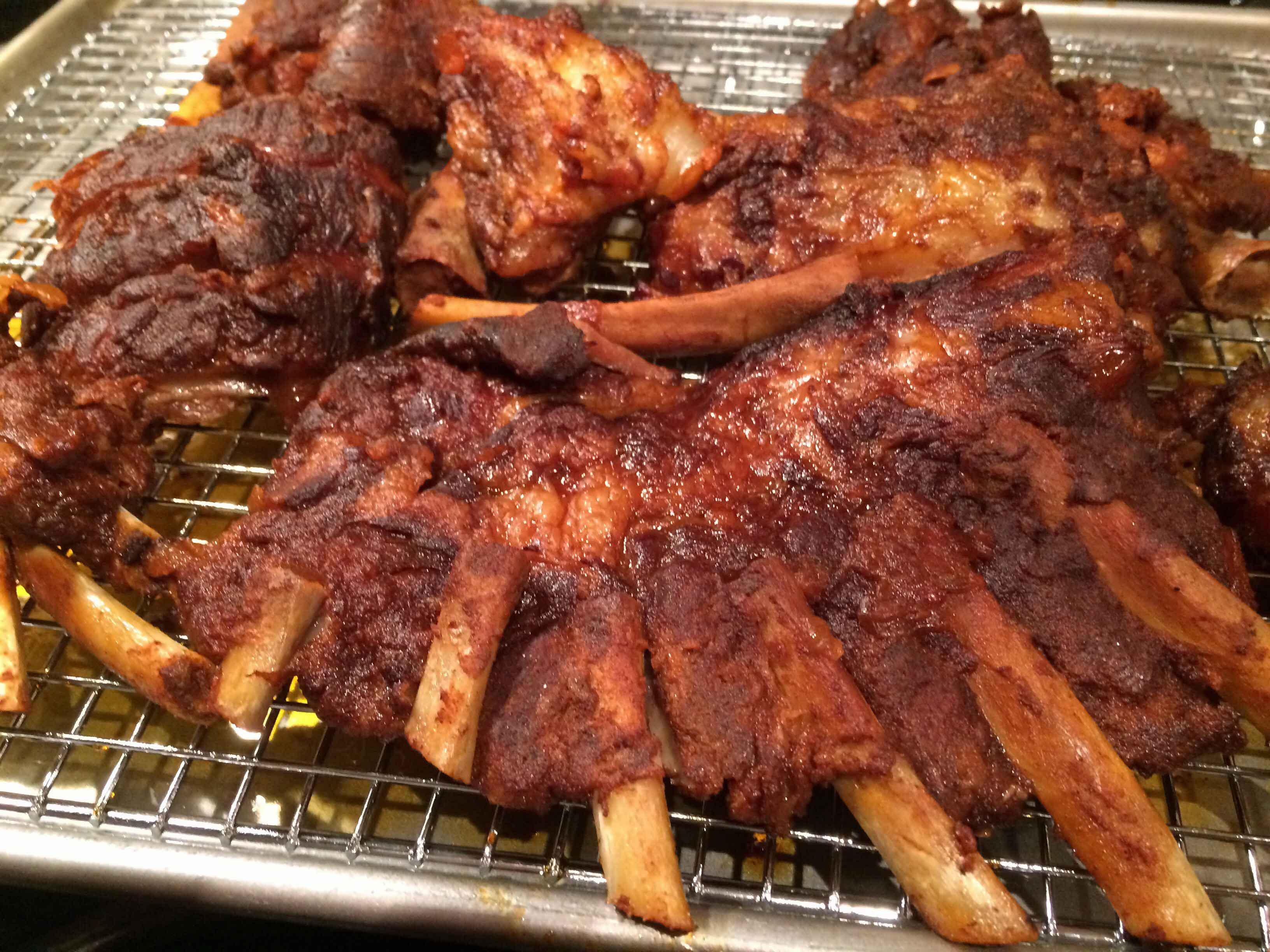
Ribs right after cooking

7. Adjust over rack 6 inches from broiler element and heat broiler. Place wire rack inside aluminum foil-lined rimmed backing sheet and spray with vegetable oil spray. Transfer ribs, meaty side up, to prepared baking sheet. Using large spoon, skim excess fat from surface of sauce. Bring sauce to simmer and cook until thickened and measures 2 cups, about 10 minutes. Brush ribs with some of the sauce, then broil until browned and sticky, 10 to 15 minutes, flipping and brushing with additional sauce every few minutes. Serve ribs with remaining sauce.

ribsglazedsmall
Ribs sauced before going under the broiler

Pork Rib Ragu

pork ragusmall

One of the dividends from slow cooking is definitely the leftovers. Even if you’re simply reheating them, they can often be even better than the first time you served them.

Yesterday, I pulled from the fridge some slow-cooked pork ribs in smoked Spanish paprika sauce that we had on Sunday. On their own, there wasn’t enough left for two portions, so I decided to turn them into a ragu for pasta. (See my May 26th post for more about the ribs.)

For almost any rich, meaty sauce, my favorite variety of pasta is pappardelle. The name for these broad, flat noodles comes from the Italian verb “pappare,” which means “to gobble up.” Their heft and shape make them the perfect carrier for a thick ragu.

pork ragu3small

After skimming the congealed fat from the ribs, I removed the meat from the bones and shredded it, discarding any thick pieces of fat. I placed the meat and the sauce into a heavy-bottomed sauce pan with a little water and heated it over a low flame, with occasional stirring, for about 30 minutes. After 10 minutes, I also added some milk to the sauce for a creamier texture.

I then transferred the sauce to a skillet wide enough to accommodate the pasta and placed it over a low flame

I cooked the fresh pappardelle for 2 minutes in heavily salted water. Just before they reached the al dente stage, I transferred the pasta from the pot to the skillet with a spider-style strainer and tossed the noodles with the sauce for about 30 seconds to coat and finish cooking.

pork ragu2small

Off the heat, I added a handful of grated Romano and some parsley.

Wine Pairing: Sangiovese, Merlot, Cabernet Franc

Pork Ribs with Smoked Paprika Sauce

ribssmall

For our Memorial Day get together, I was faced with having to make a main course to follow hot-dog appetizers. Somehow ribs came to mind; however, I didn’t think my Italian version of them braised in tomato sauce was a good option. I wanted something closer to barbecue, but I really don’t like most barbecue sauces.

Great Local Grown Ribs

Looking through my cookbooks, I found the answer in The Mediterranean Slow Cookerby Michele Scicolone: Pork Ribs with Smoked Paprika Sauce. In my opinion, these smokey, saucy ribs, cooked slowly on low for 6 to 8 hours in a sauce with sherry vinegar, onions, garlic and a generous touch of Spanish smoked paprika can stand up to any southern counterpart. (I would not attempt to substitute Hungarian paprika for the Spanish variety called for by the recipe.)

Rather than serving the ribs with the suggested chickpeas, I opted for that all American favorite, corn on the cob to keep with the holiday spirit.

Wine Pairing: Dry Lambrusco, Rijoa, Zinfandel