Grilled Steaks, Corn on the Cob, and Tomato Salad

sunsteak1small

Gone are the days when I could eat steaks like this 3 or 4 times a week. Now, more health conscious, it’s more like a once-a-month indulgence. Rather than our small electric grill, I prefer to use a two-burner grill pan to prepare steaks like this one.

I leave the steaks out of the fridge for about an hour to let them come to room temperature. I dry them with paper towels, and season one side liberally with Kosher salt and freshly ground black pepper and drizzle lightly with olive oil. I place the steaks seasoned-side down on a preheated hot grill pan pressing down to ensure full contact with the grill. I then season the second side as I did the first.

I cook on high for one minute and then on medium for about 5 minutes more for steaks that are an 1.25 inches thick. I then flip and cook on high for one minute and on medium, again for about 5 minutes.

After each one minute sear on high, I move the steaks to the center of the grill so that they’re not directly over the flame.

After cooking, I allow the steaks to rest for several minutes before serving.

For our salad, I prepared a fresh tomato salad that I used to enjoy as a child. For the tomatoes, I used some beautiful mini San Marzano tomatoes grown in Texas by Village Farms that I just discovered at our local Whole Foods. They’re perfectly textured and delightfully sweet.

sunsteak2small

I slice the tomatoes in half and season with Kosher salt. I then add one large garlic clove thinly sliced, a pinch of dried oregano, and about 6 basil leaves torn. I drizzle the salad with extra virgin olive oil and add a small ice cube. I then cover the salad with plastic wrap and place in the fridge for at least an hour before serving. The ice cube is a carry over from my aunt, who used it to extend the dressing.

Wine Pairing: Valpolicella Ripasso

Veal Stew with Tomatoes and Peas – Adapted for “Detoxing”

vealandpeastewsmall

“Culinarily challenged” is how I felt this weekend, when a close friend coming to spend the 4th with us announced just before arrival that she was “food detoxing.” She explained that, during this period, she could not eat anything that had wheat, flour, sugar, any grain, most dairy products, including milk, cream, cheese, etc. The list seemed endless.

A roast chicken with sautéd spinach made up our first dinner. Breakfast the next day allowed for scrambled eggs with smoked salmon. When I asked her what she would enjoy for dinner, she said “something stewed.” Given what seemed like an endless list of prohibited foods, I thought of recipes with minimal ingredients, which led me to Marcella Hazan’s “Veal Stew with Tomatoes and Peas” from her Essentials of Classic Italian Cooking. Veal, onions, peas, and tomatoes are the main players. The recipe also calls for some flour and butter in supporting roles, but I could easily work around those prohibited ingredients.

I’ve always enjoyed this stew, which calls for a much longer cooking of peas, fresh or frozen, than has become fashionable these days. But that lengthy time, at least an hour, extracts a lot of flavor from them, which integrates perfectly with the mild taste of the veal.

To make the dish my own, I also add some rehydrated dried porcini and some of their liquid when I add the peas. In addition, right before serving, I stir in a gremolata, made from minced garlic, lemon zest, and parsley, a condiment often used to garnish and enhance osso bucco.

Veal Stew with Tomatoes and Peas Adapted from Essentials of Italian Cooking

Ingredients
2 tablespoons olive oil
2 pounds of boned veal shoulder, cut into 1.5 inch cubes
3 tablespoons chopped red onion
Salt
Fresh ground black pepper
1 28-ounce can of Italian crushed tomatoes
12 ounces frozen green peas, thawed
1 ounce dried porcini, rehydrated in warm water. When the mushrooms have rehydrated, in about 20 minutes, strain the water through a fine sieve lined with cheesecloth or through a coffee filter, reserving a few tablespoons of the filtered water to add to the stew. Chop the mushrooms roughly.

For the gremolata
Zest of 1 lemon
2 tablespoons parsley, chopped fine
1 small garlic clove, minced
Simply mix all of the above in a small bowl and cover with plastic wrap.

1. Put the olive oil in a non-reactive, heavy-bottomed Dutch oven, preferably enameled cast iron, and heat the oil on high. When the oil is hot, place as much of the meat that will fit loosely in a single layer, and brown on all sides, turning until all sides are well browned. Transfer the meat to a plate and season with salt and pepper. You may have to repeat this step to finish cooking all the meat.

2. Turn the heat down to medium and add the chopped onions. Cook, scraping up any browned pieces of veal, until the onions become a pale gold. At this point, return the meat and any remaining juices to the pot. Add the chopped tomatoes and their juice. Bring to a bubble and then lower the heat to allow for a slow simmer. Cover the pot and cook, stirring occasionally, for about 1 hour.

3. After the hour, add the peas, the chopped mushrooms, and 2 tablespoons of the filtered soaking water. Cover again and continue to cook, stirring occasionally, for an additional 1 hour or 1.5 hours, until the veal is very fork tender. Before serving, taste and adjust for seasoning. Remove the pot from the heat and stir in the gremolata.

Typically, I serve this dish with polenta or crusty Italian bread. However, given our guest’s restrictive diet, I opted for mashed potatoes, using organic chicken broth and extra-virgin olive oil for moisture.

Wine Pairing: Dolcetto, Sauvignon Blanc

Shepherd’s Pie. . .Well, Sort of

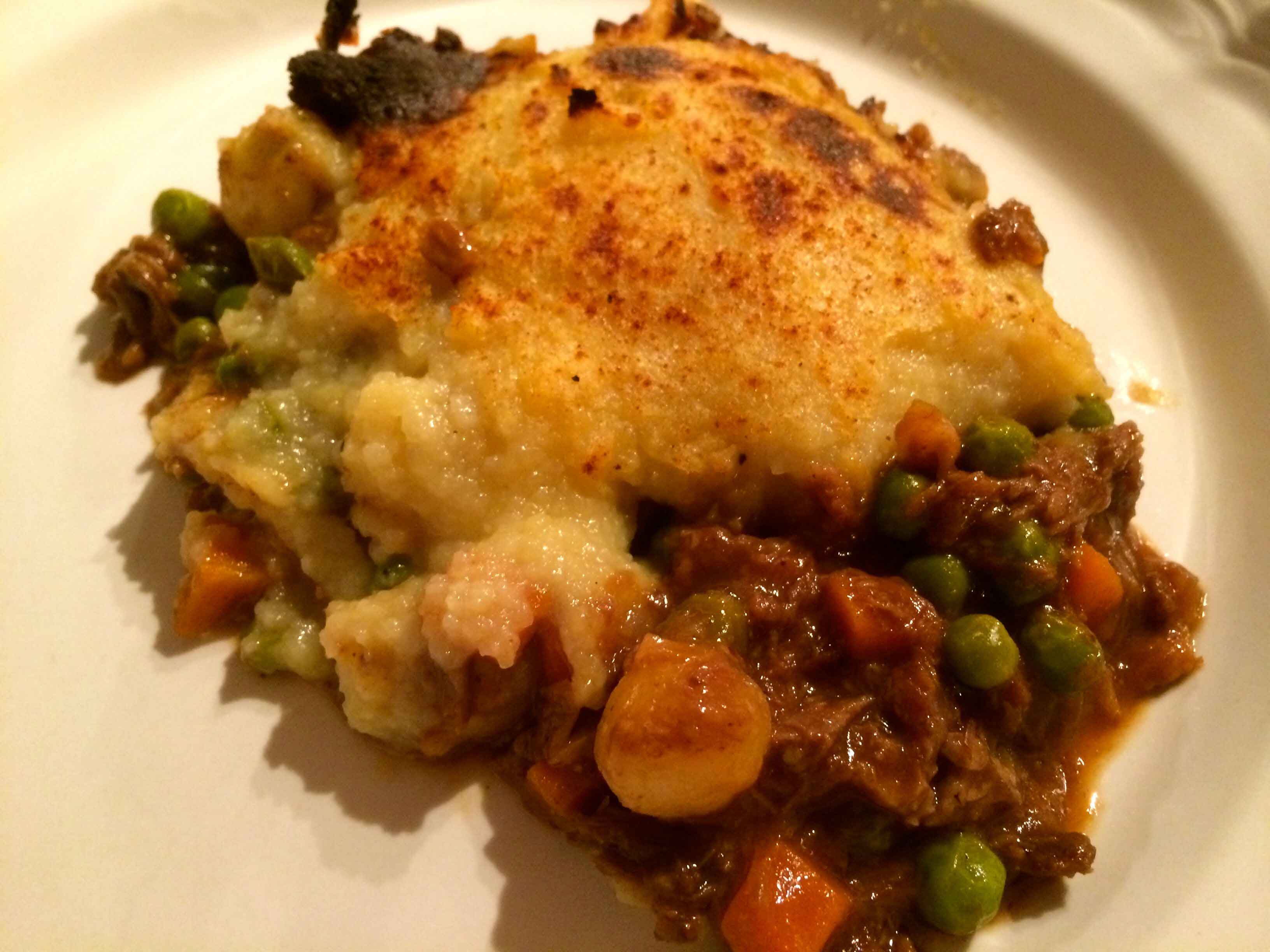
shepspiesmall

My post for 30 June highlighted a pressure-cooker pot roast with potatoes. Given the size of the roast and the number of potatoes, we had enough leftover for at least one more meal. Of course, I could have simply re-heated them, but I wanted something a little different. It didn’t take too long before I decided to make shepherd’s pie.

I realize this dish is a popular way to use up leftover lamb, but I thought why not beef. Looking at recipes in cookbooks and on the net, I started to get ideas: peas and pearl onions for more flavor, broth for more moisture, flour and butter to thicken the sauce for a gravy; olive oil for whipping the potatoes to make the topping.

I took the leftover pot roast, about 3 or 4 cups, and chopped it roughly in a food processor, reserving the juices.

I peeled the leftover cooked Yukon Gold potatoes, about 6, seasoned them with a little salt and put them through a ricer. I then whipped the potatoes with a hand mixer, adding a little chicken broth and some olive oil until they were creamy.

In a large skillet, I melted a tablespoon of butter, to which I added a cup of frozen pearl onions, and a cup of frozen peas and carrots. I sautéed the vegetables until the onions were a light gold and then seasoned them lightly with some salt.

To the sautéed vegetables, I added the juices from the roast and scraped up any brown bits on the bottom of the pan. I added the meat to reheat. After it reached a simmer, I pressed about a tablespoon of butter and the same amount of flour between my fingers to create a paste. I added as much of this to the pan stirring continuously until the sauce thickened some to become a gravy.

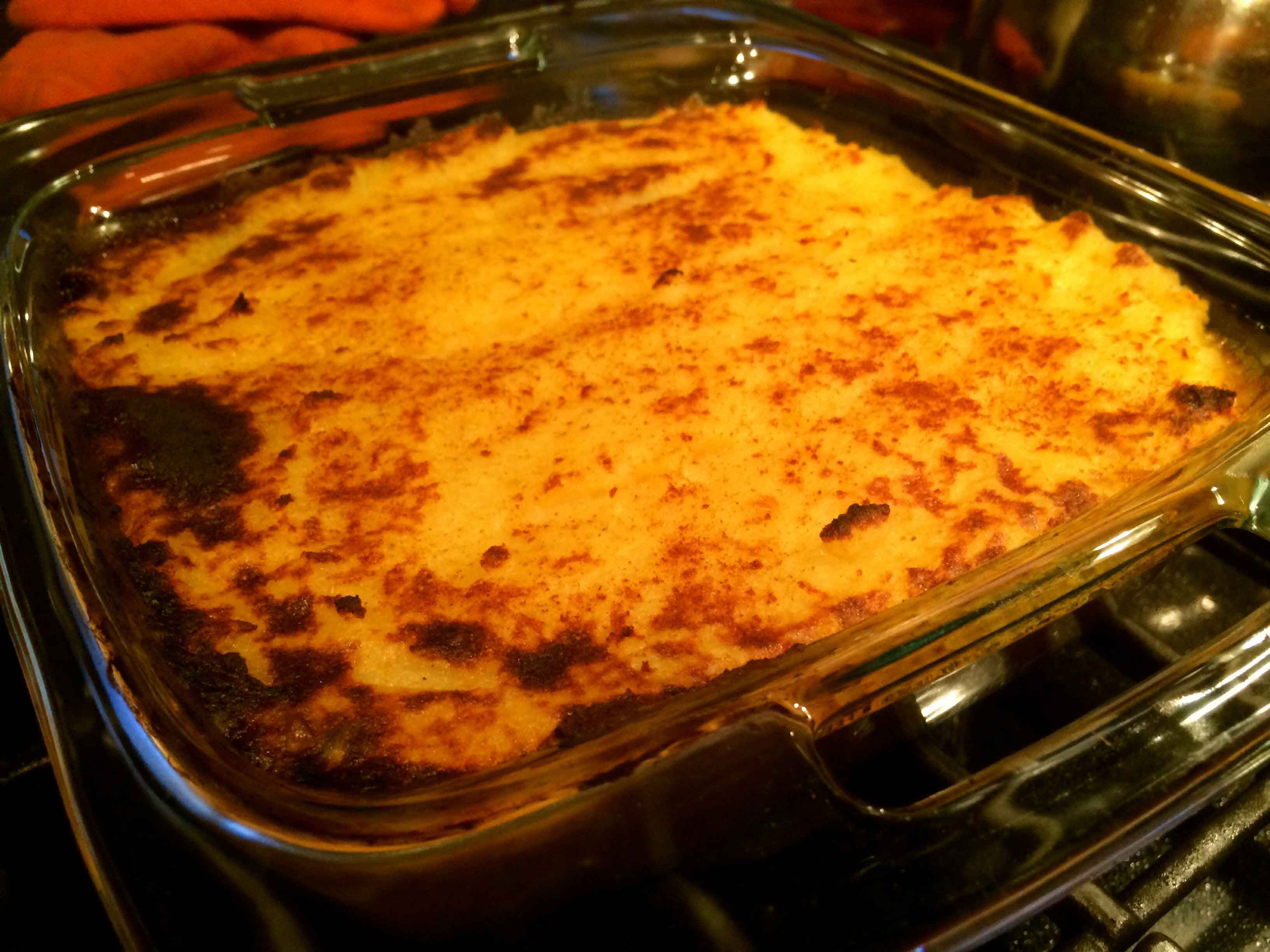
I transferred the contents of the sauté pan to a square baking dish and covered them with a thick, even layer of the mashed potatoes, which I sprinkled lightly with sweet paprika, mostly for color.

I baked the “pie” in a preheated 375° F oven for 10 to 15 minutes, and then placed it under the broiler to brown the crust for about 3 minutes.

Right from the oven
Right from the oven

We were more than pleased with the results; the flavors were richer and more varied than the original roast.

Wine Pairing: Zinfandel

Shrimp with Zucchini and Tomatoes

wwshrimpplatedsmall

Yesterday, I was challenged to to prepare the following recipe from Weight Watchers. At first glance, it looked fine.

Shrimp with Zucchini and Tomatoes

Ingredients
1 Tbsp extra-virgin olive oil
1 medium zucchini, cut into 1/4-inch slices
1 pound large shrimp, peeled and deveined
1 cup of grape tomatoes, cut in half
1/2 tsp dried oregano
1/2 tsp salt
1/4 tsp freshly ground black pepper
1 1/2 tsp minced garlic
1/4 cup water

Instructions
Heat 2 teaspoons of oil in a large nonstick skillet over medium-high heat.
Add zucchini in a single layer; increase heat to high and cook until bottoms are golden, about 2 minutes. Flip zucchini and cook until golden on the other side, about 2 minutes or more. Remove zucchini to plate with a slotted spoon. Heat remaining oil in the same skillet. Add shrimp; sauté 1 to 2 minutes. Add tomatoes, oregano, salt and pepper; sauté until shrimp are almost cooked through, about 1 minute. Stir in garlic and water; sauté, stirring to loosen bits from the bottom of the land, until shrimp are cooked through and tomatoes are softened, about 1 to 2 minutes more. Return zucchini to skillet; toss and serve.

However, when I brought the ingredients home and re-read the recipe I couldn’t resist making some changes for the following reasons., which would unfortunately slightly increase the number of Weight Watcher points.

First off, I don’t like to sauté in nonstick pans. I have two, but use them exclusively for eggs and omelets. I opted to use stainless steel, which necessitated using an extra tablespoon of olive oil.

Second, I thought that sautéing the tomatoes for 1 minute really wouldn’t extract their flavor or change their texture.

Finally, I thought combining water and raw garlic to “deglaze” the pan wasn’t going to add much flavor.

So, keeping most of the ingredients except for substituting wine for the water as well as adding an additional tablespoon of olive oil for sautéing and a quarter cup of chopped parsley for garnishing, I prepared the recipe with a few changes to the instructions.

I added all the olive oil (2 Tablespoons) up front and sautéed the zucchini along with the garlic for about 3 minutes; I kept my eye on the garlic making sure it remained light gold and not brown. As a a result, the zucchini were only lightly colored but nonetheless perfectly cooked.

I transferred the zucchini, garlic, and oil to a bowl, making sure there was no garlic left in the pan. I then carefully poured off most of the oil from the bowl, without any of the garlic, back into the sauté pan. I then seasoned the grape tomatoes with the salt and oregano and sautéed them until they started to break down and create a sauce.

At this point, I added the shrimp and cooked on one side until they turned pink, about 2 minutes. I then turned the shrimp and cooked for about 1 more minute. Then I added the wine and returned the zucchini, garlic, and any remaining oil in the bowl to the pan. I cooked everything for about about 2 more minutes. I then plated onto heated plates, sprinkling the shrimp with some chopped parsley and served with couscous.

I know the final dish had a few more Weight Watcher points than the original, but I think the extra flavor and texture of my version may have been worth them. However, if you are following their program religiously, I think you’ll be more than happy with the original recipe at the beginning of this post.

Wine Pairing: Dry Rose

Sausages and Cannellini all’Uccelletta

sausagesbeanssmall

Last year, I came across a recipe for turkey sausages and cannellini beans all’uccelletta on The Cooking Channel’s show, Extra Virgin. It’s a classic Tuscan dish, where the beans are cooked in a similar fashion as one would small birds, that is, seasoned with sage or, as in this case, with fresh bay leaves.

We enjoyed this dish a lot; but after experimenting with it, I developed my own recipe, using sweet Italian pork sausages and canned crushed Italian tomatoes rather than fresh cherry tomatoes.

Enjoy this dish all year round, served with crusty Italian bread to sop up the sauce.

INGREDIENTS
2 tablespoons olive oil
8  sweet Italian pork sausages
5 cloves garlic, peeled and sliced into chunks
1 28-ounce can crushed Italian tomatoes
Pinch of crushed red pepper flakes
Salt and freshly ground black pepper
2 (15-ounce) cans cannellini beans, drained and rinsed
5 fresh bay leaves
small pinch fennel pollen (optional)
2 handfuls fresh flat-leaf parsley, leaves picked and chopped
Extra virgin olive oil

DIRECTIONS
Heat a sauté pan large enough to hold the sausages in a single layer over medium-high heat. Add the olive oil to heat. Once hot, add the sausages and brown on all sides, for about 10 minutes total. Remove the sausages from the pan to plate and reserve.

Add the garlic, and sauté just until golden. With a wooden spoon, stir in the chopped tomatoes and crushed red pepper flakes and season with salt and pepper. (When seasoning, be aware that the sausages may already contain salt.) Lower the flame, and cover the pan with a lid, simmer for about 10 minutes, until the tomatoes have thickened to a sauce-like consistency.

Add the browned sausages (and any juice left on the plate), the beans, bay leaves, and optional fennel pollen to the thickened tomatoes. Stir well and simmer uncovered for another 10 minutes.

Drizzle lightly with olive oil and sprinkle with the chopped parsley before serving.

For those interested in the original Cooking Channel recipe, here’s a to that recipe.

Wine Pairing: Chianti Classico, Sangiovese, Merlot

Pressure Cooker Pot Roast and Potatoes

pot roast platedsmall

I know it’s summer, but despite the season, I was in the mood for beefy comfort food last night, specifically: pot roast. However, time got away from us yesterday and we got home way too late to prepare a traditional roast. I then remembered a recipe for a pressure-cooked version in Pressure Cooker Perfection from America’s Test Kitchen.

It’s a four-step recipe that yields a perfectly cooked pot roast in 30 minutes under high pressure. With releasing pressure and skimming the sauce, I had the roast on the table in a little more than an hour from start to finish.

The key to this recipe is a “secret ingredient,” something that you’ll probably never find in a gourmet store or even in the fine-foods section of a grocery. It’s not imported and it sells for under $2.00. It’s condensed French onion soup. I used Campbell’s; I don’t know of any other.

If the thought of using this ingredient turns you off, the recipe may still win you over with its use of dried porcini. It yields an aromatic, juicy roast with creamy, flavor-infused potatoes. Granted you may not want to make this roast this summer, but when fall approaches, you may want to give it a try.

Note: Before attempting this recipe, be sure you are thoroughly familiar with your pressure cooker. Read the manual to know its capacity and to understand how to lock the lid, the cooker’s high-pressure indicator, the methods of releasing (natural and quick release), and the like.

Weeknight Pot Roast and Potatoes Adapted from Pressure Cooker Perfection by America’s Test Kitchen

Ingredients
1 ounce dried porcini mushrooms (the original recipe calls for 1/2 ounce)
1 can (10.5 oz) condensed French onion soup
2 tablespoons tomato paste (I recommend the double concentrate from a tube.)
1/4 teaspoon ground cumin (not in the original recipe)
2.5 – 3 pound boneless beef chuck-eye roast, trimmed and cut across the grain into 1 inch slices
2 pounds small or medium Yukon Gold potatoes, washed

1 – In a small bowl, rehydrate the mushrooms in 1/2 cup warm water for about 20 minutes; remove the mushrooms from the water, squeezing any excess water back into the bowl. Strain the soaking water through a coffee filter or strainer lined with cheesecloth to remove any grit and reserve. Mince the mushrooms.

2 – Whisk soup, tomato paste, mushrooms, and their strained soaking water in the pressure cooker pot. Lay the sliced meat over the mixture. Season with ground cumin. Place the potatoes on top of the meat. Lock the pressure-cooker lid in place and bring to high pressure over medium-high heat. As soon as pressure cooker reaches high pressure, reduce the heat to medium-low and cook for 30 minutes, adjusting heat as needed to maintain high pressure.

3 – Remove the pressure cooker from the heat and allow the pressure to release naturally for 15 minutes. Quick release any remaining pressure, then carefully remove the lid, allowing steam to escape away from you.

4 – Transfer meat and potatoes to a warmed platter. Using a large spoon, skim excess fat from the surface of the sauce. Serve the meat and potatoes with the sauce.

Wine Pairing: Cabernet Sauvignon

Pepper and Onion Frittata

frittataplatedsmall

After several heavy meals, I like to prepare something simple, light, and quick. Such was the case last night, when we came home after 7PM from a day of errands and shopping and wanted to have dinner before 8. The answer was a a frittata made from onions, peppers, eggs, Pecorino, Romano, and flat leaf parsley.

I learned to make frittatas as I was growing up from watching my aunt at the stove. Unlike a French omelette, which should take about a minute to cook, a frittata takes cooks slowly on a low flame. And rather than rolled liked it French counterpart, it’s flipped over to finish cooking.

It’s great served hot, room temperature, and yes, even cold.

3-4 Tablespoons extra virgin olive oil
1 large garlic clove, peeled
1.5 pounds bell peppers (red, yellow, orange; I don’t like the taste of green) sliced thin
1 large Vidalia onion, sliced thin
10 extra large eggs
2 Tablespoons milk
1/3 cup Pecorino Romano, grated
1/4 cup, Italian parsley, chopped
Salt and Fresh ground black pepper, to taste

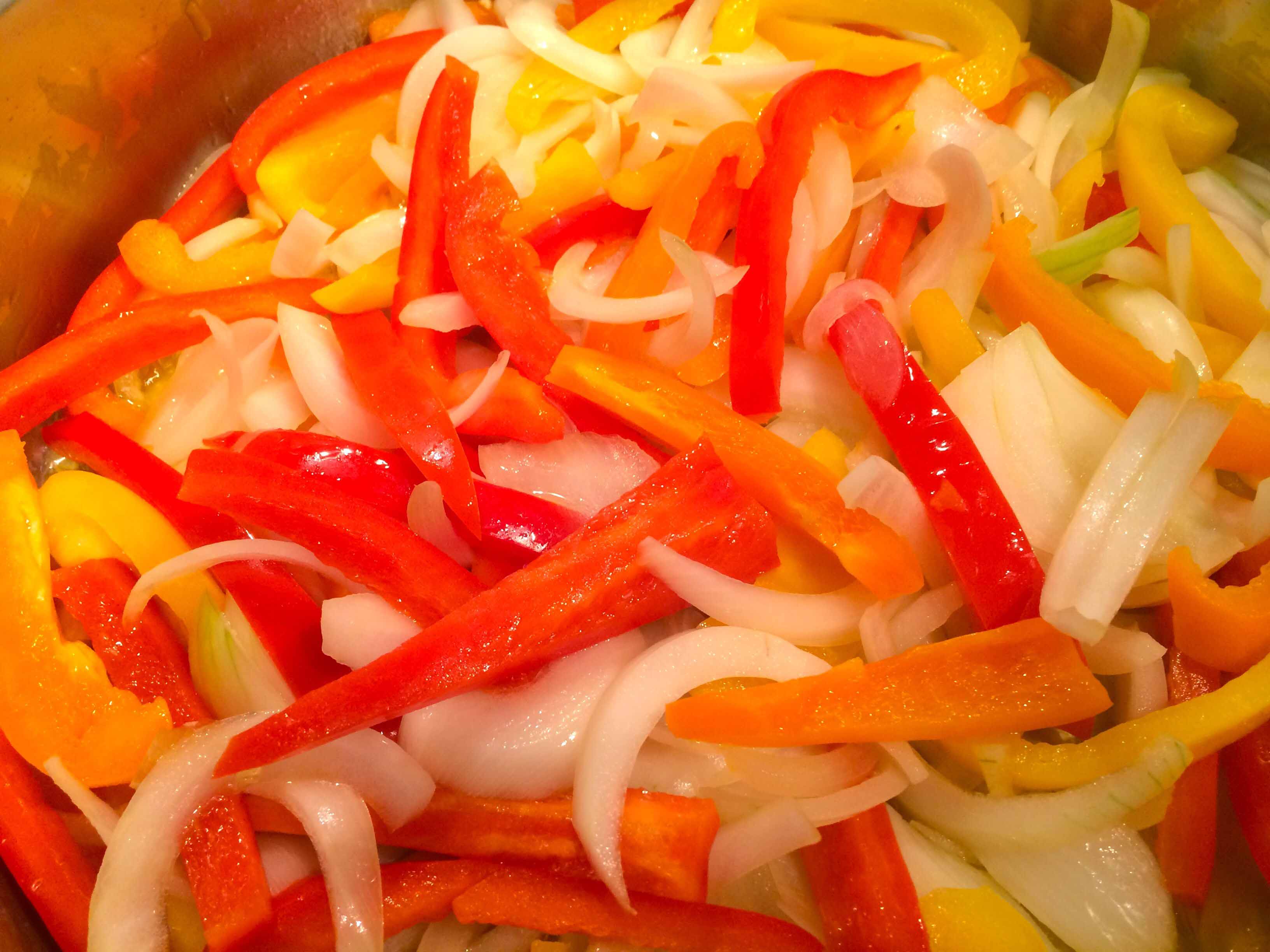
Peppers and onions uncooked

In a large sauté pan heat the oil and the garlic clove until shimmering. Add the peppers and onions and sauté over medium high heat, tossing frequently until browned. Remove the garlic clove before it gets brown. Set aside.


Browned peppers and onion

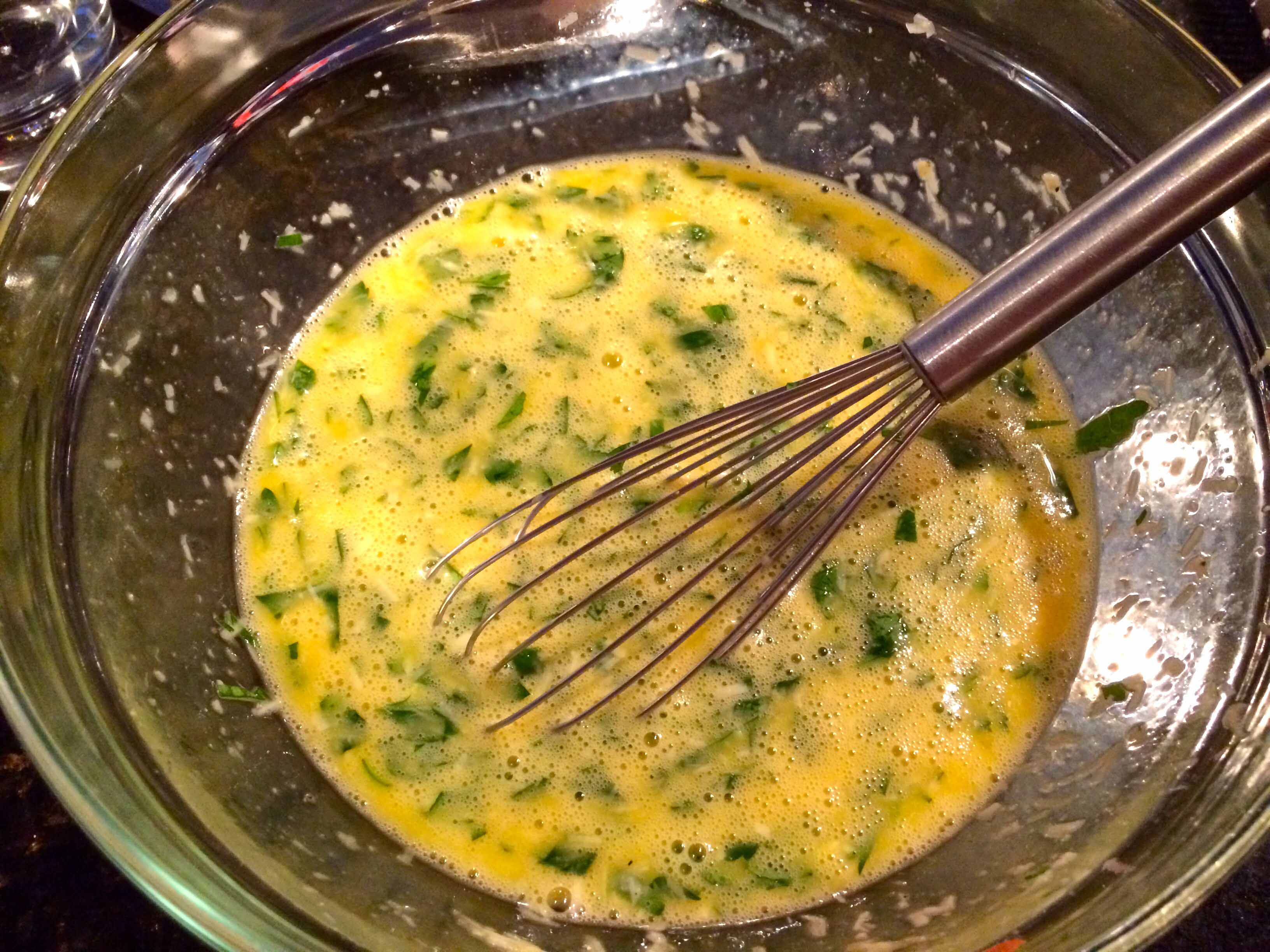
In a large bowl, beat the eggs, milk, cheese, parsley, salt and pepper, until thoroughly mixed.

Egg mixture
Egg mixture

In a 10 inch non-stick pan, transfer the peppers and onions from the sauté pan being sure to capture any remaining olive oil that’s in the pan.

Heat over a low flame and when hot, add the egg mixture. Stir the eggs and the vegetables to combine. Still over a low flame, as the eggs set around the edge, push the set portion into the center and allow the wet potion of the egg mixture to flow into the sides of the pan. Continue to do this, until most of the eggs are set.

frittata4small
Eggs setting on first side

When the eggs are almost fully set yet slightly wet on the top, remove from the heat, and then cover with a round pizza pan or plate large enough to cover the pan and flip onto the pizza pan or plate, using oven mitts.

Slide the frittata back into the pan and continue to cook, still over low flame, until lightly browned, about 2 to 3 minutes.

Finished frittata on cutting board

Slip the cooked frittata onto a cutting board, slice and serve.

Wine Pairing: Pinot Grigio, Trebbiano d’Abruzzo, Sangiovese


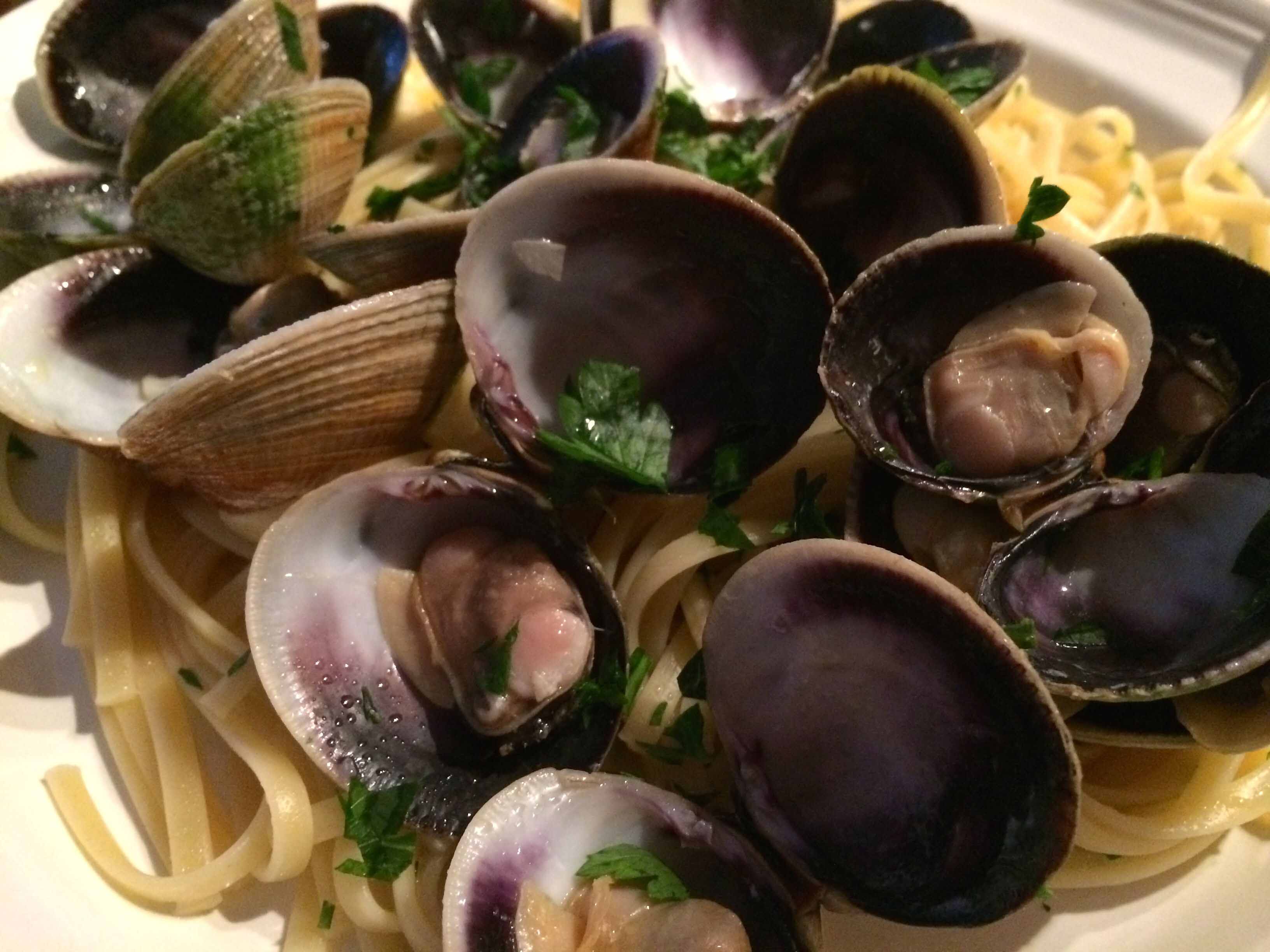
Linguine alle Vongole

clams platedsmall

Last night, we enjoyed our favorite seafood pasta: linguine alle vongole, linguine with white clam sauce. It’s a relatively quick and easy dish to prepare, but it does require attention to detail: slow poaching of the garlic in the olive oil to extract optimal flavor, just a pinch of Calabrian red pepper flakes, a final addition of finely minced fresh garlic and lemon zest at the end to add brightness.

As with most Italian cooking, the primary ingredients must be of the highest quality. For this reason, sometimes you have to adjust a recipe by what’s available in the market. Such was the case yesterday. Typically I use either Manila or small littlenecks for this dish. However, yesterday, there were none of the former and the latter were just too big. But I did find some wonderfully fresh cockles, which I find a tad sweeter than clams.

2 large cloves of garlic, minced
1/4 cup olive oil
1/8 teaspoon Calabrian red pepper flakes
2 pounds small clams (littleneck, Manila, or cockles), scrubbed if necessary and rinsed. Inspect the clams discarding any that are cracked or that are open and do not close when pinched.
1/3 cup of dry white wine
1/2 cup Italian (flat leaf) parsley, chopped fine
8 oz linguine
zest of 1/2 lemon
1 tablespoon, unsalted butter
Freshly ground black pepper

In a large pot, bring 6 quarts of water to a boil.

Meanwhile, in a large sauté pan, starting from room temperature, poach 3/4 of the garlic and the pepper flakes in the olive oil over a low flame until aromatic. Add a pinch of the parsley for the final minute of sautéing. The garlic should take on only the lightest hint of gold color.

Sautéed garlic awaiting the clams

At this point, liberally salt the water (add the salt slowly to avoid boiling over) and start cooking the pasta. Cook the pasta following package directions for 1 minute less than al dente

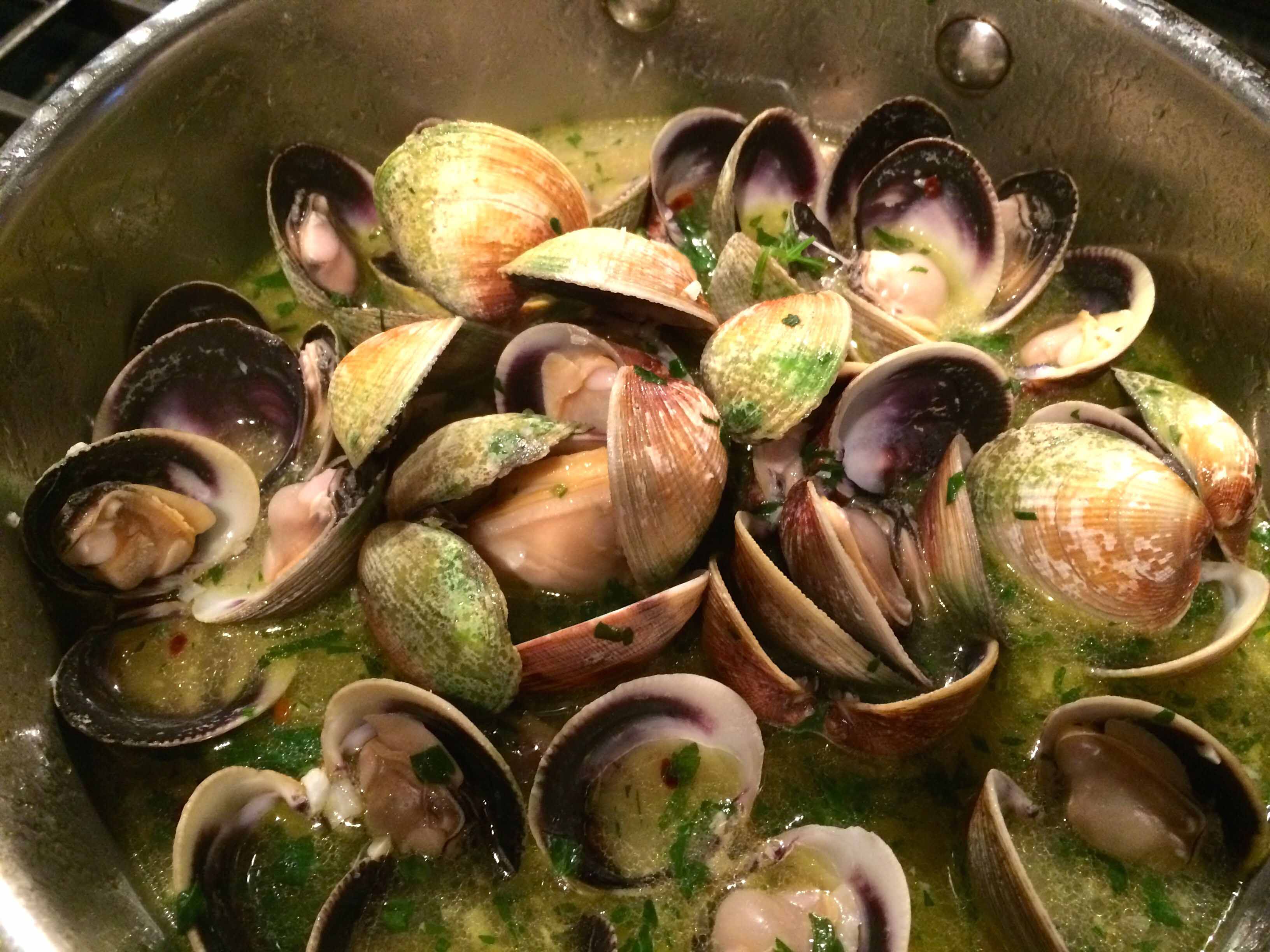
Add the clams, wine, and 3/4 of the parsley to the sauté pan, raise the heat and bring to a high simmer over medium high heat. Cover the pan tightly and shaking occasionally, cook the clams until they open. About 6 minutes.

Clams just opened
Clams just opened

Remove the clams with a slotted spoon, discarding any that do not open, sprinkle them with the lemon zest. Raise the flame to high and bring the sauce remaining in the pan to a boil. Add the butter. Using tongs or a pasta fork, immediately transfer the cooked pasta to the sauté pan and toss for about a minute to coat the pasta. If too dry, add a couple of tablespoons of the pasta water. At this point, the pasta will be the perfect al dente

Transfer the pasta and sauce to a bowl, add the clams, the remaining 1/4 of the minced garlic, and sprinkle with the remaining parsley. Serve on warmed plates with a few grinds of fresh black pepper if desired.

Wine Pairing: Soave, Pinot Grigio, Sauvignon Blanc

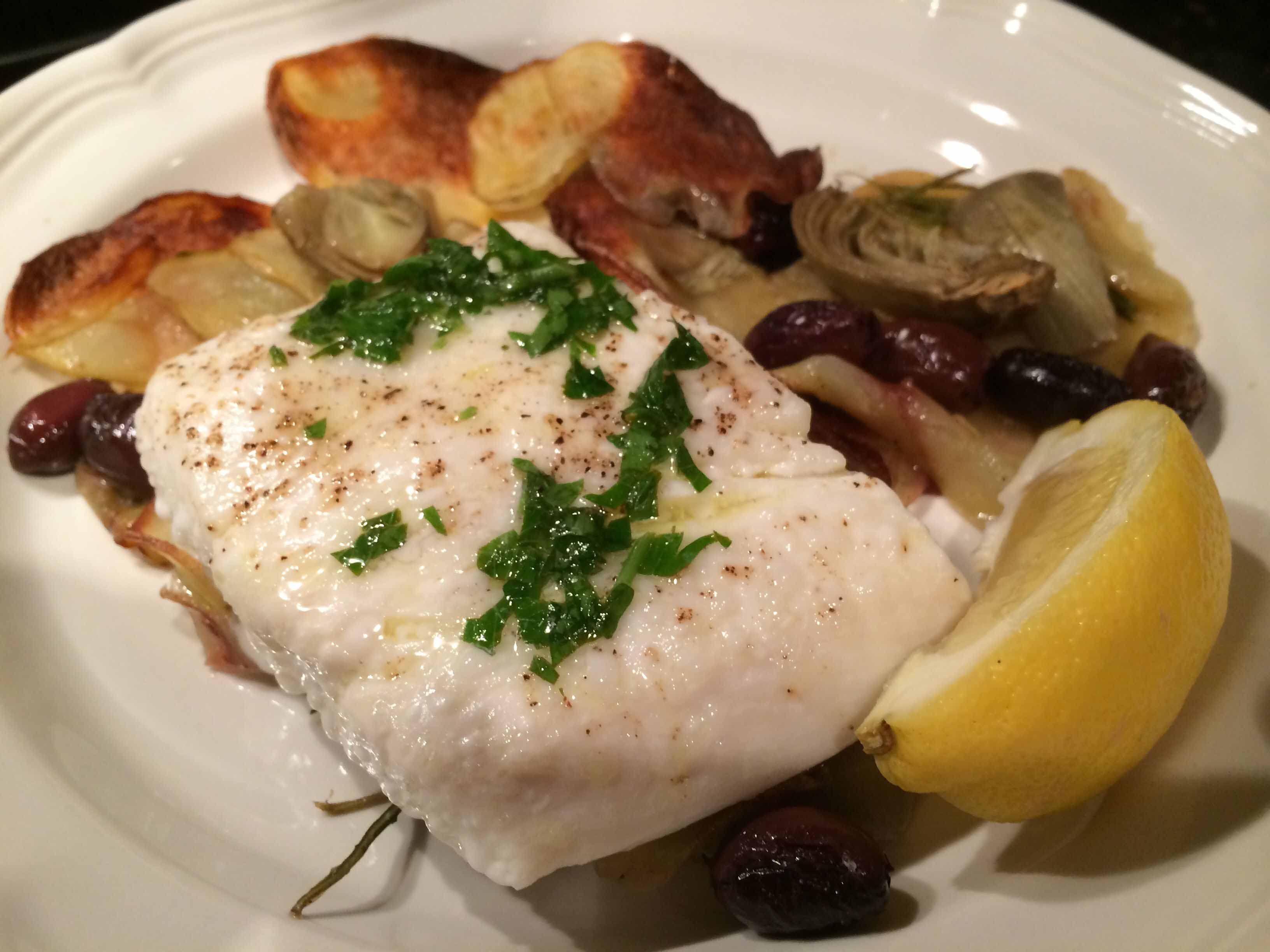
Roast Halibut with Artichokes

halibutplatedsmall

It seems that cooking magazines are always arriving in the mail and it’s hard to keep up with them. Once in a while, I go on a binge read, tearing out the recipes I want to make and filing them for future use. When I choose to prepare one of these recipes, I feel my subscriptions are justified—especially when, as last night, it turns out so good.

This recipe comes from the December 2013 issue of Food Network Magazine. It calls for cod, but when I went to the fish market, the halibut looked much better. It worked perfectly; the flavor is similar to cod, but the texture is richer.

The bed of crisp and creamy potatoes, earthy roasted artichoke hearts, and salty Kalamata olives provided the perfect background for the mildly sweet flavors of the halibut.

Recipe adapted from Food Network Magazine December 2013
Ingredients

1 pound Yukon gold potatoes, thinly sliced (I used a mandolin for uniform 1/8 inch thick potatoes)
1 9 -ounce box frozen artichoke hearts, thawed
1/2 cup pitted kalamata olives
1 tablespoon fresh rosemary leaves
1/4 cup extra-virgin olive oil
Kosher salt and freshly ground pepper
4 6 -ounce cod fillets (I substituted halibut.)
Juice of 1/2 lemon
1 tablespoon chopped fresh parsley
Lemon wedges for serving

Directions
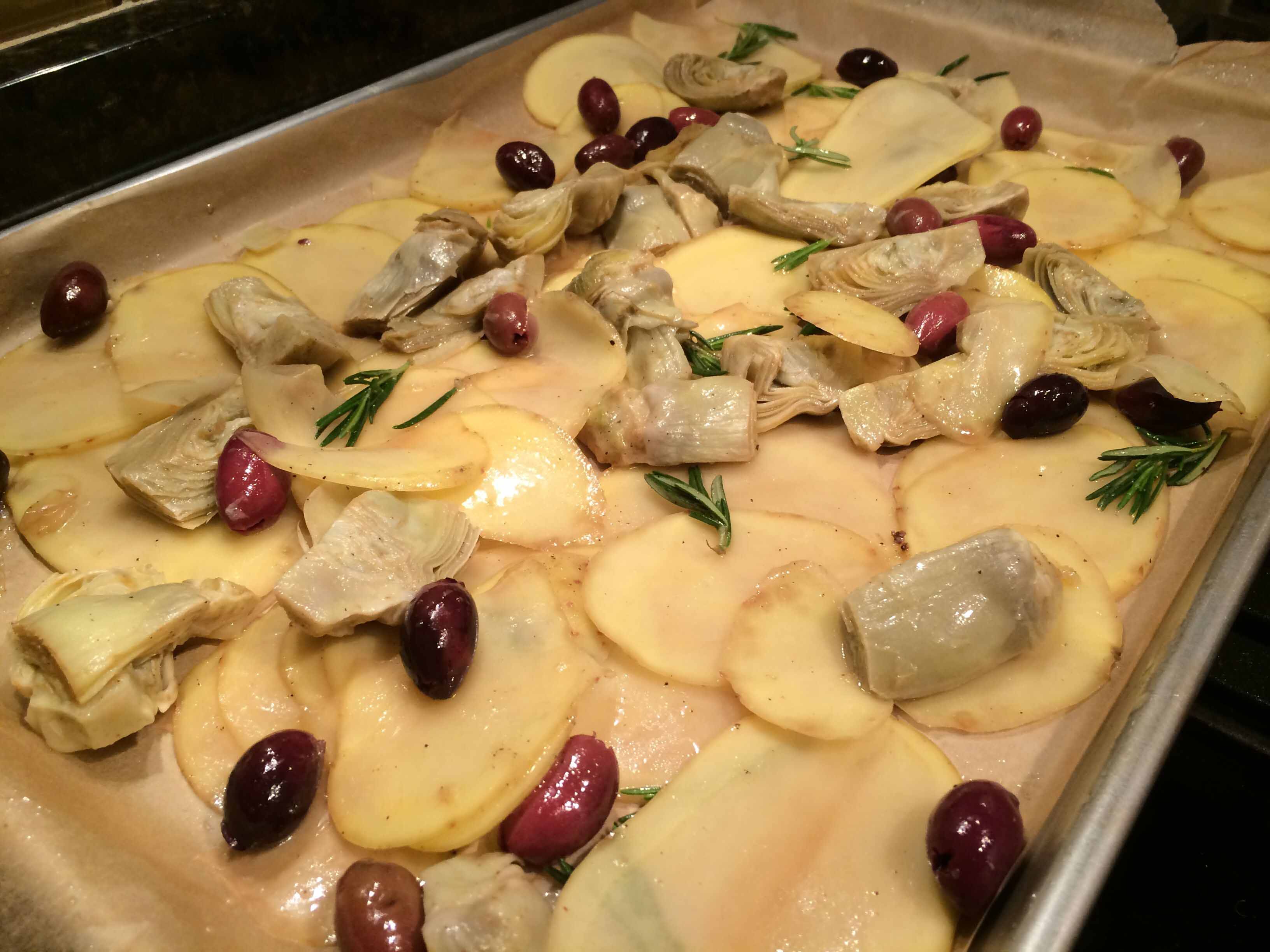
Preheat the oven to 450 degrees F. Combine the potato slices, artichokes, olives, rosemary, 2 tablespoons olive oil, 1 teaspoon salt and a few grinds of pepper in a large bowl. Spread the mixture evenly on a parchment-lined baking sheet; bake until the vegetables are tender and lightly browned, about 20 minutes.

Vegetables before roasting

Brush the fish with 1 tablespoon olive oil and season with 1 teaspoon salt and a few grinds of pepper. Remove the baking sheet from the oven and set the fish on top of the vegetables. Return to the oven and continue baking until the fish is opaque and the vegetables are golden brown, about 10 minutes.

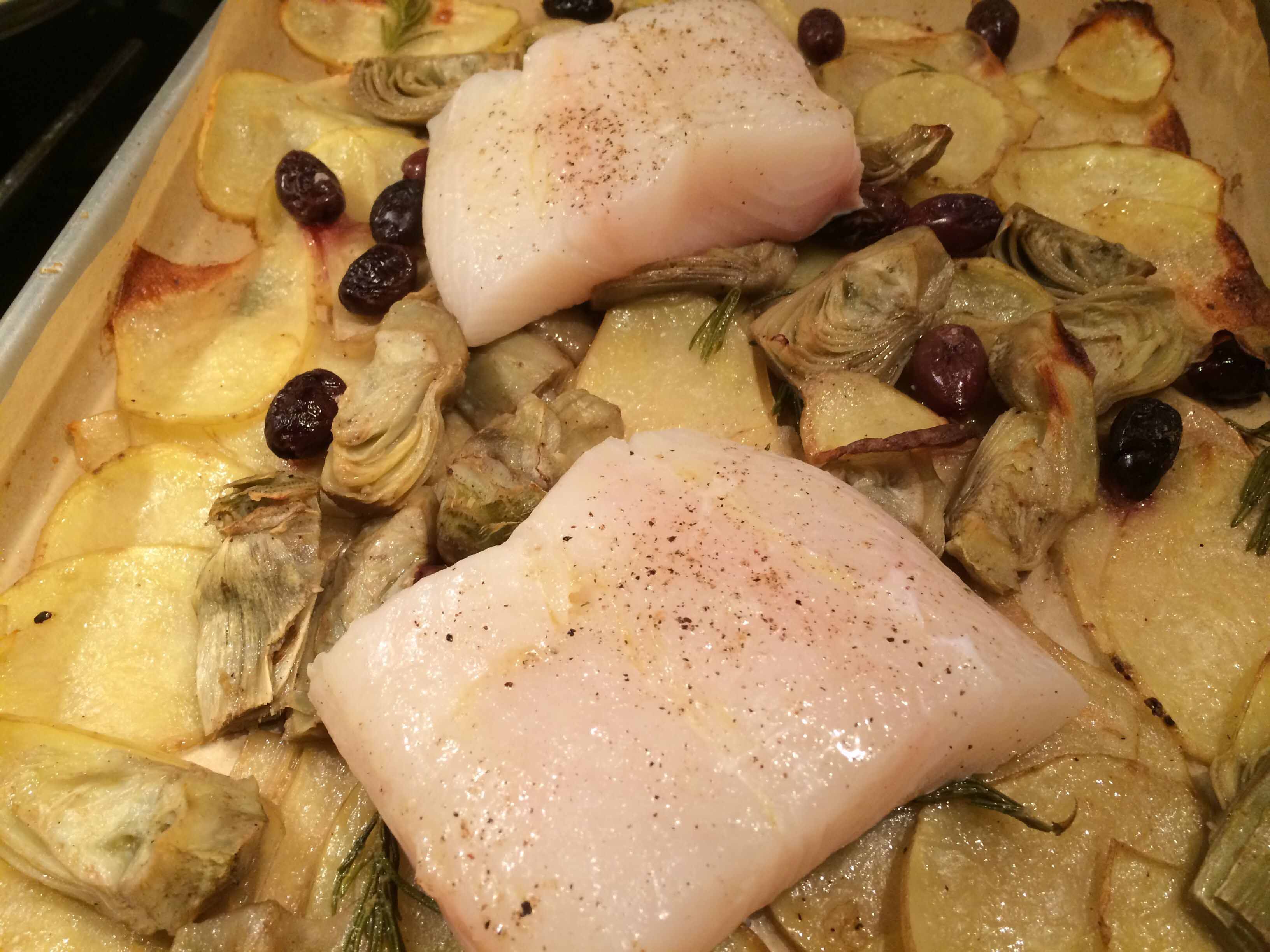
Fish before roasting

Mix the lemon juice, the remaining 1 tablespoon olive oil, and the parsley and drizzle over the fish. Serve with lemon wedges.

Read more at: Food Network

Meat Pie “Pizza” Style

piecookedsmall

Somehow the day got away from me yesterday and I needed to get dinner on the table in a hurry, or at least in under an hour. Once again I turned to Giuliano Hazan’s Every Night Italian for his recipe for an exquisite Meat Pie “Pizza” Style. This is the second time, I’ve prepared this dish. I’ve made some modifications to the original recipe, adding a little nutmeg, increasing the amount of mozzarella, and adding a few minutes to the original cooking time.

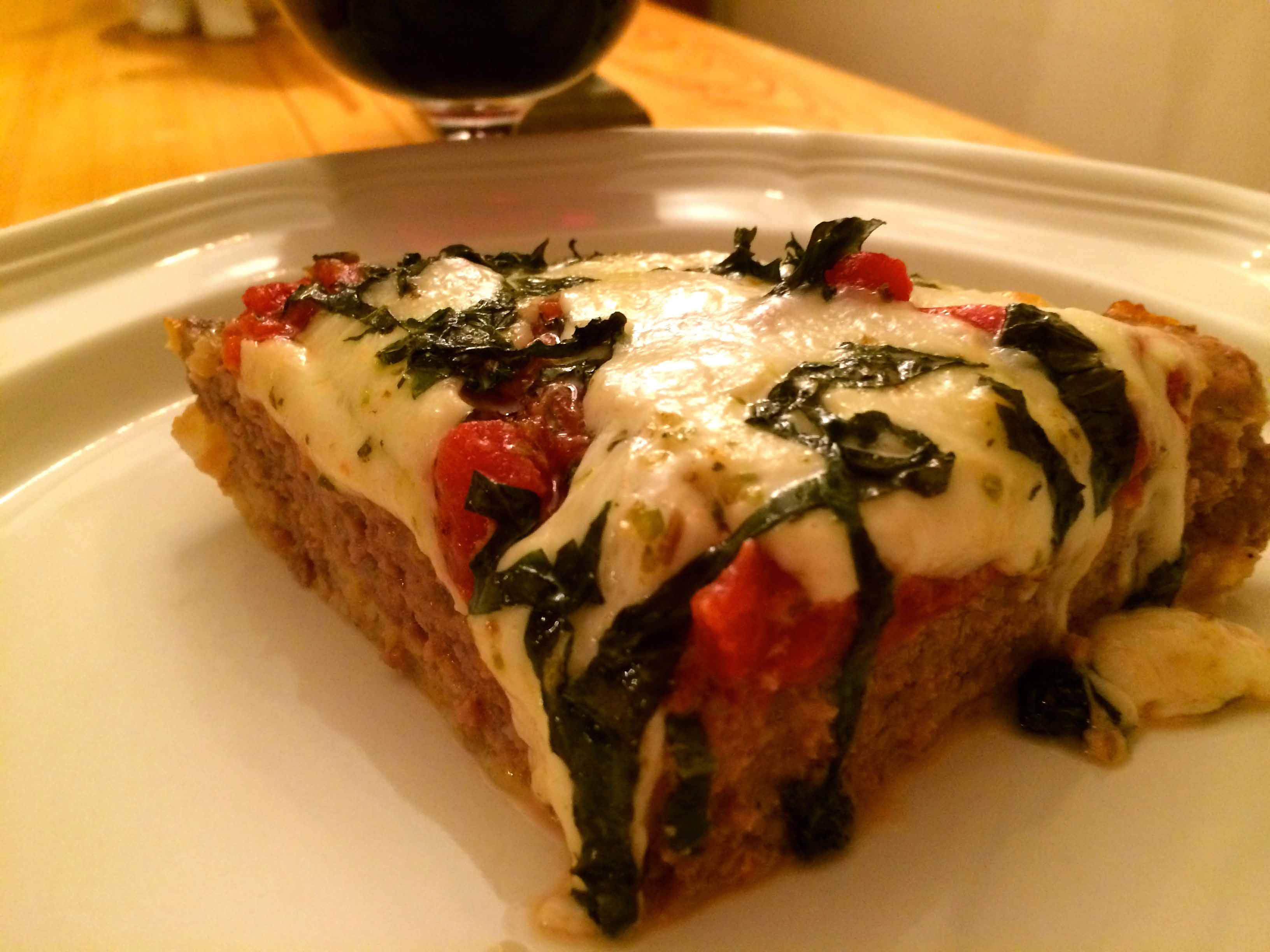
This “pizza” consists of beef, pancetta, pecorino Romano, bread, eggs, seasoning and is topped with mozzarella, basil, and oregano. It’s essentially a meatloaf topped like a pizza Margherita. A wonderful supper in 35 minutes about from start to finish. In case you didn’t know, Giuliano is the son of Victor and Marcella Hazan.

Meat Pie, “Pizza” Style Adapted from Every Night Italian by Giuliano Hazan
INGREDIENTS
2 slices white bread, trimmed of crusts
2 tablespoons whole milk
1 pound ground beef 85% lean
1/2 cup pecorino Romano cheese, freshly grated
2 tablespoons plain fine bread crumbs
2 eggs
2 ounces pancetta, thinly sliced and chopped
1/8 tsp freshly ground nutmeg
Salt
Freshly ground black pepper
Butter (for greasing the baking dish)
2 tablespoons fresh basil leaves, shredded
3/4 cup canned whole peeled tomatoes drained of juice, coarsely chopped
4 to 5 ounces fresh mozzarella cheese
1/2 teaspoon dried whole oregano leaves crushed between thumbs
Olive oil for drizzling

DIRECTIONS
1. Preheat the oven to 425°.

2. Put the trimmed bread and the milk in a small bowl and mash it with your hands until you get a smooth pasty mixture. Transfer it to a large mixing bowl and add the beef, the grated pecorino, the bread crumbs, the eggs, the chopped pancetta, and ground nutmeg.

3. Season lightly with salt and pepper, then mix everything together thoroughly with your hands.

4. Grease the bottom and sides of a round pie dish approximately 10 inches in diameter. Put in the ground beef mixture and push it down with your hands until it is evenly spread out. Cover with the tomatoes. Cut the mozzarella into strips and arrange them over the tomatoes. Sprinkle the shredded basil and dried oregano on top, drizzle lightly with olive oil, and bake in the preheated oven for 20 to 25 minutes.

piepresmall
Before baking

Let the “pizza” settle for about 5 minutes after you take it out of the oven, then transfer it with two spatulas to a serving plate. Serve it hot or lukewarm.

Plated
Plated

Wine Pairing: Chianti, Zinfandel