Veal Stew Revisited

vealstewrevisitedsmall

Recently, my friend Arthur Schwartz, an expert on southern Italian cooking, told me about an extremely simple tomato sauce made from just four ingredients: olive oil, garlic, concentrated tomato paste, and milk.

In a sauté pan, sauté a peeled and smashed garlic clove in a couple of tablespoons of olive oil. Remove the garlic just before it takes on any color. (Your nose should let you when.) Next, add two full tablespoons of imported Italian tomato paste. (The one that comes in a tube.) Stir for about two minutes or until the paste has dissolved into the oil. Finally, add a scant cup of milk, season with salt and pepper, and cook uncovered until the sauce has slightly thickened. That’s it. I knew I would eventually make this sauce.

Well last night, I remembered some veal stew with mushrooms that had been sitting in the fridge for a few days. (See my June 6th posting.) There wasn’t enough meat for two servings, so I thought I could stretch and even refashion the stew as a sauce for some fresh pappardelle.

The stew, however, even when we had it the first night, didn’t have a lot of sauce. And after several days in the fridge, there was even less. That’s when I thought of my friend’s tomato and milk sauce.

After preparing the sauce as described above, except for enriching it with just a touch of cream, I added the stew to the sauté pan and let it reheat partially covered for about 15 minutes. I then added about a half cup of frozen peas and cooked the sauce until the peas were warmed through.

While the stew, now a sauce, was still on the heat, with a spider strainer I transferred the cooked-a-minute-before-al-dente pappardelle to the pan, tossing the pasta to coat with the sauce. After less than a minute, I removed the pan from the heat. Over the pasta, I grated some Parmigiano-Reggiano, sprinkled some torn basil leaves, and gave it all a final toss.

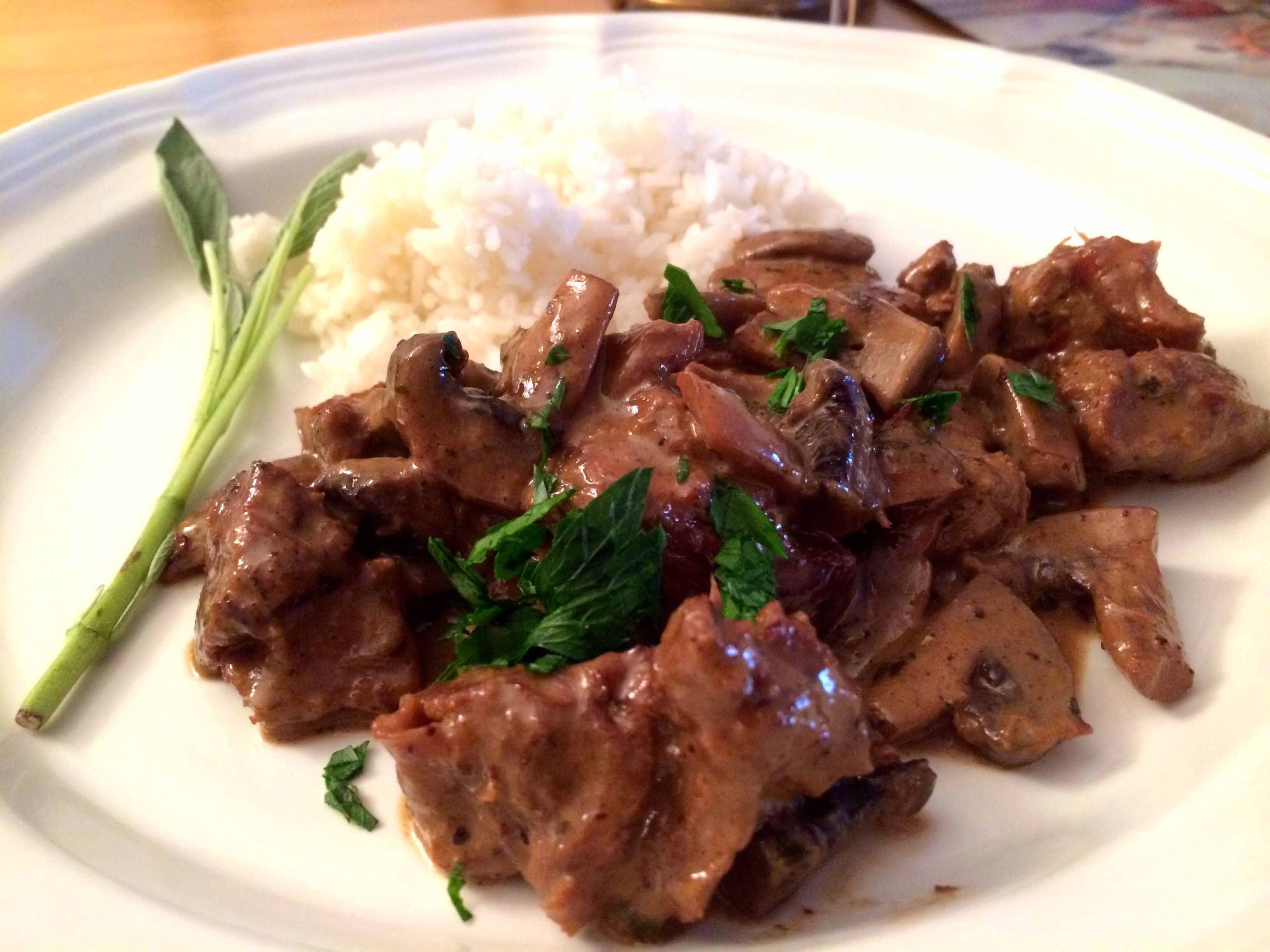
Served accompanied by a Rosso Piceno from Italy’s Marche region, our revisited stew made a perfect Sunday night pasta.

In a comment to this post, please feel free to share any of your recipes for refashioning leftovers.

Grilled Tuna Steaks


tunasteak1small

Except for shellfish and calamari, I’m not a fish lover. Nevertheless, we try to have fish twice a week and for that reason, I purchased Fish: Complete Guide to Buying and Cookingby Mark Bittman. It’s given me confidence not only in the kitchen but also at the fish market.
It was a great night for grilling and I can’t think of any fish better for the grill than thick tuna steaks—especially for a meat-lover like myself. I chose Bittman’s “Basic Grilled Tuna,” which calls for a simple marinade that seems to enhance the meaty character of the fish.

For sides, I prepared a simple couscous and roasted cherry tomatoes with olive oil, garlic, and crushed red-pepper flakes.

Basic Grilled Tuna Adapted from Mark Bittman’s Fish.
1/3 cup high quality soy sauce
2 tablespoons extra virgin olive oil
2 thick yellowfin tuna steaks about 3/4 lbs each
Ground black pepper
Lemon wedges and extra virgin olive oil for finishing.

1. Mix the soy sauce and olive oil.

2. Place the tuna in a square baking dish just large enough to hold the fish and sprinkle with fresh ground black pepper.

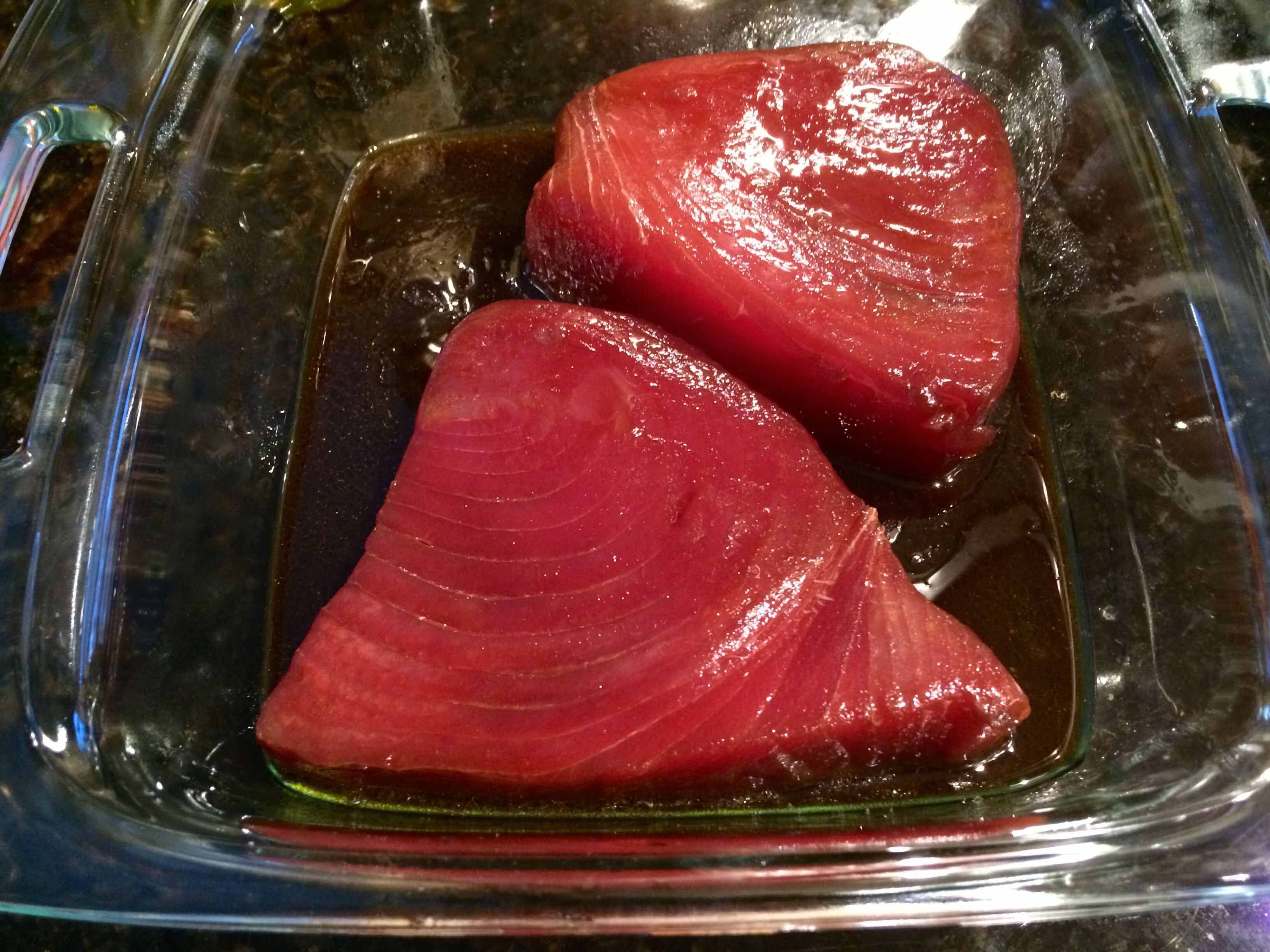
3. Cover the fish with the marinade, cover, and let the fish marinate in the fridge for no more than one hour. Marinating for too long a period may overwhelm the subtle flavors of the fish.

Tuna steaks marinating

4. Heat a grill pan greased lightly with some olive oil. When hot, grill the tuna on one side for about 5 minutes, basting occasionally.

5. Turn with a fish spatula and continue to cook for about 2 minutes. This timing should yield a steak that’s still somewhat rare in the middle. You can cook longer if you like, testing for your desired level of doneness by lightly prying open the tuna with a thin bladed pairing knife. Avoid overcooking.

6. Place the steaks on warmed plates and finish with a nice drizzle of high quality extra virgin olive oil.

Serve with lemon wedges.

Wine Pairing: Pinot Noir, Sauvignon Blanc


Veal Stew with Mushrooms

vealstew1small

It was raining yesterday while I was searching for a recipe for dinner. Somehow the weather made me want a stew but one that wasn’t too heavy for spring. It wasn’t long before I settled on having veal and found a wonderful recipe for a veal stew with mushrooms in Hazan Family Favorites by Giuliano Hazan.

It’s amazing how just a few ingredients, veal, onion, mushrooms, sage, with a little butter, olive oil, wine, and cream, can come together to create such a delicious dish. Like his mother, Marcella, Giuliano uses techniques that are simple and straightforward.

However, this type of minimalist cooking requires using the best ingredients: milk-fed veal, fresh sage, young mushrooms, and drink-worthy wine.

This recipe makes for a stew with extremely tender meat and concentrated flavors. It yields enough for 4 servings.

Veal Stew with Mushrooms adapted from Hazan Family Favorites by Giuliano Hazan.

1.5 lbs of boneless veal trimmed and cut into 1.5 inch cubes
1 small yellow onion, chopped fine
2 tablespoons unsalted butter
1 tablespoon extra virgin olive oil
Salt
Fresh ground black pepper
2-3 teaspoons fresh chopped sage
1/4 cup dry Pinot Grigio or other dry white wine
3/4 pound large white mushrooms, cleaned and quartered 1/2 inch thick
1/2 cup heavy cream
1 tablespoon chopped parsley

1. Heat butter and olive oil over medium hight heat in a large dutch over, preferably enameled cast iron.

2. When the butter finishes sizzling, brown the veal on all sides, working in batches so that the meat will brown and not steam. Remove each batch to a platter and season with salt and pepper.

3. Add the onion to the pot and sauté stirring until it is soft for around 3 minutes, scraping up any of the browned bits from the veal on the bottom of the pot. The onion will take on a brown color from the pot.

4. Add the wine to the pot and let the alcohol evaporate for about 30 seconds.

5. Return the browned veal to the pan, along with any of the juices that have accumulated on the platter.

6. Reduce the heat to low and let the meat cook at a steady simmer with the lid of the pot slightly ajar for 1 hour. Stir every 15 minutes, adding a small amount of water if all the liquid in the pot evaporates. This can be tricky, The amount of liquid is minimal and much less than there is in a typical braise. Being quick with the stirring will reduce the evaporation.

7. After the hour’s cooking, add the mushrooms, season with a little more salt and pepper, and stir. Continue to cook, stirring occasionally, at the same temperature and with the lid ajar for at least 30 minutes or until the veal is very tender.

vealstew2small
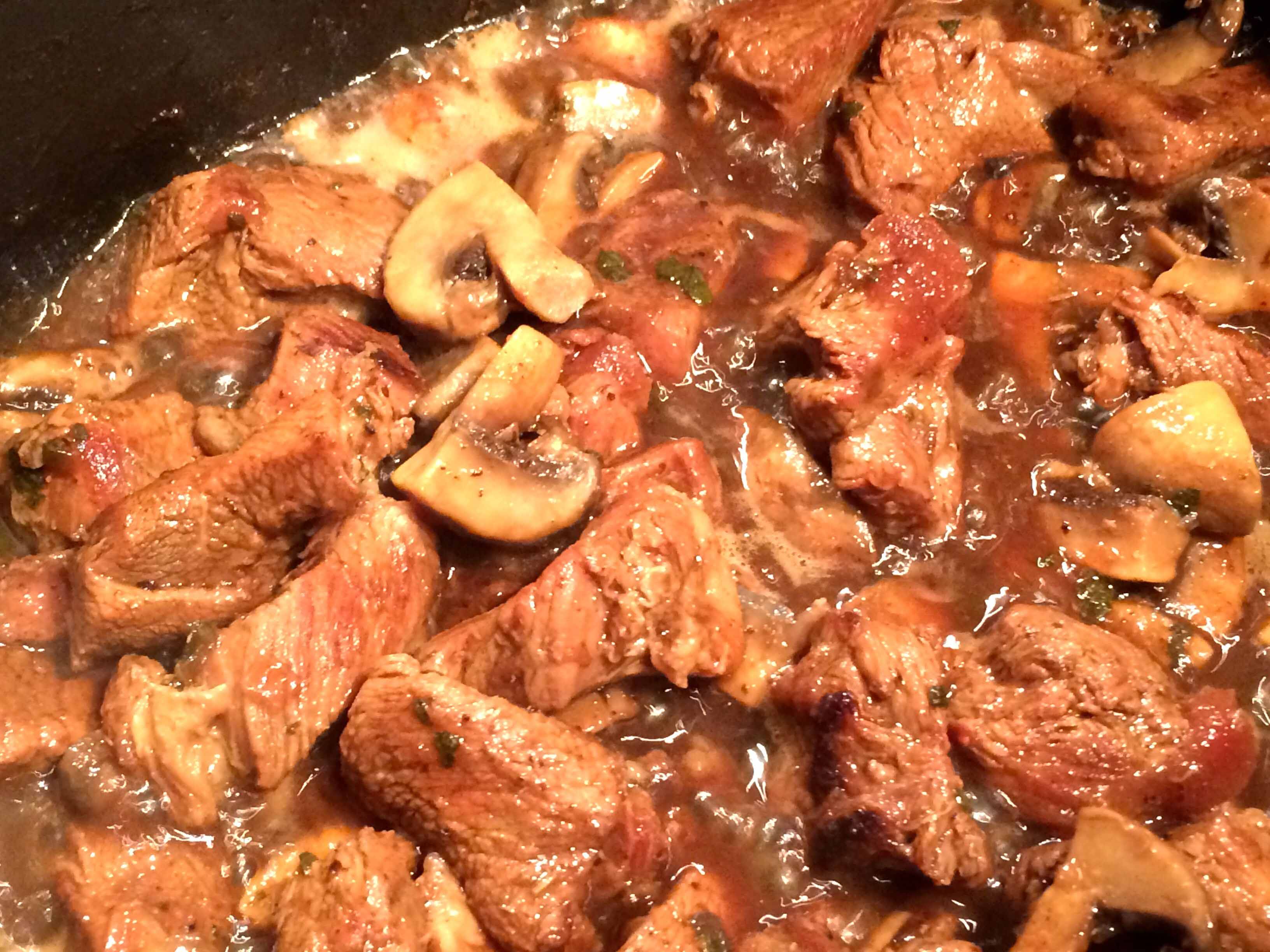
Stew just before adding the cream

8. Uncover and raise the heat to medium-high and let most of the liquid in the pot evaporate. Then add the cream and cook until the cream thickly coats a wooden spoon.

9. Sprinkle with parsley and serve hot on warmed plates with steamed white rice.

Wine Pairing: Soave, Pinot Grigio, Chablis


Pizza Margherita

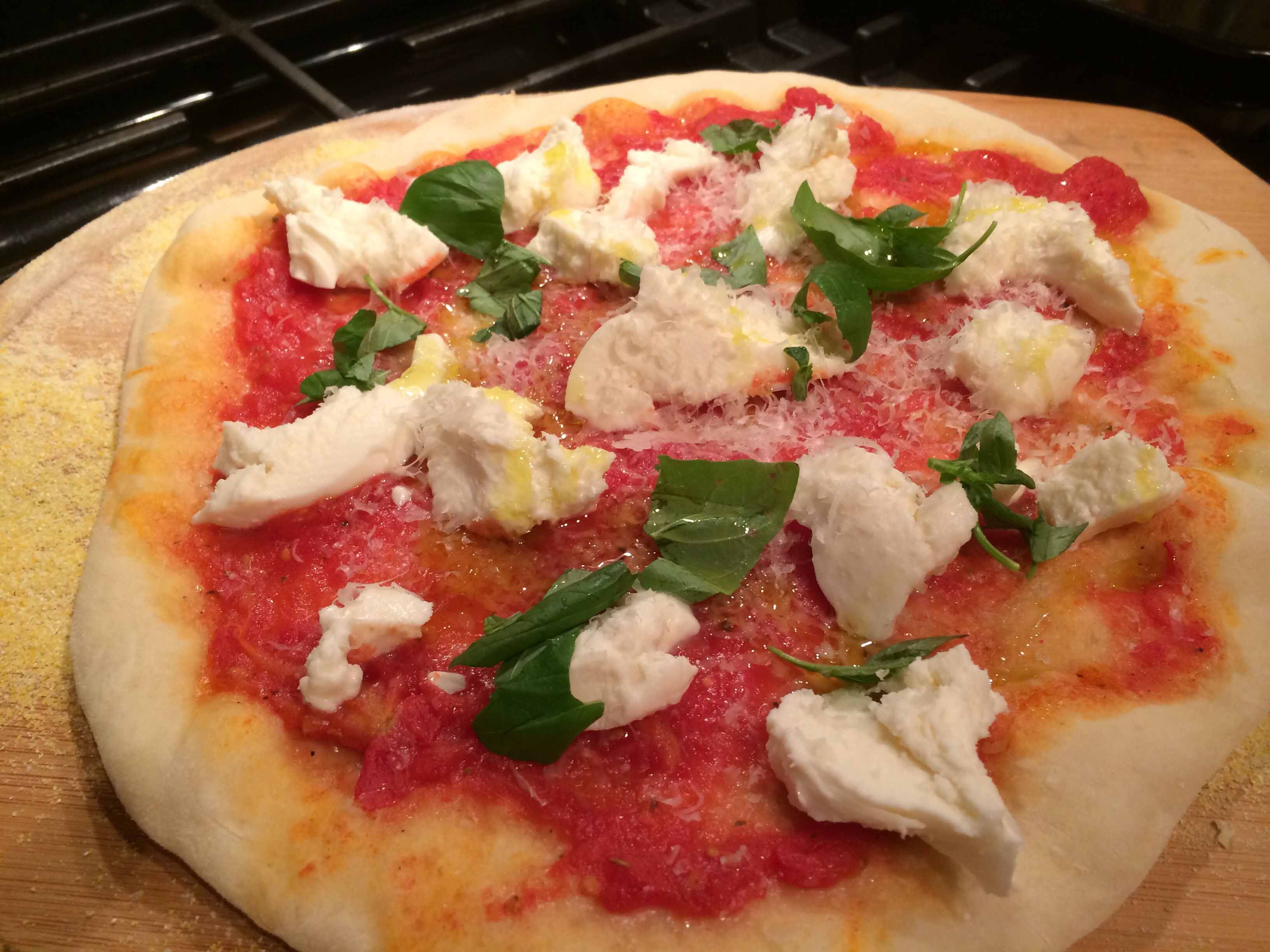
blogpizzasmallYesterday, I had an early evening engagement and wouldn’t be home in time to cook for dinner. So I thought: pizza. It’s really easy to make at home, even in a small NYC kitchen and, in my opinion, is far better and maybe even quicker than delivery.

Just before noon, I made the pizza dough following one of the best recipes I know. It’s from Lynne Rossetto Kasper’s The Italian Country Table. It makes a thin crust that perfectly balances crispy and chewy. The dough can rest covered for about 8 hours if you want to make it ahead of time like I did.

I sauce my pizza with a raw sauce made from San Marzano tomatoes, extra virgin olive oil, a pinch of oregano, some crushed red pepper, salt and pepper and cook the pizza for about 10 minutes before adding the cheeses and basil. I then top the pizza with some grated Romano, torn pieces of fresh Mozzarella, a few ripped fresh basil leaves, and a drizzle of extra virgin olive oil and cook for about another 7 minutes or until the crust is brown and the cheese melts.blogprepizzasmall

Here’s a link to Lynne’s recipe online: Classic Pizza Margherita. It includes the dough recipe as well as one for the sauce.

Wine Pairing: Chianti, chilled Lambrusco, Zinfandel

Fregola with Manila Clams

clamsfregolasmall

Last night we had a tasty dish of fregola (Sardinian couscous) with Manila clams. The attached recipe is from BBC television cook Nigella Lawson. The link below to the BBC site also has a helpful video of the recipe.

Lawson calls for tomato puree, which is actually a concentrated tomato paste. I used an imported one from Italy that comes in a tube. After adding it to the pan, I let it toast slightly while stirring it before I added the broth and the vermouth. I think toasting the paste makes for a deeper tomato flavor.

For the small clams called for in the recipe, I used the Manila variety, which I find have a delicious briny sweetness to them. Note that the clams may take a minute or two more to open than the 3 minutes called for in the recipe. Shaking the covered pan may help the clams to open.

clamsfregola2small

This is a quick and easy to prepare dish for a weeknight meal.  And if you don’t have fregola in the cupboard, it’s worth a trip to your Italian specialty store or an online search to find some. Here’s a link to the BBC Recipe.

vingrissmall

I paired the dish with a 2013 Bonny Doon Vin Gris de Cigare, a Rhone-style blend rosé. A crisp dry rosé, with hints of strawberry on the nose and an earthy minerality, it was the perfect complement to the briny fregola.

Wine Pairing: Dry Rosé, Dry Riesling, Pinot Grigio


Monday Night Leftovers

leftoverchickensmall

Didn’t have a chance to grocery shop on Monday, so I looked through the fridge for ideas.

I chose our spicy grilled chicken from Sunday night. I thought it would be perfect served at room temperature accompanied by some traditional Mostarda di Cremona, a fruit preserve made with mustard essential oils, for some sweet piquant flavors.

When serving leftovers, I like to cook something fresh as a side. I had a bunch of pencil-thin asparagus that needed to be used up. So I roasted these in the oven at 400°F for about 15 minutes, seasoned with salt and nutmeg, drizzled with extra virgin olive oil, and sprinkled with plenty of Parmigiano Reggiano. I served them topped with eggs fried in olive oil and a tad of butter. When you cut into the runny yolk, it mixes with the melted cheese, making a perfect sauce for the asparagus.

ocrerougepinotsmall

For wine, I chose a bottle that we found recently at our local merchant. It was a light 2012 Pinot Noir from Domaine de l’Ocre Rouge in the Languedoc-Roussillon region. A Vin de France (the new appellation for Vin de Table), with only 12% alcohol, it’s fresh, balanced, and packed with lively fruit and spice flavors. Ever so slightly chilled, it was the perfect accompaniment to our chicken.

Wine Pairing: Pinot Noir, Sauvignon Blanc


Spicy Grilled Chicken Roman Style

pollogrilledsmall

Last night, we grilled on the terrace for the first time this year. Not allowed by our building to use charcoal or propane, we have a small outdoor electric grill which does have its limitations (size, heat, etc.). Nevertheless, the grill is large enough to accommodate a splayed chicken held in place with a clamp grill, like the one used to grill hot dogs.

This recipe comes from one of my favorite Italian cookbooks, Cooking the Roman Way. (The book is out or print, but is available in an affordable Kindle edition.) It calls for a four-pound chicken with its backbone removed and then flattened with a mallet. You can either do this at home or, if you’re like me, ask you butcher to do the dirty deed.

The result is a juicy lemony chicken, fragrant with rosemary and garlic, with crispy skin and moist meat.

Galleto alla Diavola (Adapted from Cooking the Roman Way by David Downie)
4 pound chicken, back bone removed , spread, and flattened with a mallet or rolling pin.
2 cloves garlic, peeled and minced
6 sprigs of rinsed and dried rosemary (remove the leaves from two and chop fine; leave the other 4 whole)
2 lemons juiced and halves flattened
1 Tbs extra virgin olive oil
1/2 tsp crushed red pepper flakes (The recipe says you can also use 2 peperoncini, Italian hot chili; but these can be rather hard to find.)
2 strips bacon
Kosher salt, coarse ground black pepper (The recipe specifies fine salt, but I chose coarse Kosher.)

1. Rinse and pat dry the chicken and place it in a baking dish large enough to accommodate it spread open.

2. In a small bowl, place the minced garlic, 2 sprigs of minced fresh rosemary, 1/2 teaspoon (or a tad more if you really like things hot) of crushed red pepper flakes, the juice of two lemons, and 1 tablespoon extra virgin olive oil. Flatten the juiced lemon halves and reserve. Mix thoroughly.

3. Using a basting brush, spread this mixture on both sides (skin and meat) of the chicken.

4. Secure 1 slice of bacon with a toothpick to each inner side of the chicken. And then place two sprigs of rosemary over each slice of bacon. Top these with the flattened lemon halves. Season the chicken generously (or to taste) with Kosher salt and fresh coarsely ground black pepper. Cover with plastic wrap and/or foil and let the chicken marinate in the fridge for at least one hour or even better over night. (I went for about 8 hours.)

5. Preheat your grill or build a medium-hot charcoal fire. (You can also do this dish in the broiler, but unless you’re good at broiling, I would not attempt it.)

pollomarinatedsmall

6. Place the chicken in the clamp grill with the rosemary. (I removed the lemons.) Clamp it shut and place the chicken on the grill. (I started skin side down.) Cook turning frequently until cooked through, about 30 to 35 minutes. (Given my grill, I cooked the chicken for almost 50 minutes and turned it almost every 10 minutes.) You can tell when the chicken is done by pricking it with a fork and the juices run clear. You can also use an instant-read thermometer.

The book gives directions for cooking the chicken either under a broiler or on a grill without the clamp grill using a steel spatula. Given the frequent turning and the size of the bird, I think it’s better shelling out a few bucks for the clamp grill.

Serve hot.

We served with fingerling potatoes roasted with garlic and herbs followed by an arugula salad.

Wine Pairing: Pinot Noir, Sauvignon Blanc

Pork Rib Ragu

pork ragusmall

One of the dividends from slow cooking is definitely the leftovers. Even if you’re simply reheating them, they can often be even better than the first time you served them.

Yesterday, I pulled from the fridge some slow-cooked pork ribs in smoked Spanish paprika sauce that we had on Sunday. On their own, there wasn’t enough left for two portions, so I decided to turn them into a ragu for pasta. (See my May 26th post for more about the ribs.)

For almost any rich, meaty sauce, my favorite variety of pasta is pappardelle. The name for these broad, flat noodles comes from the Italian verb “pappare,” which means “to gobble up.” Their heft and shape make them the perfect carrier for a thick ragu.

pork ragu3small

After skimming the congealed fat from the ribs, I removed the meat from the bones and shredded it, discarding any thick pieces of fat. I placed the meat and the sauce into a heavy-bottomed sauce pan with a little water and heated it over a low flame, with occasional stirring, for about 30 minutes. After 10 minutes, I also added some milk to the sauce for a creamier texture.

I then transferred the sauce to a skillet wide enough to accommodate the pasta and placed it over a low flame

I cooked the fresh pappardelle for 2 minutes in heavily salted water. Just before they reached the al dente stage, I transferred the pasta from the pot to the skillet with a spider-style strainer and tossed the noodles with the sauce for about 30 seconds to coat and finish cooking.

pork ragu2small

Off the heat, I added a handful of grated Romano and some parsley.

Wine Pairing: Sangiovese, Merlot, Cabernet Franc

Grilled Flank Steak

flank1small

When we watched Mario Batali transform a simple flank steak to mouthwatering juiciness on his TV show “The Chew,” I had to make it.

The steak is seasoned first with salt and pepper and then rubbed with a paste of dried-porcini powder, garlic, red-pepper flakes, and olive oil. It’s then placed in a re-sealable plastic bag and refrigerated for at least an hour or even better over night.

I let the steak marinate for about 12 hours, taking it our of the refrigerator an hour or so before cooking to let it come to room temperature.

Because it was too cold for grilling outdoors, I opted for a two-burner pre-heated grill pan. Batali, who used a gas grill on the show, recommended cooking the steak with the grill lid closed for this particular cut of meat. To replicate this, I tented the steak with heavy-duty foil as it cooked for about 6 minutes per side on medium high.

To retain the meat’s juices, I let the steak rest for the recommended fifteen minutes before slicing it.

flankfbsmall

This had to be one of the juiciest and most flavorful flank steaks, I’ve ever had. The earthiness from the porcini powder was complemented by the spice from the red-chili flakes.

Batali used the steak as part of a sandwich that was sauced with a Parmesan fondue. As luscious as it looked, we decided to forego the sauce and the bread and chose to serve the steak accompanied with spinach sautéed with olive oil and garlic. Here’s a link to the recipe. Grilled Steak and Fondue Sandwich.

Some recipe tips:

  • I didn’t have any porcini powder, so I took a handful of dried porcini and ground them to a powder with a spice grinder. (Finally got to use that Magic Bullet that’s been in the back of the closet.)
  • You may also want to adjust the recipe’s amount of red-pepper flakes depending on the type you have on hand.
  • Finally, rather than smashing the garlic cloves to a paste, I grated ten with a rasp.

Wine Pairing: Cabernet Sauvignon, Valpolicella Ripasso, Cotes du Rhone

Baked Monkfish Roman Style

monkfish1small

When friends ask me which style of Italian cooking I enjoy the most, I usually say “Roman.” It seems to meld the earthy richness of the north with the sultry spice of the south. My go-to book for Roman cooking is David Downie’s Cooking the Roman Way, and it is here where I found the recipe for today’s post: Martino al Forno, Monkfish Baked on a Bed of Lemony Potatoes. (The book is sadly out of print, but is currently available in Kindle format.)

The fish, coated with olive oil and breadcrumbs, is baked slowly for about 35 minutes on a bed of thinly sliced Yukon gold potatoes dressed with olive oil, lemon, parsley, and fine breadcrumbs. What’s great about this dish is how the creamy, lemony potatoes highlight the rich buttery flavors of the monkfish, sometimes called “the poor man’s lobster.” It’s Roman cooking at its best.

I halved this recipe when I prepared it for two, using half of fish and potatoes called for, but slightly more than half measures of the other ingredients.

Martino Al Forno    Adapted from Cooking the Roman Way (Yields 4 servings)
2 pounds Monkfish fillets (Try to get fillets that are approximately equal in size and that are not too thin to ensure even cooking.)
2 pounds Yukon gold potatoes washed, peeled, and sliced 1/8 inch thick. (Use a mandolin for evenly sliced potatoes.)
4 Tbs extra virgin olive oil
Kosher salt and fresh ground black pepper
4 heaping Tbs of fine breadcrumbs (I only had seasoned Italian breadcrumbs on hand and they worked well.)
4 cloves garlic, unpeeled and mashed
4 heaping Tbs fresh Italian parsley minced (Be careful not to over mince the parsley as doing so leaves a lot of the herb’s flavor on the cutting board.)
1 lemon juiced (The next time I make this dish, I’ll also add some of the zest of the lemon to the potatoes.)

monkfishrawsmall

1. Preheat oven to 375° F.

2. Rinse fillets, pat dry with paper towels, and place on a platter. A paper towel on top of the fish will keep them dry.

3. Place the peeled, sliced potatoes in an oven-proof baking dish and drizzle with 2 Tbs of the oil. Season with generous pinches of salt and pepper. Toss lightly to evenly coat. (Be careful not to tear the slices as you toss.) Sprinkle in 2Tbs of the bread crumb and toss again. Arrange the potatoes in an even layer.

4. Distribute the smashed garlic cloves evenly over the potatoes and sprinkle with a generous pinch of the parsley.

5. Drizzle the patted-dry fish fillets with 1Tbs of the olive oil and gently rub it into the fish. Sprinkle the fish with the remaining 2 Tbs of the breadcrumbs and turn the fillets to coat them evenly with the crumbs.

monkfishseasonedsmall

6. Place the fillets in the baking dish over the potatoes and the garlic. (I folded under the thin ends of the fillets to ensure even cooking.) Sprinkle any breadcrumbs that are left behind the platter that held the fish.

7. Sprinkle 1 Tbs of lemon juice over the fish and the potatoes and then sprinkle with small pinches of salt, pepper, and parsley.

8. Bake for about 30 to 35 minutes, until the potatoes are tender on the inside and crisp on the edges.

9. Remove from the oven and sprinkle the remaining parsley over the fish. Drizzle with the remaining olive oil (1 Tbs) and the remaining lemon juice.

Serve immediately on heated plates.

Wine Pairing: Chilled Frascati, Sauvignon Blanc, Dry Riesling